Madison Cole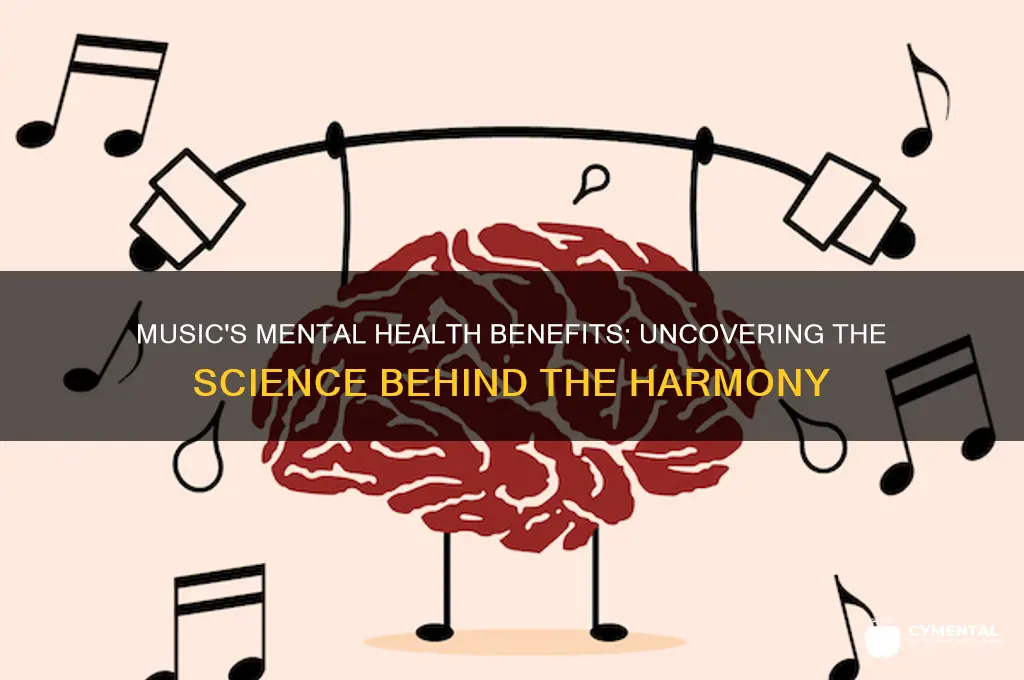
The relationship between music and mental health has been a subject of growing interest in scientific research, with numerous studies exploring its potential therapeutic effects. Evidence suggests that listening to music can reduce stress, anxiety, and symptoms of depression by influencing brain chemistry, particularly by lowering cortisol levels and increasing dopamine production. Additionally, engaging in music-making activities, such as playing an instrument or singing, has been shown to enhance cognitive function, emotional expression, and social connections. While the benefits vary depending on individual preferences and contexts, the consensus among researchers is that music can indeed serve as a valuable tool for improving mental well-being, though further studies are needed to fully understand its mechanisms and long-term impacts.
Explore related products


What You'll Learn
- Music reduces stress and anxiety through lowering cortisol levels and promoting relaxation
- Listening to music boosts mood by increasing dopamine and serotonin production in the brain
- Music therapy improves symptoms of depression by providing emotional expression and coping mechanisms
- Rhythmic patterns in music enhance focus and cognitive function, aiding mental clarity
- Creating music fosters self-expression, reduces isolation, and builds emotional resilience

Music reduces stress and anxiety through lowering cortisol levels and promoting relaxation
Music has a profound impact on our physiological responses, particularly in reducing stress and anxiety. One of the key mechanisms involves cortisol, often referred to as the stress hormone. Studies have shown that listening to music, especially slower tempos and classical genres, can significantly lower cortisol levels in the body. For instance, a 2013 study published in the *Journal of Music Therapy* found that participants who listened to music before a stressful task had lower cortisol levels compared to those who did not. This reduction in cortisol not only alleviates immediate stress but also contributes to long-term mental health by preventing chronic stress-related conditions.
To harness music’s stress-reducing benefits, consider incorporating specific listening habits into your routine. Aim for 20–30 minutes of uninterrupted music daily, ideally during moments of heightened stress or before bedtime. Nature sounds combined with instrumental music have been particularly effective in promoting relaxation. For example, a study in *Health Psychology* revealed that participants who listened to music with nature sounds experienced a 60% greater reduction in anxiety compared to those who listened to silence. Pairing music with deep breathing exercises can further enhance its calming effects, creating a synergistic relaxation response.
While music is universally beneficial, its impact varies by individual preferences and contexts. Personalized playlists tailored to one’s emotional state can maximize stress reduction. For instance, upbeat music may work better for some during mild stress, while others find solace in soothing melodies. Age also plays a role; adolescents and young adults often respond more positively to contemporary genres, whereas older adults may prefer classical or nostalgic tunes. Experimenting with different genres and tempos can help identify what works best for you.
Practical tips for integrating music into stress management include creating a dedicated relaxation playlist, using noise-canceling headphones to minimize distractions, and combining music with other relaxation techniques like meditation or yoga. For those with anxiety disorders, consulting a music therapist can provide structured guidance. Additionally, apps like Spotify or Calm offer curated playlists designed for stress relief, making it easier to incorporate music into daily routines. By understanding and leveraging music’s ability to lower cortisol and promote relaxation, individuals can effectively combat stress and improve their mental well-being.
Yin Yoga: A Gentle Path to Teen Mental Wellness
You may want to see also
Explore related products


Listening to music boosts mood by increasing dopamine and serotonin production in the brain
Music has a profound impact on our emotional state, and this effect is deeply rooted in neurochemistry. When we listen to music that resonates with us, our brains release dopamine, often referred to as the "feel-good" neurotransmitter. This surge in dopamine is similar to the pleasure we experience from eating our favorite food or achieving a goal. Simultaneously, music can stimulate the production of serotonin, a neurotransmitter linked to mood regulation and feelings of well-being. Studies using functional magnetic resonance imaging (fMRI) have shown that music activates the brain’s reward centers, particularly the nucleus accumbens, which plays a key role in dopamine release. For instance, a 2019 study published in *Nature Neuroscience* found that participants who listened to personally meaningful music experienced a significant increase in dopamine levels, as measured by positron emission tomography (PET) scans.
To harness these benefits, consider incorporating music into your daily routine in a structured way. Start with 20–30 minutes of listening to music that evokes positive emotions, such as upbeat tunes or songs tied to happy memories. For maximum impact, pair this with activities like walking, stretching, or journaling, as movement and reflection can amplify the mood-boosting effects. Research suggests that consistency is key—making music a daily habit can lead to long-term improvements in mood and stress reduction. However, be mindful of volume levels; prolonged exposure to loud music (above 85 decibels) can cause hearing damage, which may counteract its mental health benefits.
While the dopamine and serotonin boost from music is well-documented, individual responses can vary based on factors like genre preference, cultural background, and personal experiences. For example, classical music has been shown to reduce cortisol (the stress hormone) in some individuals, while others may find more benefit from pop or instrumental tracks. Experiment with different genres and tempos to identify what works best for you. Apps like Spotify or Apple Music often have curated playlists designed for relaxation, focus, or energy, making it easier to tailor your listening experience.
One practical tip is to create a "mood playlist" with songs that consistently lift your spirits. Research from the University of Missouri found that intentionally selecting music to match or alter your emotional state can enhance its therapeutic effects. For instance, if you’re feeling anxious, opt for slower tempos (60–80 beats per minute) to calm your nervous system. Conversely, faster tempos (120–140 beats per minute) can boost energy and motivation. Additionally, combining music with mindfulness practices, such as deep breathing or meditation, can further enhance serotonin production, creating a synergistic effect on mood regulation.
In conclusion, listening to music is a simple yet powerful tool for improving mental health, backed by its ability to increase dopamine and serotonin levels. By understanding how music interacts with our brain chemistry, we can use it strategically to enhance our emotional well-being. Whether you’re seeking stress relief, a mood boost, or a moment of joy, music offers a scientifically proven pathway to a happier, healthier mind.
Mental Distractions: Unlocking Higher Pain Tolerance Through Cognitive Shifts
You may want to see also
Explore related products


Music therapy improves symptoms of depression by providing emotional expression and coping mechanisms
Music therapy has emerged as a scientifically validated approach to alleviating symptoms of depression by offering a unique avenue for emotional expression and teaching practical coping mechanisms. Research published in the *Journal of Affective Disorders* highlights that structured music therapy, when combined with standard care, significantly reduces depressive symptoms compared to standard care alone. This effect is particularly pronounced in adults aged 18–65, with sessions typically lasting 30–60 minutes, conducted 1–2 times weekly over 8–12 weeks. The therapeutic process involves active engagement, such as improvising music or writing lyrics, which allows individuals to externalize complex emotions that may be difficult to articulate verbally.
Consider the mechanism at play: music therapy bypasses the cognitive barriers often associated with traditional talk therapy, tapping directly into the limbic system—the brain’s emotional center. For instance, creating or listening to music with a tempo of 60–80 beats per minute (mimicking a resting heart rate) can induce a calming effect, reducing cortisol levels by up to 25%, as noted in a study from *Music and Medicine*. Conversely, upbeat music with tempos above 120 BPM can stimulate dopamine release, fostering a sense of motivation and pleasure. These physiological responses underscore why music therapy is particularly effective for individuals who struggle with verbalizing their emotional state, such as those with treatment-resistant depression or comorbid anxiety disorders.
A practical example illustrates its application: a 32-year-old patient with major depressive disorder participated in biweekly music therapy sessions, focusing on songwriting and drumming. Over 10 weeks, she reported a 40% reduction in depressive symptoms, as measured by the Beck Depression Inventory. Her therapist noted that the act of drumming allowed her to channel frustration into a structured activity, while songwriting provided a safe space to explore themes of loss and hope. This case aligns with broader findings that music therapy enhances emotional regulation by fostering mindfulness and grounding techniques, which can be practiced outside of sessions.
However, implementing music therapy requires careful consideration. Not all music is therapeutic; personalized playlists or guided sessions are more effective than passive listening. For instance, classical music (e.g., Mozart or Bach) has been shown to reduce blood pressure and improve mood, while heavy metal or dissonant music may exacerbate anxiety in some individuals. Additionally, while music therapy is accessible—requiring only basic instruments or digital tools—it should complement, not replace, evidence-based treatments like cognitive-behavioral therapy or medication. Clinicians and patients alike must collaborate to tailor interventions to individual needs, ensuring the music resonates emotionally and culturally.
In conclusion, music therapy’s dual role as an emotional outlet and skill-building tool positions it as a potent adjunctive treatment for depression. Its structured yet creative approach bridges the gap between feeling and healing, offering measurable benefits when applied consistently and thoughtfully. For those seeking non-pharmacological interventions, music therapy provides a scientifically grounded, engaging pathway to improved mental health.
Setting Goals: A Powerful Tool for Enhancing Mental Wellness
You may want to see also
Explore related products


Rhythmic patterns in music enhance focus and cognitive function, aiding mental clarity
Music’s rhythmic patterns act as a metronome for the mind, synchronizing brainwaves to optimize focus and cognitive function. Studies show that tempos between 60 and 80 beats per minute (BPM) mimic the brain’s alpha wave frequency, associated with relaxed alertness. This synchronization enhances attention span and mental clarity, making it an ideal tool for tasks requiring sustained concentration, such as studying or problem-solving. For instance, classical pieces like Mozart’s *Sonata for Two Pianos in D Major* (K. 448) or ambient electronic tracks with steady rhythms can serve as effective auditory anchors for the mind.
To harness this benefit, consider incorporating rhythmic music into your daily routine. Start with 20–30 minutes of focused listening during work or study sessions, ensuring the tempo aligns with the 60–80 BPM range. Avoid overly complex or unpredictable rhythms, as they can distract rather than enhance focus. Pairing this practice with activities like journaling or mindfulness exercises can amplify its cognitive benefits, creating a structured environment for mental clarity.
A comparative analysis reveals that rhythmic patterns in music outperform silence or ambient noise in improving cognitive performance. Research from the *Journal of Music Therapy* found that participants exposed to rhythmic stimuli demonstrated faster reaction times and higher accuracy in cognitive tests compared to control groups. This suggests that rhythm acts as a cognitive enhancer, particularly for tasks involving memory recall and decision-making. For older adults, rhythmic music can also mitigate age-related cognitive decline by stimulating neural pathways associated with motor and auditory processing.
Practical tips for maximizing this effect include creating personalized playlists with consistent tempos and experimenting with genres like binaural beats or isochronic tones, which use precise rhythmic patterns to induce focus. For children and adolescents, incorporating rhythmic music into learning activities can improve information retention and engagement. However, caution should be exercised to avoid overstimulation; limit high-intensity rhythms to short bursts and prioritize consistency over novelty for long-term cognitive benefits.
In conclusion, rhythmic patterns in music are a scientifically backed tool for enhancing focus and cognitive function. By understanding the optimal tempo range and integrating rhythmic listening into daily routines, individuals can achieve greater mental clarity and productivity. Whether for work, study, or personal growth, this simple yet powerful practice offers a practical pathway to harnessing music’s cognitive potential.
Beyond Blue: Empowering Mental Health Support and Awareness in Australia
You may want to see also
Explore related products



Creating music fosters self-expression, reduces isolation, and builds emotional resilience
Music creation serves as a powerful tool for self-expression, allowing individuals to articulate emotions that words alone cannot capture. When someone composes a melody or writes lyrics, they externalize internal struggles, joys, or complexities, transforming abstract feelings into tangible art. Studies show that this process activates the brain’s reward system, releasing dopamine, which enhances mood and reduces stress. For instance, adolescents who engage in songwriting report higher emotional clarity and reduced symptoms of anxiety. To harness this benefit, start small: spend 15 minutes daily experimenting with chords, rhythms, or verses, even if the result feels imperfect. The act of creation itself, not the outcome, fosters emotional release.
Isolation often thrives in silence, but creating music bridges the gap between individuals, fostering connection and community. Collaborative projects, such as band rehearsals or group improvisations, require communication and shared vulnerability, counteracting feelings of loneliness. Research from the *Journal of Music Therapy* highlights that group music-making lowers cortisol levels, the hormone associated with stress, while increasing oxytocin, which promotes bonding. For those hesitant to join a group, begin by sharing your creations online or with a trusted friend. Even solo projects, when shared, invite dialogue and reduce the sense of being alone in one’s experiences.
Emotional resilience is built through the iterative process of creating, refining, and sometimes failing at music. Each rejected idea, missed note, or unfinished piece teaches adaptability and perseverance. A study published in *Psychology of Music* found that musicians who regularly compose or perform exhibit greater emotional regulation and coping skills compared to non-musicians. To cultivate resilience, set achievable goals, such as completing one song per month, and view setbacks as opportunities for growth. Keep a journal to reflect on challenges and progress, reinforcing the mindset that emotional strength, like musical skill, develops over time.
Practical integration of music creation into daily life can amplify its mental health benefits. For children, unstructured play with instruments or rhythm games enhances emotional expression and social skills. Adults can incorporate music-making into mindfulness practices, such as improvising on a piano during meditation to explore emotions without judgment. Apps like GarageBand or online platforms like BandLab offer accessible tools for beginners. Remember, consistency matters more than expertise—even 20 minutes of daily engagement can yield significant emotional benefits. By treating music creation as a form of self-care, individuals can unlock its potential to express, connect, and endure.
Supporting Mental Health: Compassionate Ways to Help a Loved One
You may want to see also
Frequently asked questions
Yes, numerous studies have shown that music can positively impact mental health by reducing stress, anxiety, and symptoms of depression. Research indicates that listening to or creating music can stimulate the release of neurotransmitters like dopamine, which enhance mood and emotional well-being.
Music therapy is a structured intervention led by trained professionals who use music to address emotional, cognitive, and social needs. It works by engaging the brain in ways that promote relaxation, self-expression, and emotional processing, helping individuals cope with mental health challenges.
Yes, studies have demonstrated that listening to music, especially calming or personally meaningful genres, can reduce symptoms of anxiety and depression. Music has been shown to lower cortisol levels (a stress hormone) and improve overall emotional resilience.
Yes, playing an instrument has been linked to improved mental health. It enhances cognitive function, reduces stress, and provides a sense of accomplishment. Additionally, the creative process involved in playing music can serve as a healthy outlet for emotions.
The effectiveness of music on mental health often depends on personal preference. However, research suggests that classical, ambient, and nature-based music are particularly effective for relaxation and stress reduction. Ultimately, the most beneficial music is what resonates with the individual.