Caleb Wright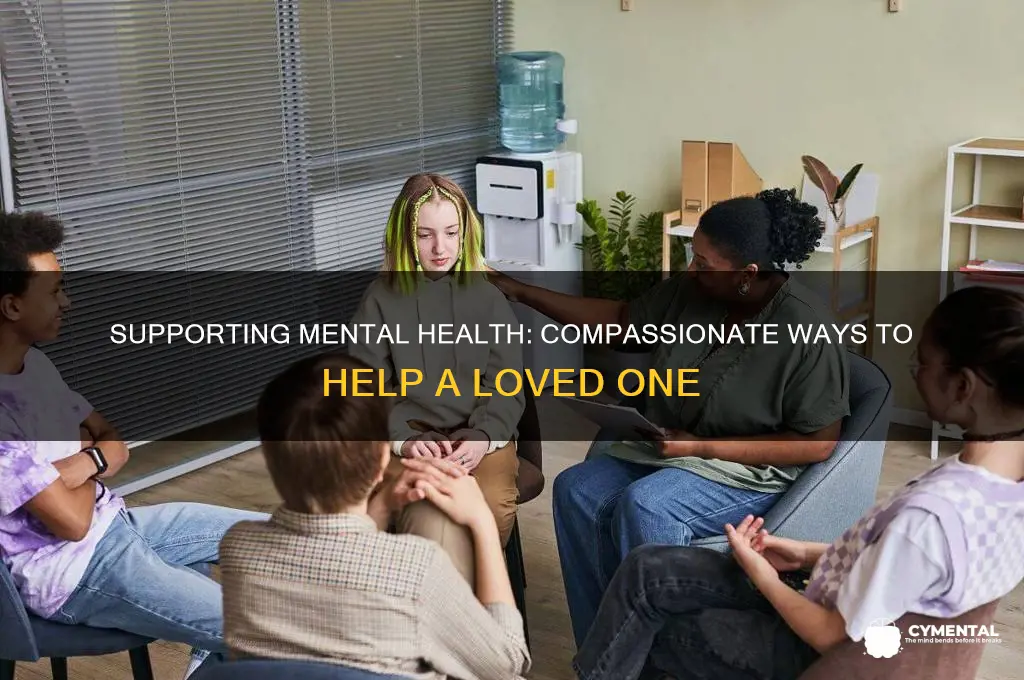
Helping a mentally ill person requires empathy, patience, and understanding. It’s essential to approach them with compassion, actively listening without judgment and validating their feelings. Educating yourself about their condition can foster better communication and reduce stigma. Encourage professional help, such as therapy or medication, while offering consistent emotional support. Small gestures, like checking in regularly or assisting with daily tasks, can make a significant difference. Respect their boundaries and avoid pressuring them, as recovery is a personal journey. By creating a safe, non-judgmental environment and being a reliable ally, you can play a vital role in their healing process.
Explore related products


What You'll Learn
- Active Listening: Show empathy, listen without judgment, and validate their feelings to build trust and connection
- Encourage Professional Help: Gently suggest therapy, medication, or support groups as essential steps for recovery
- Educate Yourself: Learn about their condition to better understand their struggles and provide informed support
- Maintain Boundaries: Support them while protecting your mental health to avoid burnout and resentment
- Promote Routine: Help establish daily habits like sleep, meals, and activities for stability and structure

Active Listening: Show empathy, listen without judgment, and validate their feelings to build trust and connection
One of the most powerful tools in supporting someone with mental illness is the art of active listening. It's not just about hearing their words; it's about creating a safe space where they feel understood and accepted. Imagine a friend confiding in you about their anxiety, describing the overwhelming sense of dread they experience daily. Instead of offering quick fixes or downplaying their struggles, you respond with, "It sounds like this anxiety is really heavy for you. I can't begin to understand exactly how you feel, but I'm here to listen and support you." This simple acknowledgment can be a lifeline, making them feel less alone in their battle.
The Power of Empathy and Validation
Empathy is the cornerstone of active listening. It involves recognizing and sharing the feelings of another. When engaging with someone who is mentally unwell, empathy allows you to step into their shoes, even if just momentarily. For instance, if a family member expresses their depression as a constant darkness clouding their vision, an empathetic response could be, "I can see how this darkness must make everyday tasks feel exhausting. It's completely valid to feel this way." Such validation is crucial; it communicates that their emotions are real and worthy of attention, fostering a sense of trust and encouraging further openness.
##
A Practical Guide to Active Listening
- Maintain Eye Contact and Open Body Language: Non-verbal cues are essential. Sit facing the person, lean in slightly, and maintain eye contact to show engagement. Avoid crossing your arms, as this may signal defensiveness.
- Ask Open-Ended Questions: Encourage dialogue by asking questions that require more than a yes or no answer. For instance, "How does that make you feel?" or "Can you tell me more about what's been on your mind?"
- Paraphrase and Reflect: Repeat back what you've heard in your own words to ensure understanding. For example, "So, what I'm hearing is that you feel trapped by these panic attacks, and it's affecting your ability to leave the house."
- Avoid Interrupting or Offering Solutions Prematurely: Let the person express themselves fully. Often, individuals just need to be heard without immediate problem-solving. If they ask for advice, offer it gently and only after they've finished speaking.
Building Trust Through Unconditional Positive Regard
The concept of unconditional positive regard, introduced by psychologist Carl Rogers, is vital here. It means accepting and supporting the individual without judgment or conditions. When you listen without judgment, you create an environment where the person feels safe to explore their thoughts and emotions. This is especially critical for those with mental health issues, who may already face self-stigma and fear of rejection. By consistently demonstrating empathy and validation, you become a trusted ally in their journey towards healing.
In the context of mental health support, active listening is a skill that can be honed and refined. It requires patience, practice, and a genuine desire to understand. Remember, sometimes the most significant help you can offer is simply being present and willing to listen without judgment, allowing the person to feel seen and heard in their struggle. This approach can be a powerful catalyst for positive change and a vital step towards recovery.
Supporting Mental Health: Practical Ways to Help Loved Ones Heal
You may want to see also
Explore related products


Encourage Professional Help: Gently suggest therapy, medication, or support groups as essential steps for recovery
Professional intervention is often the linchpin in a mentally ill person's recovery, yet suggesting it requires sensitivity and strategy. Begin by normalizing the conversation around therapy, medication, or support groups, framing them as tools rather than admissions of failure. For instance, compare seeking therapy to visiting a doctor for a physical ailment—both are acts of self-care. Use open-ended questions like, "Have you ever considered talking to someone about this?" to gauge their receptiveness without imposing your views. Timing matters; broach the topic during a calm moment, not in the heat of an emotional crisis.
The effectiveness of professional help hinges on personalization. Therapy, for example, isn’t one-size-fits-all. Cognitive Behavioral Therapy (CBT) works well for anxiety and depression, while Dialectical Behavior Therapy (DBT) is tailored for emotional regulation issues. Medication, too, requires precision—antidepressants like SSRIs often start at a low dose (e.g., 10mg of Lexapro) and are adjusted over weeks based on response and side effects. Support groups, such as those offered by the National Alliance on Mental Illness (NAMI), provide peer validation and coping strategies. Highlight these options as complementary, not competing, pathways to healing.
Encouraging professional help also means addressing barriers. Cost, stigma, and fear of judgment often deter individuals from seeking treatment. Offer practical solutions: suggest sliding-scale clinics, telehealth platforms, or employee assistance programs (EAPs) for affordability. Share statistics to combat stigma—1 in 5 adults experiences mental illness annually, making it far more common than perceived. If they express fear of medication, explain that modern psychiatry prioritizes minimal side effects and patient autonomy. Your role isn’t to convince but to empower them with information and reassurance.
Finally, model patience and persistence. Recovery isn’t linear, and resistance to professional help is common. Avoid ultimatums or guilt-tripping; instead, reiterate your support and willingness to assist in finding resources. For younger individuals (under 25), involve trusted adults or school counselors discreetly, as they may be more open to help from authority figures. For older adults, emphasize the long-term benefits of early intervention, such as improved quality of life and reduced risk of chronic conditions. By framing professional help as a collaborative journey, you foster trust and increase the likelihood of acceptance.
Sleep's Role in Boosting Mental Health and Emotional Well-Being
You may want to see also
Explore related products



Educate Yourself: Learn about their condition to better understand their struggles and provide informed support
Understanding a mentally ill person's condition is akin to learning a new language—it requires patience, curiosity, and a willingness to listen without assuming you already know the dialect. Start by identifying the specific diagnosis, whether it’s depression, schizophrenia, bipolar disorder, or anxiety, as each comes with unique challenges and symptoms. For instance, someone with bipolar disorder may experience manic episodes that manifest as rapid speech and impulsivity, while another with PTSD might have flashbacks triggered by seemingly innocuous stimuli. Reliable sources like the National Institute of Mental Health (NIMH) or the World Health Organization (WHO) offer detailed explanations of these conditions, providing a foundation for empathy and informed interaction.
Once you’ve grasped the basics, delve into the lived experience of the condition. Read personal narratives, watch documentaries, or engage with support groups to understand how symptoms manifest in daily life. For example, a person with OCD might spend hours performing rituals to alleviate anxiety, not out of preference but as a coping mechanism. This insight shifts your perspective from judgment to compassion, allowing you to recognize behaviors as symptoms rather than personal failings. Avoid oversimplifying their struggles with platitudes like “just stay positive”—instead, acknowledge the complexity of their experience and validate their feelings.
Practical education extends to recognizing warning signs of crisis. For depression, this might include withdrawal from social activities or changes in sleep patterns; for anxiety, it could be hyperventilation or panic attacks. Knowing these indicators enables you to respond appropriately, whether by offering a calm presence or helping them access professional help. For instance, if someone with severe anxiety is experiencing a panic attack, guide them through slow, deep breathing (inhale for 4 seconds, hold for 4, exhale for 6) rather than overwhelming them with questions.
Caution must be exercised to avoid becoming an armchair diagnostician or therapist. Your role is to support, not to treat. Educating yourself is about fostering understanding, not assuming expertise. Respect boundaries by not pushing for details they’re uncomfortable sharing, and always defer to their lived experience—no amount of reading can fully replicate what they’re going through. Additionally, be mindful of the stigma surrounding mental illness; avoid using clinical terms in a way that reduces them to their diagnosis.
In conclusion, educating yourself about a mentally ill person’s condition is a proactive step toward meaningful support. It equips you with the knowledge to respond empathetically, recognize crises, and avoid harmful misconceptions. By combining clinical understanding with personal narratives, you create a bridge of compassion that strengthens your ability to stand alongside them in their journey. Remember, the goal isn’t to fix them but to show up as an informed, nonjudgmental ally.
Overcoming Mental Blocks: Strategies to Support Athletes' Performance and Resilience
You may want to see also
Explore related products


Maintain Boundaries: Support them while protecting your mental health to avoid burnout and resentment
Supporting a loved one with mental illness is an act of compassion, but without boundaries, it can become a double-edged sword. Caregiver burnout is a real and debilitating consequence of neglecting self-preservation. A 2018 study published in the *Journal of Family Psychology* found that caregivers of individuals with severe mental illness experienced significantly higher levels of stress and depression compared to the general population. This highlights the critical need for establishing and maintaining clear boundaries.
Imagine a lifeboat in a storm. You can't save someone if you're drowning yourself. Similarly, you can't effectively support someone struggling with mental illness if your own well-being is compromised.
Setting boundaries isn't about being selfish; it's about sustainability. It involves defining what you can and cannot do, both emotionally and practically. For instance, you might commit to accompanying your loved one to therapy appointments twice a month but establish that you're unavailable for late-night phone calls unless it's an emergency. Be specific and communicate these boundaries clearly and respectfully. Remember, saying "no" without guilt is an essential skill.
It's crucial to recognize that boundaries are not static. They may need to be adjusted as circumstances change. If your loved one's condition improves, you might be able to offer more support. Conversely, if their needs become more demanding, you may need to temporarily reduce your involvement to protect your own mental health.
Think of boundaries as a safety net, not a wall. They allow you to provide support while preventing you from being pulled into the depths of someone else's struggle. This doesn't mean you're abandoning them; it means you're ensuring you have the strength to be there for the long haul. Remember, you can't pour from an empty cup. By prioritizing your own well-being, you'll be better equipped to offer meaningful and sustainable support to your loved one.
Empowering Self-Care: Practical Strategies to Help Yourself Thrive Daily
You may want to see also
Explore related products



Promote Routine: Help establish daily habits like sleep, meals, and activities for stability and structure
A consistent daily routine can be a powerful tool for managing mental health, offering a sense of control and predictability in a world that often feels chaotic. For individuals struggling with mental illness, establishing and maintaining routines can be particularly challenging, yet it is a crucial aspect of their overall well-being. The simple act of structuring one's day can provide a foundation for stability, allowing them to better cope with symptoms and potentially reduce the intensity of their struggles.
The Science Behind Routine and Mental Health:
Research suggests that daily routines significantly impact our mental and emotional states. A study published in the *Journal of Health Psychology* found that participants with consistent daily routines reported higher levels of self-esteem and lower levels of depression and anxiety. This is because routines provide a sense of mastery and accomplishment, especially when tasks are completed regularly. For instance, a fixed bedtime routine can improve sleep quality, which is essential for mental health, as sleep disturbances are common across various mental disorders.
Practical Steps to Establish a Routine:
- Start Small: Begin by focusing on one or two daily habits. For example, set a consistent wake-up time and a simple morning routine, like making a cup of tea and reading for 15 minutes. This initial structure can provide a sense of achievement and encourage further routine development.
- Meal Planning: Regular, nutritious meals are vital. Help the individual plan and prepare meals in advance, ensuring a balanced diet. For instance, cooking a large batch of a favorite healthy meal on Sundays can provide several days' worth of lunches or dinners, reducing daily decision-making stress.
- Activity Scheduling: Encourage engagement in activities that promote well-being. This could be a daily walk, a hobby, or a social interaction. For social activities, start with small, low-pressure gatherings, like a weekly coffee with a friend, to build confidence and a sense of routine.
Tailoring Routines for Different Age Groups:
The approach to routine-building may vary depending on the person's age. For children and adolescents, routines provide a sense of security and can improve emotional regulation. Parents can establish consistent bedtime stories and morning routines, ensuring a smooth transition into the day. For older adults, routines might focus on maintaining physical health and cognitive function, including light exercises and brain-stimulating activities like puzzles or learning a new skill.
In the journey of supporting a mentally ill person, promoting routine is a practical and effective strategy. It empowers individuals to take control of their daily lives, providing a sense of order and accomplishment. By starting small, focusing on specific habits, and tailoring routines to individual needs, you can help create a stable foundation for improved mental health and overall well-being. This approach is a powerful tool in the broader context of mental health support, offering a simple yet impactful way to make a positive difference.
Exercise and Mental Health: Unlocking the Mind-Body Connection for Wellness
You may want to see also
Frequently asked questions
Approach them with empathy, respect, and patience. Use calm, non-judgmental language, and ask if they’re open to talking. Avoid pressuring them and let them set the pace of the conversation.
Stay calm and listen actively. Encourage them to seek professional help, and if they’re at risk of harm, contact emergency services or a crisis hotline immediately.
Set clear boundaries and encourage healthy habits. Offer support while also promoting independence and professional treatment. Avoid taking responsibility for their actions or decisions.
Regularly check in with them, invite them to social activities, and show genuine interest in their life. Be consistent and patient, as isolation often stems from fear of judgment.
Learn about their specific condition through reputable sources, attend mental health workshops, and listen to their experiences. Understanding their struggles will help you provide more effective support.