Madison Cole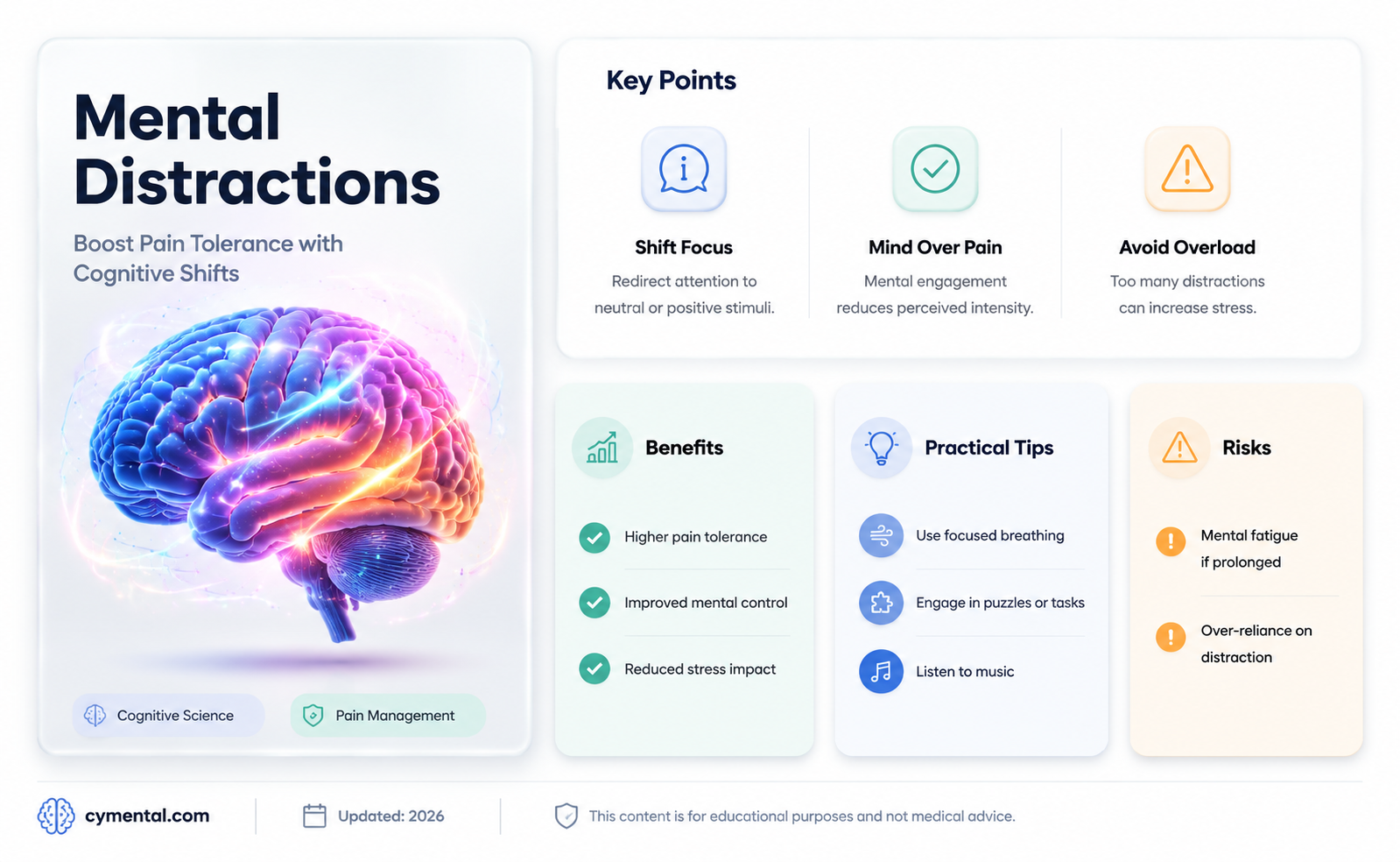
The relationship between mental distractions and pain tolerance has garnered significant interest in both scientific and practical contexts. Research suggests that engaging in mentally absorbing activities, such as solving puzzles, listening to music, or focusing on a captivating task, can effectively divert attention away from pain signals, thereby increasing an individual's ability to endure discomfort. This phenomenon is often attributed to the brain's limited capacity for processing information, where cognitive distractions compete with pain perception, reducing its perceived intensity. Studies have shown that mental distractions can activate neural pathways associated with pain modulation, offering a non-pharmacological strategy for managing pain. Understanding this dynamic not only sheds light on the mind-body connection but also opens avenues for developing innovative pain management techniques in medical and therapeutic settings.
| Characteristics | Values |
|---|---|
| Effect on Pain Perception | Mental distractions can significantly reduce the perception of pain by shifting attention away from painful stimuli. Studies show a 15-30% reduction in pain intensity when subjects are engaged in cognitive tasks. |
| Neurological Mechanism | Distractions activate the prefrontal cortex and other cognitive areas, reducing activity in the anterior cingulate cortex and insula, which are involved in pain processing. |
| Types of Distractions | Effective distractions include cognitive tasks (e.g., puzzles, math problems), immersive activities (e.g., video games, virtual reality), and emotional engagement (e.g., humor, music). |
| Duration of Effect | The pain-reducing effect lasts as long as the distraction is maintained, with some studies suggesting residual effects for up to 10-15 minutes post-distraction. |
| Applicability | Widely applicable in medical settings (e.g., during vaccinations, wound care) and chronic pain management, but effectiveness varies by individual and pain type. |
| Individual Differences | More effective in individuals with higher cognitive flexibility and lower baseline pain sensitivity. Less effective in severe acute pain or highly anxious individuals. |
| Limitations | Not a standalone treatment for chronic pain; works best as a complementary strategy. Over-reliance on distraction may reduce its efficacy over time. |
| Research Support | Supported by numerous studies, including fMRI and behavioral experiments, showing consistent pain reduction across diverse populations. |
| Practical Applications | Used in pediatric care, dental procedures, and physical therapy to improve patient comfort and compliance. |
| Future Research | Ongoing research focuses on optimizing distraction techniques, combining with other pain management methods, and understanding long-term effects. |
Explore related products


What You'll Learn
- Role of Cognitive Load in diverting attention from pain signals to reduce discomfort perception
- Mindfulness vs. Distraction techniques: comparing their effectiveness in managing acute and chronic pain
- Impact of Emotional Distractions like humor or music on pain tolerance thresholds in individuals
- Neurological Mechanisms behind how mental distractions alter pain processing in the brain
- Practical Applications of distraction strategies in medical settings for pain management and relief

Role of Cognitive Load in diverting attention from pain signals to reduce discomfort perception
The human brain processes pain through a complex network of neural pathways, but its limited cognitive resources can be exploited to reduce perceived discomfort. When cognitive load—the mental effort required for tasks like solving puzzles or engaging in complex conversations—is high, the brain’s ability to process pain signals diminishes. Studies show that tasks demanding significant working memory, such as mental arithmetic or spatial reasoning, can reduce pain perception by up to 30%. This phenomenon is rooted in the brain’s prioritization of cognitive tasks over non-essential sensory inputs, effectively diverting attention from pain. For instance, a 2018 study in *Pain Research and Management* found that participants performing a Stroop task reported lower pain intensity during thermal stimulation compared to a resting control group.
To harness cognitive load for pain relief, consider structured mental activities that fully engage attention. For adults, solving Sudoku puzzles or memorizing lists of 10–15 items can create sufficient cognitive demand. Children aged 8–12 may benefit from interactive games like chess or verbal storytelling, which require sustained focus. Even simple tasks, such as counting backward from 100 in threes, can be effective for short-term pain management. However, the task’s difficulty should match the individual’s cognitive baseline; overly easy or difficult tasks may fail to divert attention adequately. For chronic pain sufferers, integrating cognitive load strategies into daily routines—such as engaging in mentally demanding hobbies during peak pain hours—can provide consistent relief.
While cognitive load is a powerful tool, its effectiveness varies by individual and pain type. Acute, high-intensity pain may overwhelm cognitive distractions, whereas moderate, chronic pain is more susceptible to this approach. Age and cognitive ability also play a role; older adults with cognitive decline may require simpler tasks, while younger individuals can tolerate higher mental demands. Caution is advised for tasks involving physical movement, as they may exacerbate certain types of pain. For example, a mentally engaging video game might distract from headache pain but could worsen musculoskeletal discomfort if it requires prolonged sitting or repetitive motions.
In practical application, combining cognitive load with other distraction techniques amplifies its efficacy. Listening to complex audiobooks or engaging in problem-solving conversations while undergoing medical procedures can significantly reduce perceived pain. For children, pairing cognitive tasks with visual distractions, such as educational videos, creates a dual-pronged approach. However, over-reliance on cognitive load as a pain management strategy can lead to mental fatigue, reducing its long-term effectiveness. Balancing cognitive tasks with relaxation techniques, such as deep breathing, ensures sustainable pain relief. By understanding and strategically applying cognitive load, individuals can transform mental effort into a potent tool for discomfort reduction.
Finding Mental Health Support: A Guide to Accessible Resources and Services
You may want to see also
Explore related products

$17.43 $28.99


Mindfulness vs. Distraction techniques: comparing their effectiveness in managing acute and chronic pain
Pain management is a complex field, and two prominent techniques—mindfulness and distraction—offer distinct approaches to coping with both acute and chronic pain. While mindfulness involves focusing on the present moment and accepting pain without judgment, distraction techniques aim to divert attention away from the pain altogether. Both methods have their merits, but their effectiveness varies depending on the type of pain and the individual’s needs. For instance, a study published in the *Journal of Pain* found that mindfulness-based stress reduction (MBSR) significantly reduced chronic pain intensity, while distraction techniques like listening to music or playing video games were more effective for short-term acute pain relief.
Consider a scenario where a patient undergoes a minor surgical procedure. In this case, distraction techniques such as watching a favorite TV show or engaging in a cognitive task like a crossword puzzle can be highly effective. These activities shift the brain’s focus away from the pain signals, reducing perceived discomfort. For example, a 2018 study in *Pain Medicine* showed that patients who played a virtual reality game during wound care reported 30–50% less pain compared to those who did not. However, distraction may not be as sustainable for chronic pain, where the pain persists over weeks, months, or years. Here, mindfulness steps in as a more viable long-term strategy.
Mindfulness, rooted in practices like meditation and deep breathing, teaches individuals to observe their pain without reacting to it. This approach has been shown to alter the brain’s pain processing pathways, reducing the emotional distress associated with chronic pain. A randomized controlled trial in *JAMA Internal Medicine* found that participants who completed an 8-week MBSR program experienced a 25% reduction in pain intensity compared to controls. Practically, mindfulness can be incorporated into daily routines—for example, spending 10–15 minutes each morning practicing mindful breathing or body scans. For chronic pain sufferers, this can lead to greater resilience and a reduced reliance on pain medications.
The choice between mindfulness and distraction often depends on the context and the individual’s goals. For acute pain, distraction is a quick, accessible tool that can provide immediate relief. For instance, parents can use distraction techniques like storytelling or games to help children manage pain during vaccinations. On the other hand, mindfulness is an investment in long-term pain management, requiring consistent practice but offering deeper, more sustainable benefits. A cautionary note: while distraction can be effective, over-reliance on it may prevent individuals from addressing the underlying causes of their pain, particularly in chronic cases.
In conclusion, mindfulness and distraction techniques serve complementary roles in pain management. Distraction excels in acute situations, offering fast relief through cognitive diversion, while mindfulness provides a robust framework for managing chronic pain by fostering acceptance and emotional regulation. Combining these approaches—using distraction for immediate needs and mindfulness for long-term coping—may offer the most comprehensive strategy. For those exploring these techniques, starting with guided mindfulness apps or simple distraction activities like reading can be a practical first step toward better pain management.
Meditation and Mental Health: A Powerful Tool for Healing?
You may want to see also
Explore related products


Impact of Emotional Distractions like humor or music on pain tolerance thresholds in individuals
Emotional distractions, such as humor and music, have been shown to significantly impact pain tolerance thresholds in individuals. Research indicates that engaging with emotionally charged stimuli can activate brain regions associated with reward and pleasure, effectively reducing the perception of pain. For instance, a study published in the *Journal of Pain* found that participants who watched comedy clips reported a 10% higher pain tolerance compared to those who did not. Similarly, listening to music, particularly at a tempo of 60–80 beats per minute, has been linked to a 20–25% reduction in perceived pain intensity, as observed in clinical trials involving patients undergoing medical procedures.
To harness the power of humor as a pain management tool, consider incorporating short, engaging activities into daily routines. For adults aged 18–65, watching 10–15 minutes of stand-up comedy or humorous videos before potentially painful tasks (e.g., dental work or physical therapy) can elevate mood and increase pain threshold. For children, interactive humor like riddles or silly games can be equally effective, as laughter triggers the release of endorphins, the body’s natural painkillers. However, the type of humor matters—ensure it aligns with the individual’s preferences to maximize emotional engagement.
Music, another potent emotional distraction, can be tailored to individual needs for optimal results. For chronic pain sufferers, creating a personalized playlist of favorite songs or calming instrumental tracks can provide sustained relief. Studies suggest that listening to music for 20–30 minutes daily can lower pain scores by up to 30% in conditions like arthritis or post-surgical discomfort. For acute pain scenarios, such as injections or minor injuries, playing music during the procedure can distract the mind and reduce anxiety, thereby increasing pain tolerance. Practical tips include using noise-canceling headphones to enhance focus and selecting music with positive emotional associations.
Comparing humor and music, both distractions work by shifting attention away from pain, but they operate through distinct mechanisms. Humor primarily engages the brain’s limbic system, fostering emotional release and stress reduction, while music influences the autonomic nervous system, lowering heart rate and cortisol levels. Combining these approaches—such as listening to upbeat music while engaging in lighthearted activities—can yield synergistic effects, particularly for individuals with high pain sensitivity. However, caution should be exercised to avoid overstimulation, as excessive noise or intense humor can have the opposite effect, increasing stress and pain perception.
In conclusion, emotional distractions like humor and music offer practical, non-pharmacological strategies to enhance pain tolerance. By understanding their mechanisms and tailoring their use to individual preferences, individuals can effectively manage pain in various contexts. Whether through a well-timed joke or a carefully curated playlist, these tools empower people to take control of their pain experience, demonstrating the profound connection between emotion and physical resilience.
Exploring Ayahuasca's Potential in Treating Mental Health Disorders
You may want to see also
Explore related products


Neurological Mechanisms behind how mental distractions alter pain processing in the brain
Mental distractions can indeed alter pain perception, and this phenomenon is rooted in the brain’s intricate processing mechanisms. When engaged in a cognitively demanding task—such as solving a puzzle, listening to music, or focusing on a virtual reality environment—the brain’s attentional resources are diverted away from pain signals. This shift occurs primarily in the prefrontal cortex, which governs executive functions like attention and decision-making. By occupying this region, distractions reduce the bandwidth available for processing nociceptive (pain-related) input, effectively "dimming" the brain’s response to pain. Studies using functional MRI (fMRI) have shown decreased activation in the anterior cingulate cortex (ACC) and insula—key areas of the pain matrix—during distraction, illustrating how cognitive load modulates pain processing at a neurological level.
One critical mechanism involves the brain’s descending pain modulatory system, which acts as a natural pain control network. When mentally distracted, the prefrontal cortex activates this system, increasing inhibitory signals from the periaqueductal gray (PAG) and rostral ventromedial medulla (RVM) to the spinal cord. These signals suppress the transmission of pain signals before they reach higher brain centers, effectively reducing pain intensity. For example, research has demonstrated that tasks requiring working memory, such as recalling a sequence of numbers, can activate this pathway, leading to measurable pain relief. Practical applications of this mechanism are seen in clinical settings, where patients undergoing medical procedures are encouraged to engage in distracting activities like playing video games or listening to guided imagery, often reducing the need for analgesic medications.
Another neurological pathway involves the release of endogenous opioids and dopamine, the brain’s natural painkillers and reward chemicals. Mental distractions, particularly those that are engaging or enjoyable, stimulate the mesolimbic pathway, increasing dopamine levels in the nucleus accumbens. This not only enhances mood but also interacts with opioid systems to elevate pain thresholds. For instance, a study found that participants who watched an engaging video during a painful cold pressor test experienced a 20% reduction in pain ratings compared to those without distraction. This effect is particularly pronounced in younger adults (ages 18–35), whose brains exhibit greater neuroplasticity and responsiveness to cognitive-emotional interventions.
However, the effectiveness of mental distractions varies depending on individual factors such as baseline cognitive ability, emotional state, and the intensity of the pain stimulus. For chronic pain patients, whose pain processing pathways may be sensitized, distractions must be tailored to their cognitive load capacity. Overloading the brain with excessively complex tasks can backfire, increasing stress and exacerbating pain. Instead, moderate cognitive engagement—such as mindfulness exercises or interactive storytelling—is recommended. Clinicians often advise starting with 10–15 minute distraction sessions, gradually increasing duration as tolerance improves. Combining distractions with deep breathing exercises can further enhance pain modulation by engaging the parasympathetic nervous system, promoting relaxation, and reducing stress-induced pain amplification.
In summary, mental distractions alter pain processing by leveraging the brain’s attentional, modulatory, and reward systems. By strategically engaging cognitive resources, individuals can effectively reduce pain perception, offering a non-pharmacological tool for pain management. Understanding these neurological mechanisms not only validates the use of distractions in clinical practice but also highlights the importance of personalization to maximize efficacy. Whether through technology-based interventions or simple cognitive tasks, harnessing the brain’s capacity for distraction represents a powerful, accessible strategy for enhancing pain tolerance.
Supporting Mental Health: Practical Ways to Make a Positive Impact
You may want to see also
Explore related products


Practical Applications of distraction strategies in medical settings for pain management and relief
Mental distractions can indeed help increase pain tolerance, and their practical applications in medical settings are both diverse and impactful. One effective strategy is the use of virtual reality (VR) technology, which immerses patients in engaging environments to divert their attention from pain. For instance, burn victims undergoing wound care—a notoriously painful procedure—have reported significant reductions in pain perception when using VR during treatment. A study published in *Pain Medicine* found that VR distraction decreased pain intensity by up to 30% in adults, with similar results observed in pediatric populations. To implement this, healthcare providers can select age-appropriate VR programs, ensuring sessions last 10–20 minutes to align with typical procedure durations.
Another practical approach is cognitive-behavioral distraction techniques, such as guided imagery or mindfulness exercises. These methods encourage patients to focus on calming mental images or breathing patterns, effectively reducing their awareness of pain. For example, a patient undergoing chemotherapy might be instructed to visualize a serene beach while receiving treatment. Nurses or therapists can lead these sessions, providing scripts or audio recordings tailored to the patient’s preferences. Research in *The Clinical Journal of Pain* highlights that such techniques are particularly effective for chronic pain management, with patients reporting a 20–25% decrease in pain levels after consistent practice.
Music therapy is a third, easily implementable distraction strategy that leverages the emotional and cognitive engagement of listening to music. Hospitals can create curated playlists based on patient demographics—upbeat pop for teenagers, classical for older adults—and provide noise-canceling headphones to enhance focus. A meta-analysis in *The Lancet* found that music therapy reduced pain scores by an average of 1.5 points on a 10-point scale, making it a cost-effective and accessible option. For optimal results, sessions should last 20–30 minutes, aligning with the duration of minor medical procedures or recovery periods.
While these strategies are promising, their success depends on careful implementation. Healthcare providers must assess patient preferences and medical conditions before selecting a distraction method. For instance, VR may not be suitable for patients with motion sickness, while music therapy might be less effective for those with hearing impairments. Additionally, distractions should complement, not replace, pharmacological pain management, especially in acute settings. By integrating these strategies thoughtfully, medical professionals can enhance patient comfort and improve treatment outcomes, demonstrating the tangible benefits of mental distractions in pain relief.
Arrested or Assisted: Mental Illness and the Justice System's Dilemma
You may want to see also
Frequently asked questions
Yes, mental distractions can effectively increase pain tolerance by shifting focus away from the pain, reducing the brain’s perception of discomfort.
Mental distractions work by engaging cognitive processes, which compete for the brain’s attention, thereby minimizing the processing of pain signals.
Examples include listening to music, solving puzzles, practicing mindfulness, engaging in conversation, or focusing on a task that requires concentration.
Yes, studies in psychology and neuroscience have shown that mental distractions can activate brain regions that inhibit pain perception, providing empirical support for their effectiveness.
No, mental distractions are a complementary strategy and should not replace medical treatments. They can, however, be used alongside other therapies to manage pain more effectively.