Caleb Wright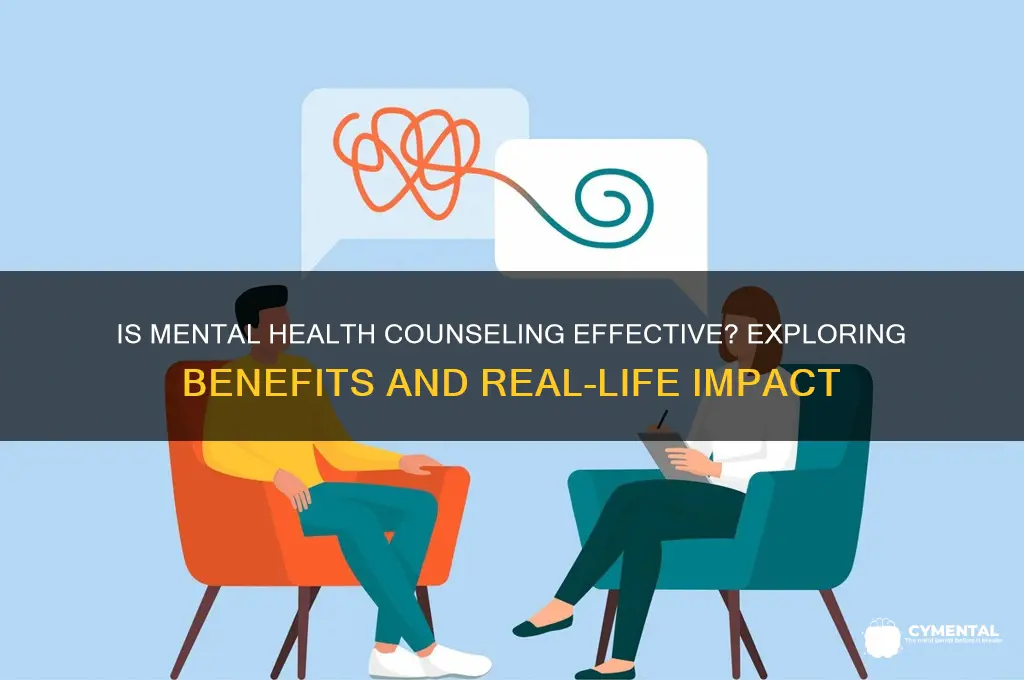
Mental health counseling has emerged as a vital resource for individuals navigating emotional, psychological, and behavioral challenges. Through evidence-based techniques and a supportive therapeutic relationship, counseling offers a structured space to explore thoughts, feelings, and patterns, fostering self-awareness and coping strategies. Research consistently demonstrates its effectiveness in alleviating symptoms of anxiety, depression, trauma, and other mental health conditions, while also improving overall well-being and resilience. By addressing underlying issues and equipping individuals with tools for long-term management, mental health counseling proves to be a transformative and helpful intervention for many.
Explore related products


What You'll Learn

Effectiveness of therapy techniques
Therapy techniques vary widely in their approaches, from cognitive-behavioral therapy (CBT) to psychodynamic therapy, mindfulness-based interventions, and more. Each method targets different aspects of mental health, and their effectiveness often depends on the individual’s specific needs and the condition being treated. For instance, CBT has been shown to be highly effective for anxiety and depression, with studies indicating that 50–75% of patients experience significant improvement after 12–20 sessions. This structured, goal-oriented approach focuses on identifying and changing negative thought patterns, making it particularly useful for those seeking practical tools to manage symptoms.
Consider the case of exposure therapy, a subset of CBT, which is widely regarded as the gold standard for treating phobias and post-traumatic stress disorder (PTSD). This technique involves gradual, controlled exposure to feared stimuli, allowing individuals to confront and desensitize themselves to triggers. Research shows that 60–90% of patients with specific phobias experience substantial relief after 3–5 sessions of exposure therapy. However, success hinges on consistent practice and a willingness to engage with discomfort, highlighting the importance of patient commitment and therapist guidance.
While evidence-based techniques like CBT dominate discussions of therapy effectiveness, emerging approaches such as mindfulness-based stress reduction (MBSR) and acceptance and commitment therapy (ACT) are gaining traction. MBSR, for example, teaches individuals to cultivate present-moment awareness through meditation and body scans, reducing symptoms of stress, anxiety, and depression. A meta-analysis found that MBSR participants reported a 38% reduction in anxiety symptoms after an 8-week program, which typically involves 2.5-hour weekly sessions and daily home practice. This underscores the value of integrating mind-body practices into mental health treatment, particularly for those seeking holistic approaches.
It’s crucial to acknowledge that no single therapy technique works universally. Factors like the therapist-client relationship, cultural relevance, and individual preferences play significant roles in determining outcomes. For example, psychodynamic therapy, which explores unconscious patterns and past experiences, may be more effective for individuals with deep-seated emotional conflicts but requires a longer-term commitment—often 1–2 years of weekly sessions. In contrast, solution-focused brief therapy (SFBT) offers rapid results for those seeking immediate problem-solving strategies, typically within 1–5 sessions. Tailoring the approach to the individual is key to maximizing effectiveness.
Practical tips for enhancing therapy outcomes include setting clear goals with your therapist, actively engaging in homework assignments, and maintaining open communication about what’s working (or not). For adolescents and young adults, incorporating technology—such as therapy apps or virtual sessions—can improve accessibility and engagement. Additionally, combining therapy with lifestyle changes, such as regular exercise and a balanced diet, can amplify benefits. Ultimately, the effectiveness of therapy techniques lies not just in their design but in how well they align with the individual’s unique needs and circumstances.
Texas State Services for Mentally Disabled Individuals: Available Resources and Support
You may want to see also
Explore related products




Benefits for anxiety and depression
Mental health counseling offers targeted strategies to manage anxiety and depression, often providing relief when self-help methods fall short. Cognitive Behavioral Therapy (CBT), for instance, is a cornerstone approach. It helps individuals identify and reframe negative thought patterns that fuel anxiety and depressive symptoms. Studies show that 12 to 20 sessions of CBT can significantly reduce symptoms in adults, with effects lasting up to a year post-treatment. For adolescents, family involvement in counseling sessions enhances outcomes, particularly in cases of severe depression.
Consider the practical steps involved in counseling for these conditions. Therapists often assign homework, such as journaling or mindfulness exercises, to reinforce session insights. For anxiety, exposure therapy gradually introduces feared situations in a controlled manner, reducing avoidance behaviors over time. For depression, behavioral activation encourages engagement in meaningful activities, even when motivation is low. These techniques are not one-size-fits-all; counselors tailor them to individual needs, ensuring relevance and effectiveness.
A comparative analysis highlights counseling’s edge over medication alone. While antidepressants can alleviate symptoms, they often address the biological aspect without tackling underlying thought patterns. Counseling, on the other hand, equips individuals with tools to manage triggers and prevent relapse. Combining both approaches can be particularly effective for moderate to severe cases, but counseling alone often suffices for mild to moderate symptoms. This dual benefit underscores its role as a comprehensive solution.
Persuasively, counseling fosters self-awareness and resilience, key factors in long-term mental health. Unlike quick fixes, it encourages deep introspection, helping individuals understand the root causes of their anxiety or depression. This process, though sometimes challenging, leads to sustainable change. For example, a 30-year-old professional with work-related anxiety might learn boundary-setting techniques, reducing stress and improving overall well-being. Such transformative outcomes make counseling a valuable investment.
Finally, accessibility and adaptability are critical strengths. Online counseling platforms have made therapy more convenient, especially for those with busy schedules or limited mobility. Group therapy sessions offer peer support, reducing feelings of isolation common in depression. Even short-term counseling models, like solution-focused therapy, provide immediate coping strategies. These options ensure that individuals can find a format that suits their lifestyle, making mental health care more inclusive and effective.
Counselling's Role in Fostering Positive Mental Health and Well-being
You may want to see also
Explore related products

$9.79 $17.99


$7.84 $14.99


Long-term mental health improvements
Mental health counseling is not a quick fix but a process that fosters long-term improvements by addressing root causes rather than symptoms. Research shows that individuals who engage in consistent therapy over 6 to 12 months report significant reductions in anxiety, depression, and stress levels. For instance, cognitive-behavioral therapy (CBT) has been proven effective in reshaping negative thought patterns, with studies indicating that 50% of patients experience lasting benefits even 6 months after treatment ends. This highlights the cumulative effect of counseling, where repeated sessions build resilience and equip individuals with tools to manage future challenges.
One practical example of long-term improvement is the use of mindfulness-based stress reduction (MBSR) techniques taught in counseling. Participants who practice mindfulness for 30 minutes daily over 8 weeks often report sustained reductions in chronic stress and improved emotional regulation. Similarly, dialectical behavior therapy (DBT) has shown remarkable results in helping individuals with borderline personality disorder, with 77% of patients maintaining symptom reduction one year post-treatment. These structured approaches demonstrate that counseling provides not just temporary relief but enduring strategies for mental well-being.
However, achieving long-term improvements requires active participation and commitment. Counselors often assign "homework," such as journaling, behavioral experiments, or relaxation exercises, to reinforce session learnings. For example, a client working on social anxiety might be tasked with initiating one conversation per day, gradually increasing exposure to feared situations. Consistency in these practices is key; studies suggest that clients who complete 70% or more of assigned tasks between sessions are twice as likely to achieve lasting change. This underscores the collaborative nature of counseling, where both therapist and client play vital roles in the outcome.
A cautionary note: long-term improvements do not mean permanent immunity to mental health challenges. Life stressors, such as job loss or relationship issues, can trigger setbacks. However, individuals who have undergone counseling are better equipped to navigate these challenges. For instance, a person who has learned to reframe catastrophic thinking through CBT is less likely to spiral into depression during a crisis. Regular "maintenance sessions" every 3 to 6 months can also help sustain progress, acting as a mental health check-up to address emerging issues before they escalate.
Incorporating counseling into a holistic self-care routine further enhances long-term outcomes. Pairing therapy with physical activity, balanced nutrition, and adequate sleep amplifies its benefits. For example, aerobic exercise releases endorphins that complement the mood-stabilizing effects of counseling. Similarly, maintaining a gratitude journal alongside therapy has been shown to reinforce positive cognitive shifts. By integrating these practices, individuals can create a sustainable foundation for mental health, ensuring that the gains from counseling endure over time.
Volleyball's Mental Benefits: Boosting Mindset, Focus, and Resilience Effectively
You may want to see also
Explore related products




Role of counselor-client relationship
The counselor-client relationship is the cornerstone of effective mental health counseling. Research consistently shows that the quality of this relationship—often referred to as the therapeutic alliance—is one of the most significant predictors of treatment success, sometimes even outweighing the specific techniques used. A strong alliance fosters trust, openness, and collaboration, creating a safe space where clients feel understood and supported. Without this foundation, even the most evidence-based interventions may fall flat. For instance, a meta-analysis published in *Psychotherapy* found that a robust therapeutic alliance accounted for 7% of the variance in treatment outcomes, a figure that rivals the efficacy of specific therapeutic modalities.
Consider the process of building this relationship as a series of deliberate steps. First, the counselor must establish rapport, which involves active listening, empathy, and genuine curiosity about the client’s experiences. This step is particularly critical in the initial sessions, where clients may feel vulnerable or skeptical. For example, a counselor working with a teenager struggling with anxiety might use age-appropriate language and humor to create a non-threatening environment, encouraging the teen to open up. Second, collaboration is essential. Clients are more likely to engage in therapy when they feel their goals and preferences are respected. A counselor might involve a client in deciding the pace of sessions or the focus of treatment, ensuring the process feels personalized rather than prescriptive.
However, building a strong counselor-client relationship is not without challenges. Cultural differences, power dynamics, and client resistance can complicate the process. For instance, a counselor working with a client from a collectivist culture may need to adapt their approach to align with the client’s values, such as involving family members in the therapeutic process. Similarly, counselors must be mindful of their own biases and the inherent power imbalance in the relationship, taking steps to empower clients rather than reinforce dependency. Practical tips include using reflective statements to validate the client’s perspective and periodically checking in with the client about their experience of the relationship.
The role of the counselor-client relationship extends beyond the therapy room. A strong alliance can enhance treatment adherence, a critical factor in long-term success. For example, clients who feel supported are more likely to complete homework assignments, attend sessions consistently, and implement coping strategies outside of therapy. Additionally, the relationship can serve as a model for healthier interpersonal interactions. Clients who experience empathy, respect, and boundaries in therapy may begin to replicate these dynamics in their personal relationships, fostering broader psychological growth.
In conclusion, the counselor-client relationship is not merely a backdrop for therapy—it is an active ingredient in the healing process. By prioritizing rapport, collaboration, and cultural sensitivity, counselors can create a transformative space where clients feel seen, heard, and empowered. While challenges exist, the payoff is immense: a strong therapeutic alliance can turn therapy from a passive experience into a dynamic partnership, where both counselor and client work together toward meaningful change.
Supporting Mental Health: UK Resources for Getting Help and Guidance
You may want to see also
Explore related products


Accessibility and affordability concerns
Despite widespread acknowledgment of mental health counseling's benefits, accessibility and affordability remain significant barriers for many. Geographic disparities, particularly in rural areas, limit access to qualified professionals, with 77% of nonmetropolitan counties in the U.S. lacking a psychiatrist. Urban residents fare better but often face long wait times, averaging 21 days for an initial appointment in major cities. Telehealth has emerged as a partial solution, yet 19 million Americans lack broadband access, disproportionately affecting low-income and elderly populations. Without addressing these structural gaps, counseling’s effectiveness remains out of reach for millions.
Consider the financial strain: a single therapy session in the U.S. averages $100–$200, with specialized treatments like EMDR or CBT costing even more. Insurance coverage is inconsistent, with 20% of plans offering inadequate mental health benefits or high out-of-pocket costs. For a family earning $40,000 annually, even a $50 copay per session translates to 2.5% of their weekly income—an unsustainable burden. Sliding-scale clinics and community health centers offer relief but are often underfunded, serving only 12% of those in need. Until systemic changes reduce costs, affordability will continue to undermine counseling’s potential impact.
Contrast this with countries like Germany or the UK, where public health systems integrate mental health services into primary care. In Germany, residents pay a statutory health insurance premium averaging €400 annually, covering unlimited therapy sessions. The UK’s NHS provides free counseling, though wait times can exceed 6 months. These models demonstrate that accessibility and affordability are policy choices, not inevitabilities. Adopting similar frameworks could transform mental health care in the U.S., making it a right rather than a privilege.
Practical steps can mitigate these challenges. Employers can expand Employee Assistance Programs (EAPs) to include 10–12 free counseling sessions annually, a benefit already utilized by 79% of large companies. Universities should allocate 5% of tuition fees to on-campus mental health services, ensuring students receive timely support. Individuals can explore group therapy, which costs 30–50% less than individual sessions, or apps like BetterHelp, starting at $60/week. Advocacy for legislative changes, such as mandating mental health parity in insurance plans, is equally critical. Small actions, combined with systemic reform, can bridge the accessibility and affordability gap.
Marijuana's Potential Role in Alleviating Mental Health Challenges
You may want to see also
Frequently asked questions
Mental health counseling is effective for many people, but its success depends on individual needs, the type of therapy, and the therapist-client relationship. Some may benefit more than others, and it often requires time and commitment.
The time to see results varies. Some individuals notice improvements within a few sessions, while others may take weeks or months. Consistency and active participation in therapy are key factors in achieving progress.
Yes, mental health counseling can be highly beneficial for severe conditions like depression, anxiety, PTSD, and bipolar disorder, especially when combined with medication or other treatments. It provides tools to manage symptoms and improve overall well-being.