Caleb Wright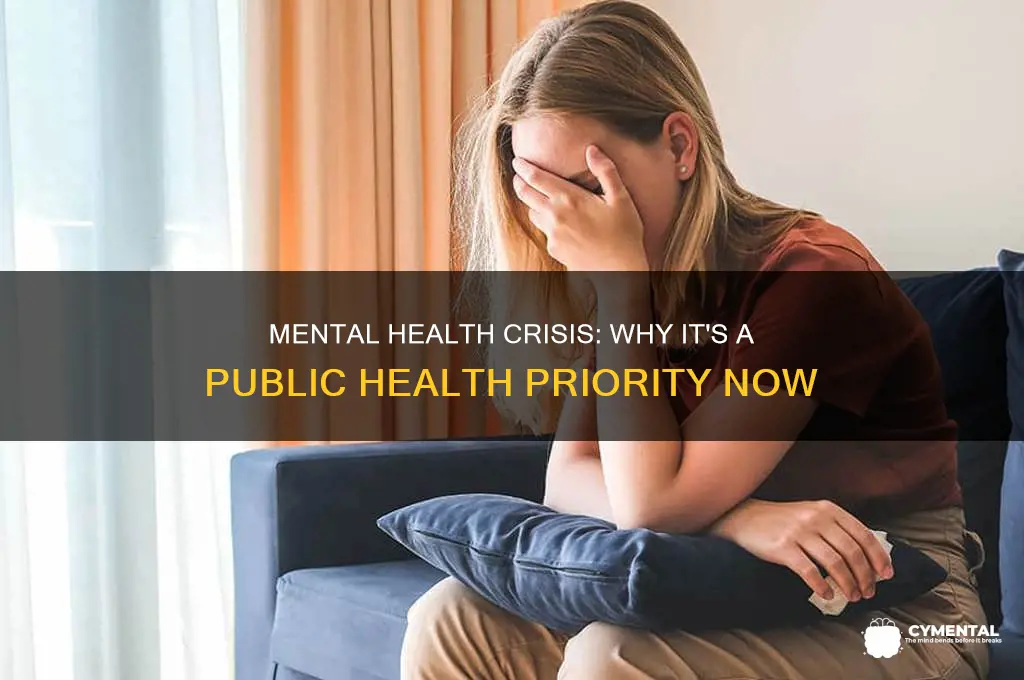
Mental health is increasingly recognized as a critical public health issue due to its widespread impact on individuals, communities, and societies at large. With rising rates of anxiety, depression, and other mental health disorders globally, the World Health Organization (WHO) emphasizes that mental well-being is integral to overall health. Public health frameworks now address mental health as a priority, focusing on prevention, early intervention, and equitable access to care. The societal burden of untreated mental health conditions, including economic costs, reduced productivity, and increased mortality, underscores its classification as a public health concern. Additionally, systemic factors such as stigma, inadequate resources, and disparities in care highlight the need for comprehensive, population-level strategies to address mental health as a collective responsibility.
| Characteristics | Values |
|---|---|
| Prevalence | 1 in 4 people globally experience a mental health condition in their lifetime (WHO, 2023) |
| Global Burden of Disease | Mental disorders contribute to 19% of years lived with disability (YLDs) worldwide (IHME, 2022) |
| Economic Impact | Estimated global economic cost of mental health conditions is $2.5 trillion annually (WHO, 2023) |
| Suicide Rates | Suicide is the 4th leading cause of death among 15-29-year-olds globally (WHO, 2021) |
| Treatment Gap | 50-75% of people with mental disorders in low- and middle-income countries receive no treatment (WHO, 2023) |
| Social Determinants | Poverty, inequality, and social exclusion are significant risk factors for mental health issues (WHO, 2022) |
| Integration into Public Health | Mental health is included in the Sustainable Development Goals (SDGs) under Goal 3: Good Health and Well-being (UN, 2015) |
| Policy Recognition | Over 130 countries have developed mental health policies or plans, though implementation varies (WHO, 2023) |
| Public Awareness | Increasing global campaigns (e.g., World Mental Health Day) highlight mental health as a public health priority |
| COVID-19 Impact | The pandemic led to a 25% increase in anxiety and depression worldwide (WHO, 2022) |
Explore related products




What You'll Learn
- Prevalence of Mental Disorders: High global rates impact societies, economies, and healthcare systems significantly
- Access to Care: Limited resources and stigma hinder treatment availability for vulnerable populations
- Economic Burden: Mental health issues cost billions in lost productivity and healthcare expenses
- Prevention Strategies: Early intervention and awareness programs reduce long-term risks and societal costs
- Policy and Advocacy: Government initiatives and public campaigns are crucial for addressing mental health

Prevalence of Mental Disorders: High global rates impact societies, economies, and healthcare systems significantly
Mental health disorders affect nearly one in four people globally, according to the World Health Organization (WHO). This staggering prevalence translates to over 970 million individuals living with a mental health condition, ranging from anxiety and depression to severe disorders like schizophrenia. Such widespread occurrence demands recognition as a public health crisis, as it permeates every facet of society, leaving no community untouched.
Consider this: In any given year, depression alone affects more than 280 million people worldwide, making it a leading cause of disability.
The economic toll of mental illness is equally alarming. The global economy loses approximately $1 trillion annually in productivity due to depression and anxiety disorders alone. This figure encompasses absenteeism, presenteeism (being present but unproductive), and reduced workplace performance. For instance, a study by the OECD found that mental health issues cost the UK economy £94 billion annually, highlighting the direct correlation between mental well-being and economic prosperity.
Imagine a workforce where a significant portion struggles with focus, motivation, and energy due to untreated mental health conditions. The ripple effects on innovation, productivity, and overall economic growth are undeniable.
Healthcare systems bear a substantial burden as well. Mental health conditions account for a significant proportion of healthcare expenditures globally. In the United States, for example, mental health and substance use disorders cost the healthcare system over $200 billion annually. This includes costs associated with hospitalization, outpatient care, medications, and emergency department visits. The strain on healthcare resources is further exacerbated by the chronic nature of many mental illnesses, requiring long-term treatment and support.
Think of the overcrowded emergency rooms, the long wait times for therapy appointments, and the limited access to specialized care – all symptoms of a system struggling to meet the demands of a population grappling with mental health challenges.
Addressing the prevalence of mental disorders requires a multi-faceted approach. Firstly, increased investment in prevention and early intervention programs is crucial. This includes promoting mental health literacy in schools, workplaces, and communities, destigmatizing help-seeking behavior, and providing accessible screening tools. Secondly, strengthening healthcare infrastructure is essential. This involves training more mental health professionals, integrating mental health services into primary care settings, and expanding access to affordable treatment options, including therapy and medication. Lastly, fostering a culture of support and understanding is paramount. This means creating safe spaces for open dialogue about mental health, challenging societal stigma, and promoting policies that prioritize mental well-being at all levels.
Mental Health Disclosure: Risks and Rewards for Job Seekers
You may want to see also
Explore related products





Access to Care: Limited resources and stigma hinder treatment availability for vulnerable populations
Mental health services are often a luxury, not a given, for vulnerable populations. Rural communities, for instance, face a stark reality: 77% of nonmetropolitan counties in the U.S. are designated as Health Professional Shortage Areas for mental health providers. This means a single psychiatrist might serve thousands, leaving individuals with severe conditions like schizophrenia or bipolar disorder waiting months for an appointment. Telehealth could bridge this gap, but only if broadband access—currently unavailable to 22% of rural residents—becomes universal. Without these resources, crises escalate, and preventable hospitalizations become inevitable.
Stigma operates as a silent gatekeeper, particularly in marginalized groups. LGBTQ+ youth, who are three times more likely to experience mental health challenges, often delay seeking help due to fear of judgment or rejection. In immigrant communities, cultural taboos around mental illness can lead to self-silencing, even when symptoms are severe. Consider this: a 2020 study found that only 33% of Latinx individuals with depression sought professional care, compared to 55% of non-Latinx whites. Until stigma is dismantled through community-led education and culturally sensitive care models, these disparities will persist.
Children and adolescents are another overlooked demographic. Schools, often the first line of defense, are ill-equipped to handle the surge in mental health needs post-pandemic. On average, school counselors serve 424 students each, far exceeding the recommended 250:1 ratio. Without early intervention, mild anxiety or depression can spiral into chronic conditions. Implementing school-based mental health programs, such as Cognitive Behavioral Intervention for Trauma in Schools (CBITS), has shown promise—reducing PTSD symptoms by 60% in pilot studies. Yet, only 1 in 5 schools currently offer such programs.
Solutions exist, but they require bold action. First, expand funding for community health workers who can provide culturally competent care in underserved areas. Second, integrate mental health screenings into primary care visits, normalizing the conversation. Third, incentivize providers to work in rural or low-income areas through loan forgiveness programs. Finally, leverage technology: apps like Woebot, which uses AI to deliver CBT, have been shown to reduce depression symptoms by 20% in users aged 18–25. These steps won’t erase the problem overnight, but they’ll begin to close the gap between those who need care and those who can access it.
Sociopathy: Mental Health Disorder or Misunderstood Personality Trait?
You may want to see also
Explore related products


Economic Burden: Mental health issues cost billions in lost productivity and healthcare expenses
Mental health issues impose a staggering economic burden, costing global economies billions annually through lost productivity and soaring healthcare expenses. The World Health Organization estimates that depression and anxiety alone cost the global economy $1 trillion per year in lost productivity. In the United States, serious mental illness results in $193.2 billion in lost earnings annually, while the total economic burden of mental health conditions exceeds $200 billion when factoring in healthcare expenditures. These figures underscore the profound financial toll of untreated or inadequately managed mental health disorders.
Consider the workplace, where mental health issues often manifest as absenteeism (missing work) and presenteeism (being present but unproductive). A study by the National Institute of Mental Health found that employees with depression lose approximately 27 workdays annually due to absenteeism and reduced productivity. For employers, this translates to increased costs in hiring temporary replacements, training, and lost output. Small businesses, in particular, may struggle to absorb these costs, highlighting the need for proactive mental health interventions in the workplace, such as Employee Assistance Programs (EAPs) or flexible work arrangements.
Healthcare systems also bear a significant financial burden. In the U.S., mental health and substance use disorders account for nearly $600 billion in healthcare spending annually. Emergency room visits for mental health crises, long-term hospitalizations, and the high cost of psychiatric medications contribute to this figure. For instance, antipsychotic medications can cost upwards of $1,000 per month, placing a strain on both public and private insurance systems. Without adequate investment in preventive care and early intervention, these costs will continue to escalate, diverting resources from other critical areas of public health.
Addressing this economic burden requires a multifaceted approach. Policymakers must prioritize funding for mental health services, including expanding access to affordable therapy and medication. Employers can implement workplace wellness programs that include mental health screenings, stress management workshops, and mental health days. Individuals can take proactive steps, such as practicing mindfulness, seeking therapy when needed, and advocating for mental health coverage in insurance plans. By tackling mental health issues head-on, societies can reduce economic losses and improve overall well-being, proving that investment in mental health is not just a moral imperative but an economic necessity.
Navigating the Path to Mental Health Diagnosis: A Comprehensive Guide
You may want to see also
Explore related products



Prevention Strategies: Early intervention and awareness programs reduce long-term risks and societal costs
Mental health is unequivocally a public health issue, with global estimates indicating nearly one billion people living with a mental disorder. Early intervention and awareness programs are not just compassionate responses but cost-effective strategies that mitigate long-term risks and societal burdens. Consider this: untreated mental health conditions can lead to chronic disability, reduced productivity, and increased healthcare costs. For instance, depression alone costs the global economy over $1 trillion annually in lost productivity. By contrast, investing in early intervention programs can yield a 4:1 return on investment, according to the World Health Organization.
To implement effective prevention strategies, start with targeted awareness campaigns that destigmatize mental health conversations. Schools, workplaces, and community centers are ideal platforms for such initiatives. For children aged 5–12, incorporate mental health education into school curricula, teaching emotional literacy and coping skills. Adolescents (13–18) benefit from peer-led programs like Youth Aware of Mental Health (YAM), which has shown a 30% reduction in suicidal ideation in pilot studies. Adults can engage in workplace workshops focusing on stress management and resilience-building, with evidence suggesting a 20% decrease in absenteeism post-intervention.
Next, establish accessible early intervention services, such as school-based counseling or telehealth platforms for remote communities. For high-risk groups, like individuals with a family history of mental illness, offer proactive screenings and psychoeducation. Cognitive Behavioral Therapy (CBT) delivered in 8–12 sessions has proven effective in preventing the onset of anxiety and depression in at-risk populations. Pair these interventions with digital tools—mental health apps like Headspace or Moodpath—to provide continuous support. However, caution against over-reliance on technology; human connection remains irreplaceable in fostering trust and adherence.
A comparative analysis of countries like Australia and the UK highlights the success of integrated prevention models. Australia’s Headspace centers, offering early intervention for 12–25-year-olds, have reduced hospital admissions by 35%. Similarly, the UK’s Improving Access to Psychological Therapies (IAPT) program has treated over 5 million people, with 50% recovering from anxiety and depression. These examples underscore the importance of scalable, evidence-based programs tailored to local needs.
In conclusion, prevention strategies are not optional but essential in addressing mental health as a public health issue. By prioritizing early intervention and awareness, societies can reduce individual suffering, enhance productivity, and alleviate economic strain. The key lies in combining education, accessibility, and innovation while avoiding one-size-fits-all approaches. As the adage goes, “An ounce of prevention is worth a pound of cure”—a principle that holds truer than ever in mental health.
ChatGPT and Mental Health: Unraveling the Impact of AI Conversations
You may want to see also
Explore related products


Policy and Advocacy: Government initiatives and public campaigns are crucial for addressing mental health
Mental health is unequivocally a public health issue, with global statistics revealing that one in four people will experience a mental health disorder at some point in their lives. This prevalence underscores the necessity for systemic interventions, particularly through policy and advocacy. Governments play a pivotal role in shaping the landscape of mental health care by implementing initiatives that reduce stigma, improve access to services, and allocate resources effectively. Public campaigns, on the other hand, amplify awareness and foster community engagement, ensuring that mental health is prioritized alongside physical health. Together, these efforts create a framework that addresses mental health as a collective responsibility rather than an individual burden.
Consider the example of the UK’s *Five Year Forward View for Mental Health*, a government initiative launched in 2016. This policy aimed to improve access to mental health services for all age groups, with specific targets such as providing support to an additional one million people by 2020–2021. It included funding for early intervention programs for children and young adults, crisis care improvements, and integrated physical and mental health services. Such initiatives demonstrate how strategic planning and resource allocation can bridge gaps in care. However, their success hinges on sustained political commitment and transparent monitoring to ensure goals are met.
Public campaigns, like Australia’s *R U OK?* initiative, illustrate the power of advocacy in destigmatizing mental health conversations. This campaign encourages individuals to ask a simple question—“Are you OK?”—to start meaningful dialogues about mental well-being. By normalizing these conversations, the campaign has reached millions, fostering a culture of empathy and support. Similarly, the U.S. *Mental Health First Aid* program trains individuals to recognize and respond to mental health crises, equipping communities with practical skills. These campaigns highlight the importance of grassroots efforts in complementing policy initiatives, creating a multi-layered approach to mental health advocacy.
Despite progress, challenges remain. Policy implementation often faces barriers such as inadequate funding, fragmented healthcare systems, and competing public health priorities. For instance, while many countries have mental health policies in place, only a fraction allocate the recommended 5–10% of their health budgets to mental health services. Public campaigns, too, must navigate cultural sensitivities and ensure inclusivity to avoid alienating marginalized groups. To maximize impact, governments should adopt evidence-based practices, such as integrating mental health into primary care and leveraging digital platforms for outreach. Additionally, involving individuals with lived experiences in policy development can enhance relevance and effectiveness.
In conclusion, policy and advocacy are indispensable tools in addressing mental health as a public health issue. Governments must lead with bold, well-funded initiatives that prioritize accessibility and equity, while public campaigns should continue to challenge stigma and empower communities. By combining top-down policy measures with bottom-up advocacy efforts, societies can create a holistic support system that recognizes mental health as a fundamental component of overall well-being. The question is not whether mental health is a public health issue, but how effectively we mobilize policy and advocacy to address it.
Understanding Criminal Behavior: Crime or Mental Health Crisis?
You may want to see also
Frequently asked questions
Yes, mental health is widely recognized as a critical public health issue due to its prevalence, impact on individuals and communities, and its influence on overall well-being and societal functioning.
Mental health is classified as a public health concern because mental illnesses affect a large portion of the population, contribute to disability and mortality, and are linked to other public health challenges like chronic diseases and substance abuse.
Mental health impacts public health systems by increasing healthcare costs, straining resources, and reducing productivity. It also intersects with other public health priorities, such as preventing suicide, addressing stigma, and promoting equitable access to care.
Public health plays a key role in addressing mental health issues by implementing prevention strategies, raising awareness, advocating for policy changes, and ensuring access to mental health services for all populations, especially underserved communities.