Noah Parker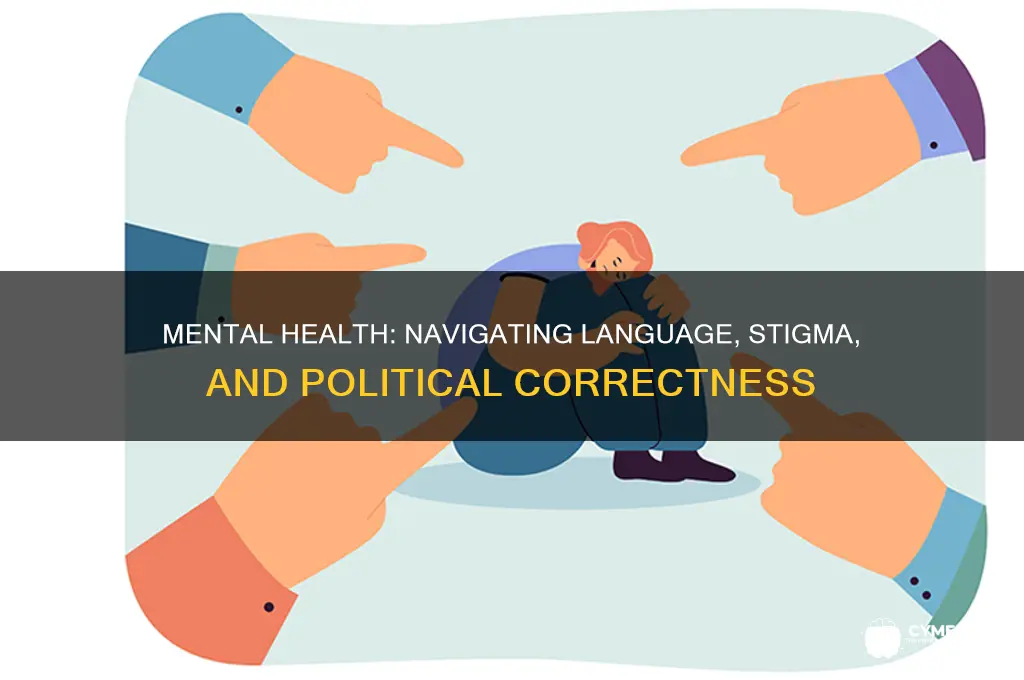
The question of whether mental health issues are politically correct touches on a complex interplay between language, stigma, and societal attitudes. While the term politically correct often implies a focus on avoiding offense, the discourse around mental health has shifted toward emphasizing accuracy, empathy, and inclusivity. Advocates argue that using respectful and precise language—such as saying person with depression instead of depressed person—helps reduce stigma and humanizes individuals. However, critics contend that excessive focus on terminology can sometimes overshadow the need for concrete action, such as improved access to care and funding. Ultimately, the goal is not merely to be politically correct but to foster a culture that prioritizes understanding, support, and destigmatization of mental health challenges.
Explore related products


What You'll Learn
- Language Sensitivity: Using respectful terms like mental health condition instead of stigmatizing labels
- Policy Impact: How political decisions affect access to mental health care and resources
- Media Representation: Portraying mental health accurately and responsibly in news and entertainment
- Workplace Culture: Promoting mental health awareness and support in professional environments
- Public Discourse: Encouraging empathetic and informed conversations about mental health in politics

Language Sensitivity: Using respectful terms like mental health condition instead of stigmatizing labels
Language matters, especially when discussing mental health. The shift from stigmatizing labels to respectful terms like "mental health condition" reflects a broader cultural evolution toward empathy and understanding. Historically, phrases such as "crazy," "lunatic," or "psycho" have perpetuated harmful stereotypes, reducing individuals to their diagnoses. These labels often carry judgment and fear, isolating those they describe. By contrast, "mental health condition" frames the experience as a health issue, no different from a physical ailment, fostering compassion and normalizing the conversation.
Consider the practical impact of this linguistic choice. When a person is referred to as "having a mental health condition" rather than "being mentally ill," the focus shifts from their identity to their experience. This distinction empowers individuals to seek support without internalizing shame. For instance, a teenager struggling with anxiety might feel more comfortable disclosing their condition to a teacher if they know the response will be framed in terms of managing a health challenge rather than overcoming a personal flaw. This small but significant change can open doors to early intervention and better outcomes.
However, adopting sensitive language requires intentionality. It’s not enough to replace one term with another; the shift must be accompanied by a genuine commitment to understanding and respect. For example, using "mental health condition" while still treating the individual as "other" or avoiding conversations about their needs undermines the purpose. Employers, educators, and healthcare providers must educate themselves on the nuances of mental health language, ensuring their words align with actions that promote inclusion and support.
Critics might argue that focusing on language is superficial, but research suggests otherwise. Studies show that person-first language—such as "a person with depression" instead of "a depressed person"—can reduce implicit bias and improve attitudes toward those with mental health challenges. This approach acknowledges the individual’s humanity before their condition, a critical step in dismantling stigma. For parents, educators, or colleagues, this means modeling language that separates the person from their diagnosis, especially when discussing mental health with children or peers.
Ultimately, the move toward respectful terminology like "mental health condition" is both a reflection of progress and a call to action. It challenges us to rethink how we perceive and interact with those facing mental health challenges. By choosing our words carefully, we contribute to a culture that values dignity and understanding. This isn’t about political correctness; it’s about recognizing the power of language to shape perceptions and outcomes. Small changes in how we speak can lead to significant shifts in how we treat one another.
Is Depression a Mental Health Issue? Understanding Its Classification
You may want to see also
Explore related products


$9.99

$21.77 $24.95


Policy Impact: How political decisions affect access to mental health care and resources
Political decisions shape the landscape of mental health care, often determining who receives support and who is left behind. Legislation and funding allocations directly influence the availability of services, from therapy sessions to crisis intervention programs. For instance, the 2008 Mental Health Parity and Addiction Equity Act in the United States mandated equal insurance coverage for mental and physical health, yet enforcement remains inconsistent, leaving gaps in access. Such policies highlight how political choices can either bridge or widen disparities in care.
Consider the impact of budget cuts on community mental health programs. When governments reduce funding, clinics close, wait times for appointments extend, and vulnerable populations—such as low-income individuals or rural residents—lose critical resources. In contrast, policies like Medicaid expansion under the Affordable Care Act increased access to mental health services for millions. These examples illustrate how fiscal decisions are not neutral; they carry profound consequences for individuals’ ability to seek help.
Political rhetoric also plays a role in shaping public perception and resource allocation. When leaders prioritize mental health in public discourse, it can destigmatize seeking help and encourage investment in preventive measures. Conversely, neglect or misinformation can perpetuate myths and reduce funding. For example, campaigns promoting mental health awareness in schools have led to earlier interventions for adolescents, while silence on the issue often results in untreated conditions that worsen over time.
To mitigate these effects, advocates must engage in policy discussions armed with data and personal stories. Push for legislation that mandates comprehensive mental health coverage, including telehealth options for underserved areas. Support initiatives that integrate mental health services into primary care settings, making them more accessible. Finally, hold policymakers accountable by tracking their commitments and highlighting the human cost of inaction. Political decisions are not abstract—they determine whether someone receives life-saving care or faces a system that fails them.
Unveiling Stigma: How Society Treats Mental Health Struggles
You may want to see also
Explore related products


Media Representation: Portraying mental health accurately and responsibly in news and entertainment
Media representation of mental health often perpetuates stereotypes, such as linking mental illness to violence or portraying individuals as one-dimensional victims. These inaccuracies not only stigmatize those affected but also discourage help-seeking behaviors. For instance, a study by the American Psychological Association found that 60% of characters with mental health conditions in popular films are depicted as dangerous, despite real-world statistics showing that people with mental illness are more likely to be victims of violence than perpetrators. To combat this, journalists and creators must prioritize factual portrayals, consulting mental health professionals and individuals with lived experiences to ensure authenticity.
In news reporting, sensationalism often overshadows responsible storytelling. Headlines that equate mental illness with tragedy or crime contribute to public fear and misunderstanding. Instead, journalists should adopt a trauma-informed approach, focusing on context rather than causation. For example, instead of attributing a mass shooting solely to the perpetrator’s mental health, reporters should explore systemic factors like access to firearms or societal influences. Practical steps include using person-first language (e.g., “a person with schizophrenia” instead of “a schizophrenic”) and avoiding speculative diagnoses, which can be achieved by adhering to guidelines from organizations like the National Alliance on Mental Illness (NAMI).
Entertainment media has the power to shape cultural perceptions, but it often falls short in representing mental health diversity. While shows like *BoJack Horseman* and *Ted Lasso* have been praised for their nuanced portrayals of depression and anxiety, many productions still rely on clichés like the “crazy ex” or the “genius with bipolar disorder.” Creators can improve by incorporating mental health advisors into their teams and ensuring that characters’ struggles are not their sole defining trait. For instance, a character with OCD should not be reduced to their compulsions but shown as a multifaceted individual whose condition is one aspect of their life.
A comparative analysis of media representation reveals that children’s programming often handles mental health more responsibly than adult-oriented content. Shows like *Sesame Street* introduce topics like anxiety and grief in age-appropriate ways, using puppets and simple narratives to normalize emotional experiences. Adult media, however, tends to prioritize drama over accuracy. By adopting a child-friendly approach—breaking down complex issues into relatable stories—adult entertainment can similarly reduce stigma. For example, a workplace drama could depict an employee seeking therapy without framing it as a sign of weakness, thereby encouraging viewers to see mental health care as a normal part of self-care.
Ultimately, accurate and responsible media representation requires a shift in mindset from exploitation to education. This involves moving beyond tokenism—where mental health is included only to tick a diversity box—to embedding it authentically within narratives. Practical tips for creators include conducting sensitivity reads, avoiding plot twists that hinge on mental illness, and showcasing recovery as a process rather than a sudden resolution. By doing so, media can become a tool for destigmatization, fostering empathy and understanding in its audience. After all, stories have the power to change minds—and when it comes to mental health, that power should never be underestimated.
Mental Health in America: A Growing Social Crisis Explored
You may want to see also
Explore related products





Workplace Culture: Promoting mental health awareness and support in professional environments
Mental health issues are no longer whispered about in hushed tones, but actively discussed in professional environments. However, the language and approach to these discussions vary widely, often influenced by cultural norms and organizational policies. In the workplace, promoting mental health awareness isn’t just about sensitivity—it’s about creating a culture where employees feel safe to seek support without fear of stigma or career repercussions. This begins with understanding the nuances of politically correct language, which, when applied thoughtfully, can foster inclusivity rather than perpetuate stereotypes.
Consider the shift from saying "suffers from depression" to "lives with depression." The latter emphasizes the person’s agency and normalizes mental health as a manageable aspect of life, not a defining limitation. Employers can model this by updating internal communications, training materials, and performance reviews to reflect such language. For instance, instead of asking, "Are you stressed?" during a check-in, managers might say, "How are you managing your workload and well-being?" This subtle change encourages employees to view mental health as an integral part of their professional lives, not a taboo topic.
Implementing mental health initiatives requires more than posters in break rooms or occasional seminars. It demands actionable steps, such as offering flexible work hours, providing access to confidential counseling services, and integrating mental health days into leave policies. For example, companies like Microsoft and Google have introduced "wellness days" specifically for mental health, signaling that self-care is a priority. However, these efforts must be paired with leadership buy-in; employees are more likely to utilize resources if they see executives openly discussing their own mental health journeys or actively participating in wellness programs.
One common pitfall is treating mental health as a one-size-fits-all issue. Different demographics—age groups, cultural backgrounds, or job roles—may face unique challenges. For instance, younger employees might struggle with burnout from overwork, while older workers may grapple with ageism-related stress. Tailoring support programs to address these specific needs demonstrates a commitment to inclusivity. For example, offering workshops on stress management for entry-level employees or providing mentorship programs for mid-career professionals can make a tangible difference.
Ultimately, promoting mental health awareness in the workplace isn’t about ticking a diversity box—it’s about cultivating a culture of empathy, resilience, and productivity. By adopting politically correct language, implementing practical support systems, and addressing diverse needs, organizations can create environments where employees thrive, not just survive. The takeaway? Mental health isn’t a fringe concern; it’s a cornerstone of a healthy, sustainable workplace.
Approaching Mental Health Conversations: Compassionate Strategies for Supportive Connections
You may want to see also
Explore related products


$3.99 $12.95


Public Discourse: Encouraging empathetic and informed conversations about mental health in politics
Language around mental health has evolved significantly, yet political discourse often lags behind. Terms like "crazy" or "lunatic" persist in political attacks, perpetuating stigma and minimizing the experiences of millions. This isn't just about political correctness; it's about accuracy and empathy. Mental health conditions are medical diagnoses, not insults. Framing them as such undermines public understanding and discourages individuals from seeking help.
Consider this: 1 in 5 adults in the U.S. experiences mental illness annually. That's 52.9 million people whose lives are impacted by conditions like depression, anxiety, and PTSD. When politicians weaponize mental health terms, they contribute to a culture of shame and silence. Imagine a campaign ad labeling an opponent as "unhinged" without evidence. This not only misrepresents mental illness but also discourages voters who struggle with their own mental health from engaging in politics.
The solution lies in fostering informed and empathetic conversations. Politicians and the media must prioritize accuracy and sensitivity. Instead of using mental health as a rhetorical bludgeon, focus on policy discussions that address access to care, funding for research, and destigmatization efforts. For example, highlighting the success of mental health parity laws or advocating for increased funding for crisis hotlines provides a constructive framework.
This shift requires conscious effort. Media outlets can implement guidelines for responsible reporting on mental health, avoiding sensationalism and prioritizing expert voices. Politicians can undergo training on mental health literacy, learning to recognize stigma and choose their words carefully. The public can hold leaders accountable, calling out harmful language and demanding respectful discourse. By reframing the conversation, we can move beyond political correctness and towards a society that truly understands and supports mental well-being.
Recognizing Mental Health Struggles: A Guide for College Students and Staff
You may want to see also
Frequently asked questions
Yes, "mental health issues" is widely considered a politically correct and respectful term, as it focuses on the condition rather than stigmatizing the individual.
Yes, terms like "crazy" or "insane" are often seen as derogatory and can perpetuate stigma. Using person-first language or neutral terms like "mental health challenges" is more appropriate.
While "suffers from" is commonly used, some prefer phrases like "lives with" or "experiences" mental illness, as they emphasize resilience and reduce a sense of victimhood.
It’s better to use person-first language, such as "person with a mental illness," to emphasize the individual’s identity beyond their condition.
No, "commit suicide" carries negative connotations tied to criminality. Phrases like "died by suicide" or "lost to suicide" are more sensitive and politically correct.