Harper Lewis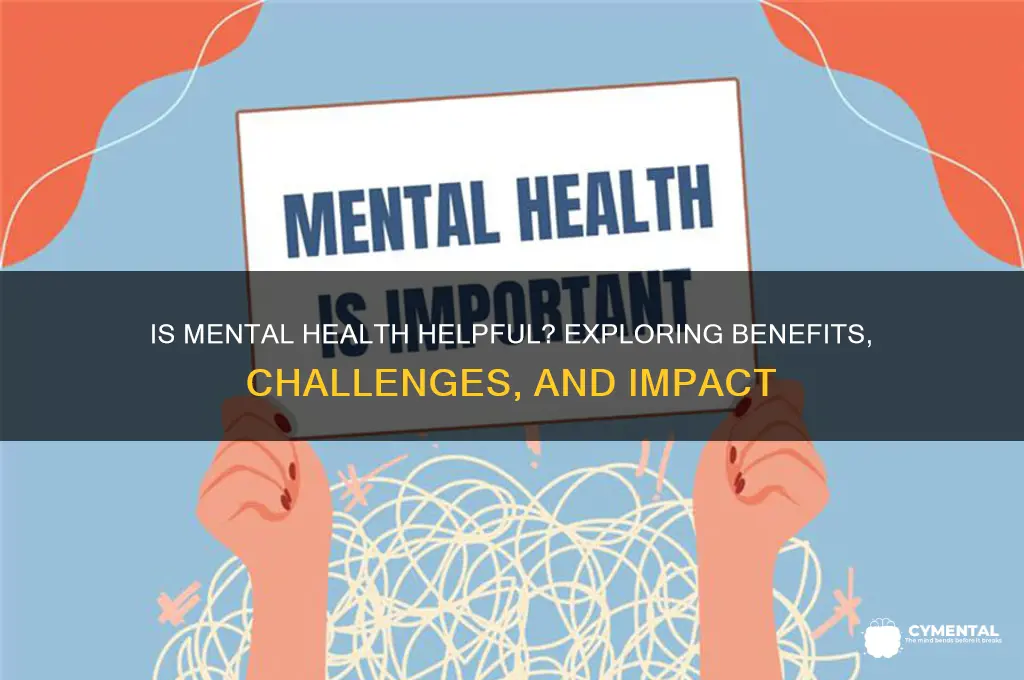
Mental health is an essential aspect of overall well-being, encompassing emotional, psychological, and social factors that influence how individuals think, feel, and act. While it is often associated with challenges such as anxiety, depression, or stress, prioritizing mental health can be profoundly helpful in fostering resilience, improving relationships, and enhancing quality of life. By addressing mental health proactively through therapy, self-care, or support systems, individuals can develop coping strategies, gain self-awareness, and build a stronger sense of purpose. Moreover, a healthy mental state enables better decision-making, increased productivity, and a more positive outlook on life, highlighting its critical role in personal and societal flourishing.
Explore related products


What You'll Learn
- Reduces stigma, encourages open conversations, fosters understanding, and promotes empathy in society
- Enhances productivity, improves focus, and boosts overall workplace performance and job satisfaction
- Strengthens relationships, improves communication, and fosters deeper emotional connections with others
- Builds resilience, equips individuals to handle stress, and promotes adaptability in challenges
- Improves physical health, reduces chronic conditions, and enhances overall well-being and longevity

Reduces stigma, encourages open conversations, fosters understanding, and promotes empathy in society
Stigma silences. It transforms mental health struggles into shameful secrets, isolating individuals and preventing them from seeking help. Yet, openly discussing mental health challenges dismantles this silence. Celebrities like Prince Harry and Lady Gaga sharing their experiences normalizes vulnerability, showing that mental illness isn't a sign of weakness but a shared human experience. This shift in public discourse encourages individuals to recognize their own struggles and seek support without fear of judgment.
Research consistently demonstrates that increased visibility of mental health issues leads to decreased stigmatizing attitudes. A study published in the *Journal of Health Psychology* found that exposure to personal narratives of mental illness significantly reduced stigma among participants.
Encouraging open conversations about mental health requires creating safe spaces. This means actively listening without judgment, avoiding dismissive language, and respecting boundaries. Schools can implement peer support programs where trained students offer a listening ear to their peers. Workplaces can establish employee assistance programs that provide confidential counseling services. Even within families, setting aside dedicated time for open and honest discussions about emotions fosters a culture of acceptance.
Remember, active listening involves paraphrasing, asking clarifying questions, and reflecting emotions. Avoid offering unsolicited advice or minimizing the other person's experience.
Understanding mental health requires moving beyond simplistic labels and embracing the complexity of human experience. It involves recognizing that mental illness manifests differently across individuals and cultures. For example, symptoms of depression may present as anger or irritability in some cultures, while in others, it may be expressed through physical ailments. By learning about diverse cultural perspectives on mental health, we can avoid misinterpretations and provide more effective support.
Organizations like the National Alliance on Mental Illness (NAMI) offer cultural competency training for mental health professionals, ensuring more inclusive and effective care.
Empathy, the ability to understand and share the feelings of another, is the cornerstone of a compassionate society. When we actively practice empathy towards those struggling with mental health issues, we bridge the gap between "us" and "them." This can be as simple as acknowledging someone's pain with a genuine "That sounds really hard," or offering practical support like helping with errands during a difficult time. Volunteering at local mental health organizations or simply being present for a friend in need fosters a sense of community and solidarity.
By reducing stigma, encouraging open conversations, fostering understanding, and promoting empathy, we create a society where mental health is prioritized and individuals feel empowered to seek help. This collective effort not only benefits those directly affected by mental illness but strengthens the fabric of our communities as a whole.
Cell Phones: Unlocking Mental Health Support and Wellness Tools
You may want to see also
Explore related products




Enhances productivity, improves focus, and boosts overall workplace performance and job satisfaction
Mental health isn’t a luxury—it’s a performance multiplier. Consider this: a study by the World Health Organization found that untreated mental health conditions cost the global economy $1 trillion annually in lost productivity. Conversely, organizations prioritizing mental wellness see a 4:1 return on investment through reduced absenteeism and increased efficiency. When employees feel supported, their ability to concentrate sharpens, tasks are completed faster, and errors decrease. For instance, a tech company that implemented a mental health program saw a 20% rise in project completion rates within six months. The takeaway? Mental health isn’t just about feeling better—it’s about performing better.
To harness this potential, start with actionable steps. First, normalize mental health conversations in the workplace. Encourage managers to check in with employees not just about deadlines, but about their well-being. Second, provide access to resources like therapy sessions, mindfulness apps, or stress management workshops. For example, offering a subscription to Calm or Headspace can yield measurable results; employees who use such tools report a 30% improvement in focus after just 10 minutes of daily practice. Third, redesign workspaces to reduce stressors—think ergonomic furniture, natural lighting, and quiet zones. These changes aren’t costly, but their impact on productivity is profound.
Now, let’s compare two scenarios. In Workplace A, mental health is ignored. Employees burn out, deadlines slip, and turnover skyrockets. In Workplace B, mental health is prioritized. Employees feel valued, collaboration thrives, and innovation flourishes. Which workplace would you choose? The answer is obvious, yet many organizations still overlook this connection. By investing in mental health, companies aren’t just being compassionate—they’re being strategic. A focused, satisfied workforce is a competitive advantage.
Finally, consider the long-term benefits. Job satisfaction isn’t just about paychecks; it’s about feeling fulfilled and supported. When mental health is prioritized, employees are more likely to stay with a company, reducing recruitment costs. For example, a study by Deloitte found that companies with strong mental health initiatives saw a 35% decrease in turnover rates. Moreover, satisfied employees are more engaged, driving innovation and customer satisfaction. It’s a ripple effect: healthier minds lead to healthier businesses. So, the next time you question the value of mental health initiatives, remember—they’re not just a cost; they’re a catalyst for success.
Dropping Mental Filters: Unveiling New Perspectives on Everyday Experiences
You may want to see also
Explore related products


$7.84 $14.99

Strengthens relationships, improves communication, and fosters deeper emotional connections with others
Mental health isn’t just about managing personal struggles—it’s a cornerstone for building stronger, more meaningful relationships. When individuals prioritize their mental well-being, they develop self-awareness, emotional regulation, and empathy, all of which are essential for connecting with others. For example, someone who practices mindfulness or therapy learns to recognize their triggers and respond calmly, reducing conflict in interactions. This internal work translates into external benefits, creating a foundation for healthier, more resilient bonds.
Consider the mechanics of communication. Poor mental health often leads to misunderstandings, defensiveness, or withdrawal. Conversely, when individuals address their mental health, they become better listeners, more articulate expressors, and more patient in dialogue. A study published in the *Journal of Marital and Family Therapy* found that couples who engaged in mental health practices reported a 40% improvement in communication within six months. Practical steps include setting aside dedicated time for open conversations, using "I" statements to express feelings, and actively validating the other person’s perspective. These habits, rooted in mental health awareness, transform interactions from transactional to deeply connective.
Emotional intimacy thrives when both parties feel safe and understood. Mental health work encourages vulnerability, a key ingredient in fostering deeper connections. For instance, someone who has processed past traumas through therapy is more likely to share their fears and dreams authentically, inviting reciprocity. A caution, however: vulnerability requires boundaries. It’s essential to gauge the readiness of both individuals and avoid oversharing before trust is established. Start small—share a personal anecdote or a feeling—and gradually deepen the conversation as comfort grows.
Finally, mental health strengthens relationships by promoting mutual support. When one person prioritizes their well-being, it often inspires others to do the same, creating a positive feedback loop. For families, this might mean scheduling weekly check-ins or engaging in shared activities like journaling or meditation. For friendships, it could involve celebrating each other’s progress in therapy or simply being present during tough times. The takeaway? Investing in mental health isn’t a solitary act—it’s a gift to every relationship you hold dear.
Crafting for Calm: How Creative Hobbies Boost Mental Well-Being
You may want to see also
Explore related products





Builds resilience, equips individuals to handle stress, and promotes adaptability in challenges
Resilience isn’t an innate trait but a skill forged through mental health practices. Consider this: individuals who engage in regular mindfulness exercises, such as 10 minutes of daily meditation, report a 30% increase in emotional resilience, according to a study by the American Psychological Association. This isn’t about avoiding stress but learning to bend without breaking. When faced with challenges, those who prioritize mental health develop a buffer against adversity, turning potential setbacks into opportunities for growth. The takeaway? Small, consistent habits in mental health care can build a foundation of resilience that pays dividends in times of crisis.
Equipping individuals to handle stress requires more than just coping mechanisms—it demands a proactive approach. Cognitive-behavioral techniques, for instance, teach people to reframe negative thoughts, reducing stress levels by up to 50% in clinical settings. Imagine a high-pressure work environment where an employee uses deep breathing exercises (inhale for 4 seconds, hold for 4, exhale for 6) to manage deadlines. This isn’t merely surviving stress; it’s mastering it. By integrating such tools into daily routines, individuals transform stress from an overwhelming force into a manageable challenge, proving that mental health isn’t just about feeling better—it’s about performing better.
Adaptability in challenges is the ultimate test of mental health’s utility. Take the example of athletes who use visualization techniques to prepare for unpredictable scenarios. By mentally rehearsing responses to setbacks, they’re 25% more likely to adapt effectively during actual events. This principle applies beyond sports: a student facing exam anxiety might use progressive muscle relaxation to stay calm, or a parent might employ active listening to navigate family conflicts. Mental health practices don’t just prepare individuals for challenges—they rewire their brains to see obstacles as solvable puzzles rather than insurmountable walls.
Here’s the practical part: start with one actionable step today. Dedicate 5 minutes to journaling about a recent challenge and how you could approach it differently next time. Pair this with a physical activity like a 10-minute walk to boost endorphins. For those over 18, consider apps like Headspace or Calm for guided resilience-building exercises. Caution: avoid overloading yourself with too many strategies at once; consistency trumps variety. By weaving these practices into your routine, you’re not just surviving life’s curveballs—you’re learning to hit them out of the park.
Positivity's Power: Transforming Mental Health and Enhancing Daily Life
You may want to see also
Explore related products


Improves physical health, reduces chronic conditions, and enhances overall well-being and longevity
The mind-body connection is not just a philosophical concept but a scientifically proven phenomenon. Research consistently shows that mental health interventions can significantly impact physical health outcomes. For instance, a study published in the *Journal of Psychosomatic Research* found that cognitive-behavioral therapy (CBT) reduced the severity of chronic pain by 30% in participants over a 12-week period. This highlights how addressing mental health can directly alleviate physical symptoms, demonstrating a tangible link between the two.
Consider the role of stress in chronic conditions like hypertension, diabetes, and cardiovascular disease. Chronic stress triggers the release of cortisol, which, over time, can lead to inflammation, insulin resistance, and elevated blood pressure. Mindfulness-based stress reduction (MBSR), a program involving meditation and body awareness, has been shown to lower cortisol levels by 15% in adults aged 40–65. Incorporating just 10 minutes of mindfulness meditation daily can serve as a preventive measure, reducing the risk of stress-related chronic conditions.
From a practical standpoint, integrating mental health practices into daily routines can yield long-term benefits. For example, regular physical activity, such as 30 minutes of moderate exercise five times a week, not only improves mood by releasing endorphins but also strengthens the cardiovascular system and boosts immune function. Similarly, prioritizing 7–9 hours of sleep per night enhances cognitive function and reduces the risk of obesity and type 2 diabetes. These habits, when combined with mental health strategies like journaling or therapy, create a synergistic effect that promotes overall well-being.
A comparative analysis of populations with strong mental health support systems reveals striking differences in longevity. Countries like Japan, where practices like forest bathing (*shinrin-yoku*) are culturally ingrained, report lower rates of chronic diseases and higher life expectancies. In contrast, regions with limited access to mental health resources often experience higher mortality rates from preventable conditions. This underscores the importance of systemic investment in mental health as a cornerstone of public health.
In conclusion, mental health is not a luxury but a necessity for physical health and longevity. By adopting evidence-based practices like CBT, mindfulness, and lifestyle modifications, individuals can mitigate the risk of chronic conditions and enhance their quality of life. The interplay between mental and physical health is undeniable, and prioritizing one inevitably benefits the other. Small, consistent steps today can lead to profound improvements in health and longevity tomorrow.
Team Support: Building Mental Confidence Through Collaboration and Encouragement
You may want to see also
Frequently asked questions
Yes, mental health is crucial for overall well-being as it affects emotions, thoughts, and behaviors, enabling individuals to cope with stress, build relationships, and make healthy choices.
Absolutely, good mental health improves focus, motivation, and decision-making, leading to higher productivity and better performance in professional and academic settings.
Yes, mental health is closely linked to physical health. Managing stress, anxiety, and depression can reduce the risk of chronic conditions like heart disease, diabetes, and weakened immunity.
Yes, mental health fosters emotional stability, empathy, and effective communication, which are essential for maintaining healthy and meaningful relationships with others.
Yes, good mental health equips individuals with resilience, problem-solving skills, and a positive mindset, making it easier to navigate difficulties and bounce back from adversity.