Madison Cole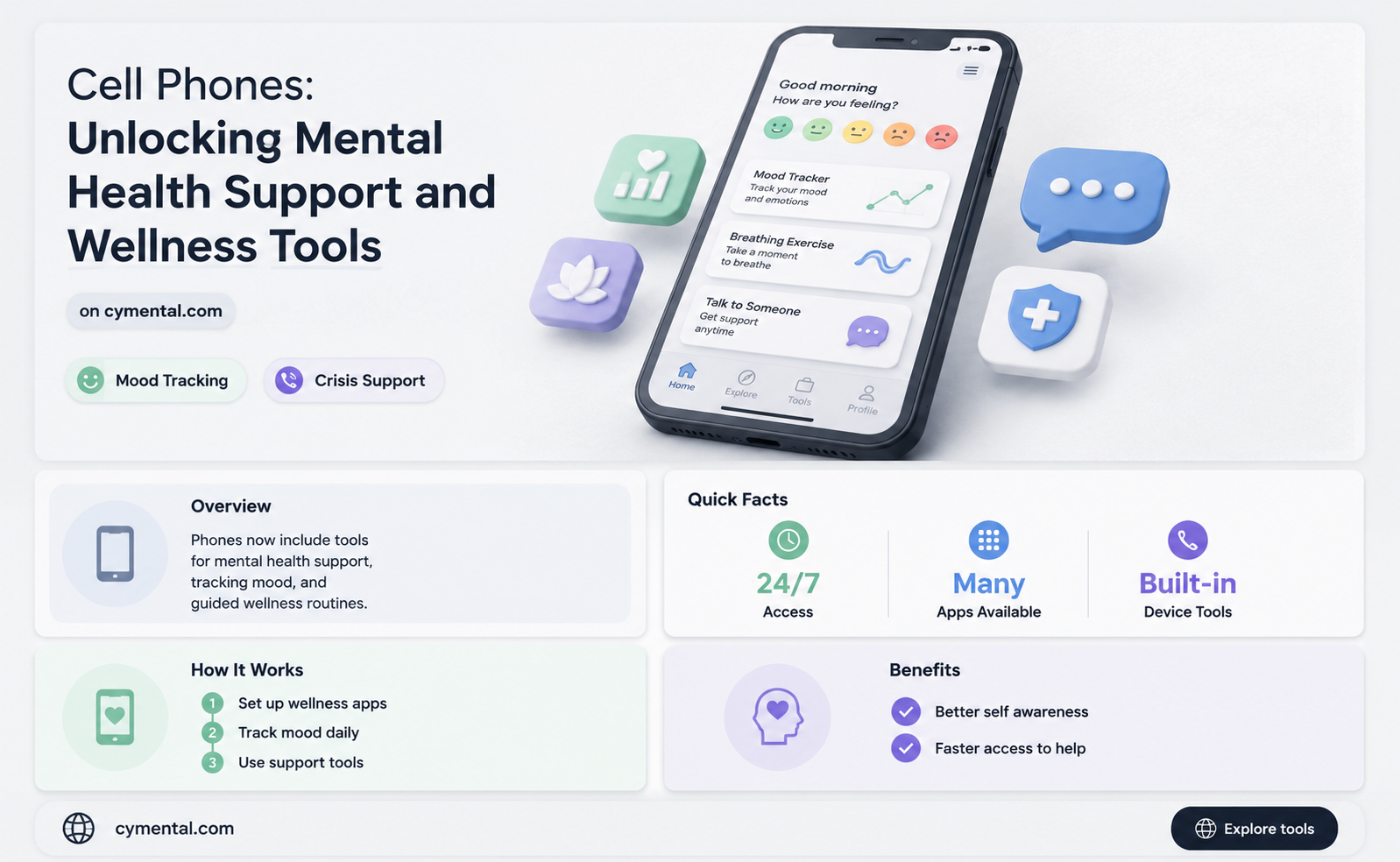
Cell phones have become indispensable tools in supporting mental health, offering a wide range of resources and connectivity that can significantly improve well-being. Through dedicated mental health apps, individuals can access therapy sessions, meditation guides, and mood tracking tools, fostering self-awareness and coping strategies. Social media platforms and messaging apps enable users to stay connected with loved ones, reducing feelings of isolation and providing emotional support. Additionally, cell phones provide instant access to crisis hotlines and emergency services, ensuring help is always within reach. By combining technology with mental health care, cell phones empower individuals to manage stress, anxiety, and other challenges more effectively, making them a valuable ally in the pursuit of mental wellness.
Explore related products


What You'll Learn
- Mindfulness Apps: Guided meditation and breathing exercises reduce stress and promote relaxation effectively
- Therapy Access: Teletherapy platforms connect users to mental health professionals remotely and conveniently
- Mood Tracking: Apps monitor emotional patterns, helping users identify triggers and manage mental health
- Social Support: Messaging and video calls maintain connections, reducing loneliness and fostering community
- Cognitive Training: Brain-training apps improve focus, memory, and cognitive resilience through engaging exercises

Mindfulness Apps: Guided meditation and breathing exercises reduce stress and promote relaxation effectively
In the palm of your hand lies a powerful tool for mental well-being: mindfulness apps. These digital sanctuaries offer guided meditation and breathing exercises designed to reduce stress and promote relaxation effectively. With just 10 minutes a day, users can experience measurable benefits, such as lowered cortisol levels and improved emotional regulation. Apps like Headspace and Calm provide structured programs tailored to specific needs, whether it’s managing anxiety, improving sleep, or enhancing focus. The convenience of accessing these practices anytime, anywhere makes them an invaluable resource in today’s fast-paced world.
Consider the mechanics of these apps: guided meditation sessions often range from 5 to 30 minutes, allowing users to choose based on their schedule. Breathing exercises, such as box breathing (inhale for 4 seconds, hold for 4, exhale for 4, hold for 4), are particularly effective for quick stress relief. Studies show that consistent practice can rewire the brain’s response to stress, fostering resilience over time. For beginners, starting with shorter sessions and gradually increasing duration is key. Apps often include progress tracking, which can motivate users to maintain a daily practice.
The persuasive appeal of mindfulness apps lies in their accessibility and personalization. Unlike traditional meditation classes, these apps cater to all age groups, from teenagers dealing with academic pressure to seniors seeking mental clarity. Features like soothing soundscapes, gentle voice guidance, and visual animations enhance the experience, making mindfulness feel less abstract and more attainable. For instance, Calm’s "Sleep Stories" combine meditation with storytelling, helping users unwind before bed. This blend of science and creativity ensures that mindfulness becomes a habit, not a chore.
However, it’s essential to approach these apps with realistic expectations. While they are effective tools, they are not a substitute for professional therapy in cases of severe mental health issues. Users should also be mindful of screen time; ironically, excessive phone use can counteract the benefits of mindfulness. A practical tip is to designate a specific time for practice, such as first thing in the morning or during a lunch break, and to use "do not disturb" mode to minimize distractions. By integrating these apps thoughtfully, individuals can harness their full potential for mental wellness.
Physical Activity: A Powerful Tool to Boost Mental Well-Being
You may want to see also
Explore related products





Therapy Access: Teletherapy platforms connect users to mental health professionals remotely and conveniently
Cell phones have revolutionized the way we access mental health care, particularly through teletherapy platforms. These digital tools bridge the gap between individuals and mental health professionals, offering convenience, flexibility, and privacy that traditional therapy often lacks. For those in remote areas, with busy schedules, or facing mobility challenges, teletherapy has become a lifeline, ensuring that mental health support is just a tap away.
Consider the process: users download an app or visit a website, create a profile, and are matched with a licensed therapist based on their needs. Sessions can be conducted via video calls, voice chats, or even messaging, depending on the platform and user preference. For instance, platforms like BetterHelp and Talkspace allow users to communicate with therapists asynchronously, meaning they can send messages at any time and receive responses within a set timeframe. This flexibility is particularly beneficial for individuals who struggle with real-time conversations or need support outside of traditional office hours.
However, teletherapy isn’t without its challenges. Ensuring a stable internet connection and a private space for sessions can be difficult for some users. Additionally, not all therapeutic techniques translate seamlessly to a digital format. For example, art therapy or certain cognitive-behavioral exercises may require in-person interaction for maximum effectiveness. Despite these limitations, studies show that teletherapy can be just as effective as in-person therapy for many conditions, including anxiety, depression, and PTSD. A 2021 study published in *JAMA Psychiatry* found that teletherapy outcomes were comparable to traditional therapy, with high patient satisfaction rates.
To make the most of teletherapy, users should take practical steps. First, test the platform’s functionality before the session to avoid technical glitches. Second, choose a quiet, comfortable space where you won’t be interrupted. Third, be open and honest with your therapist, just as you would in person. Finally, set realistic expectations—teletherapy is a process, and progress takes time. For younger users, such as teenagers, parental involvement can help ensure consistency and support, though privacy boundaries should be respected.
In conclusion, teletherapy platforms on cell phones have democratized access to mental health care, breaking down barriers of geography, time, and stigma. While it’s not a one-size-fits-all solution, its convenience and effectiveness make it a valuable tool for anyone seeking support. By understanding its strengths and limitations, users can harness its potential to improve their mental well-being.
Unlocking Wellness: How a Mental Health Counselor Can Transform Your Life
You may want to see also
Explore related products


Mood Tracking: Apps monitor emotional patterns, helping users identify triggers and manage mental health
Cell phones have become indispensable tools for managing mental health, and mood-tracking apps stand out as a prime example of their utility. These apps function as digital journals, allowing users to log their emotions, activities, and environmental factors throughout the day. By aggregating this data, they create visual patterns that highlight correlations between moods and potential triggers, such as lack of sleep, social interactions, or specific stressors. For instance, a user might notice that their anxiety spikes after excessive screen time or that their mood improves after exercise. This insight empowers individuals to make informed decisions about their daily routines and long-term habits.
To maximize the benefits of mood-tracking apps, consistency is key. Users should aim to log their moods at least twice daily—once in the morning and once in the evening—to capture fluctuations accurately. Many apps, like Daylio or Moodpath, offer customizable reminders to ensure regular input. Additionally, pairing mood entries with notes about significant events or feelings can provide deeper context. For example, noting "felt overwhelmed after a long meeting" alongside a low mood rating can help identify workplace stress as a recurring trigger. Over time, this practice fosters self-awareness and enables users to anticipate and mitigate negative emotional episodes.
While mood-tracking apps are powerful tools, they are not without limitations. Relying solely on self-reported data can introduce biases, such as underreporting or overemphasizing certain emotions. Users should also be cautious about becoming overly fixated on their mood patterns, as this can lead to anxiety or obsession. To balance this, it’s helpful to integrate app insights with professional guidance. For instance, sharing mood charts with a therapist can provide a structured framework for discussions, allowing for more targeted interventions. Apps like Bearable even offer features to export data for clinical use, bridging the gap between self-monitoring and professional care.
The effectiveness of mood-tracking apps is particularly notable among younger users, who are often more tech-savvy and comfortable with digital tools. Studies show that adolescents and young adults aged 18–25 are more likely to adopt these apps as part of their mental health toolkit. For this demographic, apps like Moodfit or eMoods offer gamified elements, such as streaks for consistent logging or achievements for positive habits, which enhance engagement. However, older adults can also benefit, especially when apps feature intuitive interfaces and clear instructions. Regardless of age, the key is to choose an app that aligns with individual preferences and needs, ensuring it becomes a sustainable part of one’s mental health routine.
In conclusion, mood-tracking apps exemplify how cell phones can serve as proactive allies in mental health management. By transforming raw emotional data into actionable insights, these tools enable users to identify triggers, track progress, and make meaningful changes. While they are not a substitute for professional care, they complement traditional therapies by fostering self-awareness and accountability. As technology continues to evolve, the potential for these apps to improve mental well-being grows, making them an invaluable resource in the digital age.
Lion's Mane for Stress Relief and Mental Clarity: What Research Says
You may want to see also
Explore related products






Social Support: Messaging and video calls maintain connections, reducing loneliness and fostering community
Cell phones have become lifelines for maintaining social connections, especially in an era where physical distance often separates loved ones. Messaging and video calls, in particular, serve as powerful tools to bridge this gap, offering a sense of presence and immediacy that traditional communication methods lack. For individuals facing isolation due to geographical, health, or lifestyle constraints, these features can be transformative. A study published in the *Journal of Medical Internet Research* found that regular video calls among older adults reduced feelings of loneliness by 30%, highlighting the tangible impact of such interactions.
Consider the mechanics of these interactions: messaging allows for asynchronous communication, enabling individuals to share thoughts, updates, or even just emojis when they feel most comfortable. This flexibility is particularly beneficial for those with anxiety or depression, who may struggle with real-time conversations. Video calls, on the other hand, provide a more immersive experience, allowing for facial expressions, tone of voice, and body language to convey emotions that text alone cannot. For instance, a grandparent seeing their grandchild’s smile during a video call can evoke a warmth that a photo or voice message might not fully capture.
To maximize the mental health benefits of these tools, intentionality is key. Schedule regular check-ins with friends or family, treating them as non-negotiable appointments. For example, a weekly 30-minute video call with a close friend can create a sense of routine and reliability. For those in different time zones, asynchronous messaging can be a lifeline, allowing for meaningful exchanges without the pressure of immediate responses. Apps like WhatsApp, Zoom, or Marco Polo offer features tailored to these needs, such as voice notes or video messaging, which can feel more personal than text.
However, it’s important to balance digital connection with self-awareness. Over-reliance on messaging or video calls can sometimes lead to fatigue or a sense of obligation. Set boundaries, such as designating tech-free hours or muting notifications during personal time. Additionally, be mindful of the quality of interactions. A study from the *American Psychological Association* suggests that superficial exchanges may not provide the same mental health benefits as deeper, more meaningful conversations. Prioritize discussions that foster emotional intimacy, such as sharing personal experiences or expressing gratitude.
In conclusion, messaging and video calls are not just conveniences—they are vital tools for combating loneliness and fostering a sense of community. By leveraging these features thoughtfully, individuals can maintain and even strengthen relationships, contributing to improved mental well-being. Whether it’s a quick check-in or a scheduled call, these digital interactions remind us that, even in isolation, we are never truly alone.
Designing Spaces: Architecture's Role in Enhancing Mental Well-being
You may want to see also
Explore related products



Cognitive Training: Brain-training apps improve focus, memory, and cognitive resilience through engaging exercises
Brain-training apps have emerged as a popular tool for enhancing cognitive function, offering exercises designed to sharpen focus, boost memory, and build mental resilience. These apps leverage gamified activities, such as puzzles, memory challenges, and attention-based tasks, to engage users in consistent mental workouts. Research suggests that regular use—ideally 15 to 30 minutes daily—can lead to measurable improvements in cognitive performance, particularly among adults aged 18 to 65. For older adults, these apps may help mitigate age-related cognitive decline, though results vary based on individual engagement and app quality.
Consider the mechanics: brain-training apps often target specific cognitive domains, such as working memory, processing speed, or executive function. For instance, apps like Lumosity or Elevate use adaptive algorithms to tailor difficulty levels, ensuring users remain challenged without feeling overwhelmed. A study published in *Psychological Science* found that participants who engaged in dual n-back exercises—a common brain-training task—showed improved working memory and fluid intelligence. However, effectiveness depends on consistent practice; sporadic use yields minimal benefits.
Practical implementation requires strategy. Start by selecting an app aligned with your cognitive goals—whether improving focus for work or enhancing memory for academic pursuits. Set a daily schedule, integrating sessions into your routine, such as during morning commutes or evening downtime. Combine app use with real-world cognitive challenges, like learning a new language or solving complex problems, to reinforce gains. Caution against over-reliance; brain-training apps complement, rather than replace, holistic mental health practices like physical exercise, social interaction, and adequate sleep.
Critics argue that the long-term benefits of brain-training apps remain debated, with some studies questioning their transferability to real-life tasks. Yet, for many users, the immediate engagement and sense of progress provide intrinsic motivation. To maximize utility, track your performance over time, noting improvements in focus or memory retention. Pair app use with mindfulness techniques, such as meditation, to enhance overall cognitive resilience. Ultimately, brain-training apps offer a convenient, accessible way to invest in your mental fitness—a small but impactful step toward lifelong cognitive health.
Mental Disorders and Bankruptcy: Unraveling the Complex Financial Impact
You may want to see also
Frequently asked questions
Cell phones provide access to mental health apps, online therapy platforms, and mindfulness tools, making it easier to manage stress, anxiety, and depression. They also connect users to support networks and resources instantly.
Yes, cell phones enable instant communication with friends, family, and support groups, helping to combat loneliness by fostering social connections and maintaining relationships, even over long distances.
Absolutely, there are numerous apps for meditation (e.g., Headspace), mood tracking (e.g., Moodpath), and therapy (e.g., BetterHelp) that offer tools and resources to support mental well-being.
Cell phones provide quick access to crisis hotlines, emergency contacts, and mental health professionals, ensuring immediate support during moments of distress or suicidal thoughts.