Harper Lewis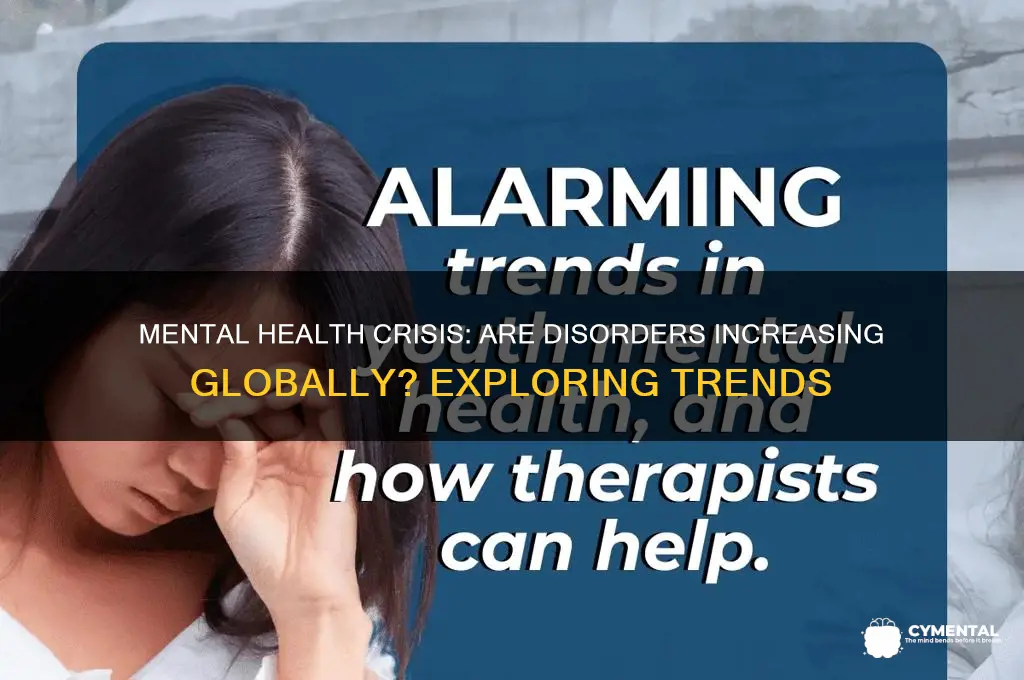
Mental health issues have become an increasingly prominent topic of discussion in recent years, with many experts and individuals alike questioning whether these concerns are on the rise. Factors such as heightened awareness, reduced stigma, and improved diagnostic tools have led to more people seeking help and receiving diagnoses for conditions like anxiety, depression, and stress-related disorders. However, it remains unclear whether the apparent increase reflects a genuine surge in prevalence or simply better recognition and reporting of these issues. Societal changes, including the impact of social media, economic pressures, and global events like the COVID-19 pandemic, have also been cited as potential contributors to this trend. Understanding whether mental health issues are genuinely rising is crucial for developing effective strategies to address this growing public health concern.
| Characteristics | Values |
|---|---|
| Global Prevalence | 1 in 8 people worldwide live with a mental health condition (WHO, 2022) |
| Increase Over Time | 25% increase in anxiety and depression globally during the first year of the COVID-19 pandemic (WHO, 2022) |
| Youth Affected | 1 in 7 adolescents aged 10-19 years old experience a mental disorder (WHO, 2021) |
| Leading Cause of Disability | Mental health disorders are the leading cause of disability worldwide (WHO, 2022) |
| Economic Impact | Global economy loses $1 trillion per year in productivity due to depression and anxiety (WHO, 2019) |
| Access to Care | Nearly 2 out of 3 people with a known mental disorder never seek professional help (Treatment Advocacy Center, 2022) |
| Regional Variations | Higher prevalence in high-income countries, but low- and middle-income countries have a larger treatment gap (WHO, 2022) |
| Common Disorders | Depression and anxiety are the most common mental health disorders globally (WHO, 2022) |
| Suicide Rates | Suicide is the 4th leading cause of death among 15-29-year-olds (WHO, 2021) |
| Stigma | Stigma and discrimination remain significant barriers to seeking help (NAMI, 2022) |
Explore related products


What You'll Learn
- Increased Awareness & Diagnosis: More people recognize symptoms, seek help, leading to higher reported cases globally
- Pandemic Impact: COVID-19 exacerbated stress, anxiety, and depression due to isolation and uncertainty
- Social Media Influence: Platforms contribute to anxiety, depression, and low self-esteem, especially among youth
- Economic Stressors: Financial instability and job insecurity linked to rising mental health challenges
- Youth Vulnerability: Younger generations face higher rates of mental health issues than previous generations

Increased Awareness & Diagnosis: More people recognize symptoms, seek help, leading to higher reported cases globally
The global conversation around mental health has shifted dramatically over the past decade. Once shrouded in stigma, conditions like depression, anxiety, and PTSD are now discussed more openly. This cultural shift has empowered individuals to recognize symptoms in themselves and others, prompting a surge in help-seeking behaviors. For instance, a 2021 WHO report noted a 13% increase in mental health consultations worldwide compared to pre-pandemic levels, with younger adults aged 18–25 leading the charge. This trend isn’t merely about rising cases—it’s about rising awareness and action.
Consider the role of digital platforms in this transformation. Social media campaigns like #MentalHealthAwareness and celebrity disclosures of personal struggles have normalized conversations once deemed taboo. Schools and workplaces now integrate mental health training, equipping people with tools to identify early warning signs. For example, a 2020 study found that employees who received mental health literacy training were 40% more likely to seek professional help within six months. These initiatives don’t create mental health issues; they illuminate what was already present, often undiagnosed.
However, increased awareness isn’t without challenges. Misdiagnosis or overdiagnosis can occur when symptoms are misinterpreted or when societal pressures inflate self-reported conditions. A 2019 meta-analysis revealed that up to 20% of diagnosed anxiety cases in adolescents might be linked to misinterpreted stress responses. To mitigate this, professionals emphasize the importance of comprehensive assessments, including standardized tools like the PHQ-9 for depression or GAD-7 for anxiety. Patients, too, should approach self-diagnosis cautiously, using reputable resources like the NHS’s Every Mind Matters toolkit to guide their understanding.
The takeaway is clear: the rise in reported mental health cases is, in part, a reflection of progress. More people are breaking free from silence, armed with knowledge and support systems. Yet, this evolution demands vigilance. As awareness grows, so must the precision of diagnosis and treatment. For those navigating this landscape, the message is twofold: recognize symptoms early, but seek professional confirmation. In this balance lies the path to genuine improvement.
Navigating Mental Health: Strategies for Awareness, Support, and Healing
You may want to see also
Explore related products


Pandemic Impact: COVID-19 exacerbated stress, anxiety, and depression due to isolation and uncertainty
The COVID-19 pandemic forced millions into isolation, upending routines and severing social connections. This abrupt shift wasn’t just inconvenient—it was psychologically destabilizing. Prolonged loneliness, a known risk factor for mental health issues, became widespread. Studies show that social isolation can increase the risk of depression by up to 80%, and anxiety disorders by 60%. For many, the absence of face-to-face interaction, coupled with the inability to engage in stress-relieving activities like exercise or hobbies, created a perfect storm for emotional distress.
Consider the case of remote workers, a demographic that ballooned during the pandemic. Without the structure of an office environment, many struggled to separate work from personal life, leading to burnout. A 2021 survey by the American Psychological Association found that 60% of remote workers reported increased stress levels, with 40% citing blurred boundaries as the primary cause. Practical steps to mitigate this include setting strict work hours, creating a dedicated workspace, and scheduling regular breaks to simulate office routines.
Uncertainty, another hallmark of the pandemic, fueled anxiety across all age groups. The constant barrage of alarming news, coupled with fears of illness and economic instability, left many in a state of hypervigilance. This chronic stress response can lead to long-term mental health issues, including generalized anxiety disorder and insomnia. For instance, a study published in *The Lancet* found that the prevalence of anxiety disorders increased by 25% globally during the first year of the pandemic. To combat this, mindfulness practices such as meditation or deep-breathing exercises can help recalibrate the nervous system. Apps like Headspace or Calm offer guided sessions tailored to reducing anxiety.
The impact on younger populations was particularly stark. School closures and canceled social events left adolescents and young adults feeling disconnected and purposeless. A CDC report revealed that emergency room visits for suspected suicide attempts among girls aged 12–17 increased by 51% in early 2021 compared to the same period in 2019. Parents and caregivers can support teens by encouraging open conversations about mental health, monitoring screen time, and fostering safe social interactions, even if virtual.
While the pandemic’s mental health toll is undeniable, it also spurred innovation in care delivery. Teletherapy, once a niche service, became mainstream, offering accessible support to those unable to visit clinics in person. However, this shift highlighted disparities in access, particularly for low-income or rural populations. Moving forward, policymakers must prioritize expanding mental health resources and ensuring equitable access to digital tools. The pandemic may have exacerbated stress, anxiety, and depression, but it also underscored the resilience of individuals and the urgent need for systemic change.
Navigating Mental Health Challenges: Strategies for Healing and Resilience
You may want to see also
Explore related products


Social Media Influence: Platforms contribute to anxiety, depression, and low self-esteem, especially among youth
The relentless scroll through curated feeds has become a daily ritual for many, especially the younger generation. Social media platforms, designed to connect and entertain, have inadvertently become breeding grounds for anxiety, depression, and self-doubt. A 2021 study by the American Psychological Association revealed that adolescents who spent more than three hours a day on social media were at a higher risk of experiencing mental health issues. This isn't merely a correlation; the constant exposure to idealized lifestyles, cyberbullying, and the fear of missing out (FOMO) directly contribute to these problems.
Consider the impact of Instagram, a platform dominated by visually appealing content. Teenagers, particularly girls, are bombarded with images of seemingly perfect bodies, luxurious vacations, and flawless skin. This creates an unrealistic beauty standard, leading to body dissatisfaction and low self-esteem. A survey by the Royal Society for Public Health found that Instagram had the most negative impact on young people's mental health, with 60% reporting feelings of inadequacy after using the app. The pressure to present a perfect online persona further exacerbates these issues, as individuals feel compelled to curate their lives, often at the expense of their authentic selves.
To mitigate these effects, it's essential to adopt a mindful approach to social media usage. First, set strict time limits; apps like Screen Time (iOS) or Digital Wellbeing (Android) can help monitor and control daily usage. For instance, limiting social media to 30 minutes in the morning and 30 minutes in the evening can significantly reduce exposure to harmful content. Second, curate your feed intentionally. Unfollow accounts that trigger negative emotions and follow those that promote positivity, diversity, and realism. For example, accounts like @bodyposipanda and @thefinancialdiet offer empowering content that challenges societal norms.
Another practical step is to engage in offline activities that boost self-esteem and provide a sense of accomplishment. Joining a local sports team, volunteering, or taking up a hobby like painting can help shift focus from virtual validation to real-world achievements. Parents and educators play a crucial role here; encouraging face-to-face interactions and open conversations about social media's impact can foster resilience in young people. For instance, organizing family game nights or school workshops on digital literacy can create safe spaces for discussion and learning.
While social media's influence on mental health is undeniable, it's not entirely negative. Platforms can also be tools for support and connection when used mindfully. Online communities centered around mental health, such as Reddit's r/depression or Facebook support groups, offer spaces for individuals to share experiences and seek advice. The key lies in balancing usage, being critical of content, and prioritizing real-life relationships. By taking proactive steps, both individuals and society can harness the benefits of social media while minimizing its detrimental effects on mental well-being.
Navigating the Conversation: Sharing Your Mental Health Struggles with Parents
You may want to see also
Explore related products



Economic Stressors: Financial instability and job insecurity linked to rising mental health challenges
Financial instability and job insecurity are potent triggers for mental health challenges, with research consistently linking economic stressors to increased rates of anxiety, depression, and even suicidal ideation. A 2022 study published in *The Lancet* found that individuals facing financial strain are twice as likely to experience symptoms of depression compared to those with stable incomes. This correlation is particularly alarming given the global economic fluctuations of recent years, which have left millions grappling with unemployment, debt, and housing insecurity.
Consider the psychological toll of job insecurity. The constant fear of layoffs or reduced hours activates the body’s stress response, flooding the system with cortisol. Prolonged exposure to this stress hormone can lead to physical health issues, such as hypertension and weakened immunity, while also exacerbating mental health conditions. For instance, a 2021 survey by the American Psychological Association revealed that 65% of workers experiencing job insecurity reported significant symptoms of anxiety, compared to 35% of those with stable employment. Practical steps to mitigate this include creating a financial safety net—aim to save at least three months’ worth of living expenses—and diversifying income streams through freelance work or side hustles.
Financial instability doesn’t just affect adults; it has a ripple effect on families, particularly children. A study from the Urban Institute found that children in households with income volatility are 25% more likely to exhibit behavioral problems and 15% more likely to struggle academically. Parents can buffer this impact by maintaining open conversations about financial realities, modeling healthy coping strategies, and seeking community resources like food banks or mental health clinics. Schools can also play a role by integrating financial literacy programs and providing counseling services tailored to economically stressed families.
From a policy perspective, addressing economic stressors requires systemic solutions. Governments can implement measures such as universal basic income (UBI) pilots, as seen in Finland, where participants reported reduced stress levels and improved mental well-being. Employers, too, have a role to play by offering mental health benefits, flexible work arrangements, and job retraining programs. For individuals, prioritizing self-care is non-negotiable—whether through mindfulness practices, regular exercise, or seeking professional help. The takeaway is clear: economic stability isn’t just a financial issue; it’s a mental health imperative.
Identifying Mental Health Concerns in Your Wife: A Compassionate Guide
You may want to see also
Explore related products

$8.49 $11.99



Youth Vulnerability: Younger generations face higher rates of mental health issues than previous generations
Young people today are reporting mental health issues at alarming rates, with studies showing a significant increase in anxiety, depression, and self-harm among adolescents and young adults. According to a 2021 report by the World Health Organization (WHO), one in seven adolescents aged 10-19 years old experiences a mental disorder, with anxiety and depression being the most common. This trend is particularly concerning, as it suggests that younger generations are facing unique challenges that previous generations did not encounter to the same extent.
The Perfect Storm of Stressors
To understand this phenomenon, consider the myriad of stressors that young people face today. The rise of social media, academic pressure, and economic uncertainty have created a perfect storm of anxiety-inducing factors. For instance, a study published in the Journal of Abnormal Psychology found that the prevalence of major depressive episodes among adolescents increased from 8.7% in 2005 to 13.2% in 2017. This increase coincides with the widespread adoption of smartphones and social media platforms, which have been linked to increased feelings of loneliness, inadequacy, and FOMO (fear of missing out). Furthermore, the COVID-19 pandemic has exacerbated these issues, with school closures, social isolation, and economic instability taking a significant toll on young people's mental health.
A Comparative Perspective
Compared to previous generations, today's youth are growing up in a vastly different world. Baby boomers and Generation Xers, for example, did not have to navigate the complexities of online identity, cyberbullying, or the constant pressure to curate a perfect digital persona. A 2019 study by the American Psychological Association found that millennials and Generation Zers report higher levels of stress than older generations, with concerns about job stability, student loan debt, and social issues topping the list. This intergenerational comparison highlights the unique challenges faced by younger generations, which may be contributing to the rise in mental health issues.
Practical Strategies for Support
Given these challenges, it's essential to provide young people with practical strategies to support their mental health. Here are some evidence-based tips:
- Limit screen time: Encourage young people to take regular breaks from screens, especially before bed, to reduce exposure to blue light and promote better sleep.
- Promote physical activity: Aim for at least 60 minutes of moderate-intensity physical activity per day, as recommended by the WHO, to reduce stress and improve mood.
- Teach mindfulness techniques: Introduce young people to mindfulness practices, such as meditation or deep breathing exercises, to help them manage anxiety and improve emotional regulation.
- Foster social connections: Encourage face-to-face interactions and community involvement to combat feelings of loneliness and isolation.
- Provide access to mental health resources: Ensure young people know about available resources, such as school counselors, mental health hotlines, or online therapy platforms, and encourage them to seek help when needed.
A Call to Action
Ultimately, addressing the mental health crisis among young people requires a multifaceted approach involving parents, educators, healthcare professionals, and policymakers. By recognizing the unique challenges faced by younger generations and providing them with the tools and support they need to thrive, we can work towards creating a more resilient and mentally healthy future. This may involve rethinking educational priorities, investing in mental health services, and promoting a culture of openness and understanding around mental health issues. As a society, we must prioritize the well-being of our young people and take proactive steps to mitigate the factors contributing to the rise in mental health issues.
Understanding Insecurity: A Mental Health Concern or Normal Emotion?
You may want to see also
Frequently asked questions
Yes, mental health issues are on the rise globally. Factors such as increased stress, social isolation, economic instability, and greater awareness leading to more diagnoses contribute to this trend.
Studies suggest that younger generations, particularly adolescents and young adults, are experiencing higher rates of mental health issues like anxiety and depression, possibly due to social media, academic pressure, and changing societal norms.
Yes, the COVID-19 pandemic has significantly contributed to the rise in mental health issues, with increased reports of anxiety, depression, and loneliness due to lockdowns, isolation, and economic uncertainty.