Ava Ramirez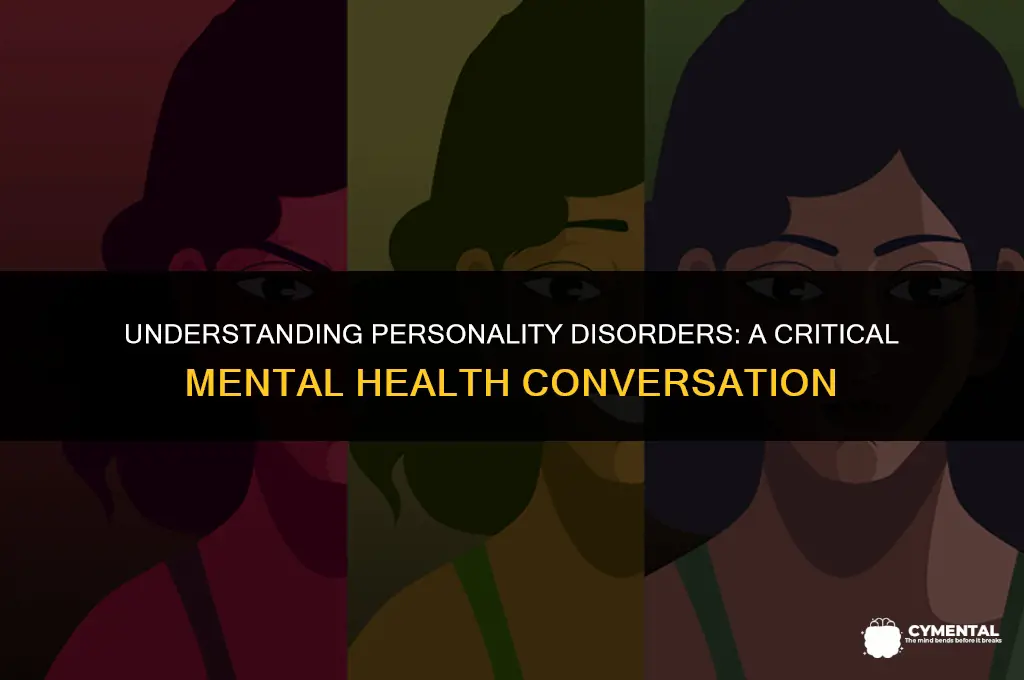
Personality disorders are a category of mental health conditions characterized by long-standing patterns of thinking, feeling, and behaving that deviate significantly from societal norms and expectations. These disorders can lead to distress, impairment in social and occupational functioning, and a decreased quality of life. While they are often misunderstood or stigmatized, personality disorders are indeed mental health issues that require professional assessment, diagnosis, and treatment. Understanding these conditions is crucial for promoting empathy, support, and effective interventions for those affected.
| Characteristics | Values |
|---|---|
| Definition | A mental health condition characterized by long-standing patterns of thinking and behavior that deviate from societal norms and expectations |
| Types | Includes disorders such as borderline, narcissistic, antisocial, and histrionic personality disorders |
| Symptoms | Can vary depending on the specific disorder, but may include difficulties with self-identity, relationships, emotional regulation, and impulse control |
| Causes | Often a combination of genetic, environmental, and psychological factors |
| Diagnosis | Typically made by a mental health professional through a comprehensive evaluation, including interviews and psychological assessments |
| Treatment | May involve psychotherapy, medication, or a combination of both, tailored to the individual's specific needs and symptoms |
| Prognosis | Can be challenging to treat, but with appropriate intervention, individuals can learn to manage their symptoms and improve their quality of life |
| Impact on daily life | Can significantly affect personal relationships, work, and overall well-being |
| Stigma | Individuals with personality disorders may face stigma and misunderstanding from others, which can hinder their ability to seek help and support |
| Research | Ongoing research aims to better understand the underlying causes and develop more effective treatments for personality disorders |
Explore related products


$14.2 $24.95


What You'll Learn

Definition and Classification
Personality disorders are a category of mental health conditions characterized by long-standing patterns of thinking, feeling, and behaving that deviate significantly from societal norms and expectations. These disorders are deeply ingrained and pervasive, affecting various aspects of an individual's life, including interpersonal relationships, work, and overall well-being. The classification of personality disorders is complex and has evolved over time, with different diagnostic systems offering varying perspectives on the nature and number of these conditions.
The Diagnostic and Statistical Manual of Mental Disorders (DSM-5), published by the American Psychiatric Association, is one of the most widely used diagnostic systems for mental health conditions, including personality disorders. According to the DSM-5, personality disorders are classified into 10 specific types, grouped into three clusters: Cluster A (paranoid, schizoid, and schizotypal), Cluster B (antisocial, borderline, histrionic, and narcissistic), and Cluster C (avoidant, dependent, and obsessive-compulsive). Each type of personality disorder is defined by a unique set of criteria that outline the characteristic patterns of behavior, thoughts, and emotions associated with the condition.
In contrast to the DSM-5, the International Classification of Diseases (ICD-11), developed by the World Health Organization, takes a slightly different approach to classifying personality disorders. The ICD-11 recognizes five broad categories of personality disorders: paranoid, schizoid, antisocial, borderline, and histrionic. Additionally, it includes a category for "other specified personality disorders" and "unspecified personality disorders," which allows for the diagnosis of conditions that do not fit neatly into the predefined categories.
One of the challenges in classifying personality disorders is the subjective nature of the diagnostic criteria. Unlike other mental health conditions, which may have more objective markers or symptoms, personality disorders are often diagnosed based on the clinician's interpretation of the individual's behavior and personality traits. This can lead to variability in diagnoses and may result in some individuals being misdiagnosed or underdiagnosed.
Another important consideration in the classification of personality disorders is the potential for comorbidity with other mental health conditions. It is not uncommon for individuals with personality disorders to also experience symptoms of other disorders, such as depression, anxiety, or substance abuse. This can complicate the diagnostic process and may require a more nuanced approach to treatment and management.
In conclusion, the definition and classification of personality disorders are complex and multifaceted, with different diagnostic systems offering varying perspectives on these conditions. While the DSM-5 and ICD-11 provide useful frameworks for understanding and diagnosing personality disorders, it is essential to recognize the limitations and challenges associated with these classifications. A comprehensive approach to mental health care should take into account the individual's unique circumstances and the potential for comorbidity with other conditions.
Mental Health Stigma: A Social Barrier to Healing and Acceptance
You may want to see also
Explore related products


Types of Personality Disorders
Personality disorders are a group of mental health conditions characterized by long-standing patterns of thinking and behavior that are inflexible and maladaptive, causing significant distress or impairment in social, occupational, or other areas of functioning. These disorders are deeply ingrained and often go unnoticed until they cause significant problems in a person's life.
There are ten recognized types of personality disorders, grouped into three clusters based on their underlying characteristics and symptoms. Cluster A disorders include paranoid, schizoid, and schizotypal personality disorders, which are characterized by odd or eccentric behavior and a general distrust of others. Cluster B disorders, such as antisocial, borderline, histrionic, and narcissistic personality disorders, are marked by dramatic, emotional, or erratic behavior. Cluster C disorders, including avoidant, dependent, and obsessive-compulsive personality disorders, are characterized by anxious or fearful behavior.
Each type of personality disorder has its own unique set of symptoms and diagnostic criteria. For example, individuals with borderline personality disorder may experience intense emotional instability, impulsivity, and a fear of abandonment, while those with obsessive-compulsive personality disorder may be preoccupied with orderliness, perfectionism, and control.
Diagnosing personality disorders can be challenging, as they often overlap with other mental health conditions and can be difficult to distinguish from normal personality variations. Mental health professionals typically use a combination of clinical interviews, psychological assessments, and observation to make a diagnosis. Treatment for personality disorders usually involves psychotherapy, with the goal of helping individuals understand and change their maladaptive thought and behavior patterns. In some cases, medication may also be used to manage associated symptoms such as depression or anxiety.
Living with a personality disorder can be difficult, both for the individual and their loved ones. However, with proper treatment and support, many people are able to manage their symptoms and lead fulfilling lives. It is important to remember that personality disorders are not a reflection of a person's character or worth, but rather a treatable mental health condition that requires understanding and compassion.
Mental Illness: A Medical Condition or Societal Misunderstanding?
You may want to see also
Explore related products




Symptoms and Diagnosis
Personality disorders are a group of mental health conditions characterized by long-standing patterns of thinking and behavior that are inflexible and maladaptive, causing significant distress or impairment in social, occupational, or other areas of functioning. The symptoms of personality disorders can vary widely depending on the specific type, but common features include difficulties with emotional regulation, interpersonal relationships, and impulse control. For example, individuals with borderline personality disorder may experience intense emotional swings, unstable relationships, and impulsive behaviors, while those with narcissistic personality disorder may exhibit grandiosity, a need for admiration, and a lack of empathy for others.
Diagnosing personality disorders can be challenging, as the symptoms often overlap with those of other mental health conditions and may not be readily apparent in everyday interactions. Mental health professionals typically use a combination of clinical interviews, psychological assessments, and observation to make a diagnosis. The Diagnostic and Statistical Manual of Mental Disorders (DSM-5) provides a set of criteria for diagnosing personality disorders, which includes evaluating the presence of specific symptoms and assessing their impact on the individual's functioning.
One unique aspect of diagnosing personality disorders is the emphasis on identifying enduring patterns of behavior and thought, rather than focusing solely on current symptoms. This is because personality disorders are characterized by long-standing traits that are deeply ingrained in an individual's personality structure. As a result, the diagnostic process often involves gathering information from multiple sources, including family members, friends, and employers, to gain a comprehensive understanding of the individual's behavior and functioning over time.
In addition to clinical interviews and psychological assessments, mental health professionals may also use behavioral observation to evaluate the presence of specific symptoms. For example, they may observe the individual's interactions with others, their emotional responses to different situations, and their overall demeanor to gain insight into their personality traits and functioning. This observational approach can be particularly useful in identifying subtle or nuanced symptoms that may not be readily apparent in self-report measures.
Once a diagnosis is made, the next step is to develop an appropriate treatment plan. Treatment for personality disorders typically involves a combination of psychotherapy, medication, and skills training. The specific approach will depend on the type and severity of the disorder, as well as the individual's unique needs and circumstances. In some cases, hospitalization may be necessary to provide intensive treatment and support.
In conclusion, diagnosing personality disorders requires a comprehensive and nuanced approach that takes into account the individual's long-standing patterns of behavior and thought, as well as their current symptoms and functioning. By using a combination of clinical interviews, psychological assessments, and behavioral observation, mental health professionals can gain a deeper understanding of the individual's personality structure and develop an effective treatment plan to address their unique needs.
Empowering Your Friend: Practical Ways to Support Mental Health Struggles
You may want to see also
Explore related products


Causes and Risk Factors
Personality disorders are complex mental health conditions that can arise from a combination of genetic, environmental, and psychological factors. Research suggests that certain genetic predispositions can increase the likelihood of developing a personality disorder. For instance, studies have shown that individuals with a family history of mental illness, particularly mood disorders and substance abuse, may be at a higher risk.
Environmental factors also play a significant role in the development of personality disorders. Traumatic experiences during childhood, such as physical or emotional abuse, neglect, or bullying, can contribute to the formation of maladaptive personality traits. Additionally, growing up in a chaotic or unstable household environment can impact an individual's ability to develop healthy coping mechanisms and interpersonal skills.
Psychological factors, such as low self-esteem, poor impulse control, and difficulty regulating emotions, can also contribute to the development of personality disorders. These factors may stem from a combination of genetic and environmental influences and can be exacerbated by stressful life events or social isolation.
It is important to note that personality disorders are not caused by a single factor, but rather by a complex interplay of genetic, environmental, and psychological elements. Understanding these causes and risk factors can help mental health professionals develop more effective treatment strategies and interventions for individuals struggling with personality disorders.
Loving Through Challenges: Supporting Partners with Mental Health Issues
You may want to see also
Explore related products




Treatment and Management
Personality disorders are complex mental health conditions that can significantly impact an individual's life. While there is no one-size-fits-all approach to treating personality disorders, various therapeutic strategies and management techniques have been developed to help individuals cope with their symptoms and improve their overall well-being.
One of the primary approaches to treating personality disorders is psychotherapy. Cognitive-behavioral therapy (CBT) and dialectical behavior therapy (DBT) are two commonly used therapeutic modalities. CBT focuses on identifying and challenging negative thought patterns and behaviors, while DBT emphasizes the development of emotional regulation skills and interpersonal effectiveness. Both therapies aim to help individuals with personality disorders gain insight into their condition and develop healthier coping mechanisms.
In addition to psychotherapy, medication may also be used to manage the symptoms of personality disorders. Antidepressants, mood stabilizers, and antipsychotic medications are sometimes prescribed to help alleviate symptoms such as depression, anxiety, and impulsivity. However, it is important to note that medication alone is not typically sufficient to treat personality disorders, and it is often used in conjunction with psychotherapy.
Another important aspect of managing personality disorders is the development of a strong support system. Individuals with personality disorders may benefit from joining support groups or seeking out friends and family members who can provide emotional support and encouragement. Additionally, learning stress management techniques, such as mindfulness meditation and deep breathing exercises, can help individuals with personality disorders better cope with the challenges they face.
It is also crucial for individuals with personality disorders to work on improving their self-awareness and self-regulation skills. This may involve keeping a journal to track thoughts and feelings, practicing self-reflection, and learning to identify and manage triggers that may exacerbate symptoms. By developing a greater understanding of themselves and their condition, individuals with personality disorders can take an active role in their treatment and management.
In conclusion, while personality disorders can be challenging to treat, there are a variety of therapeutic strategies and management techniques available to help individuals cope with their symptoms and improve their overall well-being. By combining psychotherapy, medication, support systems, and self-regulation skills, individuals with personality disorders can work towards achieving a more balanced and fulfilling life.
Supporting Teens: Practical Strategies for Mental Health and Well-Being
You may want to see also
Frequently asked questions
Yes, personality disorders are classified as mental health conditions. They involve long-term patterns of thinking and behavior that are inflexible and maladaptive, causing significant distress or impairment in social, occupational, or other areas of functioning.
Some common types of personality disorders include borderline personality disorder, narcissistic personality disorder, antisocial personality disorder, and obsessive-compulsive personality disorder. Each type has distinct characteristics and symptoms.
Personality disorders differ from other mental health conditions in that they involve enduring patterns of behavior and thought that are characteristic of an individual's personality. These patterns are often more pervasive and longstanding than symptoms of other mental health issues, which may come and go.
Treatment for personality disorders typically involves psychotherapy, such as cognitive-behavioral therapy or dialectical behavior therapy. Medications may also be used to manage specific symptoms. The goal of treatment is to help individuals with personality disorders develop more adaptive coping mechanisms and improve their overall quality of life.