Madison Cole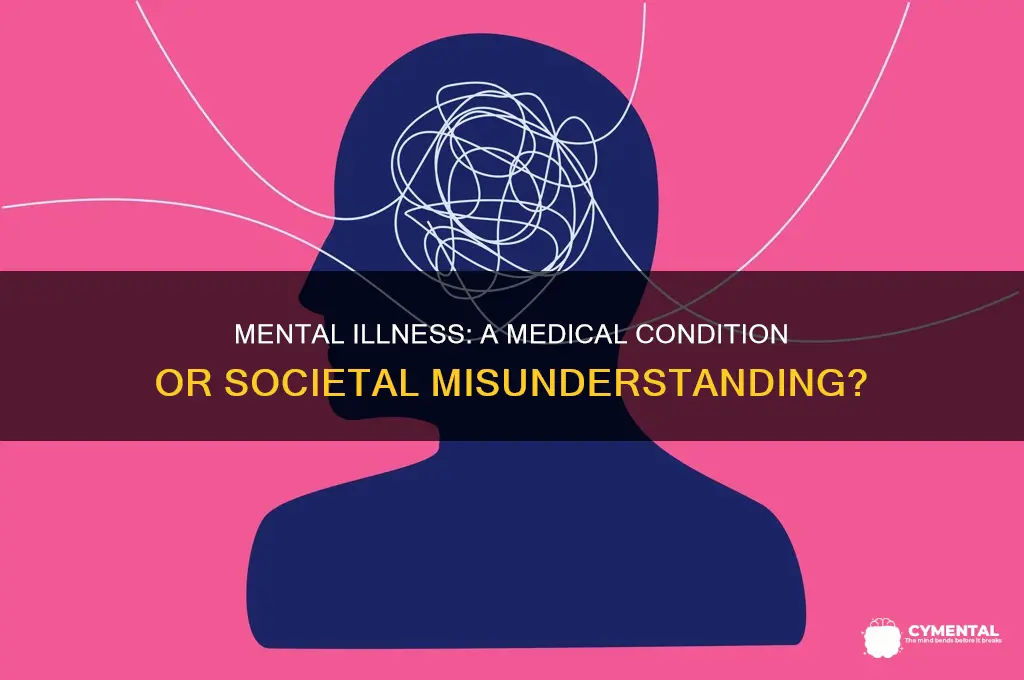
Mental illness, characterized by disorders that affect mood, thinking, and behavior, has long been a subject of debate regarding its classification as a strictly medical issue. While it is widely acknowledged that conditions such as depression, anxiety, and schizophrenia have biological underpinnings, including genetic predispositions and neurochemical imbalances, they are also deeply influenced by environmental, social, and psychological factors. This complexity raises questions about whether mental illness should be treated solely within the biomedical framework or if a more holistic approach, incorporating social support, therapy, and lifestyle changes, is necessary. As the medical community increasingly recognizes the interplay between physical and mental health, the discussion continues on how best to address these conditions, balancing medical interventions with broader societal and individual-level strategies.
| Characteristics | Values |
|---|---|
| Definition | Mental illness refers to conditions affecting mood, thinking, and behavior, often requiring medical intervention. |
| Medical Recognition | Widely recognized as a medical issue by organizations like WHO, APA, and NIMH. |
| Biological Basis | Linked to genetic, neurological, and biochemical factors (e.g., neurotransmitter imbalances). |
| Diagnostic Criteria | Diagnosed using standardized tools like DSM-5 or ICD-11 by healthcare professionals. |
| Treatment Approaches | Includes medication, psychotherapy, and evidence-based therapies (e.g., CBT). |
| Prevalence | Affects ~1 in 4 people globally, with varying severity and types (WHO, 2023). |
| Impact on Physical Health | Often co-occurs with physical conditions (e.g., cardiovascular disease, diabetes). |
| Stigma | Despite medical recognition, stigma persists, affecting access to care and public perception. |
| Public Health Priority | Recognized as a global health priority due to its societal and economic impact. |
| Research and Funding | Increasing investment in research to understand causes, improve treatments, and reduce stigma. |
Explore related products



What You'll Learn

Biological Causes of Mental Illness
Mental illnesses are not solely the result of personal weakness or environmental factors; a growing body of research highlights the significant role of biological causes. These include genetic predispositions, neurochemical imbalances, and structural brain abnormalities. For instance, studies have shown that individuals with a family history of schizophrenia are ten times more likely to develop the disorder, suggesting a strong genetic component. Understanding these biological underpinnings is crucial for developing targeted treatments and reducing the stigma surrounding mental health.
Consider the impact of neurotransmitters, the brain’s chemical messengers, on mental health. Serotonin, dopamine, and norepinephrine play critical roles in mood regulation. Imbalances in these chemicals are linked to disorders like depression and anxiety. For example, low serotonin levels are associated with depression, and medications like selective serotonin reuptake inhibitors (SSRIs) work by increasing serotonin availability in the brain. Dosage typically starts at 10–20 mg daily for SSRIs like fluoxetine, with adjustments based on individual response. This highlights the medical nature of mental illness, as these conditions often require pharmacological intervention to restore chemical balance.
Structural and functional brain abnormalities also contribute to mental illness. Neuroimaging studies have revealed differences in brain regions such as the prefrontal cortex and amygdala in individuals with conditions like bipolar disorder and PTSD. For instance, the amygdala, responsible for processing emotions, is often hyperactive in PTSD patients, leading to heightened anxiety and fear responses. Techniques like functional magnetic resonance imaging (fMRI) allow clinicians to visualize these abnormalities, reinforcing the medical basis of these disorders. Early detection through such methods can lead to more effective treatment strategies.
Genetic research further underscores the biological roots of mental illness. Twin studies have demonstrated that disorders like autism and schizophrenia have heritability rates of up to 80%. Specific gene variants, such as those affecting the COMT enzyme involved in dopamine breakdown, are linked to increased risk of schizophrenia. While genetic testing is not yet standard for diagnosing mental illness, it holds promise for personalized medicine. For example, knowing a patient carries a COMT variant could guide the choice of antipsychotic medications that minimize dopamine-related side effects.
Practical steps can be taken to address biological contributors to mental illness. Lifestyle changes, such as regular exercise and a balanced diet, can support neurochemical balance. Physical activity increases serotonin and endorphin levels, which can alleviate symptoms of depression. Additionally, maintaining a consistent sleep schedule is vital, as disruptions in circadian rhythms are linked to mood disorders. For those with a family history of mental illness, proactive monitoring and early intervention can mitigate risks. Combining these approaches with medical treatments underscores the multifaceted, yet undeniably medical, nature of mental health conditions.
Addressing Campus Mental Health: Strategies for Student Well-being and Support
You may want to see also
Explore related products


Role of Genetics in Mental Health
Genetic factors contribute to approximately 40-60% of the variance in mental health disorders, making heredity a cornerstone in understanding their etiology. Twin studies, particularly those comparing identical (monozygotic) and fraternal (dizygotic) twins, have consistently shown higher concordance rates for conditions like schizophrenia, bipolar disorder, and major depressive disorder in identical twins. For instance, if one identical twin has schizophrenia, the other has a 40-50% chance of developing it, compared to 10-15% for fraternal twins. This disparity underscores the influence of shared genes over shared environments. However, genetics alone do not dictate outcomes; they interact with environmental factors in complex ways, a concept known as gene-environment interplay.
To illustrate, consider the serotonin transporter gene (5-HTTLPR), which comes in two variants: short and long. Individuals with the short variant are more susceptible to depression when exposed to stressful life events, while those with the long variant exhibit greater resilience. This example highlights how genetic predispositions can modulate responses to environmental triggers. Similarly, the COMT gene, involved in dopamine regulation, has been linked to schizophrenia risk, with certain alleles increasing vulnerability when paired with urban upbringing or cannabis use. Such findings emphasize the need for personalized approaches in mental health care, where genetic profiling could inform risk assessment and intervention strategies.
While genetic testing holds promise, it is not a panacea. Ethical considerations, such as stigmatization and misinterpretation of results, must be addressed. For instance, knowing one carries a risk allele for bipolar disorder might lead to anxiety or self-fulfilling prophecies. Clinicians should therefore provide context, explaining that genes are probabilistic, not deterministic. Practical steps include integrating genetic counseling into mental health services, particularly for families with a history of severe disorders. For example, parents of children with a first-degree relative diagnosed with autism spectrum disorder (ASD) could benefit from genetic screening to identify mutations like those in the SHANK3 gene, which are associated with ASD.
Comparatively, the role of genetics in mental health contrasts with conditions like type 2 diabetes, where lifestyle modifications can significantly mitigate genetic risks. In mental health, while lifestyle factors (e.g., exercise, sleep) are crucial, they often cannot fully counteract strong genetic predispositions. This distinction reinforces the medical nature of mental illness, as it requires targeted interventions beyond behavioral changes. Pharmacogenomics, which tailors medication based on genetic profiles, exemplifies this approach. For instance, patients with CYP2D6 gene variations metabolize antidepressants like fluoxetine differently, necessitating dosage adjustments to avoid adverse effects or inefficacy.
In conclusion, genetics provide a critical framework for understanding mental illness as a medical issue, offering insights into risk, resilience, and treatment. However, their application must be nuanced, balancing scientific potential with ethical and practical considerations. By integrating genetic knowledge into clinical practice, mental health care can become more precise, proactive, and personalized, ultimately improving outcomes for individuals grappling with these complex disorders.
Nurturing Wellness: Preventing Mental Health Challenges During Pregnancy
You may want to see also
Explore related products

$10.21 $18.95




Neurochemical Imbalances and Disorders
Mental illnesses are increasingly understood as medical conditions rooted in neurochemical imbalances, where disruptions in neurotransmitters like serotonin, dopamine, and norepinephrine play a central role. For instance, depression is often linked to low serotonin levels, while dopamine dysregulation is implicated in schizophrenia and ADHD. These imbalances are not merely theoretical; they are measurable through advanced imaging techniques and biochemical assays, providing a tangible basis for diagnosis and treatment. Recognizing these disorders as medical issues shifts the focus from subjective symptoms to objective biological markers, reducing stigma and improving treatment precision.
Consider the treatment of major depressive disorder (MDD), where selective serotonin reuptake inhibitors (SSRIs) like fluoxetine are commonly prescribed. These medications work by increasing serotonin availability in the synaptic cleft, often at dosages ranging from 20 to 60 mg daily for adults. However, response rates vary, with only about 40-60% of patients achieving remission. This variability underscores the complexity of neurochemical imbalances, as individual differences in metabolism, receptor sensitivity, and environmental factors influence treatment outcomes. For adolescents, lower starting doses (e.g., 10 mg) are often recommended due to heightened sensitivity and developmental considerations.
A comparative analysis of ADHD further illustrates the medical nature of neurochemical disorders. Dopamine and norepinephrine deficits in prefrontal brain regions impair executive functions like attention and impulse control. Stimulant medications such as methylphenidate (Ritalin) and amphetamines (Adderall) enhance these neurotransmitters, with dosages tailored to age and weight. For children aged 6 and older, methylphenidate is typically initiated at 5-10 mg twice daily, titrated upward based on response and tolerability. Non-stimulant options like atomoxetine target norepinephrine specifically, offering alternatives for those with comorbid conditions or stimulant intolerance. This tailored approach highlights the medical precision required to address neurochemical imbalances.
Persuasively, the medical framing of these disorders demands a shift in healthcare practices. Integrating routine neurochemical assessments, such as serotonin metabolite testing in urine or dopamine transporter imaging, could refine diagnoses and personalize treatments. For example, patients with treatment-resistant depression might benefit from adjunctive therapies like transcranial magnetic stimulation (TMS) or monoamine oxidase inhibitors (MAOIs), which target neurochemical pathways differently. Additionally, lifestyle interventions—such as regular exercise, which boosts serotonin and dopamine synthesis, or dietary adjustments to include tryptophan-rich foods—can complement pharmacotherapy. This holistic, evidence-based approach positions mental health care firmly within the medical domain.
Finally, the takeaway is clear: neurochemical imbalances are not abstract concepts but measurable, treatable medical conditions. By acknowledging this, we empower patients with accurate diagnoses, effective treatments, and reduced societal stigma. For practitioners, staying informed about advancements in neurochemical research and pharmacology is essential. For patients, understanding the biological basis of their condition fosters hope and adherence to treatment plans. In this light, mental illnesses are not just "in the mind"—they are medical issues with tangible solutions.
Understanding Yourself: A Guide to Self-Diagnosing Mental Health Concerns
You may want to see also
Explore related products


$10.79 $19.99


Physical vs. Psychological Treatment Approaches
Mental illness is increasingly recognized as a medical issue, rooted in biological, psychological, and environmental factors. This understanding has led to diverse treatment approaches, with physical and psychological methods often used in tandem. However, their application varies based on the condition, severity, and individual needs. Below, we dissect these approaches, their mechanisms, and practical considerations.
Analytical Perspective: The Role of Medication in Mental Health
Physical treatments, primarily pharmacotherapy, target neurochemical imbalances associated with mental illness. For instance, selective serotonin reuptake inhibitors (SSRIs) like fluoxetine (20–60 mg/day) are prescribed for depression and anxiety by modulating serotonin levels. Antipsychotics such as olanzapine (5–20 mg/day) address dopamine dysregulation in schizophrenia. These medications act on the brain’s physiology, often providing symptom relief within 4–6 weeks. However, their efficacy varies; SSRIs show response rates of 40–60%, necessitating trial-and-error adjustments. Side effects, including weight gain or sexual dysfunction, underscore the need for careful monitoring, particularly in adolescents and older adults where metabolic risks are heightened.
Instructive Approach: Implementing Psychological Therapies
Psychological treatments focus on cognitive and behavioral patterns. Cognitive Behavioral Therapy (CBT), for example, is structured into 12–20 sessions, teaching patients to reframe negative thoughts and develop coping strategies. For generalized anxiety disorder, CBT reduces symptoms in 50–75% of cases, with effects lasting beyond treatment. Mindfulness-based interventions, such as MBSR (Mindfulness-Based Stress Reduction), involve 8-week programs with 45-minute daily practices, proven effective for depression relapse prevention. These therapies require active patient engagement and are particularly beneficial for mild to moderate conditions, though severe cases may need adjunctive medication.
Comparative Analysis: When to Choose Physical or Psychological Interventions
The choice between physical and psychological treatments depends on the disorder’s severity and patient preferences. For acute psychosis, antipsychotic medication is often non-negotiable, while psychotherapy stabilizes long-term management. In contrast, mild depression may respond adequately to CBT alone, avoiding medication side effects. Combination therapy is common in treatment-resistant cases; for instance, SSRIs paired with CBT enhance outcomes in major depressive disorder by 20–30%. Cost and accessibility also play roles: medication is often cheaper upfront, but therapy may yield long-term savings by reducing relapse rates.
Descriptive Insight: Integrative Treatment Models
Integrative models combine physical and psychological approaches for holistic care. For bipolar disorder, mood stabilizers like lithium (600–1200 mg/day) manage manic episodes, while psychoeducation and family therapy improve adherence and reduce hospitalization. In PTSD, trauma-focused CBT is paired with SSRIs to address both emotional numbing and hyperarousal. Pediatric populations often benefit from play therapy alongside low-dose stimulants for ADHD, balancing behavioral and neurochemical needs. These models emphasize collaboration between psychiatrists, psychologists, and primary care providers, ensuring tailored interventions.
Persuasive Argument: Balancing Efficacy and Patient Autonomy
While physical treatments offer quick symptom control, psychological therapies empower patients with lifelong skills. A 20-year-old with panic disorder might opt for CBT to avoid benzodiazepine dependence, whereas a 45-year-old with severe OCD may require clomipramine (50–250 mg/day) for immediate relief. Shared decision-making is critical, considering factors like age, comorbidities, and lifestyle. For instance, pregnant women often prefer psychotherapy to minimize fetal exposure to psychotropic drugs. Ultimately, the goal is not to prioritize one approach but to harmonize them, respecting both scientific evidence and individual autonomy.
Mindful Scrolling: Strategies to Safeguard Mental Health on Social Media
You may want to see also
Explore related products


$14.2 $24.95


Medical Diagnosis and Classification Systems
Mental illness is increasingly recognized as a medical issue, rooted in biological, psychological, and social factors. Medical diagnosis and classification systems play a pivotal role in standardizing the identification and treatment of these conditions, ensuring consistency across healthcare providers and research. The most widely used system globally is the *Diagnostic and Statistical Manual of Mental Disorders* (DSM), now in its fifth edition (DSM-5), published by the American Psychiatric Association. This manual provides criteria for diagnosing mental disorders, categorizing them based on symptoms, duration, and functional impact. For example, major depressive disorder is diagnosed when a patient experiences at least five of nine specified symptoms, including persistent sadness and loss of interest, for a minimum of two weeks.
The *International Classification of Diseases* (ICD), currently in its 11th revision (ICD-11), serves a similar purpose but is maintained by the World Health Organization (WHO). While the DSM is primarily used in the United States for clinical and research purposes, the ICD is employed internationally for epidemiological and health management purposes. Both systems aim to reduce diagnostic variability, though discrepancies exist. For instance, ICD-11 classifies gaming disorder as a mental health condition, while DSM-5 includes it in a section for conditions requiring further study. These differences highlight the evolving nature of classification systems and the ongoing debate over what constitutes a mental illness.
One practical challenge in using these systems is ensuring accurate diagnosis, particularly in cases where symptoms overlap across disorders. For example, generalized anxiety disorder and major depressive disorder often co-occur, sharing symptoms like fatigue and difficulty concentrating. Clinicians must carefully assess the patient’s history and symptom presentation to differentiate between these conditions. Tools such as structured interviews (e.g., the Mini-International Neuropsychiatric Interview) and rating scales (e.g., the Hamilton Depression Rating Scale) can aid in this process, providing a standardized approach to evaluation.
Critiques of these classification systems focus on their reliance on symptom-based criteria, which may overlook underlying biological mechanisms. For instance, schizophrenia is diagnosed based on symptoms like hallucinations and disorganized thinking, but its neurobiological basis—involving dopamine dysregulation and structural brain changes—is not explicitly incorporated into diagnostic criteria. This gap underscores the need for integrating biomarkers and genetic data into future revisions of these systems, potentially leading to more personalized and targeted treatments.
In practice, these systems are not just diagnostic tools but also influence treatment pathways. For example, a diagnosis of bipolar disorder typically leads to mood stabilizers like lithium (dosage: 900–1,200 mg/day for adults) as a first-line treatment, while selective serotonin reuptake inhibitors (SSRIs) are recommended for major depressive disorder. Understanding these classifications empowers healthcare providers to make evidence-based decisions, improving patient outcomes. However, clinicians must remain mindful of individual variability, as not all patients fit neatly into diagnostic categories, and treatment should be tailored to the person’s unique needs.
Is Andrew Wiggins Battling Mental Health Challenges? A Closer Look
You may want to see also
Frequently asked questions
Yes, mental illness is recognized as a medical issue by healthcare professionals and organizations worldwide. It involves changes in thinking, emotion, or behavior that cause distress or impair functioning, often rooted in biological, psychological, or environmental factors.
Yes, mental illnesses can be diagnosed through clinical assessments, psychological evaluations, and sometimes medical tests. Treatment often includes therapy, medication, lifestyle changes, or a combination of these approaches, similar to how physical illnesses are managed.
Mental illnesses are often caused by a combination of biological, psychological, and environmental factors. Research shows that genetics, brain chemistry, and neurological differences play significant roles, making them a medical concern rather than purely psychological.
Treating mental illness as a medical issue reduces stigma, ensures access to appropriate care, and validates the experiences of those affected. It also emphasizes the need for evidence-based treatments and supports research into effective interventions.