Ava Ramirez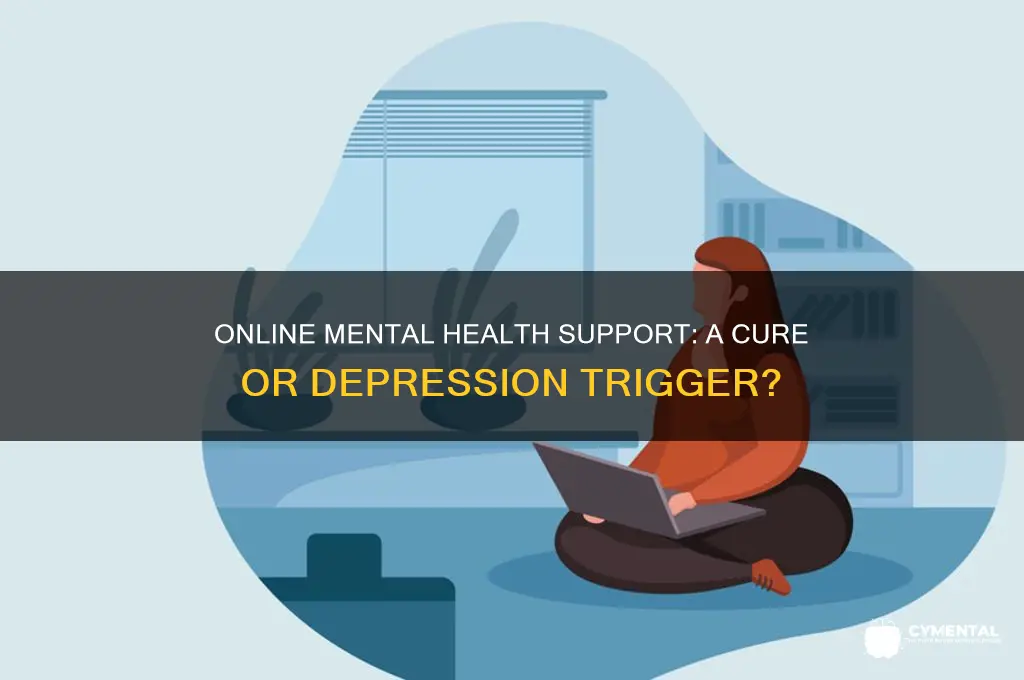
Seeking mental health support online has become increasingly common, but the question of whether it exacerbates depression remains a topic of debate. While the internet offers accessibility and anonymity, which can encourage individuals to seek help, it also presents risks such as unreliable information, lack of personalized care, and potential exposure to harmful content. Online platforms may provide temporary relief or connection, but they often lack the depth and accountability of professional therapy, potentially leading to feelings of inadequacy or isolation. Additionally, the curated nature of online interactions can create unrealistic comparisons, worsening self-esteem issues. Ultimately, while online resources can be a starting point, they should complement, not replace, professional mental health care to avoid inadvertently deepening depressive symptoms.
Explore related products


What You'll Learn
- Online Misinformation Risks: False advice can lead to harmful self-treatment, worsening depression symptoms
- Lack of Personalization: Generic online tips may not address individual needs, causing frustration
- Overwhelming Content: Excessive information can increase anxiety and feelings of hopelessness
- Anonymity Concerns: Lack of accountability in online help may lead to unreliable support
- Delayed Professional Care: Relying solely on internet resources can postpone necessary professional treatment

Online Misinformation Risks: False advice can lead to harmful self-treatment, worsening depression symptoms
The internet is a double-edged sword for those seeking mental health advice. While it offers accessibility and anonymity, it’s also a breeding ground for misinformation. A quick search for "how to treat depression" yields millions of results, but not all are grounded in science. For instance, a popular but dangerous myth suggests that cutting out gluten or sugar can cure depression. While dietary changes can support mental health, they are not a substitute for evidence-based treatments like therapy or medication. Relying solely on such advice can delay proper care, allowing symptoms to worsen unchecked.
Consider the case of self-medication, a common pitfall of online misinformation. Forums and social media often promote supplements like St. John’s Wort or 5-HTP as "natural antidepressants." However, these substances can interact dangerously with prescription medications. For example, St. John’s Wort can reduce the effectiveness of SSRIs, leading to treatment failure. Similarly, 5-HTP, when taken in doses exceeding 200 mg daily, can cause serotonin syndrome, a potentially life-threatening condition. Without professional guidance, individuals risk exacerbating their depression or triggering new health issues.
The persuasive nature of anecdotal success stories further complicates matters. Testimonials like "I cured my depression with yoga alone" or "Meditation replaced my need for medication" can be misleading. While mindfulness practices are beneficial, they are not one-size-fits-all solutions. A 2020 study in *JAMA Psychiatry* found that mindfulness-based interventions were only moderately effective for mild depression and ineffective for severe cases. Yet, such nuances are often lost in online narratives, leading vulnerable individuals to abandon proven treatments in favor of incomplete alternatives.
To navigate this landscape safely, adopt a critical approach. Verify advice by cross-referencing reputable sources like the National Institute of Mental Health or peer-reviewed journals. Avoid self-diagnosis or treatment based solely on online content. Instead, use the internet as a starting point for informed discussions with healthcare professionals. For example, if you’re curious about a specific supplement, bring it up during your next appointment. Remember, the goal is to complement professional care, not replace it. Misinformation thrives on desperation, but informed decisions empower recovery.
Government-Backed Mental Health Infographics: Empowering Support and Awareness
You may want to see also
Explore related products




Lack of Personalization: Generic online tips may not address individual needs, causing frustration
The internet is flooded with generic mental health advice: "Exercise more," "Practice mindfulness," "Keep a gratitude journal." While these tips can be helpful for some, they often fall flat for individuals battling depression. The problem lies in their one-size-fits-all nature. Depression manifests differently in everyone, influenced by unique biological, psychological, and social factors. A 20-year-old struggling with academic pressure experiences depression differently than a 50-year-old facing retirement. Generic advice, devoid of personalization, can feel dismissive, even invalidating, exacerbating feelings of isolation and hopelessness.
Imagine a person with severe depression being told to "just go for a run." For someone experiencing debilitating fatigue and anhedonia (loss of interest in activities), this suggestion is not only impractical but also insensitive. It fails to acknowledge the complex interplay of neurotransmitter imbalances, hormonal fluctuations, and cognitive distortions that characterize depression.
This lack of personalization can lead to a dangerous cycle. Individuals may try these generic tips, experience no improvement, and conclude that they are beyond help. This reinforces feelings of inadequacy and hopelessness, core symptoms of depression. A study published in the Journal of Medical Internet Research found that individuals who relied solely on online mental health information reported higher levels of anxiety and depression compared to those who sought professional help.
The solution lies in recognizing the limitations of generic advice and actively seeking personalized support. Online resources can be a starting point, but they should not be a substitute for professional guidance. Consider these steps:
- Identify your specific symptoms: Track your mood, energy levels, sleep patterns, and thoughts to gain a clearer understanding of your individual experience with depression.
- Seek professional help: A qualified therapist can provide a personalized diagnosis and treatment plan tailored to your unique needs. This may include therapy, medication, or a combination of both.
- Utilize online resources wisely: Look for platforms that offer personalized assessments and connect you with licensed professionals. Avoid relying solely on generic articles or forums.
While the internet can be a valuable tool for mental health information, it's crucial to remember that depression is a complex condition requiring personalized care. Generic online tips, though well-intentioned, can sometimes do more harm than good. By acknowledging the limitations of one-size-fits-all advice and actively seeking personalized support, individuals can break free from the cycle of frustration and take meaningful steps towards recovery.
Seeking Support: Understanding Mental Health Assistance Access Globally
You may want to see also
Explore related products


Overwhelming Content: Excessive information can increase anxiety and feelings of hopelessness
The sheer volume of mental health advice available online can be paralyzing. A simple search for "how to manage depression" yields millions of results, each promising a solution. This deluge of information, while well-intentioned, often leads to a phenomenon known as "analysis paralysis," where the abundance of choices and conflicting advice leaves individuals feeling more confused and overwhelmed than before. For someone already struggling with depression, this can exacerbate feelings of hopelessness, as the task of sifting through endless articles, videos, and forums feels insurmountable.
Consider the following scenario: a 25-year-old seeking help for mild depression encounters articles suggesting meditation, exercise, therapy, medication, dietary changes, and sleep hygiene—all in the first page of search results. Each recommendation is accompanied by success stories and scientific studies, but also by contradictory opinions and warnings of potential side effects. Without guidance, this individual might spend hours researching, comparing, and second-guessing, only to end up feeling more anxious and less capable of taking action. The irony is that the very act of seeking help becomes a source of stress, defeating its purpose.
To mitigate this, it’s essential to approach online mental health resources with a strategic mindset. Start by setting clear, narrow search parameters. Instead of "how to manage depression," try "evidence-based mindfulness techniques for depression" or "CBT exercises for beginners." Limit your research to reputable sources such as government health websites, peer-reviewed journals, or organizations like the National Alliance on Mental Health (NAMI). Allocate a specific time frame for research—say, 30 minutes—and stick to it. Avoid falling into the trap of endless scrolling by jotting down 2-3 actionable steps from your findings and implementing them immediately.
Another practical tip is to use digital tools to filter and organize information. Browser extensions like Pocket or Evernote can help save articles for later review, while apps like Headspace or Calm offer structured programs that eliminate the need for constant decision-making. For those overwhelmed by conflicting advice, consulting a mental health professional to curate a personalized plan can be invaluable. Remember, the goal is not to consume every piece of advice but to find a few strategies that resonate and are feasible to implement.
Ultimately, the internet is a double-edged sword in mental health care. While it offers unprecedented access to information and support, its overwhelming nature can hinder rather than help. By adopting a disciplined approach to online research and focusing on actionable, evidence-based steps, individuals can harness its benefits without succumbing to anxiety or hopelessness. The key lies in treating the internet as a tool, not a therapist, and recognizing when it’s time to seek professional guidance.
Taking the First Step: A Guide to Seeking Mental Health Support
You may want to see also
Explore related products


Anonymity Concerns: Lack of accountability in online help may lead to unreliable support
The veil of anonymity, while offering comfort to those seeking mental health support online, can also breed a dangerous lack of accountability. Without real-world identities tied to advice, the line between genuine help and harmful misinformation blurs. A well-intentioned stranger, lacking professional training, might offer advice that exacerbates depression rather than alleviates it.
Consider this scenario: A teenager struggling with suicidal thoughts confides in an anonymous online forum. Responses range from empathetic encouragement to dangerous suggestions like "just end it all." Without the accountability of a real name or professional credentials, these harmful words carry weight, potentially pushing the vulnerable individual further into despair.
This lack of accountability extends beyond malicious intent. Well-meaning individuals, armed with personal experiences but no formal training, might offer misguided advice based on their own, potentially unique, journeys. What worked for them might be ineffective or even detrimental for someone else.
The absence of professional oversight in online spaces creates a breeding ground for unreliable support. Unlike therapy sessions where qualifications and ethical guidelines are paramount, online interactions operate in a Wild West of advice. This lack of structure can lead to a dangerous game of Russian roulette with mental health, where the consequences of bad advice can be devastating.
While anonymity can foster openness, it's crucial to approach online mental health support with caution. Look for platforms that verify user credentials or have moderation systems in place. Remember, online communities can offer valuable peer support, but they should never replace professional help. If you're struggling, reach out to a qualified mental health professional who can provide personalized guidance and accountability.
Meditation's Power: Enhancing Mental Health and Inner Peace Naturally
You may want to see also
Explore related products


$9.79 $17.99


Delayed Professional Care: Relying solely on internet resources can postpone necessary professional treatment
The internet is a double-edged sword for those grappling with depression. While it offers a wealth of information and support communities, it can also create a false sense of security, leading individuals to delay seeking professional help. This delay can have serious consequences, as untreated depression often worsens over time.
Studies show that early intervention is crucial for effective depression management. The National Institute of Mental Health emphasizes that 60-70% of individuals with depression experience significant improvement with appropriate treatment, which often includes therapy, medication, or a combination of both.
Relying solely on online resources, while helpful for initial understanding and coping strategies, lacks the personalized diagnosis, treatment planning, and ongoing support that qualified mental health professionals provide.
Consider this scenario: A young adult experiencing persistent sadness and fatigue turns to online forums for answers. They find articles about self-care techniques and relatable stories from others struggling with similar symptoms. While this can provide temporary relief and a sense of community, it might also lead them to believe they can manage their depression independently. Weeks turn into months, and their symptoms intensify, potentially leading to social withdrawal, difficulty concentrating, and even suicidal thoughts. This delay in seeking professional help could have been avoided if they had consulted a therapist or psychiatrist who could have provided a proper diagnosis, prescribed medication if necessary, and developed a tailored treatment plan.
It's crucial to remember that online resources are not a substitute for professional care. They can be valuable tools for education and support, but they should never replace the expertise and personalized guidance of a qualified mental health professional.
If you or someone you know is struggling with depression, don't hesitate to reach out for help. Contact a mental health hotline, schedule an appointment with a therapist, or speak to your doctor. Remember, seeking professional help is a sign of strength, not weakness.
Bilingual Brains: Can Language Learning Aid Mental Health Disorders?
You may want to see also
Frequently asked questions
Not necessarily. Online mental health resources can provide valuable support, but the quality of the platform or service matters. Evidence-based programs, licensed therapists, and reputable apps can be beneficial. However, unreliable or negative content may harm mental health, so choose resources carefully.
Online interactions can be a double-edged sword. Supportive communities or forums can reduce feelings of isolation, but toxic environments or cyberbullying may exacerbate depression. Limiting exposure to negative spaces and seeking moderated, positive groups is key.
Self-diagnosing based on online quizzes or articles can lead to misinformation or unnecessary anxiety. While online tools can raise awareness, they should not replace professional evaluation. Misinterpretation of symptoms might worsen distress, so consult a mental health expert for accurate diagnosis.
Online therapy can be effective for many, but it may not suit everyone or all conditions. Severe depression often requires in-person care, medication, or intensive treatment. Relying solely on online therapy without professional guidance might delay necessary interventions, potentially worsening symptoms.