Madison Cole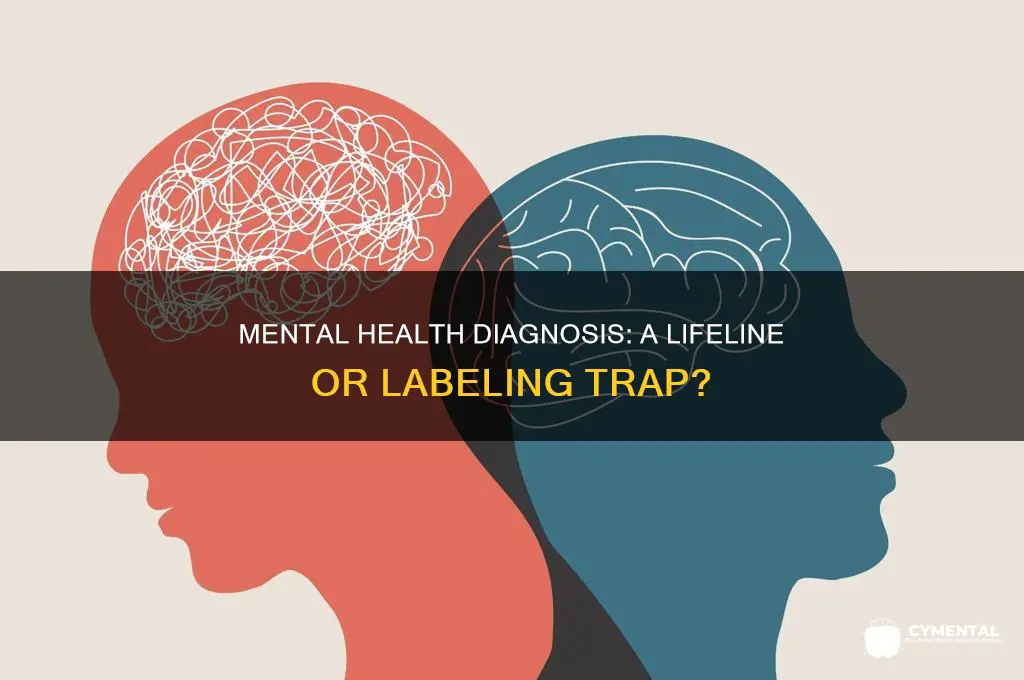
The debate surrounding whether mental health diagnosis is more helpful or harmful is a complex and multifaceted issue, sparking discussions among professionals, patients, and advocates alike. On one hand, a diagnosis can provide individuals with a sense of validation, clarity, and access to targeted treatments, fostering a structured path toward recovery. It also enables healthcare providers to communicate effectively and tailor interventions to specific conditions. However, critics argue that diagnoses can lead to stigmatization, over-medicalization, and the potential for individuals to be defined solely by their condition, which may hinder personal growth and self-perception. Additionally, misdiagnosis or overdiagnosis can result in inappropriate treatments and long-term negative consequences. Balancing these perspectives requires a nuanced approach that prioritizes individualized care, empathy, and a holistic understanding of mental health.
Explore related products



What You'll Learn
- Accuracy of Diagnoses: Reliability and validity of mental health assessments in clinical practice
- Stigma and Labeling: Impact of diagnoses on societal perception and self-identity
- Treatment Access: How diagnoses influence access to therapy, medication, and support
- Overdiagnosis Risks: Potential for misdiagnosis or excessive labeling in mental health care
- Empowerment vs. Limitation: Whether diagnoses provide clarity or restrict personal growth and recovery

Accuracy of Diagnoses: Reliability and validity of mental health assessments in clinical practice
Mental health diagnoses hinge on the accuracy of assessments, yet reliability and validity remain contentious. Reliability refers to consistency—whether the same diagnosis is reached across clinicians or over time. Validity, however, questions whether the diagnosis truly reflects the underlying condition. Studies show that inter-rater reliability for conditions like major depressive disorder can vary widely, with kappa scores (a measure of agreement) ranging from 0.6 to 0.8, indicating moderate to substantial consistency. Yet, for complex disorders like borderline personality disorder, reliability drops significantly, often below 0.5, raising concerns about diagnostic stability.
Consider the Structured Clinical Interview for DSM-5 (SCID), a gold standard tool in clinical practice. While it improves reliability by standardizing questions, its validity is challenged by the subjective nature of mental health symptoms. For instance, a patient’s self-reported anxiety levels can fluctuate based on their emotional state during the assessment, leading to potential misdiagnosis. Similarly, cultural biases in diagnostic criteria can skew results. A 2019 study found that African American individuals were 2.5 times more likely to be misdiagnosed with schizophrenia due to misinterpretation of symptoms like agitation or paranoia, highlighting systemic validity issues.
To enhance accuracy, clinicians must adopt a multi-method approach. Combining self-report measures, behavioral observations, and collateral information from family members can triangulate data, reducing reliance on a single perspective. For example, using the Generalized Anxiety Disorder-7 (GAD-7) scale alongside clinical interviews can provide quantitative data to support qualitative observations. Additionally, longitudinal assessments are crucial. A single session may capture a snapshot of symptoms, but repeated evaluations over weeks or months can reveal patterns, improving diagnostic precision.
However, even with these strategies, challenges persist. The DSM-5’s categorical approach to diagnosis often fails to capture the spectrum of mental health conditions. For instance, depression can manifest with varying severity and comorbidities, yet the diagnosis remains binary. This limitation underscores the need for dimensional assessments, such as the World Health Organization’s ICD-11, which incorporates symptom severity and functional impact. Clinicians must also remain vigilant about overdiagnosis, particularly in conditions like ADHD, where prescription rates have surged 40% in the past decade, raising questions about diagnostic thresholds.
Ultimately, the accuracy of mental health diagnoses depends on balancing reliability and validity while acknowledging inherent limitations. Clinicians should view diagnoses as working hypotheses rather than definitive labels, adapting them as new information emerges. Patients, too, play a role by advocating for comprehensive assessments and questioning diagnoses that feel misaligned. While imperfect, accurate diagnoses remain a cornerstone of effective treatment, guiding interventions like medication, therapy, and lifestyle adjustments. The goal is not perfection but progress—a diagnosis that serves as a starting point for healing rather than a final verdict.
Nutrition's Impact: How a Healthy Diet Boosts Mental Well-being
You may want to see also
Explore related products


Stigma and Labeling: Impact of diagnoses on societal perception and self-identity
Mental health diagnoses often serve as double-edged swords, offering clarity and access to treatment while simultaneously embedding individuals within a web of societal stigma. Labels like "depressed," "bipolar," or "schizophrenic" can become shorthand for a person’s identity, overshadowing their complexities and reducing them to a single, often misunderstood, condition. This phenomenon is not merely theoretical; studies show that 40% of individuals with mental health diagnoses report experiencing discrimination in social or professional settings. The question arises: how does this labeling shape not only external perceptions but also the self-identity of those diagnosed?
Consider the process of internalizing a diagnosis. For some, it provides a framework to understand their struggles, fostering self-compassion and targeted coping strategies. For others, it becomes a self-fulfilling prophecy, limiting their belief in their own capabilities. A teenager labeled with ADHD, for instance, might begin to attribute every academic or social challenge to their diagnosis, inadvertently narrowing their sense of potential. This internalization is compounded by societal narratives that equate mental health conditions with weakness or unpredictability, further entrenching self-doubt.
Societal perception plays a critical role in this dynamic. Employers, educators, and even family members often unconsciously alter their expectations based on a diagnosis. A 2019 survey revealed that 60% of hiring managers admitted to hesitating before employing someone with a history of mental illness, fearing reduced productivity or workplace disruption. Such biases not only limit opportunities but also reinforce the idea that individuals with mental health diagnoses are inherently "other," perpetuating isolation and self-stigma.
To mitigate these effects, practical steps can be taken. First, language matters. Replacing phrases like "she’s schizophrenic" with "she lives with schizophrenia" helps separate the person from the condition. Second, education is key. Campaigns that humanize mental health struggles, such as those featuring successful individuals who manage their conditions, can dismantle stereotypes. Finally, fostering self-narratives that emphasize resilience and growth can empower individuals to reclaim their identities beyond their diagnoses.
In conclusion, while diagnoses can provide a roadmap to healing, their impact on stigma and self-identity cannot be overlooked. By addressing societal biases and encouraging nuanced self-perception, we can transform labels from chains into tools for understanding and empowerment. The goal is not to eliminate diagnoses but to ensure they serve as stepping stones rather than anchors.
Music Therapy: Healing Minds, Transforming Mental Disabilities with Harmony
You may want to see also
Explore related products

$88.36 $100.95

$21.58 $46


Treatment Access: How diagnoses influence access to therapy, medication, and support
A mental health diagnosis can be a double-edged sword when it comes to accessing treatment. On one hand, it serves as a key that unlocks doors to therapy, medication, and support systems. Without a formal diagnosis, individuals often face barriers such as insurance denials, limited provider availability, or skepticism from healthcare professionals. For instance, a diagnosis of major depressive disorder can qualify someone for antidepressants like selective serotonin reuptake inhibitors (SSRIs), typically starting at 10–20 mg daily, or cognitive-behavioral therapy (CBT), which requires a clear clinical rationale for insurance coverage. On the other hand, the label itself can stigmatize, leading some to avoid seeking help altogether. This paradox highlights the critical role diagnoses play in navigating the fragmented landscape of mental health care.
Consider the steps involved in accessing treatment post-diagnosis. First, a diagnosis provides a framework for treatment planning. For example, a diagnosis of generalized anxiety disorder (GAD) might lead to a prescription for benzodiazepines (e.g., 0.5 mg of alprazolam as needed) alongside a referral to a therapist specializing in mindfulness-based stress reduction. Second, it facilitates communication between providers, ensuring continuity of care. However, caution is necessary: misdiagnosis or overdiagnosis can lead to inappropriate treatments, such as prescribing stimulants for ADHD without thorough assessment, potentially causing adverse effects like insomnia or increased anxiety. The precision of the diagnosis directly impacts the efficacy and safety of the treatment.
From a comparative perspective, access to treatment varies significantly based on the type of diagnosis. Severe conditions like schizophrenia or bipolar disorder often grant faster access to specialized care, including antipsychotics (e.g., 5–10 mg of olanzapine daily) and case management services. In contrast, diagnoses like adjustment disorder or mild depression may receive lower priority, leaving individuals with fewer resources. This disparity underscores the need for a nuanced approach to diagnosis, one that balances clinical accuracy with equitable access. For instance, integrating stepped-care models—where treatment intensity is matched to symptom severity—can ensure that even those with less severe diagnoses receive appropriate support.
Persuasively, the argument for diagnoses as a gateway to treatment is strong, but it’s not without ethical considerations. Diagnoses can inadvertently pigeonhole individuals, limiting their perceived potential for recovery. For example, a young adult diagnosed with borderline personality disorder might face prejudice from providers, delaying access to evidence-based treatments like dialectical behavior therapy (DBT). To mitigate this, providers should adopt a person-centered approach, focusing on symptoms and goals rather than labels alone. Practical tips include advocating for yourself by asking providers to explain treatment rationales and exploring alternative therapies if initial interventions fail.
In conclusion, diagnoses are indispensable tools for accessing mental health treatment, but their impact is complex. They open doors to therapy, medication, and support but carry risks of stigma and misalignment with individual needs. By understanding this duality, individuals and providers can navigate the system more effectively. For instance, a 30-year-old diagnosed with PTSD might combine trauma-focused CBT with a low-dose SSRI (e.g., 20 mg of fluoxetine) while also engaging in peer support groups. Ultimately, the goal is not just to diagnose but to diagnose thoughtfully, ensuring that treatment access is both a right and a reality.
Nourish Your Mind: How Healthy Eating Boosts Mental Well-Being
You may want to see also
Explore related products


$44


Overdiagnosis Risks: Potential for misdiagnosis or excessive labeling in mental health care
The expansion of diagnostic criteria in mental health has led to a surge in diagnoses, raising concerns about overdiagnosis. For instance, the prevalence of ADHD diagnoses in the U.S. has increased by 42% over the past decade, with 9.4% of children aged 2–17 now labeled with the condition. While broader criteria aim to improve access to care, they also blur the line between clinical pathology and normal human variation. This shift risks medicalizing everyday experiences, such as occasional sadness or restlessness, turning them into treatable disorders. The question arises: Are we diagnosing more because we’re better at identifying mental health issues, or are we pathologizing ordinary aspects of life?
Consider the diagnostic process itself, which relies heavily on subjective assessments and self-reported symptoms. A 2019 study in *JAMA Psychiatry* found that up to 20% of depression diagnoses in primary care settings may be inaccurate, often due to overlapping symptoms or insufficient evaluation time. Misdiagnosis can lead to inappropriate treatment, such as prescribing antidepressants to someone experiencing situational grief rather than clinical depression. Excessive labeling compounds this issue, as individuals may internalize their diagnosis, altering their self-perception and behavior in ways that reinforce the very symptoms they’re seeking to treat.
To mitigate these risks, clinicians should adopt a cautious, stepwise approach. Start with a thorough differential diagnosis, ruling out medical conditions (e.g., thyroid dysfunction mimicking depression) and situational factors. Use standardized tools like the PHQ-9 for depression or the ADHD Rating Scale, but interpret results within the context of the patient’s life. For example, a teenager exhibiting inattention and hyperactivity should be assessed for sleep deprivation or academic stress before an ADHD diagnosis is considered. Additionally, involve patients in shared decision-making, discussing the pros and cons of a diagnosis and exploring non-pharmacological interventions first.
A comparative analysis of overdiagnosis in mental health versus physical health reveals a critical difference: mental health diagnoses often lack objective biomarkers. In contrast, conditions like diabetes are confirmed through measurable blood glucose levels. This subjectivity in mental health diagnosis underscores the need for ongoing monitoring and reevaluation. For instance, a patient diagnosed with generalized anxiety disorder should have their symptoms reassessed after 3–6 months to determine if the diagnosis still holds or if stressors have resolved. Such vigilance can prevent the long-term consequences of an inaccurate or unnecessary label.
Finally, the societal implications of overdiagnosis cannot be ignored. Stigma remains a significant barrier to mental health care, and excessive labeling may exacerbate this issue. A person diagnosed with borderline personality disorder, for example, may face discrimination in employment or relationships, even if their symptoms are mild or transient. To counter this, mental health professionals should emphasize the provisional nature of diagnoses and focus on functional impairment rather than symptom checklists. By doing so, they can provide care that is both accurate and compassionate, minimizing harm while maximizing benefit.
Viome and Mental Health: Can Gut Testing Improve Your Well-Being?
You may want to see also
Explore related products


Empowerment vs. Limitation: Whether diagnoses provide clarity or restrict personal growth and recovery
A mental health diagnosis can be a double-edged sword, offering both a sense of direction and a potential straitjacket. On one hand, it provides a framework to understand symptoms, access tailored treatments, and validate experiences. For instance, a diagnosis of generalized anxiety disorder can explain persistent worry, leading to evidence-based interventions like cognitive-behavioral therapy (CBT) or selective serotonin reuptake inhibitors (SSRIs), often prescribed at 10–20 mg daily for adults. On the other hand, labels can become self-fulfilling prophecies, limiting individuals to their diagnosis rather than seeing it as one aspect of their identity. This tension highlights the need to balance the clarity a diagnosis brings with the risk of it becoming a restrictive box.
Consider the case of a young adult diagnosed with major depressive disorder. This label can empower them by normalizing their struggles and connecting them to a community of support. Yet, it might also lead them to believe they are permanently "broken," hindering their belief in personal growth. Research shows that while diagnoses improve treatment adherence, they can also increase stigma and reduce self-efficacy if not handled carefully. For example, a study in *Psychological Science* found that individuals who viewed their diagnosis as malleable were more likely to engage in recovery efforts than those who saw it as fixed. This suggests that the framing of a diagnosis—as a starting point rather than a final verdict—is crucial.
To navigate this, practitioners should emphasize diagnoses as tools, not identities. For instance, instead of saying, "You *are* bipolar," reframe it as, "You *experience* bipolar symptoms, and here’s how we can manage them." Patients can also take proactive steps, such as setting personal recovery goals beyond symptom reduction, like rebuilding social connections or pursuing hobbies. For adolescents, involving them in treatment planning fosters agency, while for older adults, integrating diagnosis into a life narrative of resilience can reduce feelings of limitation. The key is to use diagnosis as a compass, not a chain.
Ultimately, the impact of a diagnosis depends on how it’s wielded. When paired with a strengths-based approach, it can catalyze growth, offering clarity without confinement. For example, a diagnosis of ADHD might explain past struggles but also highlight creativity and energy as assets to harness. Conversely, without context, it risks becoming a barrier, reducing complex human experiences to clinical checklists. By treating diagnoses as dynamic guides rather than static labels, individuals can reclaim their narratives, turning potential limitations into pathways for empowerment.
Effective Communication: A Powerful Tool for Enhancing Mental Well-being
You may want to see also
Frequently asked questions
A mental health diagnosis is generally more helpful in treatment planning as it provides a framework for understanding symptoms, guiding appropriate interventions, and tailoring therapies to individual needs.
Yes, a mental health diagnosis can sometimes lead to stigmatization, discrimination, or self-labeling, which may cause emotional distress or social isolation, making it potentially harmful in certain contexts.
Yes, a diagnosis can be empowering by validating an individual’s struggles, reducing self-blame, and providing a sense of clarity and direction for seeking support and treatment.
No, a formal diagnosis is not always necessary for effective care. Some individuals benefit from symptom-focused treatment or therapy without a specific label, depending on their needs and preferences.