Ava Ramirez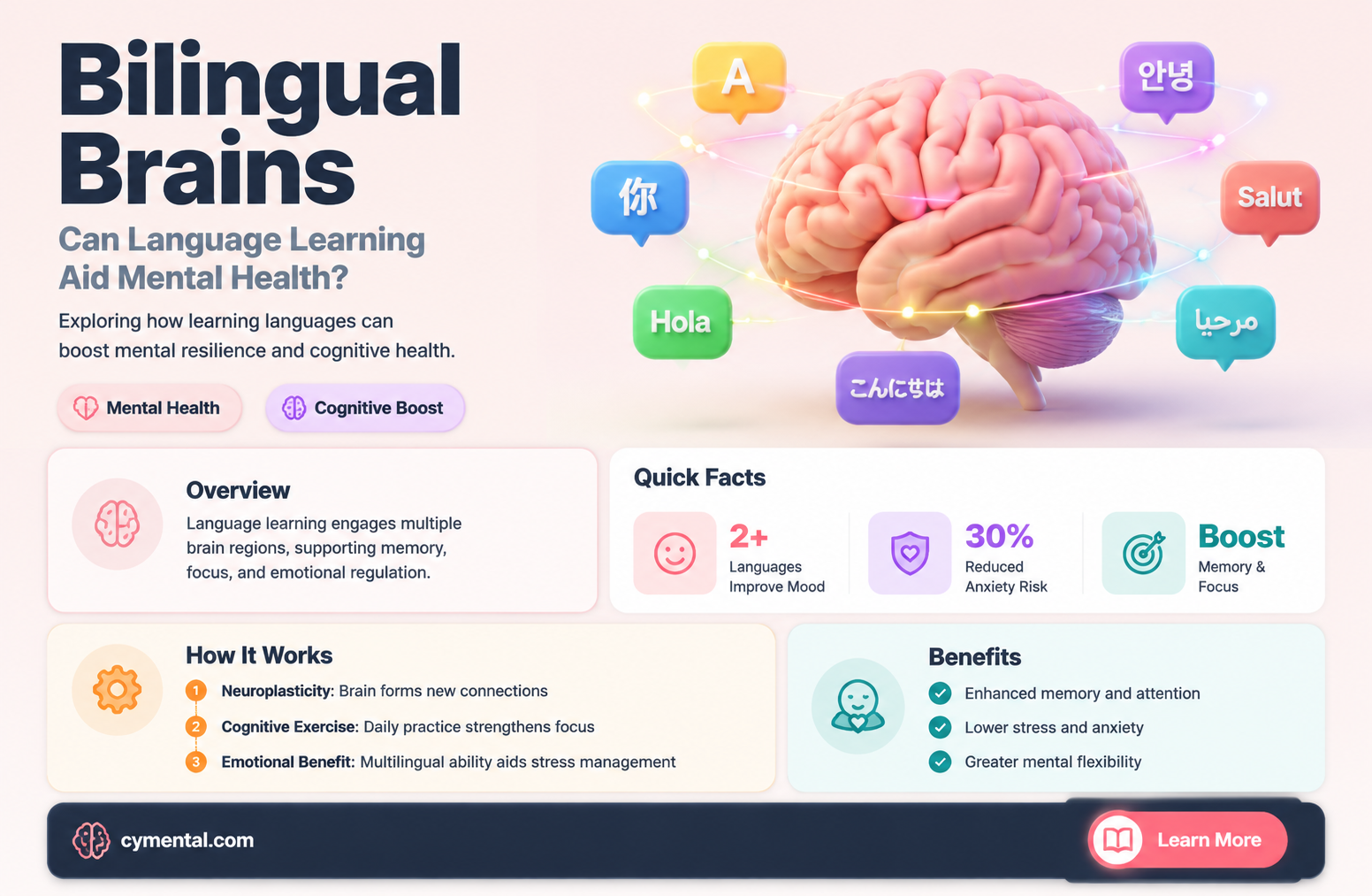
Learning a second language has long been recognized for its cognitive benefits, such as improved problem-solving skills and enhanced memory, but emerging research suggests it may also play a role in supporting mental health. Studies indicate that bilingualism can delay the onset of neurodegenerative disorders like Alzheimer’s and dementia by strengthening neural pathways and increasing cognitive reserve. Additionally, the process of language learning has been linked to reduced symptoms of anxiety and depression, as it fosters a sense of accomplishment, cultural connection, and improved communication skills. While not a standalone treatment, acquiring a second language may complement therapeutic interventions by promoting mental resilience and cognitive flexibility, offering a promising avenue for individuals managing mental disorders.
| Characteristics | Values |
|---|---|
| Cognitive Reserve | Learning a second language enhances cognitive reserve, delaying the onset of dementia and Alzheimer's disease by 4-5 years. |
| Improved Executive Function | Bilingual individuals show better task-switching, problem-solving, and working memory, which can mitigate symptoms of ADHD and schizophrenia. |
| Neuroplasticity | Language learning increases gray matter density in brain regions like the hippocampus and cerebral cortex, promoting resilience against mental decline. |
| Stress Reduction | Engaging in language learning reduces cortisol levels and improves emotional regulation, benefiting conditions like anxiety and depression. |
| Social Engagement | Bilingualism fosters social connections, reducing loneliness and improving mental well-being, particularly in older adults. |
| Delayed Onset of Mental Disorders | Studies suggest bilingual individuals experience a delayed onset of age-related cognitive impairments and mental disorders. |
| Enhanced Emotional Resilience | Bilinguals often exhibit greater emotional stability and coping mechanisms, potentially reducing the severity of mood disorders. |
| Cultural Empathy | Learning a second language increases cultural awareness, which can improve mental health by fostering a sense of belonging and reducing cultural isolation. |
| Brain Recovery Post-Injury | Bilingual individuals show better recovery from stroke and traumatic brain injuries, possibly due to increased neural connectivity. |
| Limitations | While beneficial, language learning is not a standalone treatment for mental disorders and should complement traditional therapies. Effects may vary based on age, language proficiency, and disorder type. |
Explore related products


What You'll Learn
- Cognitive Reserve: Bilingualism may delay dementia onset by enhancing brain plasticity and cognitive flexibility
- Anxiety Reduction: Language learning can provide focus, structure, and a sense of accomplishment, easing anxiety
- Improved Focus: Multilingual individuals often exhibit better attention control, aiding ADHD symptom management
- Depression Coping: Engaging in language study offers purpose, social connection, and emotional resilience against depression
- PTSD Recovery: Learning a language can create new neural pathways, potentially reducing trauma-related symptoms

Cognitive Reserve: Bilingualism may delay dementia onset by enhancing brain plasticity and cognitive flexibility
Bilingualism isn’t just about switching between languages—it’s a cognitive workout that reshapes the brain. Research shows that bilingual individuals often exhibit greater gray matter density in areas responsible for memory, attention, and language processing. This structural advantage is linked to the constant management of two linguistic systems, which strengthens neural networks and fosters brain plasticity. Such plasticity is critical for adapting to cognitive challenges, including those posed by neurodegenerative diseases like dementia.
Consider the concept of cognitive reserve, a buffer that helps the brain withstand damage before showing symptoms of decline. Bilinguals, by virtue of their dual-language practice, build a robust cognitive reserve. Studies suggest that this reserve can delay the onset of dementia symptoms by up to five years, even in individuals with similar levels of brain pathology. For instance, a 2018 study published in *Neurology* found that bilingual patients with Alzheimer’s disease were diagnosed 4.5 years later than monolinguals, despite comparable disease progression. This delay is attributed to the brain’s enhanced ability to compensate for damage, a direct result of lifelong bilingualism.
To harness these benefits, it’s never too late to start learning a second language. While early bilingualism (before age 7) maximizes cognitive advantages, adult learners still experience significant gains. Dedicate 30 minutes daily to language practice, focusing on active engagement through conversation, reading, or listening. Apps like Duolingo or Rosetta Stone can provide structured learning, but real-world interactions—such as joining language exchange groups—are most effective. Consistency is key; even basic proficiency contributes to cognitive flexibility and plasticity.
However, bilingualism isn’t a cure-all. While it delays dementia onset, it doesn’t prevent the disease entirely. Pair language learning with other brain-healthy habits: regular exercise, a Mediterranean diet, and social engagement. For older adults, combining language study with cognitive games or puzzles can amplify benefits. Caregivers and educators should encourage multilingual environments, especially for at-risk populations, as this simple intervention could significantly improve quality of life in later years.
In essence, bilingualism acts as a cognitive insurance policy, fortifying the brain against age-related decline. By demanding constant mental switching and problem-solving, it keeps neural pathways agile and resilient. Whether you’re 20 or 70, investing time in a second language isn’t just about communication—it’s about safeguarding your cognitive future. Start today, and let your brain reap the rewards for decades to come.
Finding Support: Where to Seek Help for Depression and Healing
You may want to see also
Explore related products




Anxiety Reduction: Language learning can provide focus, structure, and a sense of accomplishment, easing anxiety
Learning a second language isn't just about mastering grammar and vocabulary—it can also serve as a powerful tool for managing anxiety. By engaging in language study, individuals often find themselves immersed in a structured routine that demands focus and attention. This mental engagement acts as a natural distraction from anxious thoughts, redirecting energy toward productive learning. For instance, dedicating 30 minutes daily to language practice can create a consistent habit that anchors the mind, reducing the mental clutter associated with anxiety.
Consider the process of breaking down complex sentences or memorizing new phrases. These tasks require concentration, effectively shifting the brain’s focus away from stressors. Studies suggest that such cognitive engagement can lower cortisol levels, the hormone linked to stress. For those prone to anxiety, this structured mental workout provides a sense of control and predictability, counteracting the unpredictability that often fuels anxious feelings. Practical tips include pairing language learning with calming activities, like listening to foreign-language podcasts during a walk or practicing vocabulary with flashcards in a quiet space.
The sense of accomplishment that comes with mastering a new language also plays a critical role in easing anxiety. Achieving small milestones, such as holding a basic conversation or understanding a song lyric, triggers the release of dopamine, a neurotransmitter associated with pleasure and reward. This positive reinforcement builds confidence and fosters a mindset of progress, which can counteract the self-doubt often tied to anxiety disorders. For example, setting achievable goals like learning five new words daily or completing a weekly lesson can provide a steady stream of successes to celebrate.
However, it’s essential to approach language learning with balance. Overloading oneself with unrealistic expectations can backfire, increasing stress instead of alleviating it. Start with short, manageable sessions and gradually increase intensity as comfort grows. For younger learners or those with severe anxiety, pairing language study with mindfulness techniques, such as deep breathing during practice, can enhance its calming effects. Ultimately, language learning offers a unique blend of focus, structure, and achievement that, when tailored to individual needs, can become a valuable ally in the battle against anxiety.
How Mental Health Case Managers Assist in Securing SSI Benefits
You may want to see also
Explore related products


$18.99


Improved Focus: Multilingual individuals often exhibit better attention control, aiding ADHD symptom management
Multilingual individuals often demonstrate superior attentional control, a skill that can significantly benefit those managing ADHD symptoms. This enhanced focus isn’t merely anecdotal; studies show that bilinguals outperform monolinguals in tasks requiring sustained attention and cognitive flexibility. For instance, a 2012 study published in *Psychological Science* found that bilingual children were better at filtering out irrelevant information and focusing on relevant cues, a critical ability for individuals with ADHD. This suggests that the mental gymnastics involved in switching between languages may strengthen the brain’s executive functions, which are often impaired in ADHD.
To harness this benefit, consider incorporating language learning into daily routines, even in small doses. For adults, dedicating 20–30 minutes daily to vocabulary practice or conversational exercises can yield cognitive improvements over time. For children, interactive apps or bilingual storybooks can make learning engaging and less structured, reducing the risk of overwhelm. The key is consistency; sporadic efforts may not produce the same neural adaptations. Pairing language practice with mindfulness techniques, such as focusing on pronunciation or grammar rules, can further amplify attentional gains.
However, it’s essential to manage expectations. While bilingualism can improve focus, it is not a standalone treatment for ADHD. Medication, therapy, and lifestyle adjustments remain cornerstone interventions. Think of language learning as a complementary tool—one that not only enhances cognitive control but also fosters cultural awareness and personal growth. For those with ADHD, the structured yet creative nature of language study can provide a sense of accomplishment, counteracting the frustration often associated with attentional challenges.
A practical tip for integrating this approach: start with high-frequency phrases or words in a new language, rather than diving into complex grammar. This reduces cognitive load while still engaging the brain’s attentional networks. For example, learning to say “Where is the library?” in Spanish (*¿Dónde está la biblioteca?*) involves memory, pronunciation, and context—all while exercising focus. Over time, gradually increase complexity, mirroring the brain’s growing capacity for attention control. This method aligns with ADHD management strategies, emphasizing small, achievable goals to build momentum and confidence.
Can Lawyers Improve Mental Health Outcomes in Legal Cases?
You may want to see also
Explore related products


Depression Coping: Engaging in language study offers purpose, social connection, and emotional resilience against depression
Learning a second language isn’t just about mastering grammar or vocabulary—it can be a powerful tool for combating depression. Research suggests that the structured nature of language study provides a sense of purpose, often lacking in individuals experiencing depressive episodes. Setting achievable goals, such as memorizing 10 new words daily or completing a lesson module weekly, creates a measurable sense of progress. This small but consistent accomplishment can counteract feelings of stagnation and hopelessness, common symptoms of depression. By focusing on tangible objectives, individuals can rebuild their confidence and regain control over their mental state.
Beyond personal achievement, language learning fosters social connection, a critical factor in depression management. Joining language exchange groups, either online or in-person, exposes learners to diverse communities and cultures. For instance, practicing conversational skills with a native speaker not only improves fluency but also builds meaningful relationships. Studies show that social interaction, even in the context of language practice, can reduce feelings of isolation and increase emotional support. For adults over 30, who may face shrinking social circles, this aspect of language learning can be particularly transformative. Engaging in conversations about shared interests in a new language adds depth to interactions, making them more rewarding.
Emotionally, the cognitive demands of language study promote resilience by shifting focus away from negative thought patterns. The brain’s engagement with new linguistic structures and cultural nuances acts as a form of mental exercise, akin to mindfulness practices. For example, spending 30 minutes daily on language apps like Duolingo or Babbel can serve as a healthy distraction from depressive rumination. Over time, this practice trains the mind to adapt to challenges, a skill transferable to managing emotional distress. A study published in *Psychological Science* found that bilingual individuals exhibit greater emotional stability, likely due to the cognitive flexibility developed through language learning.
However, it’s essential to approach language study as a complementary strategy, not a standalone cure for depression. Combining it with professional therapy or medication, when prescribed, maximizes its benefits. Beginners should start with realistic expectations, focusing on consistency rather than perfection. For instance, dedicating 15–20 minutes daily to language practice is more sustainable than sporadic marathon sessions. Additionally, integrating language learning into daily routines—such as labeling household items in the target language or listening to podcasts during commutes—can make the process more enjoyable and less overwhelming. By weaving language study into life’s fabric, individuals can harness its potential to combat depression effectively.
Can CES Therapy Alleviate Symptoms of Mental Health Disorders?
You may want to see also
Explore related products


PTSD Recovery: Learning a language can create new neural pathways, potentially reducing trauma-related symptoms
Learning a second language isn’t just about mastering grammar or vocabulary—it’s a cognitive workout that reshapes the brain. For individuals with PTSD, this process can be particularly transformative. Research suggests that language acquisition stimulates neuroplasticity, the brain’s ability to form and reorganize neural connections. This is crucial for PTSD recovery, as trauma often alters brain structures like the amygdala and hippocampus, which regulate fear responses and memory. By engaging in language learning, individuals may create new neural pathways that bypass or mitigate trauma-related triggers, offering a novel approach to symptom reduction.
Consider the mechanics: language learning requires focus, memory, and problem-solving, all of which activate multiple brain regions. For PTSD sufferers, this cognitive engagement can serve as a form of mental redirection. For instance, a 2018 study published in *Frontiers in Psychology* found that bilingual individuals exhibited greater emotional resilience, partly due to enhanced cognitive control. Practically, dedicating 30 minutes daily to language study—whether through apps like Duolingo, podcasts, or conversation practice—can provide a structured, non-trauma-focused activity. Over time, this routine may help reduce hypervigilance and intrusive thoughts by shifting mental resources toward constructive tasks.
However, it’s essential to approach this strategy with caution. Language learning can be demanding, and for some PTSD survivors, the pressure to perform may exacerbate anxiety. To avoid this, start small—focus on simple phrases or vocabulary rather than fluency. Pair learning with grounding techniques, such as deep breathing or mindfulness, to ensure the process remains therapeutic rather than stressful. Additionally, choose a language that feels personally meaningful or enjoyable, as emotional investment can enhance motivation without triggering overwhelm.
Comparatively, traditional PTSD treatments like cognitive-behavioral therapy (CBT) and eye movement desensitization and reprocessing (EMDR) target trauma directly, often requiring individuals to confront painful memories. Language learning, on the other hand, offers an indirect yet powerful complement. It fosters a sense of accomplishment and agency, which can counteract feelings of helplessness common in PTSD. For example, mastering a new language might boost self-esteem, providing a tangible skill that reinforces the idea of recovery and growth.
In conclusion, while not a standalone cure, language learning holds promise as a supportive tool in PTSD recovery. Its ability to create new neural pathways, coupled with its cognitive and emotional benefits, makes it a valuable addition to a holistic treatment plan. For those willing to explore this approach, consistency and self-compassion are key. Start slowly, stay curious, and let the process of learning become a pathway to healing.
Unlocking Hope: Effective Mental Health Care in Prisons Explored
You may want to see also
Frequently asked questions
Yes, research suggests that bilingualism can enhance cognitive flexibility, problem-solving, and multitasking abilities, which may benefit individuals with mental disorders by improving overall brain function and resilience.
Learning a second language can act as a cognitive distraction and provide a sense of accomplishment, which may temporarily alleviate symptoms of anxiety or depression. However, it is not a substitute for professional treatment.
Studies indicate that bilingual individuals may experience a delayed onset of Alzheimer’s or dementia by up to 5 years, as language learning strengthens neural pathways and increases cognitive reserve.
Yes, the structured nature of language learning can improve focus and discipline in individuals with ADHD, while the cognitive challenges involved may enhance attention and working memory.
Bilingualism may improve emotional regulation by providing alternative linguistic frameworks for expressing emotions, though its effectiveness varies depending on the individual and the specific disorder.