Madison Cole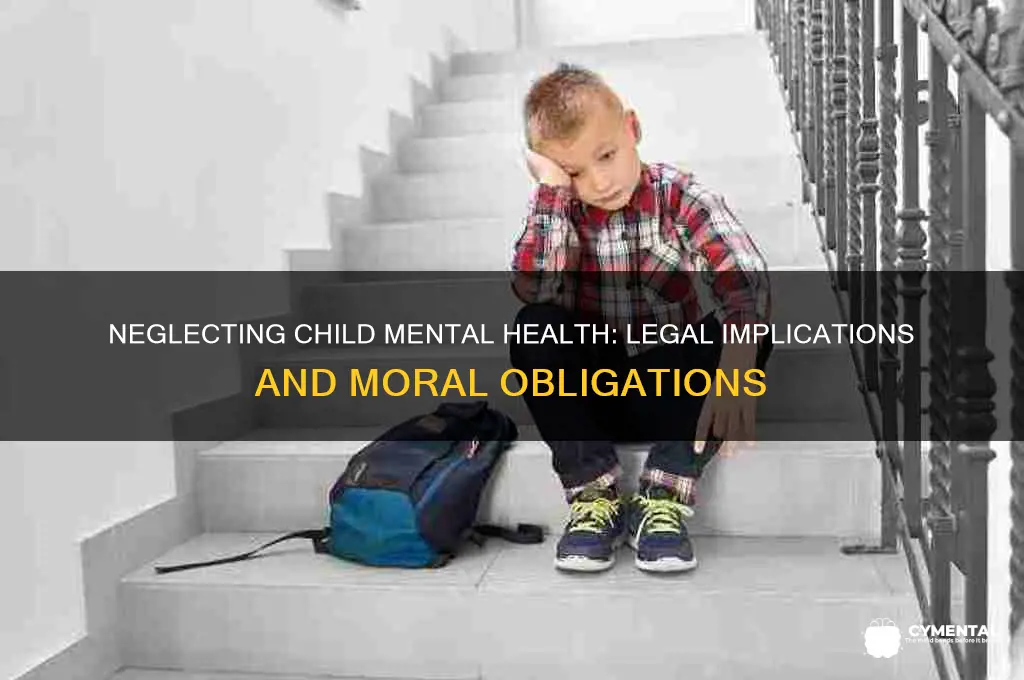
Withholding mental health help from a child raises significant ethical, legal, and moral questions, as it can have profound and lasting consequences on a child's well-being and development. In many jurisdictions, failing to provide necessary medical or psychological care to a minor is considered a form of neglect, which is often classified as a criminal offense. Mental health is recognized as an essential component of overall health, and denying a child access to treatment can exacerbate conditions, lead to long-term harm, and even result in irreversible damage. While laws vary by region, the duty of caregivers to ensure a child's mental health needs are met is increasingly emphasized, with legal systems holding parents, guardians, or institutions accountable for such omissions. This issue intersects with broader debates about children's rights, parental autonomy, and the state's role in safeguarding vulnerable populations, making it a complex and contentious topic in both legal and societal contexts.
| Characteristics | Values |
|---|---|
| Legal Definition | Withholding mental health help from a child can be considered a form of medical neglect, which is illegal in many jurisdictions. |
| Criminal Charges | Charges may include child neglect, child endangerment, or abuse, depending on the severity and intent. |
| Ethical Considerations | Ethically, it is a violation of a child's right to health and well-being. |
| Potential Consequences for Child | Long-term mental health issues, developmental delays, and emotional trauma. |
| Legal Consequences for Caregiver | Fines, imprisonment, loss of custody, and mandatory parenting classes or therapy. |
| Jurisdictional Variations | Laws vary by country and state; some have specific statutes addressing mental health neglect. |
| Reporting Requirements | Mandatory reporting laws require professionals to report suspected neglect to child protective services. |
| Intent vs. Negligence | Intentional withholding is more severely penalized than unintentional neglect. |
| Cultural and Societal Factors | Stigma around mental health may influence reporting and prosecution rates. |
| Prevention and Intervention | Early intervention and access to mental health resources are key to prevention. |
Explore related products


What You'll Learn
- Legal definitions of child neglect and mental health care obligations
- Parental rights versus state intervention in mental health decisions
- Criminal penalties for failing to provide necessary mental health treatment
- Ethical responsibilities of caregivers in ensuring child mental well-being
- Impact of untreated mental health issues on child development and rights

Legal definitions of child neglect and mental health care obligations
Child neglect laws universally emphasize the duty to provide for a child's basic needs, but mental health care occupies a gray area. While physical and educational neglect are clearly defined, mental health obligations often hinge on interpretations of "medical care" and "emotional well-being." In the United States, for instance, federal law mandates reporting of suspected neglect, but states vary widely in how they define it. Some explicitly include mental health treatment within the scope of medical neglect, while others rely on broader language about "necessary care." This inconsistency creates a patchwork of protections, leaving children vulnerable in jurisdictions with vague or narrow definitions.
Consider the case of a 12-year-old exhibiting severe anxiety and suicidal ideation. In a state where mental health care is explicitly covered under neglect statutes, withholding therapy or medication could result in criminal charges. However, in a state with a more limited definition, parents might legally refuse treatment, even if the child's condition deteriorates. This disparity highlights the need for standardized legal frameworks that explicitly address mental health as a fundamental component of child welfare. Without such clarity, the law risks failing those who need it most.
From a practical standpoint, parents and caregivers must understand their legal obligations. In states like California, where mental health care is explicitly included in neglect laws, failure to provide therapy for a diagnosed condition could lead to intervention by Child Protective Services. Conversely, in states like Texas, where the focus is on "basic necessities," the threshold for intervention is higher. To navigate this, caregivers should document all efforts to seek mental health care, including consultations, referrals, and reasons for any refusals. This not only demonstrates good faith but also provides evidence in case of legal scrutiny.
Advocates argue that mental health care should be treated as non-negotiable, akin to physical health care. The American Academy of Child and Adolescent Psychiatry recommends regular mental health screenings for children starting at age 9, yet access remains inconsistent. Legislators could address this by mandating insurance coverage for mental health services and requiring schools to provide mental health resources. Such measures would not only reduce neglect cases but also foster a culture of proactive care. Until then, the onus falls on legal systems to interpret existing laws expansively, ensuring that mental health is not treated as a secondary concern.
Ultimately, the legal definition of child neglect must evolve to reflect the critical role of mental health in a child's development. By explicitly including mental health care within neglect statutes, lawmakers can provide clear guidance to parents, caregivers, and authorities. This shift would not only protect children but also encourage early intervention, potentially preventing long-term harm. As society increasingly recognizes mental health as a cornerstone of overall well-being, the law must follow suit, closing loopholes that allow children to suffer in silence.
Seeking Support: Do Homeless Individuals Want Mental Health Assistance?
You may want to see also
Explore related products



Parental rights versus state intervention in mental health decisions
The tension between parental rights and state intervention in mental health decisions for children is a delicate balance, often tipping toward crisis when a child’s well-being is at stake. In the U.S., the 14th Amendment grants parents the right to make decisions for their children, including medical and mental health care. However, this autonomy is not absolute. States reserve the right to intervene under the "parens patriae" doctrine, which allows them to act as a child’s protector when parental decisions endanger the child’s health or safety. For instance, if a parent refuses psychiatric medication for a child diagnosed with severe depression, child protective services may step in, citing medical neglect. This legal gray area raises critical questions: At what point does parental refusal of mental health treatment become criminal neglect? And how can the state ensure intervention is protective rather than punitive?
Consider the case of a 12-year-old with anxiety disorder whose parents, citing religious beliefs, decline cognitive-behavioral therapy. While parental rights are constitutionally protected, the child’s escalating symptoms—school refusal, panic attacks—could trigger a neglect investigation. In such scenarios, courts often weigh the "best interests of the child" standard, which prioritizes the child’s health over parental preferences. Practical steps for parents include documenting their decision-making process, consulting multiple healthcare providers, and exploring alternative treatments to demonstrate good faith efforts. For states, intervention should be a last resort, preceded by offering resources like family therapy or educational workshops to bridge gaps in understanding mental health care.
Persuasively, the argument for state intervention gains traction when parental decisions result in measurable harm. For example, a child with untreated ADHD may fall behind academically, increasing their risk of long-term social and economic disadvantages. Here, the state’s role is not to usurp parental authority but to act as a safeguard, ensuring children receive evidence-based care. A comparative analysis of countries like Sweden, where mental health services are integrated into schools, reveals lower rates of untreated childhood disorders. This suggests that proactive, collaborative systems—rather than adversarial interventions—may better serve families. Parents should be encouraged to view state involvement as a partnership, not a threat, with shared goals of child welfare.
Descriptively, the emotional landscape of these cases is fraught. Parents may feel vilified for decisions rooted in love or cultural values, while children suffer silently, caught between loyalty and need. Take the example of a teenager with gender dysphoria whose parents refuse therapy, fearing it will "encourage" their child’s identity. Here, the state’s intervention must be nuanced, balancing respect for cultural beliefs with the child’s right to mental health care. A practical tip for policymakers: Implement mandatory training for child welfare workers on cultural competency and trauma-informed practices to reduce misunderstandings and build trust.
In conclusion, the debate over parental rights versus state intervention in mental health decisions is not about winning or losing but about finding a middle ground that protects children without alienating families. States must act judiciously, offering support before sanctions, while parents should recognize that their rights are bounded by their child’s health. By fostering dialogue, providing resources, and prioritizing collaboration, both parties can navigate this complex terrain with the child’s best interests at heart. After all, the goal is not to criminalize parenting but to ensure every child has access to the care they need to thrive.
Government Mental Health Support for Military: Available Resources and Assistance
You may want to see also
Explore related products


$185.56 $350


Criminal penalties for failing to provide necessary mental health treatment
Withholding necessary mental health treatment from a child can be considered a form of neglect, and in some jurisdictions, it may lead to criminal penalties. The severity of these penalties varies widely depending on the legal framework, the child’s age, and the extent of harm caused by the lack of treatment. For instance, in the United States, states like California and New York have laws that explicitly criminalize medical neglect, which can include mental health care. Penalties may range from fines and probation to felony charges carrying prison sentences, particularly if the child suffers severe harm or death as a result. Understanding these legal consequences is critical for caregivers, as ignorance of the law is rarely a valid defense.
Consider the case of a 12-year-old child exhibiting severe anxiety and suicidal ideation, whose parents refuse therapy or medication due to personal beliefs. If reported, child protective services could intervene, and prosecutors might charge the parents with criminal neglect. The court would likely evaluate whether the parents were aware of the child’s condition, the availability of treatment, and the risks of inaction. In such cases, a conviction could result in mandatory parenting classes, supervised visitation, or even termination of parental rights. This example underscores the legal system’s role in balancing parental autonomy with a child’s right to health.
From a practical standpoint, caregivers must recognize the signs that a child requires mental health intervention, such as persistent sadness, behavioral changes, or self-harm. If treatment is recommended by a licensed professional, delaying or refusing it without valid medical justification can expose caregivers to legal risk. To mitigate this, document all interactions with healthcare providers, seek second opinions if uncertain, and consult legal counsel if conflicting beliefs arise. Proactive steps, such as enrolling the child in therapy or obtaining a court order for treatment, can demonstrate good faith efforts to comply with legal obligations.
Comparatively, countries like the United Kingdom and Canada approach this issue through a lens of child welfare rather than strict criminalization. In the UK, the Children Act 1989 mandates that parents provide necessary medical treatment, but violations typically result in care proceedings rather than criminal charges. Canada’s legal system similarly prioritizes family preservation, often intervening through social services before pursuing criminal penalties. These models highlight a rehabilitative approach, emphasizing support for families over punishment, which may reduce stigma and encourage compliance with treatment plans.
Ultimately, the criminalization of withholding mental health treatment reflects society’s recognition of mental health as a fundamental aspect of child well-being. While laws vary, the underlying principle is clear: children’s mental health needs must be addressed, and failure to do so can have serious legal repercussions. Caregivers must navigate this responsibility with awareness of both their legal duties and the resources available to support their child’s mental health. Ignoring this obligation not only harms the child but also exposes caregivers to penalties that could alter their lives permanently.
Anime's Impact: Exploring Mental Health Benefits and Emotional Healing
You may want to see also
Explore related products



Ethical responsibilities of caregivers in ensuring child mental well-being
Caregivers hold a pivotal role in shaping a child's mental health trajectory, often serving as the first line of defense against psychological distress. Their ethical responsibilities extend beyond basic physical needs, encompassing a proactive commitment to recognizing, addressing, and nurturing a child's emotional and psychological well-being. This duty is not merely moral but is increasingly recognized as a legal obligation, with negligence in this area potentially constituting a form of abuse. For instance, in jurisdictions like the United States, failure to provide necessary medical treatment, including mental health care, can be prosecuted under child neglect laws, particularly if the omission results in demonstrable harm.
Consider the case of a 12-year-old exhibiting signs of severe anxiety—withdrawal from social activities, persistent nightmares, and declining academic performance. A caregiver who dismisses these symptoms as "phase" or "typical childhood behavior" without seeking professional intervention risks exacerbating the condition. Ethical caregiving demands vigilance in monitoring such changes and taking actionable steps, such as consulting a pediatrician or psychologist. Practical tools like the Pediatric Symptom Checklist (PSC) can aid in early detection, offering a structured way to assess emotional and behavioral concerns in children aged 6–18.
The ethical framework for caregivers must also account for the child's developmental stage and capacity for self-advocacy. Younger children, for instance, rely entirely on adults to articulate their distress, while adolescents may resist help due to stigma or fear. Caregivers should employ age-appropriate communication strategies: for a 7-year-old, this might involve using play therapy or drawing to express emotions, whereas a 15-year-old may benefit from open conversations about therapy options or peer support groups. The key is to foster an environment where mental health is destigmatized and seeking help is normalized.
However, ethical responsibility does not end with initiating care; it includes ensuring continuity and appropriateness of treatment. For example, a caregiver overseeing a child on antidepressant medication (e.g., fluoxetine, commonly prescribed for pediatric depression) must monitor side effects, adhere to prescribed dosages (typically starting at 10 mg/day for children), and maintain regular follow-ups with the prescribing physician. Discontinuing medication or therapy without professional guidance can lead to relapse or withdrawal symptoms, underscoring the caregiver's role in safeguarding long-term mental health outcomes.
Ultimately, the ethical mandate for caregivers is clear: to act as informed, empathetic stewards of a child's mental well-being. This involves education (understanding developmental milestones and red flags), advocacy (navigating healthcare systems to secure appropriate resources), and collaboration (working with schools, therapists, and other caregivers to provide holistic support). By fulfilling these responsibilities, caregivers not only prevent legal repercussions but also cultivate resilience and flourishing in the children under their care.
Reading the Bible: A Path to Mental Health and Healing?
You may want to see also
Explore related products


![Crimes And Misdemeanors [Blu-Ray]](https://m.media-amazon.com/images/I/61n6aacSQJL._AC_UY218_.jpg)
Impact of untreated mental health issues on child development and rights
Untreated mental health issues in children can derail their developmental trajectory, affecting cognitive, emotional, and social growth. For instance, a child with undiagnosed anxiety may struggle to concentrate in school, leading to poor academic performance. Over time, this can erode self-esteem and create a cycle of failure, making it harder for them to catch up with peers. Similarly, untreated depression in adolescents can impair executive functioning—skills like decision-making and problem-solving—which are critical for navigating adulthood. Without intervention, these developmental delays can become permanent, limiting a child’s potential and future opportunities.
Consider the rights-based perspective: withholding mental health treatment from a child violates their fundamental human rights, as outlined in the United Nations Convention on the Rights of the Child. Article 24 explicitly states that children have the right to the highest attainable standard of health, including mental health. When caregivers or systems fail to provide necessary care, they perpetuate neglect, a form of abuse. For example, a child with untreated ADHD may face disciplinary actions at school due to behavioral issues, which could have been managed with therapy and medication. This not only harms the child but also undermines their right to education and dignity.
The ripple effects of untreated mental health issues extend beyond the individual child, impacting families and communities. A child struggling with untreated trauma, for instance, may exhibit aggressive behavior, straining relationships with siblings and parents. This can create a toxic home environment, where other family members may also develop mental health issues due to chronic stress. Schools, too, bear the burden, as teachers may lack the resources to support students with unaddressed mental health needs, leading to classroom disruptions and reduced learning for all. Addressing these issues early is not just a moral imperative but a practical one, as it prevents broader societal costs.
Practical steps can mitigate these risks. Parents and caregivers should monitor children for signs of mental distress, such as persistent sadness, sudden changes in behavior, or withdrawal from social activities. Early intervention is key: children as young as 3 can benefit from play therapy, while adolescents may require cognitive-behavioral therapy or medication. Schools can play a role by integrating mental health screenings into routine check-ups and training staff to recognize warning signs. Policymakers must ensure that mental health services are accessible, affordable, and age-appropriate, removing barriers like long wait times or high costs. By prioritizing children’s mental health, we safeguard their development, uphold their rights, and build a healthier society.
Cleaning for Clarity: How Tidying Boosts Mental Well-Being
You may want to see also
Frequently asked questions
Yes, withholding necessary mental health treatment from a child can be considered a crime in many jurisdictions, as it may fall under child neglect or abuse laws, which require caregivers to provide essential medical and psychological care.
Legal consequences can include criminal charges such as child endangerment, neglect, or abuse, as well as civil penalties, loss of custody, and mandatory participation in parenting or mental health programs.
Exceptions may exist in cases where the child’s condition does not require immediate intervention, or if the caregiver is actively seeking alternative, legally acceptable forms of care. However, deliberate denial of necessary treatment is generally not excused.