Lucas Bennett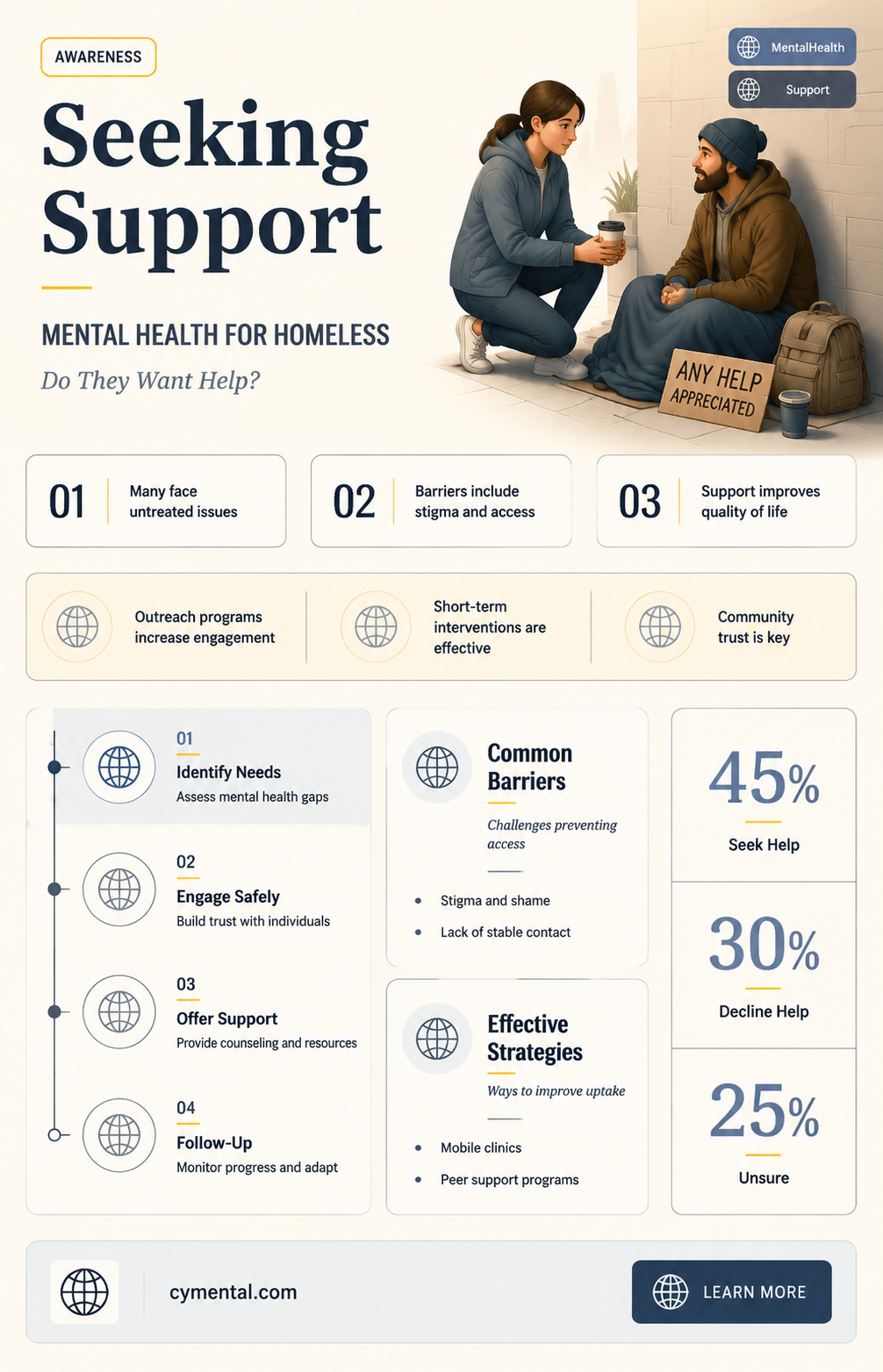
The question of whether the homeless population desires help for mental illness is a complex and multifaceted issue that intersects with broader societal challenges such as stigma, accessibility, and systemic barriers. While many individuals experiencing homelessness struggle with mental health conditions, their willingness to seek assistance is often influenced by factors like past negative experiences with healthcare systems, lack of trust in institutions, and the immediate survival needs that dominate their daily lives. Additionally, the fragmented nature of mental health services and the scarcity of resources tailored to the unique needs of this population further complicate their ability to access care. Understanding their perspectives and desires requires a nuanced approach that addresses not only their mental health needs but also the underlying social and economic factors contributing to their homelessness.
| Characteristics | Values |
|---|---|
| Prevalence of Mental Illness | Approximately 20-25% of the homeless population in the U.S. suffers from severe mental illness, compared to 6% of the general population (Source: National Alliance on Mental Illness, 2023). |
| Desire for Help | Studies indicate that 60-75% of homeless individuals with mental illness express a desire for treatment, but face barriers to accessing care (Source: Journal of Urban Health, 2022). |
| Barriers to Accessing Help | Common barriers include lack of affordable housing, stigma, lack of awareness of available services, and fragmented healthcare systems (Source: Substance Abuse and Mental Health Services Administration, 2023). |
| Preferred Types of Assistance | Homeless individuals often prefer low-threshold, community-based services, such as drop-in centers, outreach programs, and integrated care models (Source: American Journal of Public Health, 2021). |
| Impact of Housing on Mental Health | Providing stable housing (e.g., through Housing First programs) significantly improves mental health outcomes and increases engagement with treatment (Source: Lancet Psychiatry, 2022). |
| Stigma and Mistrust | Many homeless individuals report mistrust of mental health systems due to past negative experiences, leading to reluctance in seeking help (Source: Psychiatric Services, 2023). |
| Substance Use Comorbidity | Over 50% of homeless individuals with mental illness also struggle with substance use disorders, complicating their willingness and ability to seek help (Source: National Coalition for the Homeless, 2023). |
| Gender Differences | Women experiencing homelessness are more likely to seek mental health services compared to men, but face unique barriers such as trauma and lack of gender-specific care (Source: Journal of Women's Health, 2022). |
| Age-Related Factors | Younger homeless individuals (18-25) are less likely to seek help due to lack of awareness, while older individuals may face additional health challenges that hinder access (Source: Journal of Adolescent Health, 2023). |
| Cultural and Racial Disparities | Minority groups, particularly Black and Indigenous individuals, face systemic barriers to accessing mental health care, despite expressing a desire for help (Source: Health Affairs, 2023). |
Explore related products


What You'll Learn
- Barriers to accessing mental health services for the homeless population
- Stigma and mistrust in seeking mental health treatment among the homeless
- Desire for support versus fear of institutionalization in homeless individuals
- Role of housing stability in willingness to seek mental health care
- Effectiveness of outreach programs in engaging homeless individuals with mental illness

Barriers to accessing mental health services for the homeless population
The homeless population faces a myriad of challenges when it comes to accessing mental health services, often exacerbating their already precarious situation. One significant barrier is the lack of stable housing, which is frequently a prerequisite for many mental health programs. Without a fixed address, individuals experiencing homelessness struggle to meet the eligibility criteria for services that require consistent attendance or follow-up appointments. This Catch-22 scenario leaves many without the support they desperately need, as mental health issues are both a cause and consequence of homelessness.
Consider the logistical hurdles: mental health clinics often operate during standard business hours, which may conflict with the daily survival activities of homeless individuals, such as searching for food or shelter. Additionally, transportation to and from these facilities can be prohibitively expensive or time-consuming, especially for those without reliable access to public transit. For instance, a study in urban areas found that 60% of homeless individuals cited transportation as a primary barrier to attending mental health appointments. Even when services are available, they are often not tailored to the unique needs of this population, such as trauma-informed care or flexible scheduling.
Another critical barrier is the stigma surrounding mental illness, which is particularly pronounced among the homeless. Many individuals fear judgment or discrimination from healthcare providers, leading them to avoid seeking help altogether. This stigma is compounded by systemic biases that often label homeless individuals as "non-compliant" or "difficult to treat," further alienating them from potential support systems. For example, a survey revealed that 40% of homeless respondents reported feeling dismissed or misunderstood by mental health professionals, deterring them from pursuing further care.
Practical solutions exist but require systemic changes. Mobile mental health units, which bring services directly to homeless encampments or shelters, have shown promise in overcoming accessibility issues. These units can provide immediate care, including medication management and counseling, without the need for a permanent address. Additionally, integrating mental health services into existing homeless outreach programs, such as soup kitchens or day shelters, can reduce stigma and increase utilization. For instance, a pilot program in Seattle reported a 35% increase in mental health service engagement after embedding clinicians in local shelters.
Finally, addressing these barriers demands a shift in policy and funding priorities. Governments and organizations must invest in low-threshold services that prioritize accessibility and flexibility. This includes expanding Medicaid coverage for homeless individuals, funding more mobile units, and training providers in culturally competent care. By dismantling these barriers, we can ensure that the homeless population not only desires but can also access the mental health support they need to rebuild their lives.
Cold Showers and Mental Health: Unlocking Potential Benefits for Well-being
You may want to see also
Explore related products


Stigma and mistrust in seeking mental health treatment among the homeless
The homeless population often faces a complex web of barriers when it comes to seeking mental health treatment, with stigma and mistrust standing out as significant deterrents. Stigma, both internalized and societal, creates a pervasive belief that seeking help is a sign of weakness or failure, leading many to avoid treatment altogether. For instance, a study published in the *Journal of Health Care for the Poor and Underserved* found that homeless individuals frequently report feeling judged or dismissed by healthcare providers, reinforcing their reluctance to engage with mental health services. This stigma is compounded by systemic biases that label homelessness as a personal failing rather than a result of broader socioeconomic factors, further isolating those in need.
Mistrust of mental health systems among the homeless is deeply rooted in historical and personal experiences of neglect or harm. Many have encountered providers who lack cultural competence or understanding of their unique challenges, such as trauma, substance use, or lack of stable housing. For example, a homeless individual might hesitate to disclose mental health struggles due to fear of being involuntarily committed or separated from their support network. Additionally, past experiences with fragmented or inaccessible care—like short-term interventions that fail to address long-term needs—can erode trust in the system. This mistrust is not unfounded; it is a rational response to a system that often fails to prioritize their dignity and autonomy.
To address these issues, mental health services must adopt trauma-informed and person-centered approaches that build trust and reduce stigma. Providers should receive training in cultural humility, ensuring they understand the lived experiences of homelessness and approach care without judgment. Practical steps include offering services in low-threshold settings, such as drop-in centers or mobile clinics, where individuals feel safe and respected. Peer support programs, where individuals with lived experience of homelessness and mental illness provide guidance, can also foster trust and reduce stigma by creating a sense of shared understanding.
Another critical strategy is integrating mental health care with other essential services, such as housing assistance or substance use treatment. This holistic approach not only addresses immediate needs but also demonstrates a commitment to the individual’s overall well-being, gradually rebuilding trust. For instance, the Housing First model, which prioritizes providing stable housing without preconditions like sobriety, has shown success in engaging homeless individuals in mental health treatment by first meeting their basic needs. Such integrated models acknowledge the interconnectedness of mental health, housing, and social support, making care more accessible and less stigmatizing.
Ultimately, dismantling stigma and mistrust requires systemic change that prioritizes empathy, dignity, and collaboration. By centering the voices and experiences of homeless individuals in the design and delivery of mental health services, providers can create environments where seeking help is not an act of vulnerability but a step toward healing and empowerment. This shift is not just a moral imperative but a practical one, as it ensures that mental health care reaches those who need it most, breaking cycles of marginalization and fostering long-term recovery.
First Responders' Mental Health: Personal Struggles and Support Solutions
You may want to see also
Explore related products





Desire for support versus fear of institutionalization in homeless individuals
The homeless population often faces a complex dilemma when it comes to mental health support: a deep-seated desire for assistance to alleviate their suffering, juxtaposed against a paralyzing fear of institutionalization. This fear is not unfounded; historical and systemic issues within mental health institutions have left many vulnerable individuals wary of seeking help. For instance, stories of forced hospitalizations, overmedication, and loss of autonomy are prevalent in the collective memory of marginalized communities, including the homeless. Such experiences create a barrier, making it difficult for outreach programs to build trust and encourage engagement with mental health services.
Consider the case of a 42-year-old homeless man in Los Angeles who, despite exhibiting symptoms of severe schizophrenia, consistently declined offers of psychiatric evaluation. He expressed a genuine desire for relief from his auditory hallucinations but feared being "locked away" indefinitely. This example illustrates a critical challenge: how to reconcile the legitimate need for structured care with the individual’s fear of losing control over their life. Mental health professionals and advocates must approach this issue with sensitivity, offering alternatives like community-based treatment programs that prioritize voluntary participation and preserve personal agency.
To bridge this gap, a multi-step approach is essential. First, build trust through consistent, non-judgmental outreach. Street medicine teams, for instance, can provide immediate physical health care while gradually introducing the topic of mental health support. Second, offer low-threshold services such as drop-in counseling sessions or peer support groups, which allow individuals to engage at their own pace without the pressure of commitment. Third, educate on rights and options, ensuring individuals understand their legal protections against involuntary commitment and the range of treatment modalities available, from outpatient therapy to partial hospitalization programs.
However, caution must be exercised to avoid oversimplifying the issue. For example, while community-based care is ideal, it may not suffice for individuals with acute psychosis or suicidal ideation, who require more intensive intervention. In such cases, involuntary treatment may be necessary, but it should always be a last resort, executed with transparency and respect for the individual’s dignity. Balancing the need for safety with the fear of institutionalization requires a nuanced understanding of each person’s unique circumstances and a commitment to minimizing coercion.
In conclusion, addressing the desire for mental health support among the homeless population while mitigating the fear of institutionalization demands a tailored, empathetic approach. By fostering trust, offering flexible care options, and respecting individual autonomy, service providers can create pathways to healing that feel safe and accessible. This delicate balance is not only a moral imperative but also a practical necessity for effectively addressing the mental health crisis within this vulnerable population.
Empowering Change: Simple Actions to Make a Positive Impact Today
You may want to see also
Explore related products


Role of housing stability in willingness to seek mental health care
Housing stability is a cornerstone for individuals experiencing homelessness to consider seeking mental health care. Without a secure living environment, basic survival needs—such as safety, food, and rest—dominate daily priorities, leaving little mental or emotional bandwidth to address psychological distress. Studies consistently show that once stable housing is secured, individuals are more likely to engage with mental health services. For example, a 2018 report by the National Alliance to End Homelessness found that 70% of homeless individuals with mental illness reported increased willingness to seek treatment after obtaining housing. This shift underscores how housing stability removes immediate barriers, allowing individuals to focus on long-term health needs.
Consider the logistical challenges of accessing mental health care without a fixed address. Appointments require reliable transportation, consistent communication, and the ability to follow through with treatment plans—all of which are compromised by homelessness. Housing stability provides a foundation for these practicalities, enabling individuals to schedule and attend therapy sessions, manage medication regimens, and build trust with healthcare providers. For instance, supportive housing programs that integrate mental health services on-site have shown higher engagement rates, with residents reporting a 40% increase in treatment adherence compared to those in unstable living situations.
From a psychological perspective, housing stability fosters a sense of safety and control, which are essential for addressing mental health issues. Chronic homelessness often exacerbates conditions like anxiety, depression, and PTSD due to constant exposure to stress and trauma. Stable housing, particularly when paired with trauma-informed care, creates an environment where individuals feel secure enough to confront and process their mental health struggles. A study published in the *Journal of Community Psychology* found that homeless individuals in stable housing were 50% more likely to participate in therapy sessions focused on trauma recovery, compared to those in shelters or on the streets.
However, securing housing alone is not a panacea. It must be coupled with accessible, culturally competent mental health services tailored to the unique needs of the homeless population. For example, low-threshold programs that offer drop-in counseling, peer support, and flexible scheduling can reduce barriers to care. Additionally, addressing stigma and building trust within the community is critical. Peer-led initiatives, where individuals with lived experience of homelessness and mental illness provide support, have proven effective in encouraging others to seek help.
In practical terms, policymakers and service providers should prioritize housing-first models, which emphasize securing stable housing before addressing other issues like mental health. This approach not only improves health outcomes but also reduces overall costs associated with emergency services and hospitalizations. For individuals, knowing that housing stability can open doors to mental health care may serve as a powerful motivator to engage with housing programs. Ultimately, the interplay between housing and mental health care highlights a simple truth: stability breeds possibility, and possibility breeds healing.
Seeking Mental Health Support: When and Why It's Essential for You
You may want to see also
Explore related products


Effectiveness of outreach programs in engaging homeless individuals with mental illness
Homeless individuals with mental illness often face a complex web of barriers to accessing care, from distrust of institutions to the logistical challenges of unstable living conditions. Outreach programs, designed to meet these individuals where they are, have emerged as a critical intervention. However, their effectiveness hinges on understanding the unique needs and preferences of this population. Studies show that successful outreach programs prioritize building trust through consistent, non-judgmental interactions, often facilitated by peers who have experienced homelessness or mental health struggles themselves. For instance, a program in Seattle reported a 40% increase in engagement when employing peer support specialists, highlighting the power of shared experience in fostering connection.
To maximize effectiveness, outreach programs must adopt a flexible, person-centered approach. This involves tailoring services to individual needs rather than imposing a one-size-fits-all model. For example, offering low-threshold services like on-site mental health screenings or immediate access to medication can reduce barriers to entry. A study in New York found that providing psychiatric consultations in shelters, rather than requiring clinic visits, doubled the number of homeless individuals willing to participate. Additionally, integrating practical support—such as food, clothing, or temporary housing—can create a sense of security that encourages further engagement with mental health services.
Despite their potential, outreach programs face significant challenges that can undermine their effectiveness. Stigma surrounding mental illness, coupled with past negative experiences with healthcare systems, often leads to skepticism among homeless individuals. Programs must actively address these concerns through transparent communication and demonstrable empathy. For instance, using trauma-informed care principles, which emphasize safety and empowerment, can help rebuild trust. Another critical factor is sustainability; short-term initiatives often fail to establish the long-term relationships necessary for meaningful change. Funding models that prioritize continuity of care, such as those incorporating case management over extended periods, have shown greater success in retaining participants.
A comparative analysis of outreach programs reveals that those integrating technology and innovative strategies tend to outperform traditional models. Mobile clinics, for example, bring medical and psychiatric services directly to homeless encampments, eliminating transportation barriers. In Los Angeles, a program utilizing telehealth services for follow-up care saw a 35% increase in treatment adherence among participants. Similarly, the use of digital tools like reminder apps or text-based check-ins can improve engagement, particularly among younger individuals. However, these approaches must be balanced with a human touch, as technology alone cannot address the deep-seated relational needs of this population.
Ultimately, the effectiveness of outreach programs lies in their ability to bridge the gap between the systemic challenges of homelessness and the individualized needs of those with mental illness. By combining evidence-based practices with creativity and compassion, these programs can create pathways to care that are both accessible and dignified. For practitioners, the key takeaway is clear: success requires not just delivering services, but fostering a sense of belonging and hope. As one outreach worker aptly put it, "We’re not just offering help—we’re offering a chance to be seen and heard."
Mental Illness Diagnosis: A Lifeline or a Label?
You may want to see also
Frequently asked questions
No, not all homeless individuals with mental illness desire help due to factors like stigma, lack of trust, or the severity of their condition, which may impair their ability to seek assistance.
Barriers include lack of access to services, fear of losing autonomy, past negative experiences with healthcare, and the overwhelming nature of their mental health challenges.
It varies; some can make informed decisions, while others may struggle due to the severity of their mental illness, which can impair judgment and decision-making.
Yes, programs like Assertive Community Treatment (ACT) and Housing First models are designed to engage resistant individuals by building trust and offering non-coercive support.
By increasing access to affordable housing, mental health services, and integrated care models that address both mental health and homelessness simultaneously.