Lucas Bennett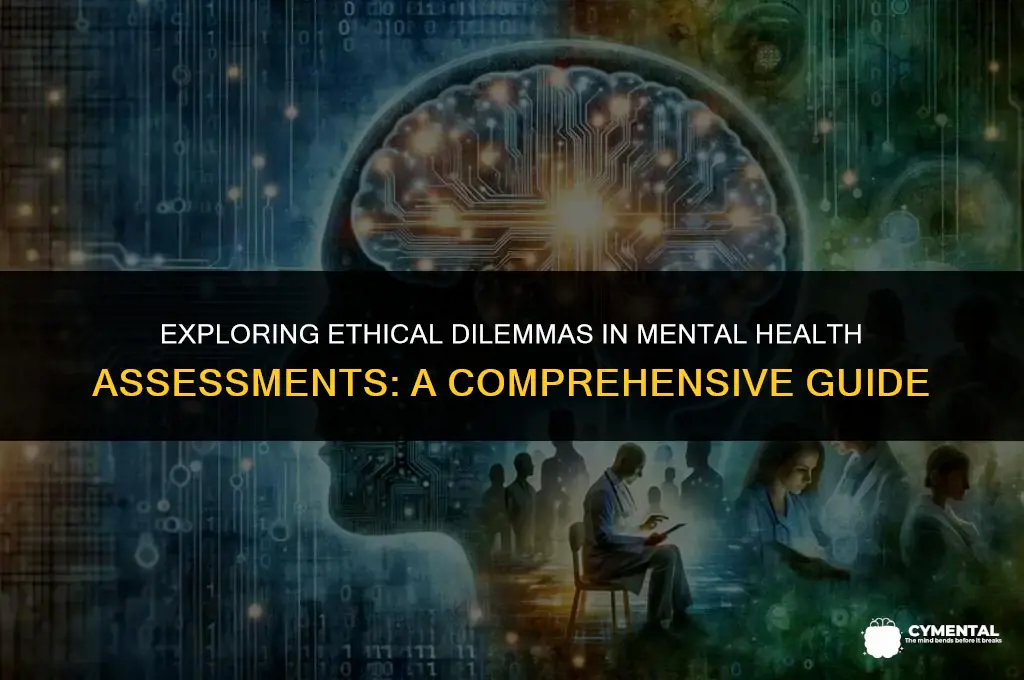
Mental health assessments are critical tools used by professionals to diagnose and treat psychological conditions. However, they are not without ethical considerations. Some of the key ethical issues include ensuring informed consent, maintaining confidentiality, avoiding bias and stereotyping, and respecting the individual's autonomy and dignity. Additionally, there are concerns about the potential misuse of assessment results, the impact of labeling on a person's self-esteem, and the need for ongoing evaluation of assessment tools to ensure their validity and reliability. Addressing these ethical issues is essential to promote trust, protect patient rights, and provide effective and compassionate mental health care.
Explore related products


$56.9 $69.95


What You'll Learn
- Privacy and Confidentiality: Protecting patient data and ensuring secure storage and transmission of sensitive information
- Informed Consent: Obtaining voluntary and informed agreement from patients before conducting assessments or treatments
- Cultural Competence: Respecting and understanding diverse cultural backgrounds to provide unbiased and effective care
- Accuracy and Validity: Ensuring assessment tools and methods are reliable, valid, and free from bias
- Stigma and Discrimination: Addressing and reducing stigma associated with mental health conditions and promoting inclusivity

Privacy and Confidentiality: Protecting patient data and ensuring secure storage and transmission of sensitive information
In the realm of mental health assessments, privacy and confidentiality are paramount. Protecting patient data is not only an ethical obligation but also a legal requirement. Mental health professionals must ensure that all sensitive information, including patient records, test results, and personal details, is stored and transmitted securely. This involves implementing robust data protection measures, such as encryption, secure servers, and access controls, to prevent unauthorized access or breaches.
One of the key challenges in maintaining privacy and confidentiality is the increasing use of digital tools and platforms in mental health assessments. While these technologies offer numerous benefits, such as improved accessibility and efficiency, they also introduce new risks. For instance, online therapy sessions and digital health records can be vulnerable to cyberattacks if not properly secured. Mental health professionals must stay abreast of the latest cybersecurity threats and best practices to safeguard patient data in the digital age.
Another important aspect of privacy and confidentiality is the need for transparency and informed consent. Patients should be fully informed about how their data will be used, stored, and shared, and they should have the right to control their own information. Mental health professionals must obtain explicit consent from patients before collecting, using, or disclosing their personal data, and they should provide clear and concise information about their privacy policies and procedures.
In addition to these technical and procedural measures, mental health professionals must also cultivate a culture of privacy and confidentiality within their practice. This includes training staff on the importance of protecting patient data, implementing strict confidentiality policies, and regularly reviewing and updating these policies to ensure they remain effective and compliant with relevant laws and regulations.
Ultimately, protecting patient data and ensuring secure storage and transmission of sensitive information is a critical component of ethical mental health assessments. By prioritizing privacy and confidentiality, mental health professionals can build trust with their patients, maintain the integrity of their practice, and provide high-quality care that respects the rights and dignity of all individuals.
Capitalism's Impact: Rising Mental Health Struggles in Modern Society
You may want to see also
Explore related products


Informed Consent: Obtaining voluntary and informed agreement from patients before conducting assessments or treatments
In the realm of mental health assessments, obtaining informed consent is a cornerstone of ethical practice. This process involves ensuring that patients fully understand the nature of the assessment or treatment, its potential risks and benefits, and their right to refuse participation. Informed consent is not merely a formality but a critical step in empowering patients and promoting transparency in mental health care.
One unique angle to consider is the importance of cultural competence in obtaining informed consent. Mental health professionals must be aware of how cultural differences can influence a patient's understanding and perception of mental health treatments. For instance, some cultures may view mental health issues as a sign of weakness or stigma, which could affect a patient's willingness to engage in treatment. Practitioners should be trained to communicate effectively across cultural boundaries, ensuring that consent forms and discussions are accessible and comprehensible to patients from diverse backgrounds.
Another aspect to explore is the use of technology in facilitating informed consent. With the rise of telemedicine and digital health platforms, mental health assessments are increasingly conducted online. This shift presents both opportunities and challenges. On one hand, digital tools can provide patients with easy access to information about treatments and allow for remote consent. On the other hand, ensuring the security and privacy of patient data becomes paramount. Mental health professionals must stay abreast of technological advancements and implement robust security measures to protect patient information.
Furthermore, it is essential to address the issue of capacity to consent in mental health assessments. Patients with certain mental health conditions, such as severe depression or psychosis, may have impaired decision-making abilities. In such cases, practitioners must carefully evaluate the patient's capacity to provide informed consent and consider involving family members or legal guardians if necessary. This process requires a nuanced understanding of both the legal and ethical implications involved.
In conclusion, obtaining informed consent in mental health assessments is a multifaceted issue that requires attention to cultural competence, technological advancements, and the capacity to consent. By addressing these unique angles, mental health professionals can ensure that patients are truly empowered to make informed decisions about their care, thereby upholding the highest standards of ethical practice.
Cross-Dressing and Mental Health: Separating Fact from Fiction
You may want to see also
Explore related products


$27.8 $52.99


Cultural Competence: Respecting and understanding diverse cultural backgrounds to provide unbiased and effective care
Cultural competence in mental health assessments is crucial for providing unbiased and effective care. It involves respecting and understanding the diverse cultural backgrounds of clients to ensure that assessments are conducted in a sensitive and appropriate manner. This is particularly important given the increasing diversity of populations and the recognition that cultural factors can significantly influence mental health outcomes.
One key aspect of cultural competence is being aware of and addressing potential biases and stereotypes that may affect the assessment process. Mental health professionals must be mindful of their own cultural assumptions and how these may impact their interactions with clients. For example, certain cultural groups may have different norms and values around mental health, which could lead to misunderstandings or misdiagnoses if not properly considered.
To provide culturally competent care, mental health professionals should strive to develop a deep understanding of the cultural backgrounds of their clients. This may involve learning about specific cultural practices, beliefs, and values, as well as being aware of historical and social contexts that may influence a client's experiences. Additionally, professionals should be skilled in adapting assessment tools and techniques to be more culturally sensitive and relevant.
Effective communication is also essential for cultural competence in mental health assessments. Professionals should be able to communicate clearly and respectfully with clients from diverse backgrounds, taking into account language barriers, cultural nuances, and nonverbal cues. This may involve using interpreters or translated materials, as well as being attentive to the client's comfort level and preferred communication style.
Ultimately, cultural competence in mental health assessments is about ensuring that all clients receive equitable and high-quality care, regardless of their cultural background. By being aware of and addressing cultural differences, mental health professionals can help to reduce disparities in mental health outcomes and promote a more inclusive and supportive environment for all individuals seeking care.
Unraveling the Complexities: Social Isolation's Impact on Mental and Emotional Well-being
You may want to see also
Explore related products


Accuracy and Validity: Ensuring assessment tools and methods are reliable, valid, and free from bias
Ensuring the accuracy and validity of assessment tools and methods is paramount in mental health evaluations. This involves a meticulous process of selecting and administering assessments that are not only reliable but also free from bias. Reliability refers to the consistency of the assessment results, ensuring that the same individual would receive similar scores if tested multiple times under the same conditions. Validity, on the other hand, pertains to the extent to which the assessment measures what it is intended to measure. For instance, a valid depression scale should accurately reflect the severity of depressive symptoms rather than other factors like anxiety or stress.
One critical aspect of ensuring accuracy and validity is the use of standardized assessment tools that have been rigorously tested and validated through research. These tools often come with specific administration protocols and scoring guidelines to minimize variability and potential bias. For example, the Beck Depression Inventory (BDI) is a widely used standardized tool for assessing depression, which has been validated across various populations and settings.
Another important consideration is the cultural and linguistic appropriateness of the assessment tools. Assessments should be culturally sensitive and translated accurately to ensure that they are relevant and understandable to the individual being assessed. This is particularly crucial when working with diverse populations, as cultural differences can significantly impact the interpretation and expression of mental health symptoms.
Furthermore, it is essential to consider the potential for bias in the assessment process itself. This includes being aware of one's own biases as a mental health professional and taking steps to mitigate them. For instance, using a structured interview format can help reduce the influence of personal biases and ensure that all relevant information is gathered systematically.
In addition to these considerations, ongoing training and education for mental health professionals are vital to maintaining the accuracy and validity of assessments. Professionals should stay updated on the latest research and best practices in assessment, as well as be familiar with the specific tools and methods they are using. This includes understanding the strengths and limitations of each assessment tool and knowing when to use alternative methods if necessary.
In conclusion, ensuring the accuracy and validity of mental health assessments requires a multifaceted approach that includes the use of standardized and culturally appropriate tools, awareness of potential biases, and ongoing professional development. By adhering to these principles, mental health professionals can provide more accurate and reliable assessments, ultimately leading to better outcomes for their clients.
Understanding Furry Fandom: Mental Health Stigma or Harmless Hobby?
You may want to see also
Explore related products


Stigma and Discrimination: Addressing and reducing stigma associated with mental health conditions and promoting inclusivity
Stigma and discrimination are pervasive issues in mental health assessments, often leading to harmful outcomes for individuals seeking help. One concrete example of this is the reluctance of many people to seek treatment for fear of being labeled with a mental illness, which can result in delayed or forgone care. To address and reduce stigma, mental health professionals can take several steps. First, they can use person-first language, emphasizing the individual rather than the condition (e.g., "person with depression" rather than "depressed person"). Second, they can educate clients and the public about the realities of mental illness, dispelling myths and misconceptions that contribute to stigma. Third, they can promote inclusivity by ensuring that their practices are welcoming and accessible to all individuals, regardless of their background or identity.
Another important aspect of addressing stigma is to recognize and challenge the biases that mental health professionals may hold. For instance, research has shown that clinicians may be more likely to diagnose certain conditions in individuals from marginalized groups, such as racial and ethnic minorities, LGBTQ+ individuals, and those with disabilities. To combat these biases, professionals can engage in ongoing training and self-reflection, seeking to understand how their own beliefs and experiences may influence their assessments and diagnoses. Additionally, they can work to create a more diverse and representative workforce, which can help to reduce the impact of bias on mental health assessments.
In terms of promoting inclusivity, mental health professionals can take several practical steps. For example, they can ensure that their offices are physically accessible to individuals with disabilities, provide interpretation services for clients who speak languages other than the clinician's, and offer flexible scheduling options to accommodate clients' varying needs. They can also work to create a welcoming environment by displaying inclusive signage, using gender-neutral pronouns, and actively seeking feedback from clients about their experiences. By taking these steps, mental health professionals can help to reduce stigma and discrimination, creating a more supportive and inclusive environment for all individuals seeking mental health care.
Understanding Mental Health Challenges in the Military
You may want to see also
Frequently asked questions
Mental health assessments involve several ethical considerations, including privacy, consent, and the potential for stigma or discrimination. It's crucial to ensure that individuals undergoing assessments are fully informed about the process and its implications, and that their consent is obtained voluntarily. Confidentiality must be maintained to protect the individual's privacy, and measures should be taken to prevent any form of discrimination or stigmatization based on the assessment results.
Mental health professionals can address ethical concerns by adhering to established ethical guidelines and standards, such as those set by the American Psychological Association (APA) or the National Association of Social Workers (NASW). They should also engage in ongoing training and education to stay updated on best practices and ethical considerations. Additionally, professionals should maintain open communication with clients, ensuring they understand their rights and the purpose of the assessment, and should always prioritize the client's well-being and autonomy.
Failing to address ethical issues in mental health assessments can have serious consequences for both the individual being assessed and the mental health professional. For the individual, it can lead to a breach of privacy, loss of trust in the mental health system, and potential discrimination or stigmatization. For the professional, it can result in legal repercussions, damage to their reputation, and loss of licensure. Moreover, it can undermine the integrity of the mental health profession as a whole, eroding public trust and hindering the provision of effective care.