Noah Parker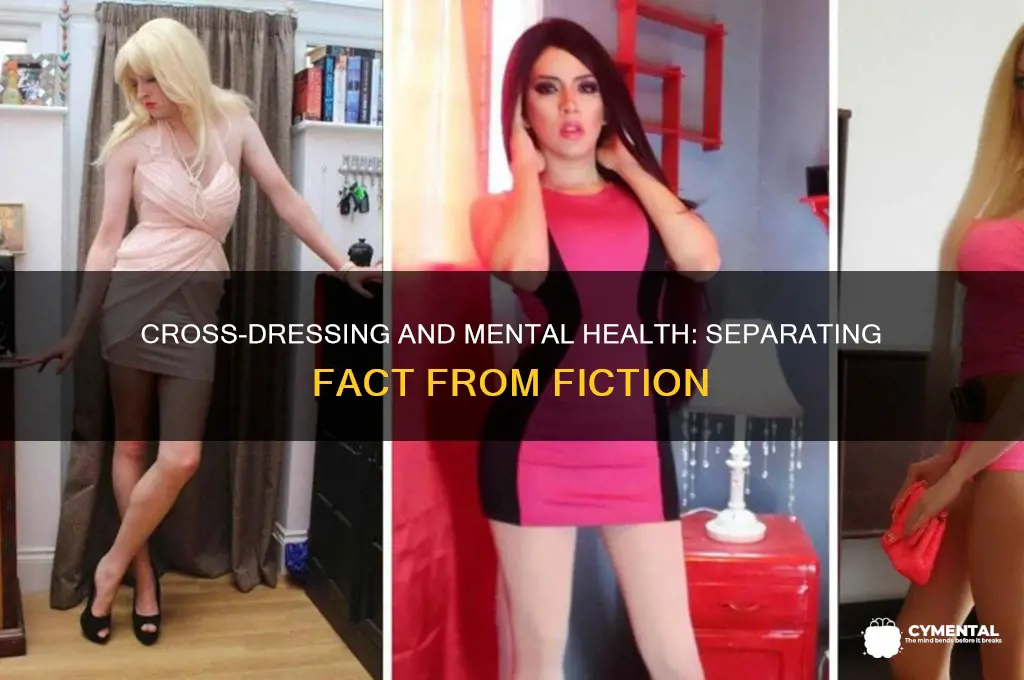
Cross-dressing, the act of wearing clothing typically associated with a gender different from one's own, has often been misunderstood and stigmatized, leading to questions about whether it constitutes a mental health issue. Historically, it was pathologized under terms like transvestic disorder, but modern psychological perspectives, including those of the American Psychiatric Association, now distinguish between consensual, non-harmful cross-dressing and behaviors that cause distress or impairment. Today, cross-dressing is widely recognized as a form of self-expression or exploration of gender identity rather than a mental illness, provided it does not interfere with an individual's well-being. However, societal prejudice and internalized shame can contribute to mental health challenges for those who cross-dress, highlighting the importance of addressing external stigma rather than pathologizing the behavior itself.
| Characteristics | Values |
|---|---|
| Definition | Cross-dressing refers to wearing clothes typically associated with the opposite sex. It is distinct from transgender identity. |
| Mental Health Classification | Cross-dressing itself is not considered a mental health disorder in the latest diagnostic manuals (DSM-5 and ICD-11). |
| Historical Perspective | Previously classified as a mental health issue (e.g., "transvestic fetishism" in DSM-III), but removed due to lack of evidence linking it to distress or impairment unless accompanied by other conditions. |
| Distress or Impairment | Only considered a concern if it causes significant distress or impairment in functioning (e.g., "Transvestic Disorder" in DSM-5, which is rare). |
| Prevalence | Common behavior across cultures; estimated 2-5% of men cross-dress occasionally, with most experiencing no psychological distress. |
| Motivation | Motivations vary widely, including self-expression, comfort, exploration of gender identity, or sexual arousal (in some cases). |
| Relationship to Gender Dysphoria | Cross-dressing is distinct from gender dysphoria, though some individuals may experience both. |
| Social Stigma | Often stigmatized due to societal norms, which can lead to stress, anxiety, or depression, but these are external factors, not inherent to cross-dressing. |
| Treatment | No treatment needed unless associated with distress or impairment. Therapy may focus on coping with stigma or exploring gender identity. |
| Cultural Context | Acceptance varies widely across cultures; some cultures have historical or traditional practices involving cross-dressing. |
Explore related products


What You'll Learn
- Historical perspectives on cross-dressing and mental health diagnoses
- Cross-dressing vs. gender dysphoria: Key differences and similarities
- Social stigma and its impact on mental well-being
- Psychological benefits of self-expression through cross-dressing
- Current research: Is cross-dressing pathologized unnecessarily

Historical perspectives on cross-dressing and mental health diagnoses
Cross-dressing has historically been pathologized, with its classification evolving alongside shifting cultural norms and medical understanding. In the late 19th and early 20th centuries, it was often linked to "sexual inversion," a term coined by sexologist Richard von Krafft-Ebing to describe same-sex attraction. This perspective framed cross-dressing as a symptom of a broader deviance, intertwining gender nonconformity with homosexuality under a single diagnostic umbrella. Such categorizations reflected the era’s moral panics and lack of distinction between sexual orientation and gender expression.
By the mid-20th century, cross-dressing found its place in the Diagnostic and Statistical Manual of Mental Disorders (DSM) under the label of "transvestism." Initially, this diagnosis was tied to distress or impairment, implying that the act itself was inherently problematic. However, the DSM-III (1980) introduced a distinction between "transvestic fetishism" and non-sexual cross-dressing, acknowledging that not all individuals experienced it as a source of psychological conflict. This shift marked a tentative step toward recognizing the diversity of motivations behind cross-dressing, though it still retained a clinical lens.
The depathologization of cross-dressing gained momentum in the late 20th century, culminating in the removal of "gender identity disorder" from the DSM-5 in 2013. This change reflected growing awareness of the harm caused by medicalizing gender nonconformity and the influence of advocacy groups pushing for more nuanced understandings. Today, cross-dressing is generally viewed as a form of self-expression rather than a mental health issue, unless it co-occurs with significant distress or functional impairment, in which case "gender dysphoria" may be diagnosed.
Historically, the medicalization of cross-dressing often mirrored societal discomfort with gender variance rather than empirical evidence of pathology. For instance, case studies from the early 20th century frequently portrayed cross-dressers as morally corrupt or psychologically unstable, reinforcing stigmatizing narratives. In contrast, contemporary research emphasizes the importance of context, highlighting that distress often arises from external factors like discrimination or lack of social support, rather than the act of cross-dressing itself.
Practical takeaways from this historical trajectory include the need for clinicians to approach gender nonconformity with cultural sensitivity and to prioritize the individual’s experience over diagnostic labels. For those exploring cross-dressing, seeking supportive communities and educating oneself about its historical context can foster self-acceptance. Ultimately, the evolution of perspectives on cross-dressing underscores the interplay between societal values and medical discourse, offering a cautionary tale about the dangers of pathologizing diversity.
America's Health Care Gap: Ignoring Mental Health in the System
You may want to see also
Explore related products


Cross-dressing vs. gender dysphoria: Key differences and similarities
Cross-dressing and gender dysphoria are often conflated, yet they represent distinct experiences with overlapping elements. Cross-dressing refers to wearing clothing typically associated with a gender different from one’s assigned sex, often driven by personal expression, comfort, or aesthetic preference. It is a behavior, not an identity, and does not inherently indicate distress or a desire to transition. Gender dysphoria, however, is a clinically recognized condition characterized by significant discomfort or distress related to one’s assigned sex at birth, often accompanied by a strong desire to live as a gender different from that assignment. Understanding this distinction is crucial for accurate discourse and support.
Key Differences:
- Motivation and Purpose: Cross-dressing is frequently situational or expressive, such as for performance, self-exploration, or enjoyment. Gender dysphoria, in contrast, stems from a deep-seated incongruence between one’s gender identity and assigned sex, often leading to persistent emotional or psychological distress.
- Medical Classification: While cross-dressing is not considered a mental health disorder, gender dysphoria is listed in diagnostic manuals (e.g., DSM-5) as a condition warranting clinical attention, though being transgender itself is not a disorder.
- Outcome and Intervention: Cross-dressing typically requires no medical intervention unless it co-occurs with other issues. Gender dysphoria often involves therapeutic support, hormone therapy, or gender-affirming surgeries to alleviate distress and align physical traits with gender identity.
Key Similarities:
Both cross-dressing and gender dysphoria challenge societal norms around gender expression and can face stigma or misunderstanding. Individuals in both groups may seek safe spaces to express themselves authentically. Additionally, cross-dressing can sometimes be an exploratory phase for those questioning their gender identity, though this is not universally the case.
Practical Tips for Support:
- Educate Yourself: Avoid assumptions; ask respectful questions to understand an individual’s experience.
- Use Correct Terminology: Refer to people by their preferred pronouns and terms, even if their expression doesn’t align with your expectations.
- Promote Inclusivity: Advocate for policies and environments that respect diverse gender expressions and identities.
Takeaway:
Cross-dressing and gender dysphoria are distinct but interconnected phenomena. Recognizing their differences fosters empathy and informed support, while acknowledging their similarities highlights shared challenges in navigating a gendered world. Both deserve validation and understanding, free from pathologization or judgment.
Understanding Borderline Personality Disorder: A Mental Health Concern Explored
You may want to see also
Explore related products


$10.99 $15.99


Social stigma and its impact on mental well-being
Cross-dressing, the act of wearing clothes typically associated with a gender different from one’s own, is often misunderstood and stigmatized in society. This stigma can manifest as ridicule, discrimination, or exclusion, creating a hostile environment for individuals who express themselves in this way. Such social rejection is not merely a personal inconvenience; it directly impacts mental well-being by fostering feelings of shame, anxiety, and isolation. For example, a study published in the *Journal of Homosexuality* found that individuals who face stigma related to gender expression are at a higher risk of developing depression and anxiety disorders. The constant fear of judgment or rejection can erode self-esteem, making it difficult for individuals to embrace their identity authentically.
To mitigate the mental health consequences of stigma, it’s essential to create safe spaces where individuals can express themselves without fear. Practical steps include fostering open conversations about gender expression in schools, workplaces, and communities. For instance, implementing diversity training programs can educate people about the harms of stigmatizing behavior and promote empathy. Additionally, mental health professionals should be trained to provide affirming care, ensuring that individuals who cross-dress feel understood and supported. A 2020 report from the American Psychological Association highlights that supportive environments significantly reduce the risk of mental health issues in marginalized groups. By addressing stigma at its roots, society can help individuals reclaim their mental well-being.
Comparatively, societies that embrace gender diversity often report lower rates of mental health issues among individuals who cross-dress. For example, countries like Sweden and Canada, which have robust anti-discrimination laws and cultural acceptance of gender nonconformity, see fewer cases of depression and anxiety in this population. In contrast, regions with rigid gender norms and high levels of stigma, such as parts of the Middle East or rural areas in the U.S., often experience higher rates of mental health struggles. This comparison underscores the role of societal attitudes in shaping individual experiences. By learning from progressive models, communities can work toward reducing stigma and improving mental health outcomes.
Finally, individuals facing stigma related to cross-dressing can take proactive steps to protect their mental well-being. Joining support groups, either in-person or online, can provide a sense of belonging and reduce feelings of isolation. For example, organizations like the Gender Society offer resources and community connections for those navigating gender expression. Engaging in self-care practices, such as mindfulness or journaling, can also help manage stress and build resilience. It’s crucial to remember that seeking professional help is a sign of strength, not weakness. Therapists specializing in gender issues can provide tailored strategies to cope with stigma and foster self-acceptance. By combining personal resilience with societal change, individuals can navigate stigma while preserving their mental health.
Supporting Mental Health: Practical Ways to Help Others Heal and Thrive
You may want to see also
Explore related products



Psychological benefits of self-expression through cross-dressing
Cross-dressing, often misunderstood as a mere fetish or taboo, can serve as a powerful tool for self-expression and psychological well-being. For many individuals, stepping into clothing typically associated with a different gender allows them to explore facets of their identity that societal norms might suppress. This act of self-expression can foster a sense of authenticity, reducing internal conflict and promoting mental clarity. By challenging rigid gender roles, cross-dressing provides a unique avenue for individuals to reconcile their inner selves with their outward presentation, often leading to increased self-acceptance and confidence.
Consider the therapeutic potential of cross-dressing as a form of emotional release. For some, wearing clothing that aligns with their internal identity can alleviate feelings of dysphoria or dissonance. This practice can act as a coping mechanism, offering a temporary escape from the pressures of conforming to societal expectations. Psychologists note that such self-expression can reduce stress and anxiety, particularly for those who feel constrained by binary gender norms. For instance, a study published in the *Journal of Homosexuality* found that individuals who engage in cross-dressing often report higher levels of emotional satisfaction and reduced symptoms of depression when they are able to express themselves freely.
To maximize the psychological benefits of cross-dressing, it’s essential to create a safe and supportive environment. Start by setting aside dedicated time for self-expression, free from judgment or interruption. Begin with small steps, such as incorporating a single piece of clothing that feels meaningful, and gradually expand as comfort levels increase. For those new to this practice, joining support groups or online communities can provide validation and encouragement. Practical tips include keeping a journal to track emotional responses and progress, as well as experimenting with different styles to discover what feels most authentic.
Comparatively, cross-dressing shares similarities with other forms of creative expression, such as art or music, in its ability to unlock emotional and psychological benefits. Just as painting allows individuals to externalize their inner world, cross-dressing offers a tangible way to manifest identity and emotions. However, unlike more abstract forms of expression, cross-dressing directly challenges societal norms, making its impact on self-perception particularly profound. This act of defiance against rigid expectations can empower individuals to embrace their true selves, fostering resilience and a stronger sense of self-worth.
In conclusion, cross-dressing is not inherently a mental health issue but rather a means of self-expression with significant psychological benefits. By providing a channel for authenticity, emotional release, and personal exploration, it can enhance mental well-being and reduce internal conflict. With the right approach and support, individuals can harness this practice to cultivate self-acceptance, confidence, and a deeper understanding of their identity. As society continues to evolve in its understanding of gender, recognizing the therapeutic value of cross-dressing becomes increasingly important.
Understanding and Supporting: Compassionate Strategies for Mental Health Challenges
You may want to see also
Explore related products


Current research: Is cross-dressing pathologized unnecessarily?
Cross-dressing, the act of wearing clothing typically associated with a gender different from one's own, has historically been pathologized as a mental health disorder. However, current research challenges this perspective, suggesting that such categorization may be unnecessary and harmful. The Diagnostic and Statistical Manual of Mental Disorders (DSM-5) no longer classifies cross-dressing as a standalone diagnosis, instead addressing it under the broader category of "gender dysphoria" only when it causes significant distress or impairment. This shift reflects a growing consensus that cross-dressing itself is not inherently a mental health issue but rather a form of self-expression.
To understand this evolution, consider the criteria previously used to diagnose "transvestic disorder," which required not only cross-dressing behavior but also sexual arousal associated with it. This narrow definition excluded many individuals who cross-dress for reasons unrelated to sexual gratification, such as comfort, creativity, or exploration of identity. Modern research emphasizes the importance of context: cross-dressing becomes a concern only when it co-occurs with distress or functional impairment, aligning with a more nuanced, person-centered approach to mental health.
A comparative analysis of cultural attitudes further illuminates this issue. In societies where gender norms are rigidly enforced, cross-dressing is often stigmatized and pathologized. Conversely, cultures that embrace gender fluidity tend to view it as a normal variation of human behavior. For instance, in Indigenous communities like the Two-Spirit tradition in North America, gender non-conformity is celebrated rather than medicalized. This suggests that the pathologization of cross-dressing may be a product of societal bias rather than an inherent psychological issue.
Practical steps can be taken to address the unnecessary pathologization of cross-dressing. Mental health professionals are increasingly encouraged to adopt a non-judgmental stance, focusing on the individual's well-being rather than their adherence to gender norms. For example, therapists might explore the motivations behind cross-dressing and help clients navigate societal pressures without labeling the behavior as abnormal. Additionally, public education campaigns can challenge stereotypes and promote acceptance, reducing the internalized shame often experienced by those who cross-dress.
In conclusion, current research strongly indicates that cross-dressing is pathologized unnecessarily in many cases. By reframing it as a form of self-expression rather than a disorder, society can foster greater inclusivity and mental well-being. This shift requires both professional reevaluation and cultural transformation, but the evidence clearly supports moving away from outdated, stigmatizing perspectives.
Healing Minds: Effective Strategies to Overcome Mental Health Challenges
You may want to see also
Frequently asked questions
Cross-dressing itself is not classified as a mental health issue. It is a form of self-expression and does not inherently indicate psychological distress. However, if it causes significant impairment or distress, it may be explored in a therapeutic context.
Cross-dressing is not a symptom of a mental health disorder unless it is accompanied by distress, impairment, or is part of a larger pattern of gender dysphoria. In such cases, professional support may be beneficial.
Cross-dressing and gender dysphoria are distinct but can overlap. While some individuals who cross-dress may experience gender dysphoria, many do not. Cross-dressing alone does not indicate gender dysphoria.
Therapy is not necessary solely because someone cross-dresses. However, if cross-dressing is causing personal distress, relationship issues, or other challenges, therapy can provide support and clarity.