Madison Cole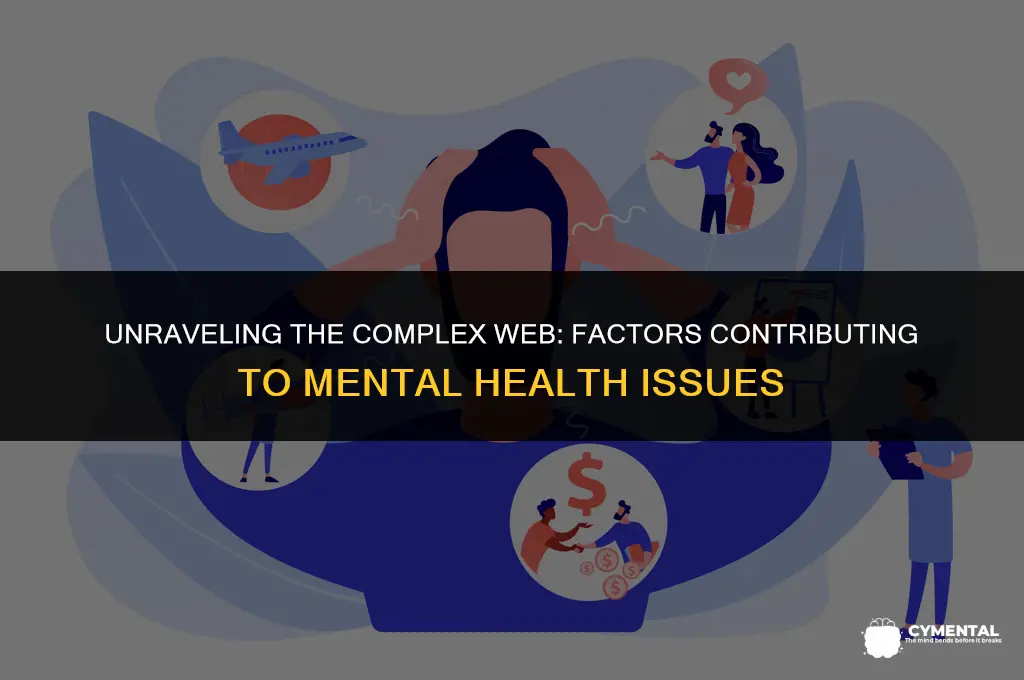
Mental health issues can arise from a complex interplay of various factors. Biological factors such as genetics, brain chemistry, and hormonal imbalances can predispose individuals to certain mental health conditions. Environmental factors, including traumatic life events, chronic stress, and social isolation, can also significantly impact mental well-being. Additionally, psychological factors like personality traits, coping mechanisms, and learned behaviors can influence the development and manifestation of mental health issues. Understanding these multifaceted causes is crucial for developing effective prevention and treatment strategies.
Explore related products


What You'll Learn
- Genetic Predisposition: Family history of mental illness can increase an individual's risk
- Environmental Stressors: Traumatic events, abuse, neglect, or chronic stress can trigger mental health problems
- Brain Chemistry: Imbalances in neurotransmitters like serotonin and dopamine can affect mood and behavior
- Social Isolation: Lack of social support and loneliness can contribute to mental health decline
- Lifestyle Factors: Poor diet, lack of exercise, and substance abuse can negatively impact mental well-being

Genetic Predisposition: Family history of mental illness can increase an individual's risk
Genetic predisposition plays a significant role in the development of mental health issues. Research has consistently shown that individuals with a family history of mental illness are at a higher risk of developing similar conditions. This increased risk is attributed to the inheritance of genetic variations that can affect brain function, neurotransmitter regulation, and stress response systems.
Studies have identified specific genes and genetic mutations that are associated with various mental health disorders, such as schizophrenia, bipolar disorder, and major depressive disorder. For example, the COMT gene, which is involved in the breakdown of dopamine, has been linked to an increased risk of schizophrenia in individuals with a family history of the condition. Similarly, variations in the BDNF gene, which is crucial for neuronal growth and survival, have been associated with an increased risk of depression and anxiety disorders.
It is important to note that genetic predisposition does not guarantee the development of mental health issues. Environmental factors, such as stress, trauma, and social support, also play a crucial role in the onset and progression of these conditions. However, understanding one's genetic risk can help individuals and healthcare providers develop personalized prevention and treatment strategies.
For instance, individuals with a family history of mental illness may benefit from early intervention programs that focus on stress management, cognitive-behavioral therapy, and social skills training. Additionally, genetic testing can help identify specific genetic variations that may influence an individual's response to certain medications, allowing for more targeted and effective treatment approaches.
In conclusion, genetic predisposition is a significant factor in the development of mental health issues, particularly for individuals with a family history of mental illness. By understanding the genetic basis of these conditions, we can develop more effective prevention and treatment strategies that take into account an individual's unique genetic profile and environmental factors.
Supporting Your Spouse: Navigating Mental Health Challenges Together with Compassion
You may want to see also
Explore related products


Environmental Stressors: Traumatic events, abuse, neglect, or chronic stress can trigger mental health problems
Traumatic events, such as natural disasters, violent crimes, or severe accidents, can have a profound impact on an individual's mental health. These events can trigger a range of psychological responses, including anxiety, depression, and post-traumatic stress disorder (PTSD). The severity and duration of these responses can vary widely depending on factors such as the nature of the event, the individual's personal resilience, and the availability of support systems.
Abuse and neglect, particularly in childhood, are significant environmental stressors that can lead to long-term mental health issues. Physical, emotional, or sexual abuse can disrupt normal brain development and lead to conditions such as depression, anxiety, and borderline personality disorder. Neglect, whether physical or emotional, can also have a lasting impact, contributing to low self-esteem, attachment disorders, and an increased risk of substance abuse.
Chronic stress, often resulting from ongoing challenges such as financial difficulties, relationship problems, or work-related pressures, can also trigger mental health problems. Prolonged exposure to stress hormones like cortisol can impair cognitive function, increase the risk of anxiety and depression, and even lead to physical health issues such as heart disease and weakened immune function.
It is important to recognize that environmental stressors can interact with genetic predispositions to exacerbate mental health issues. For example, an individual with a family history of depression may be more susceptible to developing the condition in response to environmental stressors.
Coping strategies and support systems play a crucial role in mitigating the impact of environmental stressors on mental health. Seeking professional help, engaging in therapy, and developing healthy coping mechanisms such as exercise, meditation, or social support can help individuals build resilience and better manage the psychological effects of traumatic events, abuse, neglect, or chronic stress.
Unraveling the Complex Link Between Self-Sabotage and Mental Health
You may want to see also
Explore related products

$13.58 $14.5


Brain Chemistry: Imbalances in neurotransmitters like serotonin and dopamine can affect mood and behavior
Neurotransmitters such as serotonin and dopamine play a crucial role in regulating mood, behavior, and cognitive functions. An imbalance in these chemicals can lead to various mental health issues, including depression, anxiety, and bipolar disorder. For instance, low levels of serotonin are often associated with feelings of sadness and hopelessness, while an excess of dopamine can result in manic episodes and impulsive behavior.
Several factors can contribute to imbalances in neurotransmitters, including genetics, diet, stress, and environmental factors. Genetic predispositions can affect the production and regulation of neurotransmitters, making some individuals more susceptible to mental health issues. Dietary choices, such as consuming high amounts of processed foods and sugars, can also impact neurotransmitter levels. Chronic stress, whether from personal or professional sources, can deplete neurotransmitters over time, leading to mental health problems.
Environmental factors, such as exposure to toxins and pollutants, can also disrupt neurotransmitter function. For example, studies have shown that exposure to pesticides and heavy metals can interfere with the production and regulation of serotonin and dopamine. Additionally, lifestyle choices, such as lack of exercise and poor sleep habits, can contribute to neurotransmitter imbalances.
Understanding the role of neurotransmitters in mental health can help individuals make informed choices about their lifestyle and environment. By addressing potential imbalances through diet, exercise, stress management, and environmental awareness, individuals can take proactive steps to maintain their mental well-being. In some cases, medication may be necessary to correct neurotransmitter imbalances, but lifestyle modifications can often complement or even reduce the need for pharmaceutical interventions.
In conclusion, neurotransmitter imbalances can have a significant impact on mental health, but by understanding the underlying causes and making appropriate lifestyle changes, individuals can take control of their mental well-being. It is essential to approach mental health from a holistic perspective, considering the interplay between genetics, diet, stress, environment, and lifestyle choices. By doing so, individuals can develop a comprehensive strategy for maintaining optimal mental health and preventing potential issues related to neurotransmitter imbalances.
Empathetic Communication: Supporting Mental Health Conversations with Care and Respect
You may want to see also
Explore related products



Social Isolation: Lack of social support and loneliness can contribute to mental health decline
Social isolation can have a profound impact on mental health, often leading to a decline in overall well-being. This lack of social support and loneliness can manifest in various ways, such as reduced social interaction, feelings of emptiness, and a sense of disconnection from others. Research has shown that prolonged social isolation can lead to increased levels of stress, anxiety, and depression. In fact, a study by the American Psychological Association found that social isolation can have a similar impact on mental health as chronic stress.
One of the key factors contributing to social isolation is the modern lifestyle, which often prioritizes work and technology over face-to-face interaction. This can lead to a decrease in the quality and quantity of social relationships, leaving individuals feeling lonely and disconnected. Additionally, social media can exacerbate feelings of isolation by creating a false sense of connection and promoting comparison and competition.
Another significant factor is the aging population, as older adults are more likely to experience social isolation due to factors such as retirement, loss of friends and family, and decreased mobility. This can lead to a sense of loneliness and disconnection, which can have a negative impact on mental health. Furthermore, individuals who live alone or have limited access to social support networks are also at a higher risk of experiencing social isolation.
To combat social isolation, it is essential to prioritize building and maintaining strong social relationships. This can be achieved through activities such as joining social clubs, volunteering, and participating in community events. Additionally, technology can be used to facilitate social connections, such as video calls and online support groups. It is also important to recognize the signs of social isolation and seek help if needed, as mental health professionals can provide support and guidance to individuals struggling with loneliness and disconnection.
Mental Health and Sustainability: Exploring the Interconnected Global Challenge
You may want to see also
Explore related products


Lifestyle Factors: Poor diet, lack of exercise, and substance abuse can negatively impact mental well-being
A poor diet can significantly impact mental well-being. Consuming high amounts of processed foods, sugars, and unhealthy fats can lead to fluctuations in blood sugar levels, which in turn can affect mood and energy levels. Additionally, a diet lacking in essential nutrients such as omega-3 fatty acids, vitamin D, and B vitamins can contribute to symptoms of depression and anxiety. To improve mental health, it is recommended to adopt a balanced diet rich in whole foods, fruits, vegetables, lean proteins, and healthy fats.
Lack of exercise is another lifestyle factor that can negatively impact mental health. Regular physical activity has been shown to reduce symptoms of depression and anxiety, improve mood, and enhance cognitive function. Exercise helps to release endorphins, which are natural mood-boosters, and also promotes better sleep quality. It is recommended to engage in at least 30 minutes of moderate-intensity exercise most days of the week to reap the mental health benefits.
Substance abuse, including alcohol and drug use, can have detrimental effects on mental well-being. While substances may provide temporary relief from stress or negative emotions, they can ultimately exacerbate mental health issues and lead to dependency. Substance abuse can disrupt neurotransmitter function, impair cognitive abilities, and increase the risk of developing mental health disorders such as depression, anxiety, and psychosis. Seeking professional help and support is crucial for individuals struggling with substance abuse and mental health issues.
In summary, lifestyle factors such as poor diet, lack of exercise, and substance abuse can significantly impact mental well-being. By adopting a healthy diet, engaging in regular physical activity, and avoiding substance abuse, individuals can take proactive steps to support their mental health and overall well-being.
Rehab Centers for Mental Health: Are They Highly Recommended?
You may want to see also
Frequently asked questions
Biological factors can include genetic predispositions, brain chemistry imbalances, hormonal changes, and neurological conditions. For example, a family history of mental illness can increase an individual's risk, and imbalances in neurotransmitters like serotonin and dopamine can contribute to disorders such as depression and schizophrenia.
Environmental factors encompass a wide range of influences, from social and cultural contexts to physical surroundings. Traumatic events, chronic stress, social isolation, and exposure to toxins or pollutants can all impact mental health. Additionally, societal pressures, discrimination, and access to resources like healthcare and education play significant roles in shaping an individual's mental well-being.
Psychological factors involve an individual's thoughts, feelings, and behaviors. Cognitive distortions, negative thought patterns, and maladaptive coping mechanisms can contribute to the onset and maintenance of mental health disorders. For instance, persistent negative self-talk and rumination can exacerbate symptoms of anxiety and depression, while avoidant behaviors can reinforce phobias and social anxiety disorders.