Noah Parker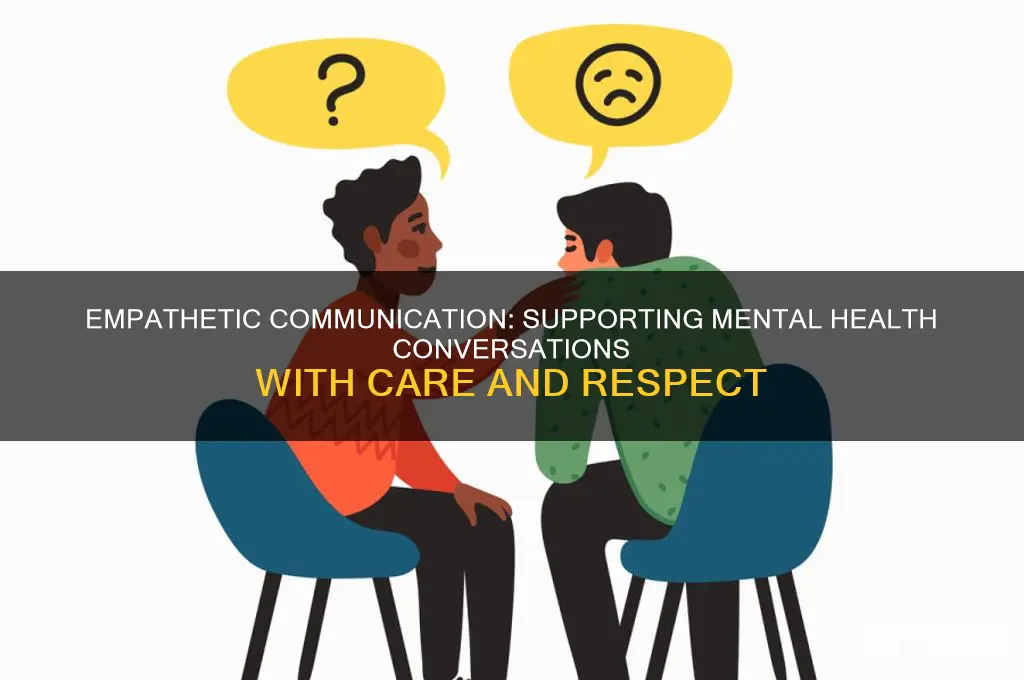
Talking to someone with mental health issues requires empathy, patience, and understanding. It’s essential to approach the conversation without judgment, actively listening to their experiences and validating their feelings rather than offering quick fixes or dismissive advice. Use open-ended questions to encourage them to share at their own pace, and avoid minimizing their struggles with phrases like “just stay positive” or “it could be worse.” Let them know you’re there to support them, whether by simply being present or helping them access professional resources. Remember, the goal is to create a safe, non-threatening space where they feel heard and understood, fostering trust and connection rather than reinforcing stigma or isolation.
Explore related products


$28.34 $34.99


$17.55 $86.99


What You'll Learn
- Active Listening: Focus on understanding, avoid interrupting, and validate their feelings without judgment
- Empathy & Compassion: Show genuine care, acknowledge their struggles, and avoid minimizing their experiences
- Avoid Stigma: Use respectful language, challenge stereotypes, and treat them as individuals, not diagnoses
- Ask Open Questions: Encourage conversation with questions like, “How can I support you”
- Set Boundaries: Be supportive but protect your mental health; it’s okay to say no

Active Listening: Focus on understanding, avoid interrupting, and validate their feelings without judgment
Effective communication with individuals facing mental health challenges begins with active listening—a skill that prioritizes understanding over response. When someone shares their struggles, the instinct to offer solutions or interject with personal anecdotes can be overwhelming. However, interrupting not only derails their train of thought but also signals that their experience is secondary to your input. Instead, practice patience. Let them speak at their own pace, using nonverbal cues like nodding or maintaining eye contact to show engagement. This simple act communicates respect for their narrative and fosters a safe space for vulnerability.
Validation is the cornerstone of active listening, but it requires precision. Phrases like "That sounds really hard" or "I can see why you’d feel that way" acknowledge their emotions without minimizing or dismissing them. Avoid toxic positivity—statements such as "It could be worse" or "Just think positively" invalidate their experience and can deepen feelings of isolation. Validation does not mean agreeing with every sentiment but recognizing the legitimacy of their feelings. For instance, if someone expresses fear of failure, respond with, "Fear of failure is a heavy burden to carry," rather than jumping to reassurances like, "You’ll be fine."
Active listening also involves asking open-ended questions to deepen understanding. Instead of "Are you feeling better?"—a question that pressures them to conform to your expectations—try, "How are you coping with this today?" Such questions invite detailed responses and demonstrate genuine interest in their perspective. Be mindful of tone and timing; rapid-fire questions can feel like an interrogation, while well-spaced inquiries allow for reflection. For example, after they share a challenging experience, pause before asking, "What’s been helping you manage this?" to show you’re processing their words, not just waiting to speak.
A common pitfall in active listening is the urge to compare or share similar experiences. While empathy is essential, phrases like "I know how you feel" can unintentionally shift the focus from their story to yours. Instead, use reflective listening to mirror their emotions and clarify understanding. For instance, if they mention feeling overwhelmed by social obligations, respond with, "It sounds like social demands are draining your energy right now." This technique not only confirms your understanding but also encourages them to elaborate on their feelings.
Finally, active listening is a practice, not a performance. It requires self-awareness to set aside personal biases and judgments. If you find your mind wandering or formulating responses, gently redirect your focus to the speaker. Remember, the goal is not to "fix" their mental health but to provide a supportive presence. By prioritizing understanding, avoiding interruptions, and validating their feelings, you create a foundation of trust that can significantly impact their sense of connection and support. This approach is not just a communication tool—it’s a form of emotional first aid.
Empowering Connections: Strategies to Engage and Support Mental Health Struggles
You may want to see also
Explore related products




Empathy & Compassion: Show genuine care, acknowledge their struggles, and avoid minimizing their experiences
Empathy begins with presence—not physical, but emotional. When someone shares their mental health struggles, the most powerful thing you can offer is your undivided attention. Put away your phone, silence distractions, and focus on their words, tone, and body language. This isn’t about fixing their problem; it’s about creating a safe space where they feel seen and heard. Research shows that feeling understood activates the brain’s social engagement system, reducing stress and fostering connection. So, before you say anything, listen—actively, patiently, and without judgment.
Acknowledging their struggles doesn’t require expertise, just humanity. Phrases like, “That sounds incredibly hard,” or “I can’t imagine how exhausting that must feel,” validate their experience without diminishing it. Avoid the temptation to compare their pain to others’ or to your own. Mental health isn’t a competition. Instead, use open-ended questions like, “How does that affect your day-to-day?” or “What’s been helping you cope?” to show you’re engaged and care about their perspective. Specificity matters here—instead of a generic “I’m here for you,” offer concrete actions: “Can I bring you dinner this week?” or “Would it help to go for a walk together?”
Minimizing their experiences, even unintentionally, can deepen their isolation. Statements like, “It could be worse,” or “Just think positive,” dismiss their reality and imply their feelings are invalid. Instead, reflect their emotions back to them: “It makes sense you’d feel overwhelmed given everything you’re dealing with.” This technique, rooted in empathetic communication, helps them feel understood and less alone. Remember, mental health struggles aren’t logical puzzles to solve—they’re deeply personal journeys that deserve respect and compassion.
Compassion isn’t about pity; it’s about partnership. Imagine their struggle as a heavy backpack they’re carrying. You can’t take it off for them, but you can walk beside them, sharing the weight of their journey. This might mean checking in regularly, celebrating small victories, or simply sitting in silence when words fail. A study in the *Journal of Consulting Psychology* found that compassionate responses reduce shame and increase self-compassion in individuals with mental health issues. So, lead with kindness, not advice, and let your actions speak louder than your words.
Navigating Conversations: Gently Sharing Your Mental Health Journey with Others
You may want to see also
Explore related products



Avoid Stigma: Use respectful language, challenge stereotypes, and treat them as individuals, not diagnoses
Language is a powerful tool that can either build bridges or erect walls, especially when communicating with individuals facing mental health challenges. The words we choose can inadvertently perpetuate stigma, reinforcing harmful stereotypes that isolate and diminish. For instance, saying someone is “schizophrenic” instead of “a person living with schizophrenia” reduces their identity to a diagnosis, stripping them of their individuality. Respectful language, such as using person-first terminology, acknowledges their humanity before their condition, fostering empathy and understanding. This simple shift in phrasing can create a more inclusive dialogue, reminding both speaker and listener that mental health struggles are only one facet of a complex, multifaceted person.
Challenging stereotypes requires active effort and awareness. Consider the pervasive myth that individuals with depression are simply “lazy” or that those with anxiety are “overreacting.” These misconceptions not only trivialize their experiences but also discourage them from seeking help. To counter this, educate yourself and others by sharing accurate information and personal stories that humanize mental health struggles. For example, highlighting how high-functioning professionals can battle severe anxiety underscores the fact that mental illness does not discriminate. By dismantling these stereotypes, we create space for compassion and encourage a more nuanced understanding of mental health.
Treating someone as an individual rather than their diagnosis involves listening deeply and engaging authentically. Avoid making assumptions based on their condition; instead, ask open-ended questions like, “How does this affect you?” or “What can I do to support you?” This approach validates their unique experience and shows genuine interest in their perspective. For instance, a person with bipolar disorder may have specific triggers or coping mechanisms that differ from generalizations about the condition. By focusing on their personal narrative, you honor their autonomy and build trust, fostering a relationship grounded in respect and mutual understanding.
Practical steps to avoid stigma include being mindful of casual language that perpetuates harmful narratives. Phrases like “commit suicide” carry negative connotations; opt for “died by suicide” instead. Similarly, avoid using mental health terms colloquially, such as “I’m so OCD” when referring to tidiness. These small adjustments, though seemingly minor, contribute to a cultural shift toward sensitivity and awareness. Additionally, advocate for inclusive language in professional and social settings, encouraging others to follow suit. By modeling respectful communication, you become an ally in the fight against stigma, creating safer spaces for those navigating mental health challenges.
Ultimately, avoiding stigma is about recognizing the dignity and worth of every individual, regardless of their mental health status. It requires intentionality in how we speak, think, and act, challenging ingrained biases and fostering a culture of acceptance. By using respectful language, confronting stereotypes, and treating people as individuals, we not only support those with mental health issues but also contribute to a more compassionate society. This approach transforms conversations from potentially harmful interactions into opportunities for connection, understanding, and growth.
Supporting Your Adult Daughter Through Undiagnosed Mental Health Challenges
You may want to see also
Explore related products

$8.96 $14.99


Ask Open Questions: Encourage conversation with questions like, “How can I support you?”
Open-ended questions are a cornerstone of supportive communication, particularly when engaging with someone experiencing mental health challenges. Unlike closed questions that elicit a simple "yes" or "no," open questions invite depth, nuance, and personal reflection. For instance, asking, “How can I support you?” shifts the focus from assumptions to the individual’s specific needs, fostering a sense of agency and collaboration. This approach acknowledges their expertise in their own experience, a principle often overlooked in well-intentioned but misguided attempts to "fix" their struggles.
Consider the difference between asking, “Are you feeling better?” and “What’s been helping you cope lately?” The former implies a binary state of being and may pressure the person to conform to an expected response. The latter, however, encourages them to articulate their coping mechanisms, potentially uncovering insights they hadn’t previously voiced. Research in therapeutic communication highlights that such questions reduce feelings of invalidation and increase the likelihood of sustained dialogue. For adults aged 18–35, who often face stigma around mental health, this method can be particularly empowering, as it aligns with their preference for peer-centered, non-judgmental interactions.
However, the effectiveness of open questions hinges on delivery and context. Avoid overloading the conversation with multiple queries at once, as this can feel overwhelming. Instead, start with one question and allow pauses for reflection. For example, after asking, “How can I support you?”, follow up with active listening cues like, “Tell me more about that,” or, “That sounds really challenging.” Be mindful of tone and body language; a rushed or distracted demeanor can undermine the sincerity of your inquiry. For adolescents (13–17), pairing open questions with non-verbal affirmations—such as maintaining eye contact or nodding—can enhance trust and engagement.
A practical tip for integrating this technique into daily interactions is to frame questions around their perspective rather than your assumptions. For instance, instead of, “Should I call your therapist for you?”, try, “What would be most helpful for you right now?” This subtle shift respects their autonomy and avoids infantilization. In workplace settings, managers can adapt this by asking, “What adjustments would make your workload more manageable?”—a question that has been shown to reduce employee burnout by 25% in studies conducted by the American Psychological Association.
Ultimately, the power of open questions lies in their ability to humanize conversations about mental health. They transform interactions from transactional exchanges into opportunities for connection and understanding. While no single approach fits every situation, consistently prioritizing curiosity over certainty can create a safe space for vulnerability. Remember, the goal isn’t to solve their problems but to signal that their voice matters—a message that, in itself, can be profoundly therapeutic.
Unraveling the Psychological Complexities Behind Nazi Leadership and Followers
You may want to see also
Explore related products


Set Boundaries: Be supportive but protect your mental health; it’s okay to say no
Supporting someone with mental health issues can be deeply rewarding, but it’s a role that demands careful navigation. One of the most critical yet overlooked aspects is setting boundaries. Without them, you risk emotional burnout, which not only harms your own well-being but also diminishes your ability to provide meaningful support. Boundaries aren’t about detachment; they’re about sustainability. For instance, if a friend texts you at 2 a.m. in crisis mode every night, it’s okay to establish a rule like, “I’m available to talk until 10 p.m., but after that, I need to recharge for my own health.” This isn’t selfish—it’s practical.
Consider the analogy of an airplane oxygen mask: you must secure your own before assisting others. This principle applies here. If you’re constantly drained, your support becomes superficial or resentful. Start by identifying your limits. Are there specific topics or times of day that trigger your own anxiety? Do you need uninterrupted evenings to unwind? Communicate these clearly and kindly. For example, “I care about you, and I want to be fully present when we talk, so I’ll call you tomorrow after work when I’m more focused.” Specificity avoids misunderstandings and shows respect for both parties.
Saying no is a skill, not a failure. It’s easy to feel guilty when declining requests, especially when the other person is struggling. However, enabling behavior—like dropping everything to solve their problems—can hinder their growth. Instead, encourage self-reliance. For instance, if a loved one repeatedly asks you to mediate their conflicts, suggest, “I’ve noticed you’re really capable of resolving this on your own. Why don’t you try talking to them directly first?” This shifts the dynamic from dependency to empowerment.
Boundaries also require enforcement. If you’ve stated you can’t lend money due to your own financial strain but still receive repeated requests, reiterate your stance firmly: “I’ve explained my situation, and I can’t change that. Let’s brainstorm other options together.” Consistency is key. Over time, clear boundaries foster healthier relationships by establishing mutual respect and accountability.
Finally, remember that boundaries are not static; they evolve. Regularly assess how your current limits are serving both you and the person you’re supporting. Are they too rigid, causing distance? Too loose, leading to exhaustion? Adjust as needed, always prioritizing open communication. By safeguarding your mental health, you ensure your support remains genuine, sustainable, and impactful.
Healing Minds: Practical Strategies to Overcome Mental Health Challenges
You may want to see also
Frequently asked questions
Begin by creating a safe and non-judgmental space. Use open-ended questions like, "How are you feeling lately?" or "Is there anything you’d like to talk about?" Avoid assumptions and let them lead the conversation at their own pace.
Steer clear of dismissive or invalidating statements like, "Just think positively," "It’s all in your head," or "Others have it worse." These phrases can minimize their experience and make them feel unheard. Instead, focus on empathy and active listening.
Sometimes, simply being present and showing you care is enough. You can say, "I’m here for you," or "I may not fully understand, but I want to support you." Offer practical help, like accompanying them to appointments or just spending time together.