Ava Ramirez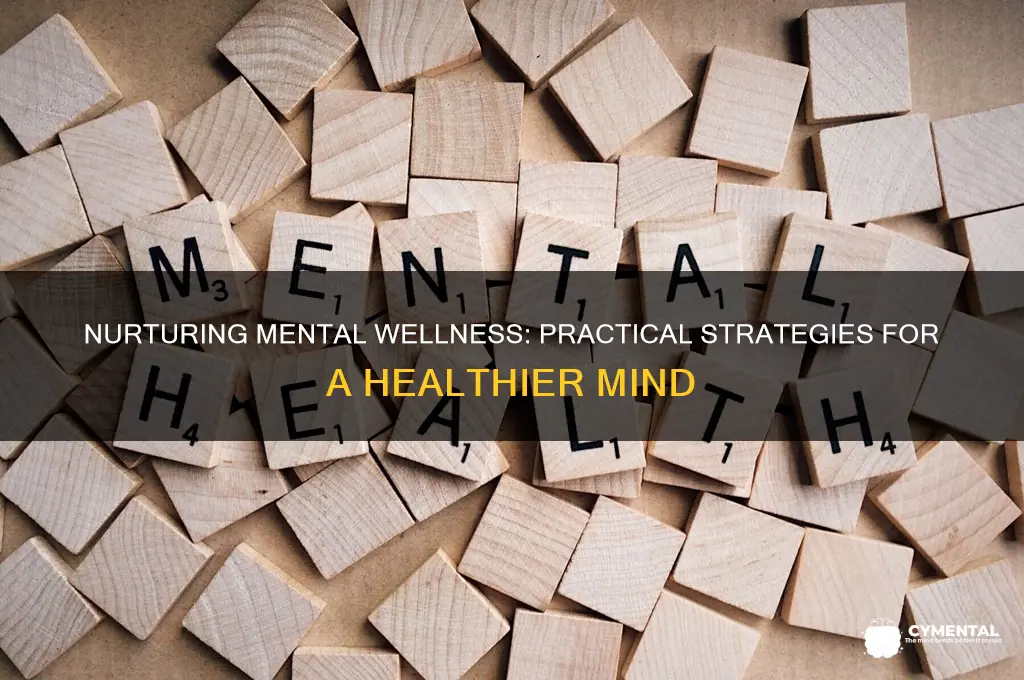
Maintaining good mental health is essential for overall well-being, and adopting effective strategies can significantly enhance one's quality of life. From prioritizing self-care practices like regular exercise, balanced nutrition, and sufficient sleep to fostering meaningful social connections and setting healthy boundaries, these habits form the foundation of mental resilience. Additionally, mindfulness techniques, such as meditation and deep breathing, can help manage stress and promote emotional balance. Seeking professional support when needed, whether through therapy or counseling, is also crucial for addressing deeper issues. By integrating these strategies into daily life, individuals can build a robust framework for mental health, enabling them to navigate challenges with greater ease and cultivate a sense of inner peace and fulfillment.
| Characteristics | Values |
|---|---|
| Regular Physical Activity | Exercise releases endorphins, reduces stress, and improves mood. Aim for at least 30 minutes of moderate activity daily. |
| Balanced Diet | Nutrient-rich foods (fruits, vegetables, whole grains, lean proteins) support brain health and stabilize mood. |
| Adequate Sleep | 7-9 hours of quality sleep per night is essential for emotional regulation and cognitive function. |
| Mindfulness and Meditation | Practices like mindfulness reduce anxiety, improve focus, and promote emotional well-being. |
| Social Connection | Maintaining relationships and social support networks reduces feelings of loneliness and isolation. |
| Time Management | Prioritizing tasks and setting realistic goals reduces stress and increases productivity. |
| Setting Boundaries | Learning to say no and protecting personal time prevents burnout and promotes self-care. |
| Gratitude Practice | Regularly acknowledging and appreciating positive aspects of life improves overall satisfaction and reduces negativity. |
| Professional Help | Seeking therapy or counseling when needed provides tools to manage mental health challenges effectively. |
| Limiting Screen Time | Reducing excessive use of digital devices improves sleep and reduces anxiety and depression. |
| Hobbies and Creativity | Engaging in enjoyable activities fosters relaxation, self-expression, and a sense of accomplishment. |
| Hydration | Staying hydrated supports cognitive function and overall well-being. |
| Avoiding Substance Abuse | Limiting alcohol, drugs, and caffeine reduces the risk of mental health issues. |
| Positive Self-Talk | Replacing negative thoughts with positive affirmations boosts self-esteem and resilience. |
| Exposure to Nature | Spending time outdoors reduces stress, improves mood, and enhances mental clarity. |
Explore related products

$10.99 $18.99


$17.49 $18.99


What You'll Learn
- Mindfulness Practices: Focus on present moment awareness to reduce stress and enhance emotional clarity
- Regular Exercise: Physical activity boosts mood, reduces anxiety, and improves overall mental well-being
- Healthy Sleep Habits: Prioritize consistent sleep patterns to support emotional regulation and cognitive function
- Social Connections: Build and maintain supportive relationships to combat loneliness and foster resilience
- Time Management: Organize tasks to reduce overwhelm and create space for relaxation and self-care

Mindfulness Practices: Focus on present moment awareness to reduce stress and enhance emotional clarity
Stress, a pervasive modern affliction, often stems from dwelling on past regrets or anxiously anticipating future uncertainties. Mindfulness practices counter this by anchoring attention to the present moment, a technique rooted in ancient traditions but validated by contemporary neuroscience. Studies show that regular mindfulness exercises, such as focused breathing or body scans, can reduce cortisol levels—the body’s primary stress hormone—by up to 14% over eight weeks. This physiological shift not only alleviates immediate tension but also fosters long-term resilience against chronic stressors.
To integrate mindfulness into daily life, start with a simple five-minute breathing exercise. Sit comfortably, close your eyes, and focus on the sensation of air entering and leaving your nostrils. When thoughts wander—as they inevitably will—gently redirect attention to the breath. This practice, known as mindful breathing, trains the brain to observe without judgment, a skill that extends beyond meditation into everyday interactions. For instance, during a heated conversation, pausing to take three deep breaths can prevent reactive responses, allowing for more thoughtful communication.
While mindfulness is accessible to all ages, its application varies. Children, for example, benefit from playful mindfulness activities like "belly breathing," where they place a hand on their stomach to feel it rise and fall. Adults, on the other hand, may find structured practices like the Body Scan—a 20-minute exercise focusing on each part of the body in sequence—more effective for unwinding after a long day. Caution should be exercised with individuals experiencing severe trauma or PTSD, as intense mindfulness practices can sometimes trigger distressing memories; in such cases, guided sessions with a trained professional are recommended.
The emotional clarity gained through mindfulness is perhaps its most transformative benefit. By observing emotions as transient experiences rather than permanent states, individuals develop a healthier relationship with their feelings. For example, instead of identifying as "an anxious person," one might acknowledge, "I am experiencing anxiety right now." This subtle shift in perspective reduces the grip of negative emotions and opens space for intentional, rather than impulsive, decision-making.
Incorporating mindfulness into routine activities amplifies its impact. Try a "mindful minute" during mundane tasks—notice the texture of your toothbrush, the sound of water running, or the scent of soap. These micro-practices, though brief, accumulate to create a more grounded and present state of being. Over time, mindfulness becomes less of an exercise and more of a lens through which life is experienced, offering a sanctuary of calm amidst chaos.
Dark Chocolate's Role in Supporting Mental Health: Fact or Fiction?
You may want to see also
Explore related products


Regular Exercise: Physical activity boosts mood, reduces anxiety, and improves overall mental well-being
Physical activity isn’t just about building muscle or losing weight—it’s a powerful tool for mental health. Studies consistently show that regular exercise triggers the release of endorphins, often called "feel-good" hormones, which can alleviate symptoms of depression and anxiety. Even a 30-minute brisk walk or a short yoga session can provide immediate mood enhancement. For those struggling with stress, exercise acts as a natural outlet, reducing cortisol levels and promoting a sense of calm. The connection between body and mind is undeniable: when you move, you’re not just strengthening your muscles but also fortifying your mental resilience.
Incorporating exercise into your routine doesn’t require a gym membership or intense workouts. The key is consistency and finding activities you enjoy. For adults aged 18–64, the World Health Organization recommends at least 150 minutes of moderate-intensity aerobic activity or 75 minutes of vigorous activity per week, paired with muscle-strengthening exercises twice a week. This could mean cycling to work, dancing, swimming, or even gardening. For older adults or those with mobility issues, low-impact activities like tai chi or water aerobics can be equally effective. The goal is to make movement a habit, not a chore.
One of the most compelling aspects of exercise is its ability to break the cycle of negative thinking. When you’re focused on a workout, your mind shifts away from stressors, providing a mental break. This is particularly beneficial for individuals with anxiety disorders, as physical activity helps regulate the body’s stress response. For example, a study published in *Frontiers in Psychology* found that participants who engaged in regular aerobic exercise reported a 20% reduction in anxiety symptoms compared to those who remained sedentary. The takeaway? Exercise isn’t just about physical health—it’s a proactive step toward mental clarity and emotional stability.
Practical tips can make this strategy even more accessible. Start small: a 10-minute walk during your lunch break or a few stretches before bed can build momentum. Pair exercise with social interaction by joining a group class or inviting a friend to hike. Track your progress using apps or journals to stay motivated. Remember, the benefits of exercise compound over time, so patience is key. Whether you’re aiming to manage stress, boost mood, or simply feel better in your body, regular physical activity is a proven, accessible strategy for enhancing mental well-being.
Enhance Problem-Solving Skills with the Power of Mental Imagery
You may want to see also
Explore related products


Healthy Sleep Habits: Prioritize consistent sleep patterns to support emotional regulation and cognitive function
Sleep is the cornerstone of mental resilience, yet it’s often the first sacrifice in our overbooked lives. Prioritizing consistent sleep patterns isn’t just about feeling rested—it’s about rewiring your brain for emotional stability and cognitive clarity. Adults require 7–9 hours of sleep nightly, but consistency trumps duration. Going to bed and waking up at the same time every day, even on weekends, synchronizes your circadian rhythm, reducing irritability and improving focus. Think of it as a daily tune-up for your mind.
Consider the mechanics: during deep sleep, your brain clears toxins and consolidates memories, while REM sleep processes emotions. Disrupt this cycle, and you’re left with a foggy mind and a short fuse. For instance, a study in *Sleep Medicine Reviews* found that inconsistent sleep schedules increase anxiety by 25% and impair decision-making by 30%. To reset, start small: shift your bedtime by 15-minute increments until you hit your target. Use blackout curtains, white noise, and a cool room (60–67°F) to create an environment conducive to uninterrupted sleep.
However, consistency alone isn’t enough—quality matters. Avoid caffeine after 2 p.m. and screens at least an hour before bed, as blue light suppresses melatonin production. Instead, adopt a wind-down ritual: read a physical book, practice deep breathing, or journal to offload racing thoughts. For shift workers or those with irregular schedules, a 20-minute nap between 1–3 p.m. can mitigate deficits, but avoid longer naps that disrupt nighttime sleep.
The payoff? A 2020 study in *Nature* revealed that consistent sleep patterns improve emotional regulation by enhancing prefrontal cortex activity, the brain’s "calm center." Conversely, erratic sleep primes the amygdala, the fear and stress hub, for overreaction. For teens, who need 8–10 hours, consistent sleep boosts academic performance and reduces mood swings. Parents can model this by enforcing device-free zones and family dinner times to signal the evening transition.
Finally, track your progress. Use a sleep diary or app to monitor patterns and identify disruptions. If issues persist, consult a healthcare provider—conditions like sleep apnea or insomnia require targeted treatment. Remember, sleep isn’t a luxury; it’s a non-negotiable pillar of mental health. Treat it as such, and your mind will thank you with clarity, calm, and resilience.
Grayson Allen's Mental Health: Addressing Concerns and Seeking Support
You may want to see also
Explore related products


Social Connections: Build and maintain supportive relationships to combat loneliness and foster resilience
Human beings are inherently social creatures, and our connections with others play a pivotal role in shaping our mental well-being. Loneliness, often described as the discrepancy between desired and actual social relationships, can have profound negative effects on mental health, increasing the risk of depression, anxiety, and even physical ailments. Conversely, supportive relationships act as a buffer against life's stressors, fostering resilience and promoting emotional stability. Building and maintaining these connections is not merely a luxury but a necessity for good mental health.
Consider the quality over quantity principle when nurturing social connections. A few deeply supportive relationships can be more beneficial than a large network of superficial acquaintances. Start by identifying individuals who uplift and understand you—those who listen without judgment, offer constructive feedback, and celebrate your successes. These relationships require intentional effort: regular check-ins, shared activities, and open communication. For instance, scheduling a weekly phone call or monthly meetup can create a sense of consistency and reliability. Even small gestures, like sending a thoughtful message or sharing an article that reminds you of them, can strengthen bonds over time.
However, building connections isn’t solely about leaning on others; it’s also about being a reliable support system yourself. Reciprocity is key. Offer help when you can, celebrate others’ achievements, and be present during their difficult times. This mutual exchange not only deepens relationships but also enhances your own sense of purpose and belonging. For example, volunteering or joining community groups can provide opportunities to connect while contributing to a shared cause, creating a dual benefit of social interaction and personal fulfillment.
Caution must be exercised in the digital age, where social media often masquerades as genuine connection. While platforms like Instagram or Facebook can help maintain long-distance relationships, they rarely substitute for face-to-face interactions. Over-reliance on virtual communication can lead to feelings of isolation or inadequacy. Aim to balance online interactions with in-person engagements. For instance, if you connect with someone online, suggest a coffee meetup or video call to deepen the relationship. Additionally, be mindful of how social media consumption affects your mental state, and limit usage if it fosters comparison or negativity.
Finally, cultivating social connections requires vulnerability and patience. It’s natural to fear rejection or worry about being a burden, but these concerns often stem from self-doubt rather than reality. Start small by initiating conversations or joining social activities aligned with your interests. For introverts or those with anxiety, low-pressure environments like book clubs or hiking groups can be ideal starting points. Remember, resilience in relationships is built over time through shared experiences and mutual trust. By prioritizing these connections, you not only combat loneliness but also create a foundation for enduring mental well-being.
Work's Impact: How Employment Influences Mental Health and Well-Being
You may want to see also
Explore related products



Time Management: Organize tasks to reduce overwhelm and create space for relaxation and self-care
Effective time management is a cornerstone of mental well-being, yet it’s often overlooked in favor of more glamorous self-care practices like meditation or exercise. The truth is, feeling overwhelmed by tasks is a silent saboteur of mental health, triggering stress, anxiety, and burnout. By organizing your time strategically, you reclaim control over your day, reducing mental clutter and creating space for activities that nourish your mind and soul.
Consider the Eisenhower Matrix, a simple yet powerful tool for prioritizing tasks. Divide your to-do list into four quadrants: urgent and important, important but not urgent, urgent but not important, and neither urgent nor important. Focus on the first quadrant—tasks that are both urgent and important—and delegate or eliminate tasks in the other quadrants. For example, responding to a critical work email (urgent and important) takes precedence over scrolling through social media (neither urgent nor important). This method ensures you’re not just busy, but productive, freeing up mental bandwidth for relaxation.
Another practical strategy is time blocking, where you allocate specific time slots for different tasks and stick to them. For instance, dedicate 9–11 AM to deep work, 12–1 PM to lunch and a short walk, and 2–4 PM to meetings. This structure prevents tasks from bleeding into your personal time and reduces the mental strain of constantly switching focus. Apps like Google Calendar or Notion can help visualize and enforce these blocks. Remember, the goal isn’t to pack every minute with activity but to create a rhythm that includes downtime.
Caution: avoid the trap of over-scheduling. While organization is key, rigidity can backfire. Build in buffer time between tasks to account for unexpected delays, and allow flexibility for spontaneous self-care, like a 10-minute meditation or a quick chat with a friend. Overloading your schedule with tasks, even well-organized ones, can negate the benefits of time management by leaving no room for rest.
In conclusion, time management isn’t about doing more—it’s about doing what matters most while preserving your mental health. By prioritizing tasks, structuring your day, and embracing flexibility, you reduce overwhelm and create a sustainable balance between productivity and relaxation. Start small, experiment with techniques like the Eisenhower Matrix or time blocking, and watch as your mental clarity and well-being improve.
Innovative Tech Solutions: Transforming Mental Health Care and Support
You may want to see also
Frequently asked questions
Daily habits like regular exercise, maintaining a balanced diet, getting adequate sleep, practicing mindfulness or meditation, and staying hydrated can significantly boost mental well-being.
Strong social connections provide emotional support, reduce feelings of loneliness, and foster a sense of belonging, all of which are crucial for maintaining good mental health.
Setting clear boundaries helps manage stress, prevents burnout, and ensures personal needs are met, contributing to a healthier mental state.
Journaling allows for self-reflection, helps process emotions, reduces stress, and provides clarity, making it a powerful tool for improving mental health.


![Nekteck Shiatsu Foot Massager with Heat [2026 Upgraded], Valentines Day Gifts for Him Her Relaxation Tools, FSA Eligible Deep Kneading Therapy Air Compression, HSA Feet Massage for Plantar Fasciitis](https://m.media-amazon.com/images/I/81lu0+xiXEL._AC_UL320_.jpg)