Caleb Wright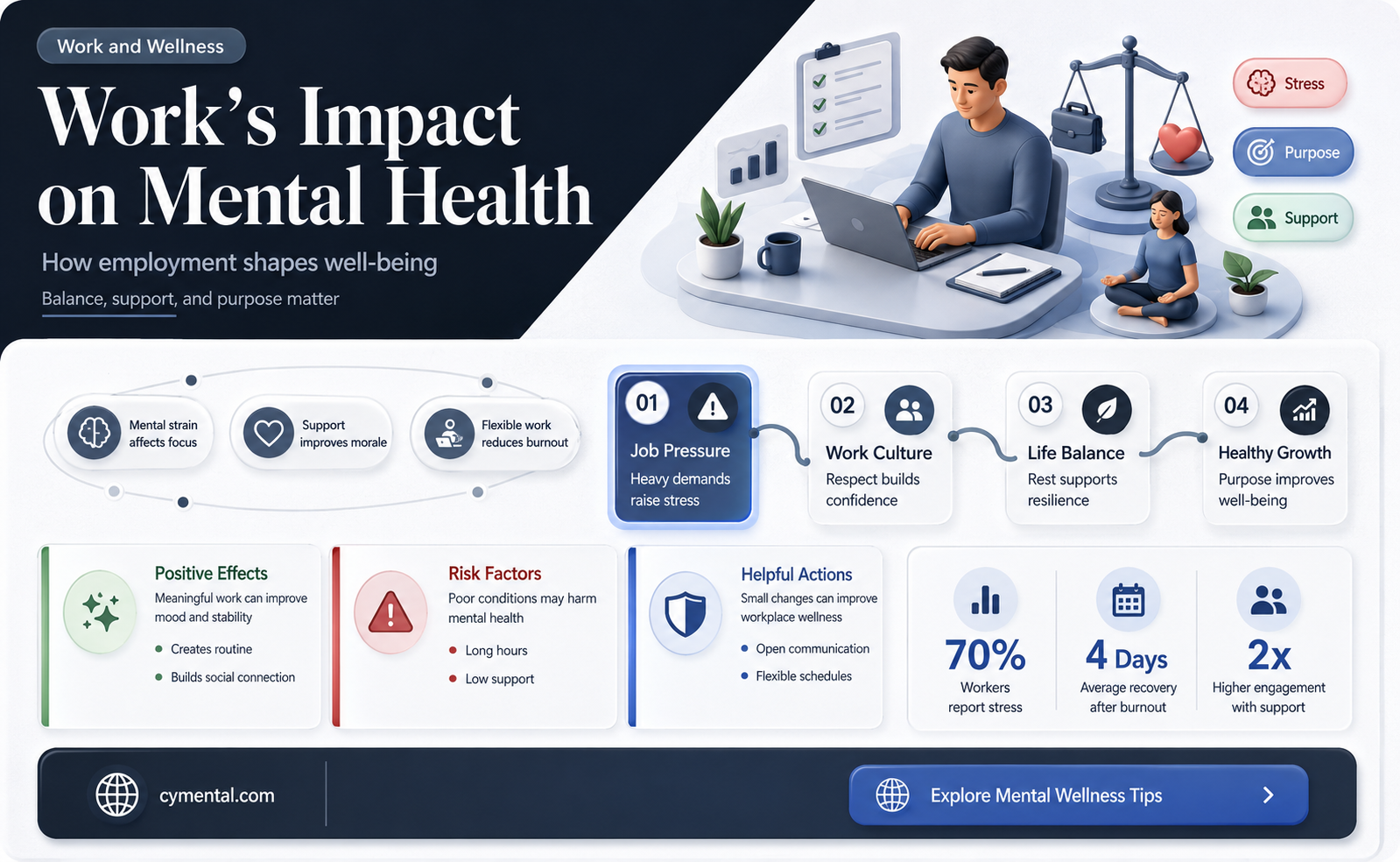
Work can significantly impact mental health, often serving as a double-edged sword. On one hand, employment provides structure, purpose, and social connections, which are essential for emotional well-being. Engaging in meaningful tasks can boost self-esteem, foster a sense of accomplishment, and reduce feelings of isolation. On the other hand, high-stress environments, heavy workloads, or toxic workplace cultures can exacerbate anxiety, depression, and burnout. The relationship between work and mental health is complex, influenced by factors like job satisfaction, work-life balance, and access to support systems. Understanding this dynamic is crucial for individuals and organizations alike to create environments that promote mental wellness rather than hinder it.
Explore related products


$14.99 $29.99


What You'll Learn
- Work as Distraction: Engaging tasks can divert focus from negative thoughts, reducing anxiety and depression symptoms
- Purpose and Identity: Employment fosters a sense of belonging and self-worth, boosting mental well-being
- Social Connection: Workplace interactions combat loneliness, providing emotional support and camaraderie
- Structure and Routine: Consistent schedules stabilize mood, reduce stress, and promote mental clarity
- Achievement and Growth: Accomplishments at work enhance confidence, motivation, and overall mental resilience

Work as Distraction: Engaging tasks can divert focus from negative thoughts, reducing anxiety and depression symptoms
Engaging in meaningful work can act as a powerful distraction from the relentless cycle of negative thoughts that often accompany anxiety and depression. When absorbed in a task that demands focus and creativity, the mind shifts its attention away from rumination, providing a temporary reprieve from emotional distress. This phenomenon is not merely anecdotal; studies have shown that structured activities, particularly those requiring problem-solving or skill application, can significantly reduce symptoms of anxiety and depression by occupying cognitive resources that would otherwise fuel negative thinking patterns.
Consider the case of a graphic designer who, after a particularly stressful day, immerses herself in a complex project. As she fine-tunes color palettes and adjusts layouts, her mind becomes fully engaged in the task at hand. The act of creating not only distracts her from worries about deadlines or personal challenges but also triggers a sense of accomplishment as she sees tangible progress. This example illustrates how work, when it aligns with one’s skills and interests, can serve as a healthy escape, breaking the cycle of overthinking and fostering a sense of purpose.
However, the effectiveness of work as a distraction depends on its nature and intensity. Tasks that are overly repetitive or unchallenging may fail to engage the mind sufficiently, leaving room for negative thoughts to resurface. Conversely, work that is excessively demanding can lead to burnout, exacerbating mental health issues. The key lies in finding a balance—engaging in tasks that are stimulating yet manageable, ideally lasting between 30 minutes to 2 hours at a time. For instance, a writer might dedicate focused blocks to drafting a chapter, while a gardener could immerse themselves in pruning or planting during specific intervals.
Practical tips can enhance the distraction benefits of work. First, choose tasks that align with your strengths and interests to ensure they are inherently engaging. Second, set clear boundaries to prevent overwork; use timers to limit sessions and take breaks to recharge. Third, incorporate variety by alternating between different types of tasks to maintain mental freshness. For example, a software developer might switch between coding and designing user interfaces to keep their mind actively engaged without monotony.
While work can be a valuable tool for managing mental health, it is not a substitute for professional treatment or self-care practices. It is essential to recognize when distraction through work becomes avoidance, masking deeper issues that require attention. Combining structured tasks with therapy, mindfulness, and social support creates a holistic approach to mental well-being. Ultimately, when used mindfully, work can be more than a means of productivity—it can be a sanctuary where the mind finds respite from its own storms.
Comic Books and Cartoons: Unlocking Mental Health Benefits Through Art
You may want to see also
Explore related products


Purpose and Identity: Employment fosters a sense of belonging and self-worth, boosting mental well-being
Employment serves as a cornerstone for building a sense of purpose and identity, two elements critical to mental well-being. When individuals engage in work, they often find themselves part of a larger collective, whether it’s a team, department, or organization. This sense of belonging is not merely social; it’s psychological. Research from the *Journal of Occupational Health Psychology* highlights that employees who feel connected to their workplace report lower levels of anxiety and depression. For instance, a 40-hour workweek, when balanced with meaningful tasks, can provide a structured routine that combats feelings of aimlessness. Practical tip: Seek roles that align with your values or interests to deepen this connection, as alignment fosters a stronger sense of belonging.
Consider the transformative power of identity through work. A barista isn’t just making coffee; they’re crafting experiences. A teacher isn’t merely delivering lessons; they’re shaping futures. These roles become integral to how individuals define themselves, offering a narrative that extends beyond personal life. Studies show that those who derive a significant part of their identity from their profession exhibit higher self-esteem and resilience. However, caution is necessary: over-identification with a job can lead to burnout if personal worth becomes solely tied to professional success. To mitigate this, allocate 10–15 minutes daily for self-reflection, separating personal identity from job performance.
The act of contributing to a shared goal amplifies self-worth. For example, a software developer debugging code isn’t just fixing errors; they’re ensuring a product works seamlessly for users. This tangible impact reinforces one’s value, a key factor in combating feelings of inadequacy. A study by the *American Psychological Association* found that employees who perceive their work as meaningful are 30% less likely to experience symptoms of depression. To maximize this benefit, break tasks into smaller, achievable goals. Completing these micro-goals provides a steady stream of accomplishment, bolstering self-worth incrementally.
Finally, employment offers a unique platform for skill development, which further enhances identity and purpose. Learning new skills—whether through formal training or on-the-job experience—provides a sense of progression and mastery. For instance, a retail worker who transitions into management gains not only a new title but also a redefined sense of self. This growth is particularly impactful for younger adults (ages 18–30), who are still forming their professional identities. Employers can support this by offering mentorship programs or skill-building workshops, while individuals should aim to learn one new skill every quarter to maintain momentum.
In essence, employment is more than a means to earn a living; it’s a vehicle for crafting purpose and identity. By fostering belonging, shaping self-perception, and enabling contribution, work becomes a vital tool for mental well-being. However, balance is key. Integrate work into your life in a way that enhances, not defines, your identity. Practical takeaway: Regularly assess how your job aligns with your values and adjust as needed to ensure it remains a source of fulfillment, not stress.
Acupuncture and Mental Health: A Natural Path to Wellness?
You may want to see also
Explore related products


Social Connection: Workplace interactions combat loneliness, providing emotional support and camaraderie
Workplace interactions are a powerful antidote to loneliness, a silent epidemic affecting millions globally. According to a 2020 survey by the Mental Health Foundation, 25% of adults reported feeling lonely occasionally, with younger adults (18-24) experiencing higher rates. In this context, the workplace emerges as a vital social ecosystem. Daily conversations, team meetings, and even casual watercooler chats foster a sense of belonging, breaking the isolation that often fuels mental health struggles. For instance, a study published in the *Journal of Occupational Health Psychology* found that employees with strong workplace friendships reported lower stress levels and higher job satisfaction.
To harness this benefit, intentionally cultivate workplace connections. Start by initiating small talk during breaks or asking colleagues about their weekend plans. Managers can play a pivotal role by organizing team-building activities or creating dedicated social spaces. For remote workers, virtual coffee breaks or weekly check-ins can simulate in-person interactions. However, quality trumps quantity—a single meaningful conversation can be more impactful than numerous superficial exchanges. Aim for at least one deep interaction per week, whether discussing a shared challenge or celebrating a colleague’s achievement.
Compare this to the alternative: a work environment devoid of social connection. Research from the University of Chicago reveals that loneliness can be as detrimental to health as smoking 15 cigarettes daily. In contrast, workplaces that prioritize camaraderie act as protective buffers against anxiety and depression. For example, companies like Google and Salesforce have implemented "buddy systems" for new hires, pairing them with experienced employees to ease transitions and foster relationships. Such initiatives not only combat loneliness but also enhance productivity and retention.
A cautionary note: not all workplace interactions are beneficial. Toxic relationships or forced socializing can exacerbate stress. To ensure positive outcomes, focus on authenticity and mutual respect. If a colleague seems withdrawn, approach them with empathy rather than intrusion. Additionally, set boundaries to prevent burnout—socializing should complement, not dominate, your workday. For introverts, shorter, more intentional interactions may be more effective than prolonged group activities.
In conclusion, workplace interactions are a double-edged sword—when nurtured thoughtfully, they become a cornerstone of mental well-being. By integrating simple yet intentional practices, individuals and organizations can transform the workplace from a mere professional space into a thriving community. Start small, stay consistent, and watch as camaraderie becomes a shield against loneliness, one conversation at a time.
B12 and Mental Calmness: Unlocking Serenity Through Nutrition
You may want to see also
Explore related products


$10.99 $18.99

$12.68 $18.95


Structure and Routine: Consistent schedules stabilize mood, reduce stress, and promote mental clarity
Human brains thrive on predictability, a fact rooted in our evolutionary wiring. When faced with uncertainty, the amygdala, our brain's alarm system, sounds the alert, flooding our bodies with stress hormones. This ancient survival mechanism, while crucial for dodging predators, becomes counterproductive in the face of modern-day stressors like looming deadlines or overflowing inboxes. Enter structure and routine, the antidote to this primal panic. A consistent schedule acts as a psychological scaffold, providing a sense of control and order that calms the amygdala's hypervigilance.
Studies show that individuals with structured daily routines report lower levels of cortisol, the primary stress hormone, and exhibit greater emotional resilience in the face of challenges.
Imagine a day without a schedule: waking up at erratic hours, meals haphazardly consumed, work tasks tackled in a chaotic flurry. This lack of structure breeds decision fatigue, a state of mental exhaustion stemming from the constant need to choose and prioritize. Each decision, no matter how trivial, depletes our finite reservoir of willpower, leaving us vulnerable to impulsivity, poor judgment, and heightened stress. A well-structured routine, on the other hand, automates many daily decisions, freeing up cognitive resources for more complex tasks and fostering a sense of calm focus.
Think of it as outsourcing the mundane to your autopilot, allowing your conscious mind to tackle the truly important.
Building a mood-stabilizing routine doesn't require military precision. Start small, focusing on anchoring points like consistent wake-up and bedtimes. Gradually incorporate dedicated blocks for work, exercise, meals, and leisure activities. Aim for a balance between structure and flexibility, allowing for adjustments when needed without abandoning the overall framework. Remember, the goal is not rigid control but a sense of predictable flow that reduces anxiety and promotes mental clarity.
Think of your routine as a gentle riverbank guiding your day, not a rigid canal dictating every twist and turn.
For optimal mental health benefits, aim for a routine that incorporates elements of physical activity, social connection, and meaningful engagement. Studies suggest that even 30 minutes of moderate exercise, five days a week, can significantly reduce symptoms of depression and anxiety. Scheduling regular social interactions, whether it's a coffee date with a friend or a virtual book club meeting, combats loneliness and fosters a sense of belonging. Finally, dedicate time to activities that bring you joy and purpose, whether it's painting, volunteering, or learning a new skill. By weaving these elements into your daily structure, you create a routine that not only stabilizes your mood but also nurtures your overall well-being.
Ketamine's Role in Treating Mental Illness: Hope or Hype?
You may want to see also
Explore related products
$6.79 $14.99


Achievement and Growth: Accomplishments at work enhance confidence, motivation, and overall mental resilience
Accomplishments at work act as a powerful catalyst for mental resilience, transforming daily tasks into opportunities for personal growth. Completing a challenging project, mastering a new skill, or even receiving recognition for a job well done triggers the brain’s reward system, releasing dopamine—a neurotransmitter linked to pleasure and motivation. Over time, these small victories accumulate, fostering a sense of competence that buffers against stress and anxiety. For instance, a study published in the *Journal of Occupational Health Psychology* found that employees who experienced regular achievements at work reported higher levels of job satisfaction and lower levels of burnout. This suggests that work, when structured to encourage achievement, can serve as a protective factor for mental health.
To harness the mental health benefits of workplace achievements, it’s essential to set realistic, measurable goals. Break larger tasks into manageable steps, ensuring each milestone is achievable within a specific timeframe. For example, if you’re tasked with leading a team project, set weekly goals like finalizing the project scope, conducting stakeholder meetings, or delivering a progress report. Each completed step not only moves the project forward but also provides a tangible sense of progress. Pair this with self-reflection: at the end of each week, jot down what you accomplished and how it contributed to the bigger picture. This practice reinforces the connection between effort and achievement, bolstering confidence and motivation.
However, it’s crucial to strike a balance between ambition and self-compassion. Overemphasis on achievement can lead to perfectionism, a known risk factor for anxiety and depression. To mitigate this, reframe setbacks as learning opportunities rather than failures. For instance, if a presentation doesn’t go as planned, analyze what went wrong, identify actionable improvements, and apply those lessons to future tasks. Additionally, celebrate progress, not just outcomes. A 2021 study in *Frontiers in Psychology* highlighted that individuals who focused on effort and growth, rather than solely on results, experienced greater psychological well-being. This mindset shift ensures that work remains a source of growth, not stress.
Finally, organizations play a pivotal role in fostering achievement-driven mental resilience. Managers can encourage this by providing clear expectations, regular feedback, and opportunities for skill development. For example, implementing a mentorship program or offering access to online courses can empower employees to take on new challenges. Similarly, recognizing achievements—whether through formal awards or simple verbal acknowledgment—reinforces their value. A Gallup poll revealed that employees who receive regular praise are 30% more likely to be engaged at work, a key indicator of mental well-being. By creating an environment that values and celebrates accomplishment, workplaces can transform daily tasks into meaningful contributors to mental resilience.
Testosterone's Impact on Mental Clarity: Enhancing Focus and Cognitive Function
You may want to see also
Frequently asked questions
Yes, work can positively impact mental health by providing structure, purpose, and social interaction, which are essential for emotional well-being.
Yes, excessive stress, long hours, or a toxic work environment can negatively affect mental health, leading to anxiety, burnout, or depression.
A job offers financial stability, a sense of accomplishment, and opportunities for personal growth, all of which can boost self-esteem and reduce feelings of isolation.
Set boundaries, seek support from colleagues or professionals, and consider adjusting your workload or exploring new opportunities to prioritize your mental health.