Madison Cole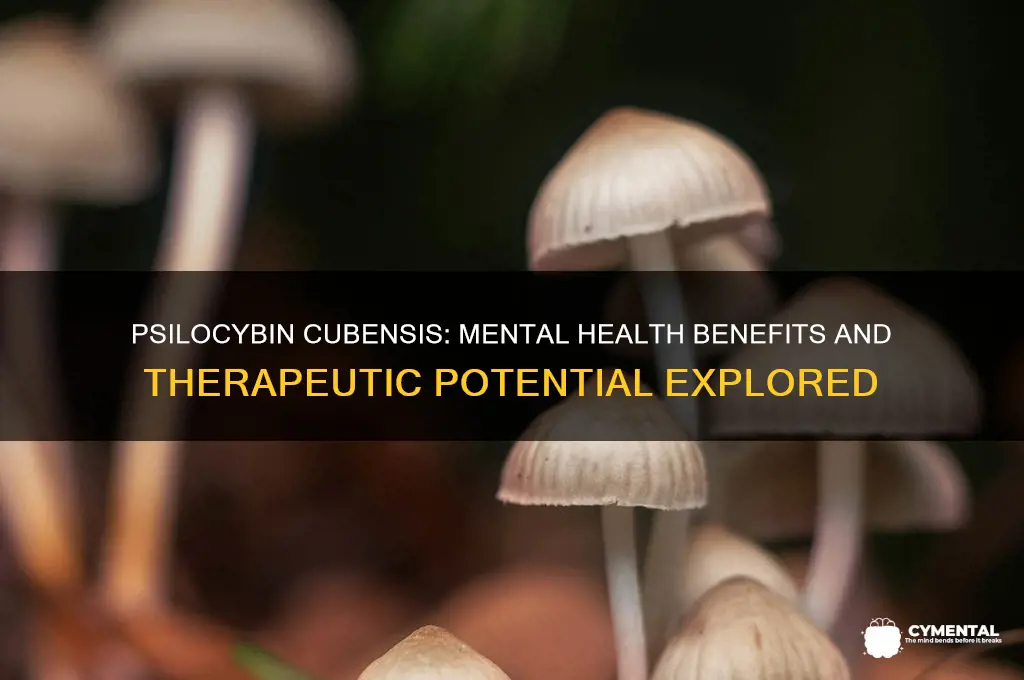
Psilocybin cubensis, a species of psychedelic mushroom, has garnered significant attention in recent years for its potential mental health benefits. Research suggests that psilocybin, the active compound in these mushrooms, may help alleviate symptoms of various mental health conditions, including depression, anxiety, and PTSD. Studies have shown that guided psilocybin therapy can lead to profound and lasting improvements in mood, emotional well-being, and overall quality of life. By promoting neuroplasticity and facilitating emotional processing, psilocybin cubensis may offer a unique and promising approach to treating mental health disorders, particularly for individuals who have not responded to traditional treatments. However, it is essential to note that psilocybin therapy should only be administered in controlled, therapeutic settings under professional supervision.
Explore related products


$15.99 $14.95


What You'll Learn
- Reducing Depression Symptoms: Psilocybin shows promise in alleviating treatment-resistant depression quickly and effectively
- Anxiety Relief: Studies suggest it reduces anxiety, especially in terminally ill patients
- PTSD Treatment: May help process trauma by promoting emotional release and new perspectives
- Enhancing Mindfulness: Users report increased present-moment awareness and spiritual connection
- Addiction Recovery: Shows potential in treating substance dependencies like alcohol and smoking

Reducing Depression Symptoms: Psilocybin shows promise in alleviating treatment-resistant depression quickly and effectively
Depression, a pervasive and often debilitating condition, affects millions worldwide, with many finding little relief from conventional treatments. Psilocybin, the active compound in *Psilocybin cubensis*, has emerged as a promising alternative for those with treatment-resistant depression (TRD). Clinical trials have demonstrated that a single dose of psilocybin, administered in a controlled therapeutic setting, can produce rapid and sustained reductions in depressive symptoms. For instance, a 2021 study published in *JAMA Psychiatry* found that two doses of 25 mg psilocybin, combined with psychotherapy, led to significant improvements in TRD patients within weeks, compared to minimal changes in the placebo group.
The mechanism behind psilocybin’s efficacy lies in its ability to modulate brain networks associated with mood and cognition. Functional MRI studies reveal that psilocybin increases connectivity in the brain’s default mode network (DMN), which is often hyperactive in depression. By "resetting" this network, psilocybin appears to disrupt rigid thought patterns and foster emotional flexibility. Patients frequently report profound shifts in perspective, describing experiences of interconnectedness and renewed purpose, which correlate with long-term symptom relief.
While the results are compelling, practical considerations are essential for safe implementation. Psilocybin therapy is not a DIY solution; it requires professional oversight. Sessions typically last 6–8 hours, with patients receiving a dose of 20–30 mg psilocybin in a comfortable, supportive environment. Preparation and integration sessions with a trained therapist are critical to maximize benefits and minimize risks, such as transient anxiety or disorientation during the experience. This structured approach ensures that the psychological insights gained during the session translate into lasting behavioral changes.
Critics often raise concerns about psilocybin’s hallucinogenic effects and potential for misuse. However, when administered in controlled doses and settings, the risks are minimal, particularly compared to the chronic use of antidepressants, which can have side effects like weight gain, sexual dysfunction, and emotional numbing. Psilocybin’s rapid onset of action—often within days—also contrasts sharply with traditional antidepressants, which may take weeks to show effects. For individuals with severe, treatment-resistant depression, this speed can be life-saving.
As research progresses, psilocybin therapy is poised to revolutionize mental health care, offering hope to those who have exhausted other options. Regulatory bodies are beginning to recognize its potential, with the FDA granting breakthrough therapy designation for psilocybin in TRD. While widespread availability remains years away, the evidence is clear: psilocybin is not just another experimental treatment—it’s a paradigm shift in how we approach depression, prioritizing deep healing over symptom management. For those struggling with TRD, it represents a beacon of possibility in a landscape often shrouded in despair.
Meditation's Mental Benefits: Enhancing Mindfulness, Reducing Stress, and Improving Focus
You may want to see also
Explore related products


Anxiety Relief: Studies suggest it reduces anxiety, especially in terminally ill patients
Psilocybin, the active compound in *Psilocybe cubensis*, has emerged as a promising tool for alleviating anxiety, particularly in terminally ill patients. Clinical trials have shown that a single, moderate dose of psilocybin (typically 20–30 mg/70 kg body weight) administered in a controlled, therapeutic setting can lead to significant and lasting reductions in anxiety and depression. These effects are often accompanied by profound emotional and spiritual experiences, which patients describe as transformative. For those facing end-of-life distress, such relief can be life-altering, offering a sense of peace and acceptance during an otherwise tumultuous time.
Consider the process: patients undergo preparatory sessions with trained therapists to establish trust and set intentions. The psilocybin session itself lasts 6–8 hours, during which individuals are guided through their experience in a calm, supportive environment. Eye masks and curated music often enhance introspection. Post-session integration is critical, as therapists help patients process insights and apply them to their lives. This structured approach ensures safety and maximizes therapeutic potential, distinguishing it from recreational use.
Critics might question the risks, but studies emphasize the importance of screening. Candidates with a history of psychosis or severe cardiovascular conditions are typically excluded. For eligible individuals, side effects like transient anxiety or confusion during the session are manageable with proper support. Long-term follow-ups reveal sustained anxiety reduction in many cases, with some patients reporting improvements lasting over a year. This contrasts sharply with traditional anxiolytics, which often require daily use and may lose efficacy over time.
Practically, integrating psilocybin therapy into end-of-life care requires collaboration between healthcare providers, policymakers, and patients. Advocacy for decriminalization and research funding is growing, driven by compelling results. For those exploring this option, consulting with specialized clinics or participating in clinical trials is essential. While not a panacea, psilocybin offers a unique pathway to relief, grounded in both science and human compassion. Its potential to ease existential distress underscores a broader shift toward holistic, patient-centered care.
Speaking Up: The Power of Conversation for Mental Well-Being
You may want to see also
Explore related products


PTSD Treatment: May help process trauma by promoting emotional release and new perspectives
Trauma lingers, often locking individuals in a cycle of fear, hypervigilance, and emotional numbness. For those with PTSD, traditional therapies sometimes fall short, leaving them searching for alternative paths to healing. Psilocybin cubensis, the active compound in certain mushrooms, has emerged as a promising tool in this quest. Its ability to induce altered states of consciousness may facilitate the processing of traumatic memories by promoting emotional release and fostering new perspectives on past experiences.
Research suggests that psilocybin’s effects on the brain’s default mode network—a system involved in self-referential thought and emotional regulation—can temporarily dissolve rigid thought patterns associated with PTSD. This "reset" effect allows individuals to revisit traumatic memories with reduced emotional intensity, enabling them to reframe their narratives and integrate the trauma into their life story in a healthier way.
Consider a guided therapy session where a trained professional administers a moderate dose of psilocybin (typically 10-25 mg) in a controlled, supportive environment. The individual is encouraged to focus on the trauma during the experience, allowing suppressed emotions to surface. The psychedelic state often amplifies emotional responses, but the therapeutic setting ensures safety and guidance. For example, a combat veteran might relive the fear of an explosion but, under the influence of psilocybin, perceive it from a distance, as if watching a film. This emotional distancing can reduce the memory’s grip, making it less overwhelming in daily life.
However, this approach is not without risks. Psilocybin can induce anxiety, paranoia, or re-traumatization if not carefully managed. It is crucial to screen candidates for a history of psychosis or severe mental health conditions, as these individuals may be more vulnerable to adverse reactions. Additionally, integration sessions post-experience are essential to process insights and ensure lasting change. Practical tips include maintaining a journal to track emotional shifts, practicing mindfulness to ground oneself, and seeking ongoing support from a therapist familiar with psychedelic-assisted therapy.
While still in the experimental stage, studies show that psilocybin-assisted therapy can lead to significant reductions in PTSD symptoms, with effects lasting up to a year in some cases. For those who have exhausted conventional treatments, this approach offers a glimmer of hope. It is not a magic cure but a tool—one that, when used responsibly, may unlock the door to healing and transformation.
Lifting Weights, Lifting Moods: Strength Training for Teen Mental Health
You may want to see also
Explore related products


Enhancing Mindfulness: Users report increased present-moment awareness and spiritual connection
Psilocybin, the active compound in *Psilocybe cubensis*, has been linked to profound shifts in consciousness, with users frequently reporting heightened mindfulness and a deeper connection to the present moment. These experiences often transcend ordinary perception, fostering a sense of unity with the surrounding environment and a heightened awareness of one’s thoughts and emotions. For instance, individuals describe feeling "fully immersed" in activities like walking in nature or listening to music, as if time has slowed to reveal layers of experience previously unnoticed. Such reports align with studies suggesting that psilocybin can temporarily alter brain activity in the default mode network, a region associated with self-referential thought and mind-wandering, allowing for a more grounded, present-focused state.
To cultivate this mindfulness, users often combine psilocybin with intentional practices. A typical dosage for such experiences ranges from 1 to 2 grams of dried *Psilocybe cubensis*, considered a "moderate" dose that balances introspection with manageability. Setting and intention play critical roles: creating a calm, distraction-free environment and setting a clear goal, such as "to observe without judgment," can amplify the effects. For example, one user described sitting in silence, focusing on their breath, and noticing how each inhale and exhale felt more vivid and connected to the rhythm of the world around them. This practice, akin to meditation, leverages psilocybin’s ability to dissolve mental barriers, making it easier to sustain attention on the present moment.
However, this heightened mindfulness is not without challenges. Some users report feeling overwhelmed by the intensity of sensory input or emotions, particularly at higher doses (3+ grams). To mitigate this, integrating grounding techniques—such as focusing on a physical object or repeating a calming phrase—can help anchor the experience. Additionally, having a trusted guide or sitter can provide reassurance, allowing the user to surrender more fully to the present without fear of losing control. For those new to psilocybin, starting with microdoses (0.1–0.3 grams) can build familiarity with its effects before exploring deeper states of mindfulness.
The spiritual dimension of these experiences often emerges as users feel a sense of interconnectedness—a dissolving of the boundaries between self and other. This can manifest as a profound appreciation for the beauty of everyday moments or a feeling of unity with the universe. For example, a 35-year-old user described seeing a tree not as a separate entity but as an extension of the earth, air, and sunlight, all working in harmony. Such insights frequently lead to lasting changes in perspective, with users reporting increased gratitude, compassion, and a reduced fear of death. While not all experiences reach this depth, even subtle shifts in awareness can foster a more mindful approach to daily life.
Incorporating psilocybin-induced mindfulness into long-term practice requires integration. Journaling about the experience, discussing it with a therapist, or engaging in creative activities like painting or writing can help solidify insights. For instance, one user created a "mindfulness map," a visual representation of their experience, which they referred to during meditation to reconnect with the feelings of presence and connection. Over time, these practices can reinforce the neural pathways associated with mindfulness, making it easier to access such states without psilocybin. While the substance may act as a catalyst, the true transformation lies in how users carry its lessons into their everyday lives.
Running for Mental Clarity: Boost Mood, Reduce Stress, and Focus
You may want to see also
Explore related products


Addiction Recovery: Shows potential in treating substance dependencies like alcohol and smoking
Psilocybin, the psychoactive compound found in *Psilocybe cubensis*, has emerged as a promising tool in addiction recovery, particularly for substance dependencies like alcohol and smoking. Clinical trials have shown that a single high-dose session (20–30 mg/70 kg body weight) administered in a controlled, therapeutic setting can lead to significant reductions in cravings and relapse rates. For instance, a 2019 study published in *JAMA Psychiatry* found that 80% of participants with alcohol dependence remained abstinent or significantly reduced their drinking after psilocybin-assisted therapy. This contrasts sharply with traditional treatments, which often yield lower success rates.
The mechanism behind psilocybin’s efficacy lies in its ability to disrupt entrenched behavioral patterns by fostering neuroplasticity and promoting introspection. Users often report profound shifts in perspective, describing experiences of ego dissolution or a reconnection with personal values. These insights can catalyze lasting behavioral change, particularly when paired with psychotherapy. For example, a smoker might realize during a session that their habit is tied to unresolved emotional trauma, enabling them to address the root cause rather than merely managing symptoms.
However, integrating psilocybin into addiction treatment is not without challenges. Dosage precision is critical; too low, and the therapeutic effect may be insufficient; too high, and the experience could become overwhelming, potentially triggering anxiety or psychosis. Additionally, the setting must be carefully curated—a calm, supportive environment with trained facilitators is essential to ensure safety and maximize therapeutic potential. Patients should also undergo thorough screening to exclude those with a history of psychotic disorders or severe mental health conditions, as psilocybin can exacerbate these risks.
Practical implementation requires a structured approach. Pre-session preparation involves educating patients about what to expect and encouraging them to set intentions for the experience. Post-session integration is equally vital, as therapists help patients process insights and translate them into actionable changes. For instance, a patient might develop a mindfulness practice to sustain the newfound clarity gained during the session. While still in the experimental phase, psilocybin-assisted therapy represents a paradigm shift in addiction treatment, offering hope to those who have struggled with conventional methods. Its potential lies not just in symptom management but in fostering deep, transformative healing.
Building Stronger Communities: Enhancing Mental Health Through Resilience Strategies
You may want to see also
Frequently asked questions
Psilocybin cubensis has shown promise in alleviating symptoms of depression, anxiety, PTSD, and OCD, particularly in treatment-resistant cases, when used in controlled therapeutic settings.
Yes, studies suggest psilocybin can rapidly reduce depressive symptoms by promoting neuroplasticity and altering brain connectivity, often leading to sustained improvements in mood.
Research indicates psilocybin can significantly reduce anxiety and existential distress in terminally ill patients, often leading to increased acceptance and improved quality of life.
Many users report enhanced creativity and problem-solving abilities after psilocybin experiences, likely due to its effects on brain networks associated with cognition and perception.
Emerging evidence suggests psilocybin-assisted therapy can help reduce cravings and promote abstinence in individuals with substance use disorders, particularly when combined with psychotherapy.