Ava Ramirez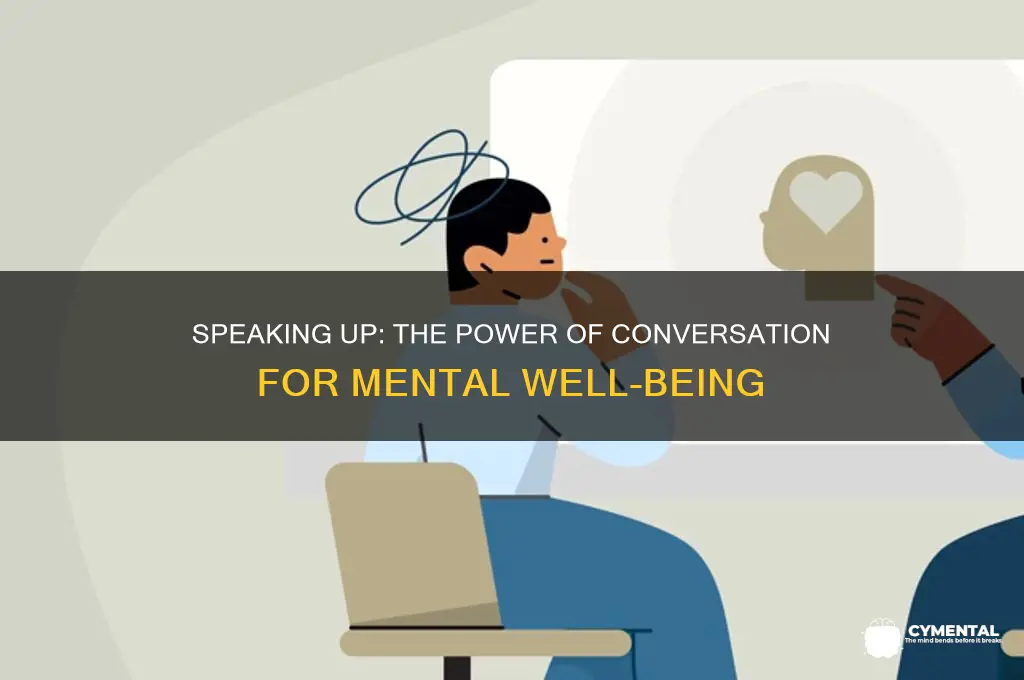
Talking about our thoughts and feelings is a powerful tool for improving mental health, as it allows individuals to process emotions, gain perspective, and reduce the burden of stress or anxiety. Engaging in open conversations, whether with a trusted friend, family member, therapist, or support group, fosters a sense of connection and validation, combating feelings of isolation. Verbalizing struggles can help clarify problems, identify solutions, and promote self-awareness, while also releasing pent-up emotions that may contribute to mental distress. Additionally, talking encourages empathy and understanding, creating a supportive environment that is essential for healing and growth. By normalizing conversations about mental health, we break down stigma and empower individuals to seek help, ultimately fostering resilience and well-being.
| Characteristics | Values |
|---|---|
| Emotional Release | Talking allows individuals to express bottled-up emotions, reducing stress and anxiety. Studies show that verbalizing feelings activates the medial prefrontal cortex, which helps process emotions. |
| Validation and Support | Sharing experiences with a listener provides validation, reducing feelings of isolation. Social support is linked to lower rates of depression and improved mental well-being. |
| Cognitive Reframing | Discussing problems helps individuals gain new perspectives, challenging negative thought patterns. Cognitive reframing is a key component of therapies like CBT (Cognitive Behavioral Therapy). |
| Stress Reduction | Verbalizing concerns lowers cortisol levels, the body's primary stress hormone. Research indicates that talking about stressors can reduce physiological markers of stress. |
| Improved Problem-Solving | Articulating thoughts clarifies issues and fosters better decision-making. Studies show that talking through problems enhances cognitive flexibility and creative solutions. |
| Strengthened Relationships | Open communication builds trust and intimacy, which are protective factors for mental health. Strong social connections are associated with a 50% increased chance of longevity and better mental health. |
| Normalization of Experiences | Sharing struggles helps individuals realize they are not alone, reducing stigma. Group therapy and peer support groups leverage this effect to improve mental health outcomes. |
| Access to Professional Help | Talking to therapists or counselors provides evidence-based strategies for managing mental health. Therapy is proven to reduce symptoms of anxiety and depression by 50-75% in many cases. |
| Mindfulness and Presence | Engaging in conversation encourages mindfulness, grounding individuals in the present moment. Mindfulness-based interventions are effective in reducing symptoms of anxiety and depression. |
| Behavioral Activation | Discussing goals and plans motivates individuals to take action, combating lethargy and hopelessness. Behavioral activation is a core technique in treating depression. |
Explore related products

$16.98 $30


What You'll Learn
- Reducing Stress: Sharing feelings lowers stress by releasing tension and promoting relaxation
- Building Connections: Conversations foster support networks, reducing loneliness and enhancing emotional well-being
- Clarifying Thoughts: Talking helps organize emotions, making problems feel more manageable and clear
- Validation & Empathy: Being heard and understood boosts self-worth and reduces feelings of isolation
- Early Intervention: Open dialogue identifies mental health issues early, enabling timely support and treatment

Reducing Stress: Sharing feelings lowers stress by releasing tension and promoting relaxation
Stress, a silent yet pervasive force, often accumulates in the body like a coiled spring, tightening muscles, quickening heartbeats, and clouding thoughts. Sharing feelings acts as a release valve for this pent-up tension. When you articulate your worries, fears, or frustrations, the act of verbalization shifts the burden from your mind to the external world. This process, known as "affect labeling," has been scientifically shown to reduce activity in the amygdala, the brain’s alarm center, effectively calming the nervous system. Think of it as deflating a balloon—slowly, intentionally, until the air of anxiety escapes.
Consider this practical approach: set aside 10–15 minutes daily to journal or speak aloud about what’s weighing on you. If writing feels too solitary, engage in a conversation with a trusted friend, family member, or therapist. The key is consistency. Research suggests that even brief, regular emotional expression can lower cortisol levels, the hormone associated with stress. For instance, a study published in *Psychological Science* found that participants who described their emotions during a stressful task experienced a quicker return to baseline heart rates compared to those who remained silent. This isn’t about venting aimlessly but about structured, intentional sharing.
However, not all forms of sharing yield the same results. Avoid ruminating on problems without seeking solutions, as this can amplify stress. Instead, frame your feelings in a way that invites reflection or problem-solving. For example, instead of saying, “I’m so overwhelmed,” try, “I feel overwhelmed because of these three tasks—how can I prioritize them?” This shifts the conversation from passive complaint to active resolution, doubling the stress-reducing benefits. Similarly, be mindful of your audience; sharing with someone empathetic and non-judgmental enhances relaxation, while unsupportive responses can backfire.
For those hesitant to speak openly, start small. Begin with low-stakes disclosures—sharing a minor frustration or a fleeting worry—to build emotional resilience. Gradually, as comfort grows, tackle more significant stressors. Age and personality play a role here: younger individuals or extroverts may find group settings like support circles beneficial, while older adults or introverts might prefer one-on-one conversations. The medium matters less than the act itself. Even voice notes or video calls can bridge the gap when in-person interaction isn’t feasible.
In essence, sharing feelings isn’t merely a coping mechanism—it’s a physiological reset button. By externalizing emotions, you disrupt the cycle of stress, allowing the body and mind to enter a state of relaxation. This isn’t about eliminating challenges but about changing how you carry them. As the tension releases, clarity emerges, and with it, the capacity to navigate life’s pressures with greater ease. Start today—your nervous system will thank you.
Supporting Mental Health: Practical Ways to Help Someone in Need
You may want to see also
Explore related products



$9.79 $17.99


Building Connections: Conversations foster support networks, reducing loneliness and enhancing emotional well-being
Human beings are inherently social creatures, and our mental health thrives on connection. Loneliness, a pervasive issue in modern society, acts as a silent epidemic, contributing to depression, anxiety, and even physical health problems. Conversely, meaningful conversations act as a powerful antidote, weaving a safety net of support that bolsters emotional well-being.
Think of conversations as the threads that bind us together. Each interaction, whether a deep heart-to-heart or a casual chat, strengthens the fabric of our social network. These connections provide a sense of belonging, validation, and understanding, all crucial elements in combating loneliness and fostering resilience against life's challenges.
Building a robust support network through conversation isn't merely about accumulating acquaintances. It's about cultivating relationships characterized by trust, empathy, and reciprocity. Start small: initiate conversations with colleagues, strike up a chat with a neighbor, or join a local club aligned with your interests. Consistency is key; regular interactions nurture deeper connections. Remember, vulnerability is a strength, not a weakness. Sharing your thoughts and feelings authentically invites others to do the same, fostering genuine bonds.
Active listening is paramount. Pay attention, ask questions, and demonstrate genuine interest in the other person. This not only strengthens the connection but also creates a safe space for open communication, allowing both parties to feel heard and understood.
Consider the power of support groups. These structured environments provide a safe haven for individuals facing similar challenges, offering a unique blend of understanding, shared experience, and collective wisdom. Research suggests that participation in support groups can significantly reduce symptoms of depression and anxiety, highlighting the profound impact of communal conversation.
While technology can facilitate connections, it's crucial to prioritize face-to-face interactions whenever possible. The nuances of body language, tone of voice, and physical presence contribute significantly to the depth and authenticity of a conversation. Aim for at least one meaningful, in-person interaction daily, whether it's a coffee date with a friend or a walk with a family member.
Faith and Healing: How Religion Supports Mental Well-Being
You may want to see also
Explore related products


Clarifying Thoughts: Talking helps organize emotions, making problems feel more manageable and clear
Emotions often arrive in a tangled mess, especially during stressful or traumatic experiences. Talking acts as a mental sieve, separating the threads of fear, anger, sadness, or confusion. When you vocalize your thoughts, you're forced to slow down and examine them one by one. This process of externalization transforms abstract feelings into concrete words, making them easier to identify, categorize, and ultimately, understand. Think of it as untangling a knot: pulling gently at each strand until the whole thing becomes clear.
Consider the difference between silently ruminating on a conflict with a friend and discussing it aloud. In your head, the argument might feel like a chaotic storm of blame, hurt, and frustration. But when you articulate your side, you begin to distinguish between your core concerns and secondary irritations. You might realize, for instance, that the real issue isn't about forgetting a birthday but about feeling undervalued. This clarity doesn't just emerge—it's actively constructed through the act of speaking.
To maximize this benefit, structure your conversations intentionally. Start by describing the situation without assigning blame or judgment. Use "I" statements to own your emotions, such as "I felt overlooked when..." rather than "You always ignore me." Then, ask open-ended questions to explore the other person's perspective, which can further refine your understanding. Even solo methods like journaling or voice recording can mimic this effect, as the process of translating emotions into language engages the brain's analytical centers.
However, not all talking is equally effective. Venting without reflection can reinforce negative thought patterns, while oversharing with unsupportive listeners may lead to invalidation. Aim for a balance of emotional release and cognitive processing. For example, a 20-minute daily check-in with a trusted friend or therapist can provide structure without overwhelming either party. If professional help isn't accessible, apps like Reflectly or tools like the "Five Whys" technique (asking "why" repeatedly to uncover root causes) can guide self-analysis.
The takeaway is clear: talking isn't just about offloading emotions—it's about reshaping them. By converting chaotic feelings into organized narratives, you gain distance from their intensity and insight into their origins. This clarity doesn't solve problems instantly, but it makes them feel less like insurmountable obstacles and more like puzzles with discernible pieces. Whether through dialogue, journaling, or structured self-inquiry, the simple act of putting emotions into words can be one of the most powerful tools for mental clarity.
Ginseng's Potential Role in Supporting Mental Health and Wellness
You may want to see also
Explore related products

$10.21 $18.95

$7.84 $14.99

$8.47 $19.99


Validation & Empathy: Being heard and understood boosts self-worth and reduces feelings of isolation
Human beings are inherently social creatures, wired to seek connection and understanding. When we share our thoughts and feelings with someone who listens attentively and responds with empathy, a powerful psychological shift occurs. This act of validation—of being truly heard and understood—acts as a balm for the mind, soothing anxiety, easing loneliness, and fostering a sense of self-worth.
Research consistently demonstrates the profound impact of validation on mental well-being. Studies show that individuals who feel understood by others exhibit lower levels of stress hormones like cortisol and report higher levels of life satisfaction. Conversely, chronic feelings of invalidation are linked to increased risk of depression, anxiety, and even physical health problems.
Imagine a scenario: a teenager struggles with self-doubt, convinced their worries are trivial. A trusted friend listens without judgment, acknowledges their feelings, and reflects back their concerns with phrases like, "That sounds really tough" or "I can see why you'd feel that way." This simple act of validation communicates, "Your experiences matter. You are not alone." Over time, such interactions build resilience, helping the teenager develop a stronger sense of self and the confidence to navigate life's challenges.
Practical application of validation requires active listening, a skill that involves more than just hearing words. It demands full attention, open body language, and reflective responses that demonstrate genuine understanding. Repeating back key phrases, paraphrasing, and asking clarifying questions all signal engagement and encourage deeper sharing. Crucially, validation doesn't mean agreeing with everything said, but rather acknowledging the validity of the speaker's emotions and perspective.
Incorporating validation into daily interactions can have a ripple effect on mental health. Parents can validate their children's emotions by saying, "It's okay to feel angry" instead of dismissing their feelings. Partners can strengthen their bond by actively listening to each other's concerns without jumping to solutions. Even brief moments of validation from colleagues or acquaintances can brighten someone's day and foster a sense of connection.
ADA Support for Mental Health: Empowering Accessibility and Inclusion
You may want to see also
Explore related products


Early Intervention: Open dialogue identifies mental health issues early, enabling timely support and treatment
Mental health issues often simmer beneath the surface, undetected until they reach a boiling point. Early intervention through open dialogue acts as a pressure release valve, allowing for timely identification and treatment before symptoms escalate. This proactive approach leverages the power of conversation to uncover subtle signs of distress, fostering a culture of prevention rather than reaction.
Consider the analogy of a garden. Just as weeds are easier to remove when young and tender, mental health concerns are more manageable when addressed early. Open dialogue serves as the gardener’s keen eye, spotting the first signs of trouble—a change in mood, withdrawal from social activities, or increased irritability. By tending to these early indicators, individuals can prevent the "weeds" of anxiety, depression, or other conditions from taking root and spreading. For instance, a teenager exhibiting mild social withdrawal might benefit from a supportive conversation with a trusted adult, leading to early counseling or coping strategies that avert a full-blown depressive episode.
The effectiveness of early intervention lies in its ability to disrupt the progression of mental health issues. Research shows that untreated mental health conditions can worsen over time, leading to chronic illness, impaired functioning, and reduced quality of life. For example, untreated anxiety in adolescents has a 70% chance of persisting into adulthood, often accompanied by comorbid conditions like depression. Conversely, studies indicate that early intervention programs, such as cognitive-behavioral therapy (CBT) initiated within the first six months of symptom onset, can reduce the severity of anxiety disorders by up to 50%. This highlights the critical window of opportunity that open dialogue provides.
Implementing early intervention requires a structured yet empathetic approach. Start by creating safe spaces for conversation, whether in schools, workplaces, or homes. Train individuals to recognize red flags, such as persistent sadness, changes in sleep patterns, or declining academic/professional performance. Encourage active listening, avoiding judgment or quick fixes. For children and adolescents, integrate mental health screenings into routine check-ups, as recommended by the American Academy of Pediatrics. Adults can benefit from workplace wellness programs that include mental health days and access to confidential counseling services. Pair these efforts with accessible resources, such as telehealth platforms or community mental health clinics, to ensure seamless transitions to professional support.
The takeaway is clear: early intervention through open dialogue is not just beneficial—it’s transformative. By normalizing conversations about mental health and equipping individuals with the tools to recognize and address early signs of distress, we can shift the paradigm from crisis management to proactive care. This approach not only alleviates individual suffering but also reduces the societal burden of untreated mental illness. In a world where one in four people will experience a mental health issue in their lifetime, fostering a culture of early intervention is not just a choice—it’s a necessity.
Organized Mind, Calm Life: How Structure Boosts Mental Well-Being
You may want to see also
Frequently asked questions
Talking helps by allowing individuals to express their thoughts and emotions, reducing feelings of isolation, and providing clarity. It also fosters connection, which is essential for emotional well-being.
Yes, talking can reduce stress and anxiety by releasing pent-up emotions, offering perspective, and activating the brain’s calming mechanisms. Sharing concerns often makes them feel more manageable.
Both can be helpful. Friends provide emotional support, while professionals offer trained guidance and strategies. The choice depends on the severity of the issue and personal comfort.
Consistency is key. Regular conversations, whether daily check-ins or weekly sessions, can help maintain mental health. Even occasional talks can provide relief and insight.
Start small—share simpler thoughts or use journaling as a stepping stone. Over time, practice and trust can make it easier. Remember, it’s okay to go at your own pace.