Harper Lewis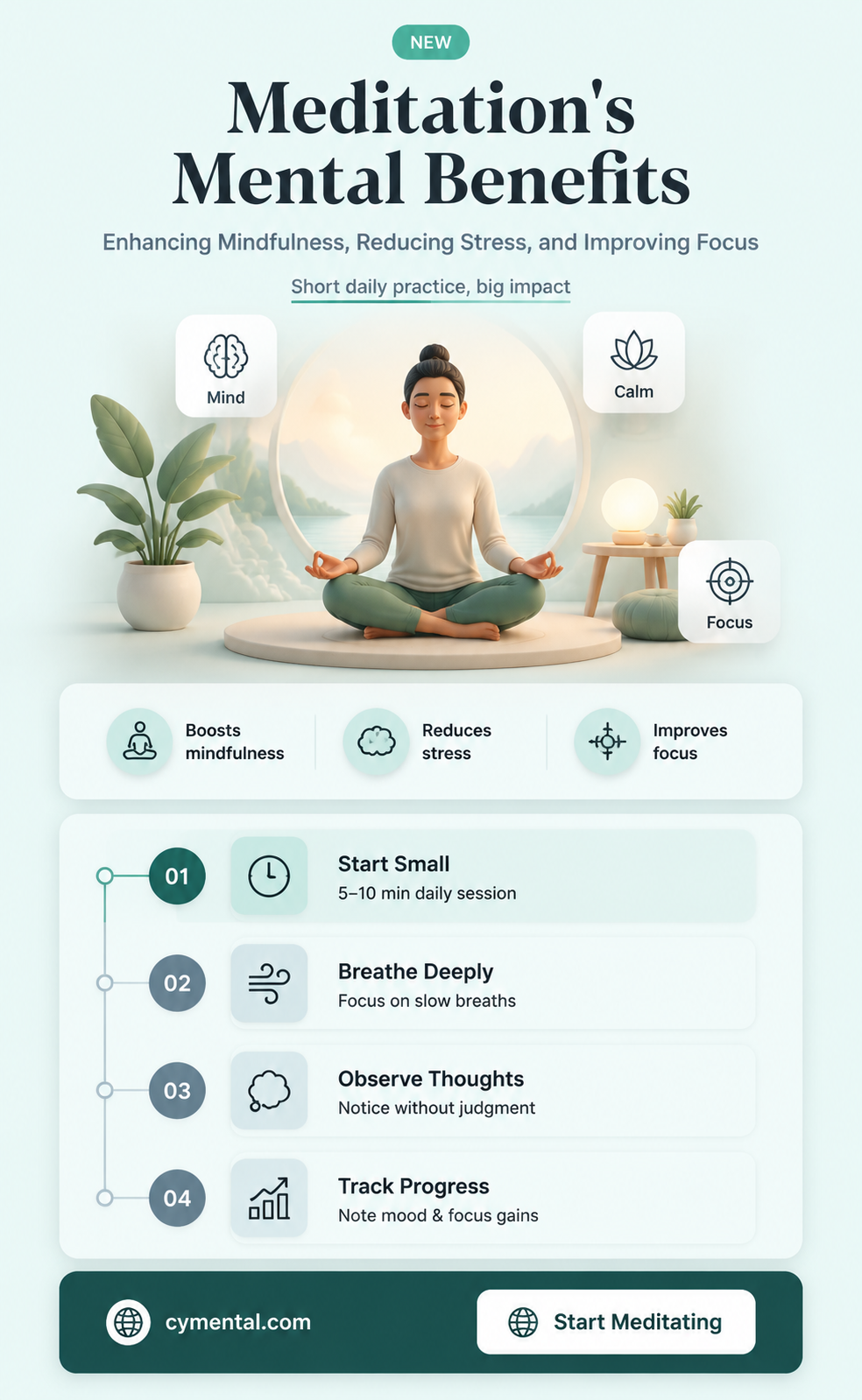
Meditation has gained widespread attention as a practice that promotes mental well-being, with numerous studies suggesting it can significantly impact one's psychological health. By encouraging mindfulness and relaxation, meditation is believed to reduce stress, anxiety, and symptoms of depression, while enhancing emotional regulation and overall mental clarity. Its ability to foster a sense of inner peace and self-awareness has made it a popular tool for managing the challenges of modern life. However, the extent of its benefits and the mechanisms behind its effects continue to be explored, sparking ongoing debates about its role in mental health care and personal development.
| Characteristics | Values |
|---|---|
| Stress Reduction | Meditation significantly reduces cortisol levels and activates the parasympathetic nervous system, promoting relaxation. |
| Anxiety Relief | Regular practice decreases symptoms of anxiety disorders by calming the amygdala, the brain's fear center. |
| Improved Emotional Regulation | Enhances self-awareness and emotional intelligence, helping individuals manage negative emotions effectively. |
| Enhanced Focus and Attention | Increases gray matter in the prefrontal cortex, improving concentration and reducing mind-wandering. |
| Depression Management | Reduces symptoms of depression by increasing serotonin levels and fostering positive thinking patterns. |
| Better Sleep Quality | Promotes relaxation and reduces insomnia by regulating sleep-related hormones like melatonin. |
| Increased Self-Awareness | Encourages mindfulness, helping individuals understand their thoughts and behaviors better. |
| Boosted Resilience | Strengthens the ability to cope with adversity by fostering a non-reactive mindset. |
| Reduced Symptoms of PTSD | Helps process traumatic memories and reduces hyperarousal in individuals with post-traumatic stress disorder. |
| Improved Cognitive Function | Enhances memory, creativity, and problem-solving skills by increasing neural connectivity. |
| Lower Blood Pressure | Reduces hypertension by promoting relaxation and lowering stress hormones. |
| Increased Compassion and Empathy | Practices like loving-kindness meditation (Metta) foster positive social connections and altruistic behavior. |
| Neuroplasticity | Encourages brain plasticity, allowing for structural and functional changes in response to meditation practice. |
| Reduced Inflammation | Lowers inflammatory markers in the body, contributing to overall mental and physical health. |
| Enhanced Overall Well-being | Improves quality of life by integrating mental, emotional, and physical health benefits. |
Explore related products


What You'll Learn

Stress reduction through mindfulness practices
Stress, an inevitable companion in our fast-paced lives, often leaves us feeling overwhelmed and mentally exhausted. Amidst the chaos, mindfulness practices emerge as a powerful antidote, offering a sanctuary of calm and clarity. By cultivating present-moment awareness, these techniques enable individuals to disentangle themselves from the web of anxious thoughts and preoccupations. Research consistently demonstrates that mindfulness meditation, even in short daily doses of 10–20 minutes, can significantly reduce cortisol levels—the body’s primary stress hormone. This physiological shift not only alleviates immediate tension but also builds long-term resilience against chronic stressors.
Consider the practice of mindful breathing, a cornerstone of stress reduction. Start by finding a quiet space and sitting comfortably. Close your eyes and focus on the sensation of air entering and leaving your nostrils. When your mind wanders—as it inevitably will—gently guide your attention back to the breath. This simple exercise, practiced for just 5 minutes daily, trains the brain to stay grounded in the present, breaking the cycle of rumination that fuels stress. For those new to mindfulness, guided apps or recordings can provide structure, making the practice more accessible and consistent.
While mindfulness is often associated with meditation, its principles extend to everyday activities. Mindful walking, for instance, involves paying attention to the sensation of each step—the ground beneath your feet, the movement of your legs, the rhythm of your breath. Incorporating this practice during a lunch break or commute can transform routine moments into opportunities for stress relief. Similarly, mindful eating encourages savoring each bite, noticing flavors, textures, and aromas, which not only reduces stress but also fosters a healthier relationship with food.
However, mindfulness is not a one-size-fits-all solution. Its effectiveness depends on consistency and individual commitment. Skeptics may find it challenging to "slow down" or may feel frustrated by the initial difficulty of maintaining focus. It’s crucial to approach mindfulness with patience, viewing it as a skill that develops over time rather than a quick fix. For those with severe anxiety or trauma, mindfulness should complement professional therapy, not replace it. Combining mindfulness with cognitive-behavioral techniques, for example, can enhance its stress-reducing benefits.
Incorporating mindfulness into daily life doesn’t require drastic changes. Start small—set a timer for 3 minutes of mindful breathing each morning, or dedicate one meal a day to mindful eating. Over time, these micro-practices accumulate, creating a buffer against stress and fostering a sense of inner peace. As studies show, even brief, regular engagement with mindfulness can rewire the brain’s stress response, making it a valuable tool for mental well-being in an increasingly chaotic world.
Anime's Impact: Exploring Mental Health Benefits and Emotional Healing
You may want to see also
Explore related products




Improved emotional regulation and mood stability
Meditation cultivates a mindful awareness of emotions, allowing individuals to observe their feelings without immediately reacting. This mental pause, often likened to stepping back from a chaotic scene, disrupts the automatic fight-or-flight response triggered by stress or negative emotions. Research suggests that regular meditation practice, even as little as 10 minutes daily, can thicken the prefrontal cortex, the brain region responsible for decision-making and emotional regulation. This neurological change translates to a greater ability to manage impulsive reactions and maintain composure in challenging situations.
Imagine a boiling pot of water representing your emotions. Meditation acts as a lid, not eliminating the heat but preventing it from spilling over.
Consider the case of mindfulness-based stress reduction (MBSR), a structured meditation program. Studies show that MBSR participants exhibit decreased activity in the amygdala, the brain's alarm center, during emotionally charged tasks. This suggests that meditation trains the brain to respond less intensely to stressors, leading to a calmer, more measured emotional state. Think of it as retraining your emotional thermostat, setting it to a more comfortable, stable temperature.
For optimal results, aim for consistency. Daily practice, even in short bursts, is more effective than sporadic, longer sessions. Beginners can start with guided meditations, readily available through apps or online platforms, to establish a routine.
While meditation is a powerful tool, it's not a magic bullet. Severe mental health conditions require professional intervention. However, for individuals seeking to enhance their emotional resilience and overall well-being, meditation offers a practical and accessible strategy. Just as physical exercise strengthens muscles, meditation strengthens the mind's ability to navigate the complexities of human emotion. Remember, emotional regulation is a skill, and like any skill, it improves with practice. Start small, be consistent, and witness the transformative power of a calm and centered mind.
Isolation's Impact: Does Solitude Heal or Harm Mental Health?
You may want to see also
Explore related products


Enhanced focus and cognitive performance benefits
Meditation’s impact on focus and cognitive performance is rooted in its ability to rewire the brain’s attentional networks. Studies using functional MRI scans reveal that regular meditators exhibit increased activity in the prefrontal cortex, the brain region responsible for decision-making and sustained attention, while showing reduced activity in the default mode network, which is linked to mind-wandering. For instance, a 2010 study published in *Psychological Science* found that participants who completed an 8-week mindfulness meditation program demonstrated significant improvements in their ability to maintain focus during high-pressure tasks compared to a control group. This neurological shift underscores why meditation is not just a relaxation tool but a cognitive enhancer.
To harness these benefits, start with a daily practice of 10–20 minutes, focusing on breath awareness or a guided meditation. Beginners often struggle with consistency, so anchoring the practice to a daily routine—such as immediately after waking up or before dinner—can improve adherence. For those seeking measurable gains, combining meditation with specific cognitive tasks, like solving puzzles or learning a new language, amplifies its effects. A 2018 study in *Frontiers in Psychology* showed that individuals who meditated before engaging in cognitive tasks performed 15% better than those who did not. The key is to treat meditation as a mental workout, not a passive activity.
While meditation’s benefits are clear, overloading the practice with unrealistic expectations can backfire. For example, attempting hour-long sessions without prior experience may lead to frustration and abandonment. Instead, gradually increase duration and intensity. Caution is also advised for individuals with attention-related disorders, such as ADHD, as unstructured meditation can sometimes exacerbate restlessness. In such cases, structured techniques like focused attention meditation or apps with guided sessions tailored for ADHD can be more effective. Always consult a mental health professional when integrating meditation into a therapeutic regimen.
Comparing meditation to other focus-enhancing methods highlights its unique advantages. Unlike caffeine or nootropics, which provide temporary boosts, meditation fosters long-term neural changes. A 2012 study in *NeuroImage* found that meditators with over 10,000 hours of practice had significantly thicker cortical regions associated with attention, a benefit not observed in stimulant users. Additionally, meditation is accessible across age groups—from children struggling with classroom focus to older adults combating age-related cognitive decline. For instance, a 2016 study in *Journal of Cognitive Enhancement* showed that seniors who meditated for 12 weeks improved their working memory by 20%. This versatility makes meditation a universally applicable tool for cognitive enhancement.
Incorporating meditation into daily life requires creativity and adaptability. For busy professionals, micro-meditations—2–3 minute sessions throughout the day—can yield noticeable improvements in task-switching efficiency. Students can use mindfulness techniques before exams to reduce anxiety and enhance recall. Even corporate environments are recognizing its value; companies like Google and Aetna offer meditation programs, reporting increased productivity and employee satisfaction. The takeaway is clear: meditation is not a one-size-fits-all solution but a customizable practice that, when tailored to individual needs and lifestyles, can unlock unparalleled focus and cognitive performance.
Yoga and Mental Health: Unlocking Inner Peace and Resilience
You may want to see also
Explore related products


Anxiety and depression symptom alleviation
Meditation has emerged as a powerful tool in the battle against anxiety and depression, offering a natural and accessible way to alleviate symptoms. Research consistently shows that regular practice can reduce the intensity and frequency of anxious and depressive episodes. For instance, a study published in *JAMA Internal Medicine* found that mindfulness meditation programs had moderate evidence of improved anxiety and depression symptoms, particularly when practiced for at least 20 minutes daily over an 8-week period. This suggests that consistency and duration are key factors in harnessing meditation’s therapeutic potential.
To effectively use meditation for symptom alleviation, consider incorporating specific techniques tailored to these conditions. Mindfulness-based stress reduction (MBSR) and mindfulness-based cognitive therapy (MBCT) are two evidence-based approaches. MBSR focuses on cultivating present-moment awareness to break the cycle of rumination, while MBCT combines mindfulness with cognitive behavioral strategies to prevent relapse in depression. Start with guided sessions, available through apps like Headspace or Calm, to build a foundation. Gradually transition to unguided practice as confidence grows. For those with severe symptoms, combining meditation with professional therapy can enhance outcomes.
A comparative analysis reveals that meditation’s benefits extend beyond temporary relief, addressing underlying mechanisms of anxiety and depression. Unlike pharmaceutical interventions, which often target neurotransmitter imbalances, meditation modifies neural pathways associated with emotional regulation and self-awareness. Studies using functional MRI have shown increased activity in the prefrontal cortex—the brain’s decision-making center—and decreased activity in the amygdala, which governs fear responses. This neuroplasticity underscores meditation’s long-term impact, making it a valuable adjunct or alternative to traditional treatments.
Practical tips can maximize meditation’s effectiveness for anxiety and depression. Create a dedicated space free from distractions, and establish a routine by meditating at the same time daily. For those overwhelmed by long sessions, start with 5–10 minutes and gradually increase duration. Incorporate deep breathing exercises, such as diaphragmatic breathing, to calm the nervous system before meditation. Lastly, be patient and compassionate with yourself; progress may be gradual, but small shifts in perspective can lead to significant symptom reduction over time.
Gender Affirming Care: Boosting Mental Health and Well-Being for Transgender Individuals
You may want to see also
Explore related products





Increased self-awareness and mental resilience development
Meditation fosters increased self-awareness by training the mind to observe thoughts and emotions without judgment. Through practices like mindfulness meditation, individuals learn to recognize patterns in their thinking, identify triggers for stress or anxiety, and understand their emotional responses. For instance, a study published in *Psychological Science* found that participants who meditated for 15 minutes daily over two weeks showed greater awareness of their cognitive processes, leading to more intentional decision-making. This heightened self-awareness is not just introspective; it translates into better interpersonal relationships, as individuals become more attuned to their own reactions and how they impact others.
Developing mental resilience through meditation involves cultivating a mindset that views challenges as opportunities rather than threats. Techniques like loving-kindness meditation (metta) and body scan meditation encourage emotional regulation and physical relaxation, which are foundational to resilience. A randomized controlled trial in *JAMA Internal Medicine* revealed that participants practicing mindfulness meditation for 45 minutes daily over eight weeks reported significantly lower levels of perceived stress and greater emotional stability compared to a control group. The key lies in consistency; even 10 minutes of daily meditation can build the mental fortitude needed to navigate adversity with grace.
To integrate self-awareness and resilience-building into daily life, start with a simple routine: sit in a quiet space, focus on your breath, and observe your thoughts without attachment. For beginners, guided meditation apps like Headspace or Calm offer structured sessions tailored to specific goals. Pair this practice with journaling to reflect on insights gained during meditation. For example, note recurring thoughts or emotions and consider how they influence your behavior. Over time, this dual approach enhances self-awareness and equips you with tools to bounce back from setbacks.
A cautionary note: while meditation is generally beneficial, it’s not a one-size-fits-all solution. Individuals with trauma or severe mental health conditions should approach meditation under professional guidance, as it can sometimes amplify distressing thoughts. Additionally, over-meditation without proper technique can lead to mental fatigue. The takeaway is balance—meditation is most effective when practiced mindfully and complemented by other wellness strategies like exercise, social connection, and therapy. By combining these elements, individuals can harness meditation’s potential to foster self-awareness and build lasting mental resilience.
Can CES Therapy Alleviate Symptoms of Mental Health Disorders?
You may want to see also
Frequently asked questions
Yes, meditation has been shown to reduce stress and anxiety by promoting relaxation, lowering cortisol levels, and improving emotional regulation.
Absolutely, regular meditation practice enhances attention span, cognitive function, and the ability to stay focused by training the mind to remain present.
Meditation can be a complementary tool for managing depression by fostering mindfulness, reducing negative thought patterns, and improving overall emotional well-being. However, it should not replace professional treatment.