Harper Lewis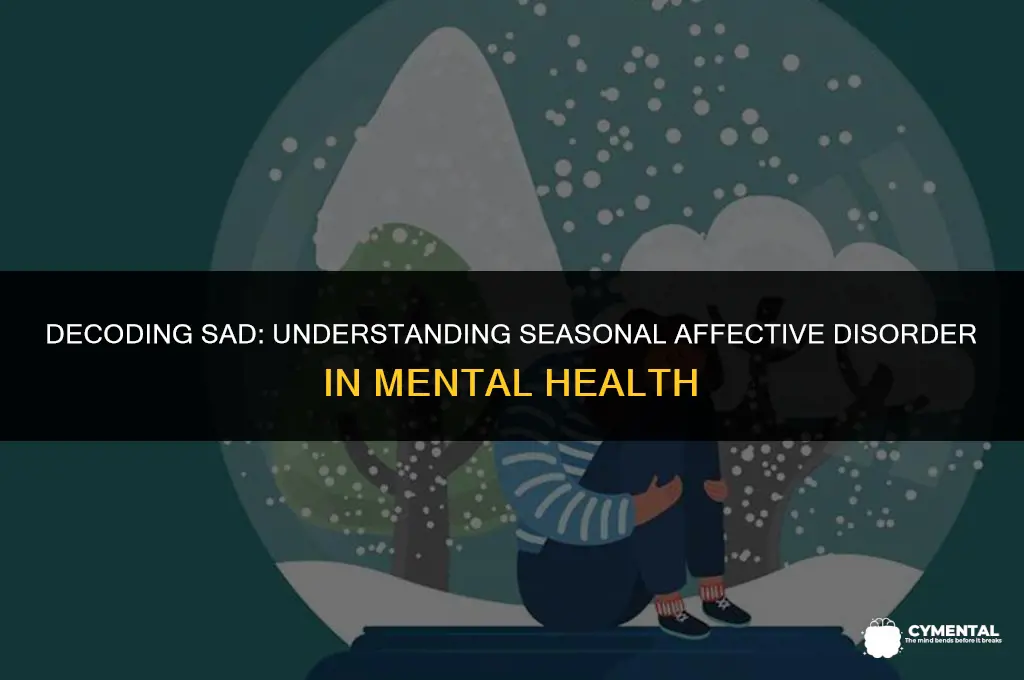
SAD in mental health stands for Seasonal Affective Disorder. It's a type of depression that relates to changes in seasons, typically starting in the fall and continuing into the winter months. This condition is characterized by symptoms such as low energy, difficulty concentrating, changes in appetite, and feelings of sadness or hopelessness. SAD is thought to be caused by reduced exposure to sunlight, which can disrupt the body's internal clock and lead to imbalances in neurotransmitters like serotonin and melatonin. Treatment options often include light therapy, medication, and psychotherapy. Understanding SAD is crucial for recognizing its symptoms and seeking appropriate help.
Explore related products


What You'll Learn
- Definition: SAD refers to Seasonal Affective Disorder, a type of depression linked to seasonal changes
- Symptoms: Common symptoms include low mood, lack of energy, oversleeping, and changes in appetite
- Causes: Reduced sunlight exposure during fall and winter months can trigger SAD by affecting serotonin levels
- Diagnosis: Diagnosed by a mental health professional through evaluation of symptoms and seasonal patterns
- Treatment: Treatments include light therapy, antidepressant medications, and psychotherapy to manage symptoms

Definition: SAD refers to Seasonal Affective Disorder, a type of depression linked to seasonal changes
Seasonal Affective Disorder (SAD) is a specific type of depression that follows a seasonal pattern. Unlike other forms of depression that may occur at any time, SAD is characterized by its recurrent nature, typically beginning in the fall and winter months when daylight hours are shorter. This condition affects individuals in a cyclical manner, often leading to symptoms such as low energy, difficulty concentrating, and changes in appetite.
One unique aspect of SAD is its relationship with light exposure. Research suggests that the reduced levels of natural light during the colder months can disrupt the body's internal clock, leading to hormonal imbalances that contribute to depressive symptoms. Light therapy, which involves exposure to artificial light that mimics natural sunlight, is often used as a treatment for SAD. This therapy can help regulate the body's circadian rhythms and alleviate symptoms.
Another distinctive feature of SAD is its impact on daily functioning. Individuals with SAD may experience significant impairment in their ability to perform everyday tasks, maintain relationships, and engage in activities they once enjoyed. This can lead to feelings of isolation and hopelessness, further exacerbating the depressive symptoms. It is essential for those affected by SAD to seek professional help, as treatment can significantly improve their quality of life.
In addition to light therapy, other treatment options for SAD include psychotherapy and medication. Cognitive-behavioral therapy (CBT) can help individuals identify and change negative thought patterns, while antidepressant medications may be prescribed to manage symptoms. Lifestyle changes, such as regular exercise and a balanced diet, can also play a role in managing SAD.
Understanding SAD is crucial for both those who suffer from it and their loved ones. By recognizing the signs and symptoms of SAD, individuals can seek appropriate treatment and support. With the right interventions, it is possible to effectively manage SAD and improve overall well-being.
Exploring Advanced Mental Health Services: A Comprehensive Guide
You may want to see also
Explore related products


Symptoms: Common symptoms include low mood, lack of energy, oversleeping, and changes in appetite
Depression, clinically referred to as Major Depressive Disorder (MDD), manifests through a variety of symptoms that can significantly impact an individual's daily life. One of the most common symptoms is a persistent low mood, which can be described as a feeling of sadness, emptiness, or hopelessness that lasts for most of the day, nearly every day. This low mood can be accompanied by a lack of energy or fatigue, making even simple tasks feel exhausting and overwhelming.
Another symptom frequently observed in depression is oversleeping, also known as hypersomnia. This can present as sleeping for extended periods, often more than 10 hours a day, and still feeling tired or unrefreshed upon waking. Oversleeping can disrupt daily routines, work schedules, and social activities, further exacerbating feelings of isolation and low self-esteem.
Changes in appetite are also a common symptom of depression. Some individuals may experience a decrease in appetite, leading to weight loss, while others may find themselves overeating, resulting in weight gain. These changes can be particularly concerning as they can lead to malnutrition or obesity, both of which can have serious health implications.
It's important to note that while these symptoms are common in depression, they can also be indicative of other mental health conditions or physical illnesses. Therefore, a comprehensive evaluation by a healthcare professional is necessary to determine an accurate diagnosis and appropriate treatment plan. Treatment options for depression may include psychotherapy, medication, lifestyle changes, or a combination of these approaches. Early recognition and intervention are crucial in managing symptoms and improving overall quality of life.
Exploring Trump's Vision for Mental Health Reform: A Comprehensive Analysis
You may want to see also
Explore related products


Causes: Reduced sunlight exposure during fall and winter months can trigger SAD by affecting serotonin levels
Reduced sunlight exposure during the fall and winter months is a significant factor in triggering Seasonal Affective Disorder (SAD). This condition is a type of depression that occurs at certain times of the year, usually in the colder months when daylight hours are shorter. The decrease in sunlight can disrupt the body's internal clock, or circadian rhythm, leading to feelings of sadness, lethargy, and a general lack of energy.
One of the primary ways that reduced sunlight exposure affects individuals with SAD is by impacting serotonin levels in the brain. Serotonin is a neurotransmitter that plays a crucial role in regulating mood, appetite, and sleep. When there is less sunlight, the body produces less serotonin, which can lead to symptoms of depression. This is why light therapy, which involves exposure to artificial light that mimics natural sunlight, is often used as a treatment for SAD.
In addition to affecting serotonin levels, reduced sunlight exposure can also influence melatonin production. Melatonin is a hormone that regulates sleep-wake cycles, and its levels typically rise in the evening and fall in the morning. However, during the winter months, melatonin levels may remain elevated for longer periods due to the shorter days, leading to increased sleepiness and fatigue.
To mitigate the effects of reduced sunlight exposure, individuals with SAD may benefit from spending more time outdoors during the day, especially in the morning. They can also use light therapy boxes, which emit bright light that simulates natural sunlight. These boxes are typically used for about 30 minutes to an hour each day, and they can help regulate serotonin and melatonin levels, improving mood and energy.
It's important to note that while reduced sunlight exposure is a significant factor in SAD, it is not the only cause. Other factors, such as genetics, stress, and hormonal changes, can also contribute to the development of this condition. Therefore, a comprehensive approach to treatment may include a combination of light therapy, medication, and psychotherapy.
Navigating Mental Health and Short-Term Disability: What You Need to Know
You may want to see also
Explore related products


Diagnosis: Diagnosed by a mental health professional through evaluation of symptoms and seasonal patterns
A mental health professional diagnoses Seasonal Affective Disorder (SAD) by evaluating a patient's symptoms and identifying seasonal patterns. This process involves a thorough assessment of the individual's mood, energy levels, sleep patterns, and appetite over the course of several months. The professional will look for a consistent pattern of symptoms that occur at the same time each year, typically during the fall and winter months when daylight hours are shorter.
The evaluation may include a physical exam to rule out other potential causes of the symptoms, as well as a psychological assessment to determine the severity of the disorder. The mental health professional may also ask the patient to keep a journal of their symptoms and mood changes to help identify patterns and triggers.
It's important to note that SAD can sometimes be misdiagnosed as other mental health conditions, such as depression or bipolar disorder. Therefore, it's crucial for the mental health professional to carefully consider the seasonal nature of the symptoms and rule out other potential diagnoses before making a definitive diagnosis of SAD.
Once a diagnosis is made, the mental health professional can work with the patient to develop a treatment plan that may include light therapy, medication, or cognitive-behavioral therapy. It's important for individuals who suspect they may have SAD to seek professional help, as early diagnosis and treatment can significantly improve outcomes and quality of life.
Understanding Weekly Compensation for Mental Health Disabilities: A Guide
You may want to see also
Explore related products


Treatment: Treatments include light therapy, antidepressant medications, and psychotherapy to manage symptoms
Light therapy, also known as phototherapy, is a treatment that involves exposure to bright light to help regulate the body's internal clock and improve mood. This therapy is particularly effective for individuals experiencing seasonal affective disorder (SAD), a type of depression that occurs at certain times of the year, usually in the winter months when natural light is scarce. Light therapy can help alleviate symptoms of SAD by mimicking the effects of natural sunlight, which can boost serotonin levels and improve overall mood.
Antidepressant medications are another common treatment for SAD. These medications work by balancing chemicals in the brain that affect mood and emotions. Selective serotonin reuptake inhibitors (SSRIs) are often prescribed for SAD due to their effectiveness in treating depression and their relatively mild side effects. It is important to consult with a healthcare professional to determine the appropriate medication and dosage for individual needs.
Psychotherapy, or talk therapy, can also be beneficial in managing symptoms of SAD. Cognitive-behavioral therapy (CBT) is a type of psychotherapy that focuses on identifying and changing negative thought patterns and behaviors. CBT can help individuals with SAD develop coping strategies to deal with their symptoms and improve their overall mental health.
In addition to these treatments, lifestyle changes can also play a role in managing SAD symptoms. Engaging in regular exercise, maintaining a healthy diet, and practicing stress-reduction techniques such as meditation or yoga can all contribute to improved mood and overall well-being. It is important for individuals experiencing SAD to work with a healthcare professional to develop a comprehensive treatment plan that addresses their specific needs and symptoms.
Overall, the key to effectively treating SAD is to combine different approaches to address both the physical and psychological aspects of the disorder. By incorporating light therapy, antidepressant medications, psychotherapy, and lifestyle changes, individuals with SAD can better manage their symptoms and improve their quality of life.
Understanding the Semicolon: A Symbol of Mental Health Awareness
You may want to see also
Frequently asked questions
SAD stands for Seasonal Affective Disorder, a type of depression that occurs at certain times of the year, usually in the winter.
Symptoms of SAD include feeling sad or down most of the day, losing interest in activities you once enjoyed, having low energy, difficulty concentrating, and changes in appetite and sleep patterns.
SAD can be treated with light therapy, which involves exposure to bright light to help regulate the body's internal clock, as well as with antidepressant medications and talk therapy.