Harper Lewis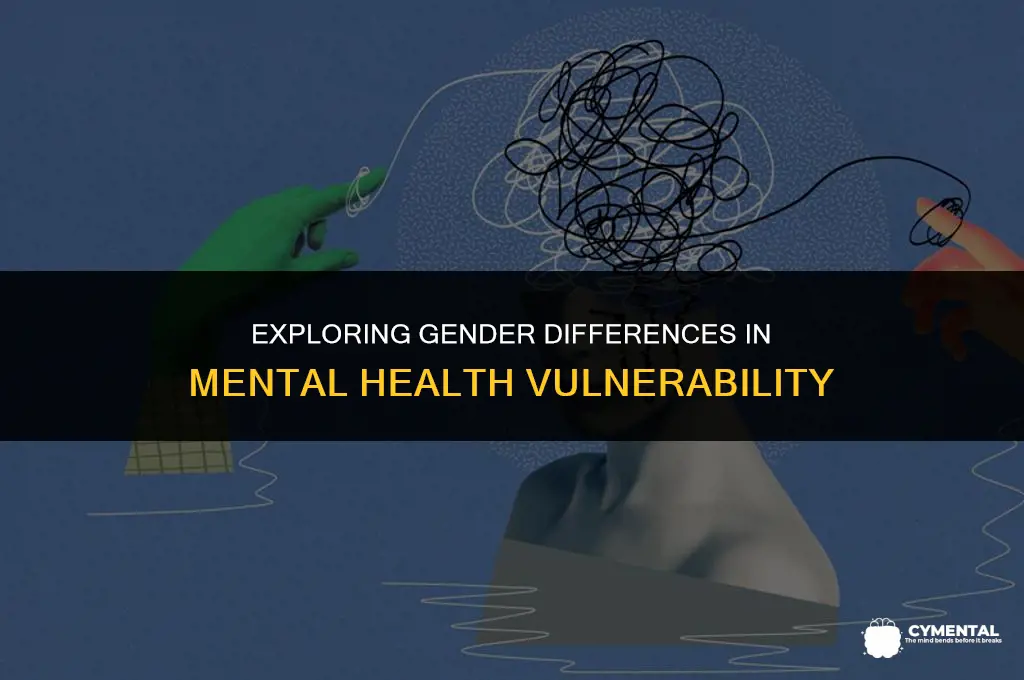
Mental health issues can affect anyone regardless of gender, but research has shown that there are some differences in the prevalence and types of mental health conditions experienced by men and women. Women are generally more likely to experience anxiety and depression, while men are more likely to experience substance abuse disorders and antisocial personality disorder. However, it's important to note that these are general trends and do not apply to every individual. Additionally, societal factors such as gender roles and expectations can contribute to the development of mental health issues in both men and women. It's crucial to approach mental health with a nuanced understanding that takes into account the complex interplay of biological, psychological, and social factors.
Explore related products


What You'll Learn
- Biological Factors: Hormonal differences and genetic predispositions may influence mental health risks between genders
- Social Pressures: Gender roles and societal expectations can impact mental well-being, leading to higher stress levels
- Trauma Exposure: Rates of trauma, such as sexual assault or domestic violence, differ between genders, affecting mental health
- Help-Seeking Behavior: Gender differences in seeking mental health treatment can influence diagnosis and support access
- Cultural Influences: Varying cultural norms and values may contribute to mental health disparities between genders

Biological Factors: Hormonal differences and genetic predispositions may influence mental health risks between genders
Hormonal differences play a significant role in the mental health risks between genders. For instance, estrogen, which is more prevalent in females, has been shown to have a protective effect on mental health, potentially reducing the risk of depression and anxiety. Conversely, testosterone, which is more prevalent in males, may contribute to increased aggression and impulsivity, potentially leading to higher rates of substance abuse and antisocial behavior. These hormonal differences are just one aspect of the complex interplay between biology and mental health.
Genetic predispositions also contribute to the mental health risks between genders. Research has identified specific genes that may increase the risk of certain mental health conditions, such as schizophrenia and bipolar disorder, in males. Additionally, the way in which genes are expressed can be influenced by hormonal levels, further complicating the relationship between genetics and mental health. For example, certain genes may be more active in females due to higher estrogen levels, potentially leading to increased vulnerability to depression and anxiety.
It is important to note that while biological factors such as hormonal differences and genetic predispositions can influence mental health risks between genders, they are not the sole determinants. Environmental factors, such as social and cultural influences, also play a significant role in shaping mental health outcomes. Furthermore, individual experiences and circumstances can greatly impact mental health, regardless of gender.
In conclusion, the relationship between biological factors and mental health risks between genders is complex and multifaceted. While hormonal differences and genetic predispositions can contribute to increased vulnerability to certain mental health conditions, they are not the only factors at play. A comprehensive understanding of mental health requires consideration of both biological and environmental influences, as well as individual experiences and circumstances.
When Mental Health Issues Peak: Understanding the Most Vulnerable Ages
You may want to see also
Explore related products


Social Pressures: Gender roles and societal expectations can impact mental well-being, leading to higher stress levels
Gender roles and societal expectations can significantly impact mental well-being, leading to higher stress levels and an increased likelihood of mental health issues. While both men and women experience these pressures, research suggests that women may be more vulnerable to their negative effects. This vulnerability can stem from a variety of factors, including the tendency for women to internalize societal expectations and the greater likelihood of women experiencing certain types of stressors, such as sexual harassment and discrimination.
One key area where gender roles can impact mental health is in the workplace. Women often face the "double bind" of being expected to conform to traditional gender roles while also striving for professional success. This can lead to feelings of guilt, anxiety, and stress as women navigate the conflicting demands placed upon them. Additionally, women are more likely to experience sexual harassment in the workplace, which can have severe negative effects on mental health.
In terms of societal expectations, women are often held to higher standards of beauty and appearance, which can contribute to body dissatisfaction and eating disorders. The pressure to conform to these beauty standards can also lead to feelings of inadequacy and low self-esteem. Furthermore, women are often expected to take on more caregiving responsibilities, which can result in increased stress and burnout.
It is important to note that while women may be more vulnerable to the negative effects of gender roles and societal expectations, men also experience these pressures and can suffer from mental health issues as a result. For example, men may feel pressure to conform to traditional masculine norms, which can lead to feelings of isolation and emotional suppression. Additionally, men are more likely to experience certain types of stressors, such as financial stress and job insecurity, which can also impact mental health.
In conclusion, gender roles and societal expectations can have a significant impact on mental well-being, leading to higher stress levels and an increased likelihood of mental health issues. While women may be more vulnerable to these pressures, it is important to recognize that men also experience them and can suffer from mental health issues as a result. Addressing these pressures and promoting gender equality can help to improve mental health outcomes for all individuals.
Recognizing Mental Health Struggles: Signs and Symptoms to Watch For
You may want to see also
Explore related products


Trauma Exposure: Rates of trauma, such as sexual assault or domestic violence, differ between genders, affecting mental health
Rates of trauma exposure, including sexual assault and domestic violence, vary significantly between genders, with profound implications for mental health. Research indicates that women are disproportionately affected by these forms of trauma, which can lead to a higher prevalence of mental health issues such as depression, anxiety, and post-traumatic stress disorder (PTSD). According to the World Health Organization (WHO), 1 in 3 women experience physical or sexual violence in their lifetime, compared to 1 in 4 men. This gender disparity in trauma exposure is a critical factor in understanding why women may be more likely to experience mental health challenges.
The impact of trauma on mental health is complex and multifaceted. Trauma can disrupt the normal functioning of the brain, affecting areas responsible for emotional regulation, memory, and decision-making. This can lead to a range of psychological symptoms, including intrusive thoughts, flashbacks, and emotional numbing. Furthermore, trauma can contribute to the development of maladaptive coping mechanisms, such as substance abuse or self-harm, which can exacerbate mental health issues.
It is essential to recognize that while women are more likely to be victims of certain types of trauma, men are not immune to these experiences. Men may face unique challenges in seeking help for trauma-related mental health issues due to societal expectations of masculinity and stoicism. This can lead to underreporting of trauma and a lack of access to appropriate mental health care.
Addressing the gender differences in trauma exposure and mental health requires a multifaceted approach. This includes increasing awareness of the prevalence and impact of trauma, improving access to mental health services, and promoting gender-sensitive interventions. Additionally, efforts to prevent trauma, such as education and awareness campaigns, can play a crucial role in reducing the incidence of mental health issues related to trauma exposure.
In conclusion, the gender differences in trauma exposure are a significant contributor to the disparities in mental health outcomes between men and women. By understanding these differences and implementing targeted interventions, we can work towards reducing the burden of trauma-related mental health issues and promoting overall well-being.
Exploring the Link: Mental Health Issues vs. Personality Disorders
You may want to see also
Explore related products


$101.92 $109


$96.58 $102.95


Help-Seeking Behavior: Gender differences in seeking mental health treatment can influence diagnosis and support access
Research indicates that women are more likely to seek mental health treatment than men. This gender disparity in help-seeking behavior can have significant implications for diagnosis and access to support. Women may be more inclined to recognize symptoms of mental health issues and take proactive steps to address them, while men might be more hesitant to seek help due to societal expectations of masculinity and self-reliance.
One possible explanation for this difference is the varying ways in which men and women are socialized to express emotions. Women are often encouraged to be more open about their feelings, making it easier for them to identify and articulate mental health concerns. In contrast, men may be taught to suppress emotions, leading to a reluctance to acknowledge and seek help for mental health issues.
The consequences of this disparity can be far-reaching. Men who delay seeking treatment may experience more severe symptoms and poorer outcomes. Additionally, the lack of representation of men in mental health treatment settings can contribute to a cycle of stigma and silence, making it even more challenging for men to seek help in the future.
To address this issue, it is essential to promote gender-sensitive approaches to mental health care. This includes creating safe spaces for men to express their emotions, challenging harmful gender norms, and increasing awareness about the importance of seeking help regardless of gender. By fostering a more inclusive and supportive environment, we can encourage more men to seek the treatment they need and improve overall mental health outcomes.
Navigating Resignation: When to Disclose Mental Health Concerns to Your Boss
You may want to see also
Explore related products


Cultural Influences: Varying cultural norms and values may contribute to mental health disparities between genders
Cultural norms and values play a significant role in shaping mental health outcomes, and this is particularly evident when examining gender disparities. In many societies, traditional gender roles dictate that men should be strong, stoic, and emotionally resilient, while women are often expected to be nurturing, expressive, and emotionally vulnerable. These expectations can lead to mental health issues for both genders, as individuals may feel pressured to conform to these norms, even if it means suppressing their true feelings or needs.
For example, in some cultures, men may be discouraged from seeking help for mental health issues, as it may be seen as a sign of weakness. This can lead to higher rates of untreated mental health conditions, such as depression and anxiety, among men. On the other hand, women may be more likely to experience mental health issues related to stress and burnout, as they are often expected to balance multiple roles, such as caregiver, partner, and employee.
Furthermore, cultural norms around femininity and masculinity can also influence the way mental health issues are expressed and perceived. For instance, women may be more likely to express their emotions openly, which can lead to higher rates of diagnosed mental health conditions. In contrast, men may be more likely to internalize their emotions, which can manifest in other ways, such as substance abuse or aggressive behavior.
It is essential to recognize and address these cultural influences in order to promote mental health equity between genders. This can involve challenging traditional gender norms, increasing awareness about mental health issues, and providing accessible and culturally sensitive mental health services. By doing so, we can work towards creating a society where individuals of all genders feel empowered to prioritize their mental health and seek help when needed.
Alzheimer's and Mental Health: Unraveling the Complex Connection
You may want to see also
Frequently asked questions
Research indicates that women are more likely to experience mental health issues compared to men. This is attributed to a variety of biological, social, and psychological factors.
Several factors contribute to this disparity, including hormonal differences, societal pressures, and higher rates of trauma and abuse among women. Additionally, women often face more significant caregiving responsibilities and may experience greater stress related to work-life balance.
Yes, certain mental health issues are more prevalent in men, such as substance abuse disorders and antisocial personality disorder. Men are also more likely to experience suicidal thoughts and behaviors, although women are more likely to attempt suicide.
Societal expectations can significantly impact mental health in different genders. For example, men may feel pressured to conform to traditional masculine norms, which can lead to feelings of inadequacy and depression. Women, on the other hand, may face unrealistic beauty standards and expectations related to caregiving, which can contribute to anxiety and low self-esteem.
Addressing the gender gap in mental health requires a multifaceted approach. This includes increasing awareness about gender-specific mental health issues, promoting gender equality, and providing targeted interventions and support services for individuals of all genders. Additionally, encouraging open conversations about mental health and reducing stigma can help individuals seek help when needed.