Lucas Bennett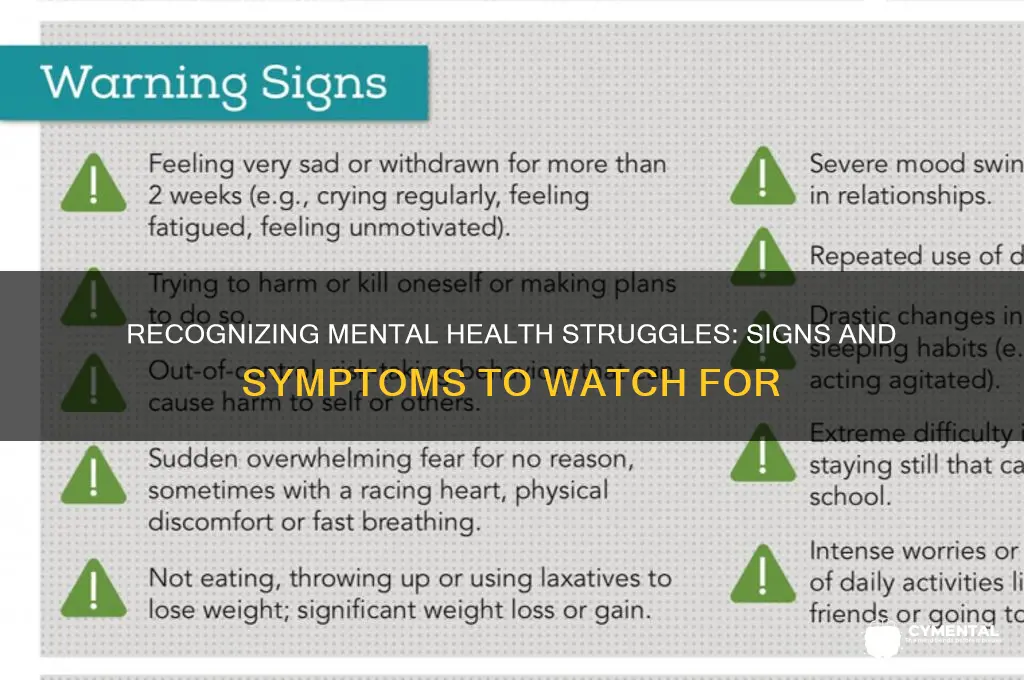
Identifying whether someone is experiencing mental health issues can be complex, as symptoms often vary widely and may not always be immediately apparent. Common signs include persistent changes in mood, behavior, or personality, such as prolonged sadness, irritability, or withdrawal from social activities. Other indicators may include difficulty concentrating, significant changes in sleep or appetite, unexplained physical ailments, or expressions of hopelessness or suicidal thoughts. It’s important to approach the situation with empathy and sensitivity, as mental health struggles are deeply personal and often stigmatized. While these signs can suggest underlying issues, only a qualified mental health professional can provide an accurate diagnosis. If you’re concerned about someone, encouraging them to seek professional help and offering support can make a meaningful difference.
Explore related products


What You'll Learn
- Behavioral Changes: Sudden shifts in mood, energy, or social withdrawal may indicate underlying mental health concerns
- Emotional Instability: Persistent sadness, anger, or anxiety beyond typical responses can signal mental health issues
- Cognitive Impairment: Difficulty thinking, concentrating, or making decisions often points to mental health challenges
- Physical Symptoms: Unexplained fatigue, sleep disturbances, or changes in appetite can be linked to mental issues
- Social Dysfunction: Struggling with relationships, work, or daily tasks may suggest mental health problems

Behavioral Changes: Sudden shifts in mood, energy, or social withdrawal may indicate underlying mental health concerns
Observation: A person who once radiated energy now struggles to leave their bed, or someone typically even-keeled suddenly oscillates between euphoria and despair. These aren't mere "off days" but seismic shifts in behavior that warrant attention.
Analysis: Sudden changes in mood, energy levels, or social engagement often signal distress in a person's mental health. For instance, a teenager who withdraws from friends, skips extracurriculars, and sleeps excessively might be grappling with depression. Conversely, a colleague exhibiting rapid speech, decreased need for sleep, and reckless spending could be experiencing a manic episode. Such alterations disrupt daily functioning and often reflect conditions like bipolar disorder, anxiety, or burnout.
Practical Tips: Track patterns over time—use a journal or mental health app to note changes. For example, if a family member’s irritability spikes for two weeks or longer, or if a friend’s energy plummets consistently, these aren’t fleeting moods but potential red flags. Encourage professional assessment if symptoms persist beyond typical stress responses.
Comparative Insight: While everyone experiences mood fluctuations, the severity and duration differentiate normal variability from mental health concerns. A post-argument sulk is transient; a month-long retreat from social interactions is not. Similarly, occasional fatigue is common, but persistent lethargy paired with hopelessness suggests depression.
Takeaway: Behavioral changes are the body’s alarm system for mental distress. Ignoring them risks deeper entrenchment of issues. Approach with empathy, not judgment, and guide the person toward resources like therapy or support groups. Early intervention can prevent escalation, so act on these signs with urgency and care.
Navigating Mental Health Challenges: Strategies for Coping During Lockdown
You may want to see also
Explore related products


Emotional Instability: Persistent sadness, anger, or anxiety beyond typical responses can signal mental health issues
Emotional instability often manifests as prolonged or intense emotions that disrupt daily life. For instance, a person might experience sadness that lingers for weeks after a minor setback, anger that escalates disproportionately to a situation, or anxiety that paralyzes decision-making. These reactions, when far beyond what’s considered typical, can be red flags for underlying mental health issues such as depression, bipolar disorder, or generalized anxiety disorder. Recognizing these patterns early is crucial, as they often precede more severe symptoms if left unaddressed.
To identify emotional instability, observe the duration and intensity of emotional responses. A helpful benchmark is to compare the reaction to societal norms or the individual’s past behavior. For example, if someone who previously handled stress well now becomes uncontrollably anxious over small tasks, this shift warrants attention. Practical steps include keeping a journal to track emotional episodes, noting triggers, and assessing their impact on work, relationships, or self-care routines. If these episodes persist for more than two weeks or significantly impair functioning, professional evaluation is recommended.
From a comparative perspective, emotional instability differs from typical mood fluctuations in its persistence and disproportionate nature. While everyone experiences sadness, anger, or anxiety, these emotions usually resolve within a reasonable timeframe. In contrast, mental health issues often amplify and prolong these states, making them difficult to manage without intervention. For instance, a person with untreated depression may feel hopeless for months, whereas a typical response to loss might involve grief that gradually lessens over time. Understanding this distinction is key to differentiating between normal emotional responses and potential mental health concerns.
Persuasively, addressing emotional instability early can prevent long-term consequences. Untreated mental health issues can lead to social isolation, job loss, or physical health problems. Encouraging open conversations about emotions and normalizing seeking help can reduce stigma. Practical tips include practicing mindfulness, setting boundaries, and engaging in regular physical activity to manage symptoms. However, self-help strategies should complement, not replace, professional treatment when emotional instability becomes unmanageable. Early intervention, such as therapy or medication, can provide tools to stabilize emotions and improve quality of life.
In conclusion, emotional instability characterized by persistent sadness, anger, or anxiety beyond typical responses is a critical indicator of potential mental health issues. By observing duration, intensity, and impact, individuals can differentiate between normal emotional fluctuations and problematic patterns. Taking proactive steps, such as journaling and seeking professional help, can mitigate risks and foster emotional well-being. Recognizing these signs early not only aids the individual but also contributes to a more supportive and informed community.
Unraveling Narcissists with Mommy Issues: A Mental Breakdown Guide
You may want to see also
Explore related products


Cognitive Impairment: Difficulty thinking, concentrating, or making decisions often points to mental health challenges
Cognitive impairment, marked by difficulty thinking, concentrating, or making decisions, is a red flag that often signals underlying mental health challenges. Unlike occasional forgetfulness or fleeting moments of indecision, persistent cognitive struggles can interfere with daily functioning, relationships, and overall quality of life. For instance, a person who once excelled at multitasking may now find themselves overwhelmed by simple tasks, such as following a recipe or managing a work schedule. This decline in cognitive abilities warrants attention, as it may indicate conditions like depression, anxiety, ADHD, or even early-stage dementia.
To identify cognitive impairment, observe patterns rather than isolated incidents. A student who suddenly struggles to focus during lectures or a colleague who repeatedly misses deadlines despite past reliability may be experiencing more than just stress. Practical steps to assess the situation include tracking changes over time—does the difficulty persist for weeks or months?—and noting whether it affects multiple areas of life, such as work, social interactions, or self-care. For older adults, cognitive decline might manifest as forgetting recent conversations or struggling with familiar tasks, which could require medical evaluation to rule out neurological conditions.
Addressing cognitive impairment begins with creating a supportive environment. For individuals experiencing concentration issues, breaking tasks into smaller, manageable steps can reduce overwhelm. For example, a person struggling to write a report might start with a brief outline, then focus on one section at a time. Additionally, incorporating mindfulness practices, such as deep breathing or short meditation sessions, can improve focus and reduce mental clutter. However, self-help strategies should not replace professional intervention; persistent cognitive difficulties warrant consultation with a mental health specialist or neurologist.
Comparatively, cognitive impairment in mental health differs from age-related cognitive changes. While mild forgetfulness is common with aging, significant memory loss or inability to solve problems is not. For instance, misplacing keys occasionally is normal, but forgetting how to use a phone or navigate home is cause for concern. Understanding this distinction is crucial for timely intervention. Early diagnosis and treatment, whether through therapy, medication, or lifestyle adjustments, can mitigate the impact of cognitive impairment and improve long-term outcomes.
In conclusion, cognitive impairment is a critical indicator of potential mental health issues that should not be overlooked. By recognizing persistent difficulties in thinking, concentrating, or decision-making, individuals and their loved ones can take proactive steps to address the problem. Combining practical strategies with professional guidance ensures a comprehensive approach to managing cognitive challenges and fostering mental well-being.
Supporting Family Mental Health: Effective Advocacy Strategies for Lasting Change
You may want to see also
Explore related products

$38.46 $72.95


Physical Symptoms: Unexplained fatigue, sleep disturbances, or changes in appetite can be linked to mental issues
The human body often communicates distress through physical symptoms long before emotional or cognitive signs become apparent. Unexplained fatigue, persistent sleep disturbances, and sudden changes in appetite are not merely inconveniences—they can be red flags signaling underlying mental health issues. For instance, chronic fatigue that persists despite adequate rest may indicate depression, while insomnia or hypersomnia can be linked to anxiety disorders or bipolar disorder. Similarly, a dramatic increase or decrease in appetite, often accompanied by weight fluctuations, is a common symptom of conditions like depression or stress-related disorders. Recognizing these physical markers is the first step in addressing the root cause, which may lie in mental rather than purely physical health.
Consider the interplay between the mind and body: mental health disorders can disrupt the body’s regulatory systems, leading to these physical symptoms. For example, prolonged stress triggers the release of cortisol, which can interfere with sleep patterns and energy levels. Similarly, depression often affects the hypothalamus, a brain region that regulates appetite and sleep, leading to noticeable changes in eating habits and fatigue. These symptoms are not isolated; they often co-occur, creating a cycle that exacerbates both physical and mental distress. Tracking these changes over time—such as noting how many nights of poor sleep occur per week or monitoring daily calorie intake—can provide valuable data for identifying patterns linked to mental health struggles.
Practical steps can help differentiate between temporary physical issues and symptoms tied to mental health. Start by maintaining a symptom journal, recording details like sleep duration, energy levels, and meal patterns. If unexplained fatigue persists for more than two weeks, or if sleep disturbances interfere with daily functioning, consult a healthcare professional. Similarly, a 10% change in body weight within a month, without intentional dieting or exercise, warrants attention. Tools like sleep trackers or food diaries can aid in monitoring these changes objectively. Remember, self-diagnosis is risky; these observations should guide conversations with professionals, not replace them.
Comparatively, physical symptoms of mental health issues often mimic those of medical conditions, making accurate diagnosis challenging. For instance, fatigue could stem from anemia or thyroid issues, while appetite changes might suggest gastrointestinal problems. However, when these symptoms appear alongside emotional signs like persistent sadness or anxiety, mental health becomes a more likely culprit. A holistic approach—combining physical exams, mental health screenings, and lifestyle assessments—is essential for accurate diagnosis. For example, a doctor might recommend blood tests to rule out physical causes before exploring psychological factors, ensuring no stone is left unturned.
Finally, addressing these physical symptoms requires a dual focus on mental and physical well-being. Lifestyle adjustments, such as adopting a consistent sleep schedule, engaging in regular physical activity, and practicing stress-reduction techniques like mindfulness, can alleviate symptoms while supporting mental health. For instance, 30 minutes of moderate exercise daily has been shown to reduce symptoms of depression and anxiety, while improving sleep quality. Nutritional interventions, like incorporating omega-3 fatty acids or vitamin D supplements, may also help, though dosage should be guided by a healthcare provider. The takeaway? Physical symptoms are not just nuisances—they are opportunities to uncover and address deeper mental health concerns before they escalate.
Identifying Mental Health Concerns in Mats: A Comprehensive Guide
You may want to see also
Explore related products


Social Dysfunction: Struggling with relationships, work, or daily tasks may suggest mental health problems
Difficulty maintaining relationships, holding down a job, or managing daily responsibilities can be more than just personal failings—they may signal underlying mental health issues. Social dysfunction often manifests as persistent patterns of withdrawal, conflict, or inefficiency that disrupt normal life. For instance, someone with depression might isolate themselves from friends, while a person with anxiety could struggle to meet work deadlines due to overwhelming stress. Recognizing these patterns is the first step in identifying potential mental health challenges.
Consider the case of a 32-year-old professional who repeatedly misses work deadlines, despite having the skills to complete tasks. Their colleagues notice irritability and a tendency to avoid team meetings. At home, they neglect household chores and withdraw from family gatherings. This isn’t mere laziness or disorganization—it’s a red flag. Such behaviors often stem from conditions like major depressive disorder or generalized anxiety disorder, which impair executive functioning and emotional regulation. Practical observation: Look for consistent, unexplained changes in behavior rather than isolated incidents.
To address social dysfunction effectively, start by encouraging open communication. Approach the person privately and express concern without judgment. For example, say, “I’ve noticed you’ve been missing a lot of work lately, and I’m worried. Is there something going on?” Offer specific examples of observed behaviors to avoid generalizations. If they’re receptive, suggest professional help, such as therapy or a mental health assessment. Caution: Avoid diagnosing or pressuring them; instead, emphasize support and resources like employee assistance programs or local mental health clinics.
Comparing social dysfunction to physical health issues can provide clarity. Just as chronic back pain might indicate an injury, persistent social struggles often point to mental health conditions. Imagine a person with untreated ADHD who constantly loses jobs due to disorganization—this isn’t a character flaw but a symptom of a neurodevelopmental disorder. Treatment, such as cognitive-behavioral therapy or medication, can significantly improve functioning. Takeaway: Addressing the root cause, rather than the symptoms, is key to long-term improvement.
Finally, practical steps can mitigate social dysfunction while seeking professional help. For instance, breaking daily tasks into smaller, manageable steps can reduce overwhelm. Using tools like planners or apps can aid organization for those with ADHD. For relationship struggles, couples or group therapy can provide structured support. Employers can implement accommodations like flexible schedules or quiet workspaces to support employees with mental health challenges. By combining personal strategies with professional intervention, individuals can regain control over their social and occupational lives.
Supporting Your Adult Daughter Through Undiagnosed Mental Health Challenges
You may want to see also
Frequently asked questions
Look for significant changes in behavior, mood, or personality. Signs may include persistent sadness, extreme mood swings, withdrawal from social activities, changes in sleep or appetite, difficulty concentrating, or expressions of hopelessness.
Yes, but approach the conversation with empathy and sensitivity. Use open-ended questions like, "How are you feeling lately?" or "I’ve noticed some changes—is everything okay?" Let them know you’re there to support them without judgment.
Respect their response, but gently encourage them to seek help if you’re concerned. Offer resources like mental health hotlines, therapists, or support groups. Let them know you’re available to talk whenever they’re ready.
Yes, mental health issues can manifest physically. Look for unexplained headaches, stomachaches, fatigue, or changes in weight. These symptoms, especially when combined with emotional or behavioral changes, may suggest underlying mental health concerns.