Ava Ramirez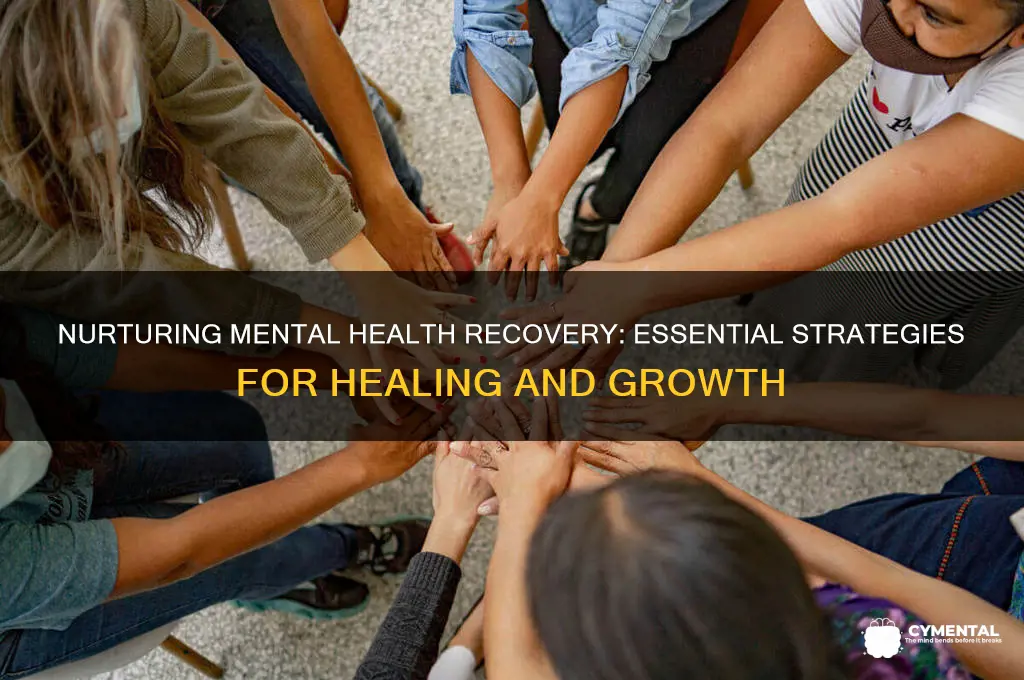
Mental health recovery is a deeply personal and multifaceted journey that involves a combination of strategies tailored to individual needs. Key elements that support recovery include access to professional therapy, such as cognitive-behavioral therapy (CBT) or mindfulness-based interventions, which provide tools to manage symptoms and build resilience. A strong support network of family, friends, or support groups fosters a sense of belonging and understanding. Lifestyle factors, such as regular physical activity, balanced nutrition, and adequate sleep, play a crucial role in stabilizing mood and energy levels. Additionally, self-care practices like journaling, meditation, or engaging in hobbies can promote emotional well-being. Empowerment through education about mental health and advocacy for one’s needs further enhances the recovery process, emphasizing that healing is possible with the right resources and commitment.
Explore related products


What You'll Learn
- Social Support Networks: Building connections with friends, family, and community fosters emotional well-being
- Healthy Lifestyle Habits: Regular exercise, balanced diet, and adequate sleep improve mental health resilience
- Therapy and Counseling: Professional guidance helps address underlying issues and develop coping strategies
- Mindfulness Practices: Meditation, yoga, and deep breathing reduce stress and enhance focus
- Purpose and Goals: Finding meaning through hobbies, work, or volunteering boosts motivation and recovery

Social Support Networks: Building connections with friends, family, and community fosters emotional well-being
Human beings are inherently social creatures, and our connections with others play a pivotal role in mental health recovery. Research consistently shows that individuals with strong social support networks experience reduced symptoms of depression, anxiety, and stress. Conversely, loneliness and social isolation are significant risk factors for mental health issues. This highlights the importance of actively cultivating and nurturing relationships as a cornerstone of emotional well-being.
Think of your social network as a safety net. When facing challenges, having people who care about you can provide emotional comfort, practical assistance, and a sense of belonging. A listening ear, a helping hand, or simply knowing you're not alone can make a world of difference in navigating difficult times.
Building a robust social support network doesn't happen overnight. It requires intentional effort and vulnerability. Start by identifying existing relationships that bring you joy and positivity. Strengthen these bonds through regular communication, shared activities, and genuine interest in the other person's life. Consider joining community groups, clubs, or volunteer organizations aligned with your interests. These provide opportunities to meet like-minded individuals and build connections based on shared passions. Remember, quality trumps quantity. Focus on cultivating deep, meaningful relationships rather than accumulating a large number of superficial acquaintances.
Be open and honest about your struggles with trusted individuals. Sharing your experiences can foster deeper connections and allow others to offer support. Don't be afraid to ask for help when needed. People who care about you will likely be willing to lend a hand or simply be a listening ear.
While building social connections is crucial, it's important to acknowledge potential challenges. Not all relationships are supportive, and some may even be detrimental to your well-being. Be mindful of toxic relationships characterized by negativity, criticism, or manipulation. Setting healthy boundaries and limiting contact with such individuals is essential for protecting your mental health. If you struggle with social anxiety or find it difficult to connect with others, consider seeking professional help. Therapists can provide guidance and strategies for overcoming social barriers and building meaningful relationships.
Remember, building a strong social support network is an ongoing process that requires time, effort, and vulnerability. By prioritizing meaningful connections and nurturing relationships, you invest in a powerful tool for mental health recovery and overall well-being.
Family Time: A Powerful Boost for Mental Health and Well-Being
You may want to see also
Explore related products






Healthy Lifestyle Habits: Regular exercise, balanced diet, and adequate sleep improve mental health resilience
Mental health recovery is not solely about therapy or medication; it’s equally about the daily habits that fortify resilience. Among these, regular exercise, a balanced diet, and adequate sleep form a trifecta of lifestyle practices that directly influence emotional stability, cognitive function, and stress tolerance. These habits aren’t just preventive—they’re active tools in rebuilding mental health, supported by research and endorsed by health organizations worldwide.
Consider exercise, a natural antidepressant. Studies show that 30 minutes of moderate-intensity physical activity, such as brisk walking or cycling, five days a week, can reduce symptoms of depression and anxiety by up to 30%. The mechanism? Exercise increases endorphin production, reduces inflammation, and promotes neuroplasticity—the brain’s ability to reorganize itself. For those starting small, even 10-minute sessions of yoga or stretching can yield immediate mood improvements. The key is consistency, not intensity; choose activities you enjoy to ensure long-term adherence.
A balanced diet acts as the foundation for mental resilience, providing the nutrients essential for brain function. Omega-3 fatty acids (found in salmon, walnuts, and flaxseeds), complex carbohydrates (whole grains, legumes), and antioxidants (berries, spinach) are particularly vital. For instance, a deficiency in vitamin D, common in 40% of adults, has been linked to depression. Practical tips include meal prepping to avoid nutrient-poor convenience foods and incorporating fermented foods like yogurt or kimchi to support gut health, which is increasingly linked to mental well-being.
Sleep, often overlooked, is the body’s repair mechanism. Adults require 7–9 hours of quality sleep nightly, yet 35% report sleeping less than 7 hours. Chronic sleep deprivation disrupts emotional regulation, impairs decision-making, and exacerbates mental health conditions. To improve sleep hygiene, establish a routine: dim lights an hour before bed, limit screen time, and keep the bedroom cool (60–67°F). For those with insomnia, cognitive-behavioral therapy for insomnia (CBT-I) is a proven, drug-free solution.
Together, these habits create a synergistic effect. Exercise improves sleep quality, a balanced diet fuels energy for physical activity, and restorative sleep enhances the benefits of both. For example, a 2019 study found that individuals who combined regular exercise with a Mediterranean diet experienced a 50% reduction in anxiety symptoms over six months. This interconnected approach isn’t about perfection but progress—small, sustainable changes that accumulate into significant mental health gains. Start with one habit, master it, and build from there. Your mind will thank you.
Mental Health Programs: Empowering Lives Through Support and Healing
You may want to see also
Explore related products


Therapy and Counseling: Professional guidance helps address underlying issues and develop coping strategies
Professional therapy and counseling are cornerstone interventions in mental health recovery, offering structured, evidence-based approaches to address deep-seated issues. Unlike self-help or peer support, these modalities involve trained experts who diagnose, treat, and monitor progress using validated frameworks like cognitive-behavioral therapy (CBT) or dialectical behavior therapy (DBT). For instance, CBT typically involves 12–20 sessions, during which individuals learn to reframe negative thought patterns, while DBT focuses on emotional regulation and distress tolerance, often recommended for conditions like borderline personality disorder. The specificity of these approaches ensures that interventions are tailored to the individual’s unique needs, making therapy a powerful tool for sustainable recovery.
Consider the process of therapy as a collaborative journey rather than a quick fix. During initial sessions, therapists often conduct assessments to identify underlying issues—such as trauma, anxiety, or depression—that may not be immediately apparent. For example, a person struggling with chronic anxiety might uncover unresolved childhood experiences through guided exploration. Subsequent sessions focus on skill-building, teaching practical coping strategies like mindfulness, progressive muscle relaxation, or journaling. These techniques are not one-size-fits-all; a therapist might recommend 10 minutes of daily mindfulness for a teenager with ADHD, while suggesting structured journaling prompts for an adult dealing with grief. The goal is to equip individuals with tools they can use independently, fostering resilience over time.
One of the most compelling aspects of therapy is its ability to provide a safe, nonjudgmental space for emotional expression. This is particularly critical for individuals who lack supportive environments or face stigma related to mental health. For example, group therapy sessions can reduce feelings of isolation by connecting participants with others facing similar challenges. In contrast, individual therapy allows for deeper exploration of personal narratives, often uncovering patterns that contribute to distress. Research shows that consistent engagement in therapy—typically weekly sessions for 3–6 months—correlates with significant improvements in symptoms and overall functioning. However, it’s essential to find a therapist whose approach aligns with your needs, whether that’s a psychodynamic focus on past experiences or a solution-focused approach targeting immediate challenges.
Despite its benefits, therapy is not without challenges. Cost, accessibility, and the vulnerability required to engage in the process can be barriers for many. Teletherapy has emerged as a practical solution, offering flexibility for those in remote areas or with busy schedules. Additionally, sliding-scale fees and community mental health centers make professional guidance more attainable. For those hesitant to start, beginning with a single session can demystify the process and highlight its potential benefits. Ultimately, therapy is an investment in long-term mental health, providing not just symptom relief but a framework for navigating life’s complexities with greater clarity and confidence.
Supporting Loved Ones: A Guide to Accessing Mental Health Assistance
You may want to see also
Explore related products
$10.99 $18.99


Mindfulness Practices: Meditation, yoga, and deep breathing reduce stress and enhance focus
Stress is an inevitable part of life, but chronic stress can wreak havoc on mental health. Mindfulness practices like meditation, yoga, and deep breathing offer powerful tools to counteract this, rewiring the brain's response to stress and fostering resilience. Research shows that regular mindfulness practice can decrease cortisol levels, the body's primary stress hormone, by up to 14%. This physiological shift translates to tangible mental health benefits, including reduced anxiety, improved mood, and enhanced emotional regulation.
Mindfulness isn't about emptying your mind of thoughts; it's about observing them without judgment. Start small, with just 5-10 minutes of daily meditation. Focus on your breath, noticing its rhythm without trying to control it. When your mind wanders (which it will!), gently bring your attention back to the breath. Consistency is key; aim for daily practice, gradually increasing duration as you become more comfortable.
Yoga combines physical postures, breath control, and meditation, creating a holistic approach to stress reduction. Studies suggest that yoga can significantly decrease symptoms of depression and anxiety, particularly in adults over 50. Opt for styles like Hatha or Yin yoga, which emphasize slower movements and longer holds, allowing for deeper mindfulness. Remember, yoga is not about achieving perfect poses; it's about connecting with your body and breath. Modify poses as needed and listen to your body's signals.
Deep breathing exercises are simple yet incredibly effective for immediate stress relief. The "4-7-8" technique is a popular choice: inhale for 4 seconds, hold for 7 seconds, exhale for 8 seconds. This pattern activates the parasympathetic nervous system, promoting relaxation. Practice this technique whenever you feel overwhelmed, aiming for at least 3-4 cycles. Incorporate deep breathing into your daily routine, such as during your morning shower or before bed, to cultivate a sense of calm throughout the day.
While mindfulness practices are generally safe, it's crucial to approach them with awareness. If you have a history of trauma, certain meditation techniques might trigger distressing memories. In such cases, seek guidance from a qualified therapist who can tailor practices to your individual needs. Remember, mindfulness is a journey, not a destination. Be patient with yourself, embrace the process, and celebrate the small victories along the way. By incorporating these practices into your life, you can cultivate a sense of inner peace and resilience, empowering yourself on the path to mental health recovery.
Supporting Awareness: Guiding Loved Ones to Recognize Mental Health Struggles
You may want to see also
Explore related products


Purpose and Goals: Finding meaning through hobbies, work, or volunteering boosts motivation and recovery
Having a sense of purpose is a powerful catalyst for mental health recovery, and it often begins with discovering meaning in everyday activities. Engaging in hobbies, work, or volunteering can provide structure, social connection, and a feeling of accomplishment, all of which are essential for rebuilding mental resilience. For instance, a study published in the *Journal of Occupational Science* found that individuals who participated in meaningful activities reported significant improvements in their overall well-being, including reduced symptoms of depression and anxiety. This highlights the importance of finding activities that align with personal interests and values, as they can serve as a foundation for recovery.
To harness the benefits of purpose-driven activities, start by identifying hobbies or tasks that bring you joy or a sense of fulfillment. For example, if you enjoy creative pursuits, consider painting, writing, or playing an instrument. These activities not only provide an outlet for self-expression but also stimulate the brain in ways that can counteract negative thought patterns. For those who thrive in structured environments, part-time work or volunteering can offer a routine and a sense of contribution. Even dedicating 5–10 hours per week to a meaningful activity can make a noticeable difference in mood and motivation.
However, it’s crucial to approach these activities with balance and self-compassion. Overcommitting or setting unrealistic goals can lead to burnout, which undermines the very purpose of recovery. For instance, if you’re new to volunteering, start with a single shift per week and gradually increase your involvement as your energy levels allow. Similarly, if you’re returning to work after a mental health hiatus, consider beginning with reduced hours or remote options to ease the transition. The goal is to build momentum without overwhelming yourself.
Comparing the impact of different activities can also provide insight into what works best for you. For example, while some individuals find solace in solitary hobbies like gardening or reading, others may benefit more from group activities like team sports or community projects. Volunteering, in particular, has been shown to enhance social connections and foster a sense of belonging, which are critical components of mental health recovery. According to a report by the *Corporation for National and Community Service*, volunteers are 20% less likely to experience depression than non-volunteers, underscoring the therapeutic potential of altruistic work.
In conclusion, finding purpose through hobbies, work, or volunteering is a dynamic and personalized process that can significantly aid mental health recovery. By starting small, staying balanced, and experimenting with different activities, you can discover what brings you the most meaning and motivation. Remember, the goal isn’t perfection but progress—each step toward a purposeful life is a step toward healing.
Seeking Mental Health Support: A Guide to Finding the Right Help
You may want to see also
Frequently asked questions
Therapy provides a safe space to explore thoughts, emotions, and behaviors, offering tools and strategies to manage symptoms, improve coping skills, and address underlying issues, which are crucial for long-term recovery.
Physical activity releases endorphins, reduces stress, and improves mood, making it a powerful complement to mental health treatment. Regular exercise can also enhance self-esteem and overall well-being.
Yes, strong social connections provide emotional support, reduce feelings of isolation, and foster a sense of belonging. Positive relationships can encourage healthy habits and offer encouragement during challenging times.
Quality sleep is essential for emotional regulation, cognitive function, and overall mental health. Poor sleep can exacerbate symptoms of mental health conditions, while consistent sleep patterns support recovery and resilience.
Mindfulness and meditation help reduce anxiety, improve focus, and promote emotional balance by encouraging present-moment awareness. These practices can also enhance self-awareness and reduce the impact of negative thoughts.