Ava Ramirez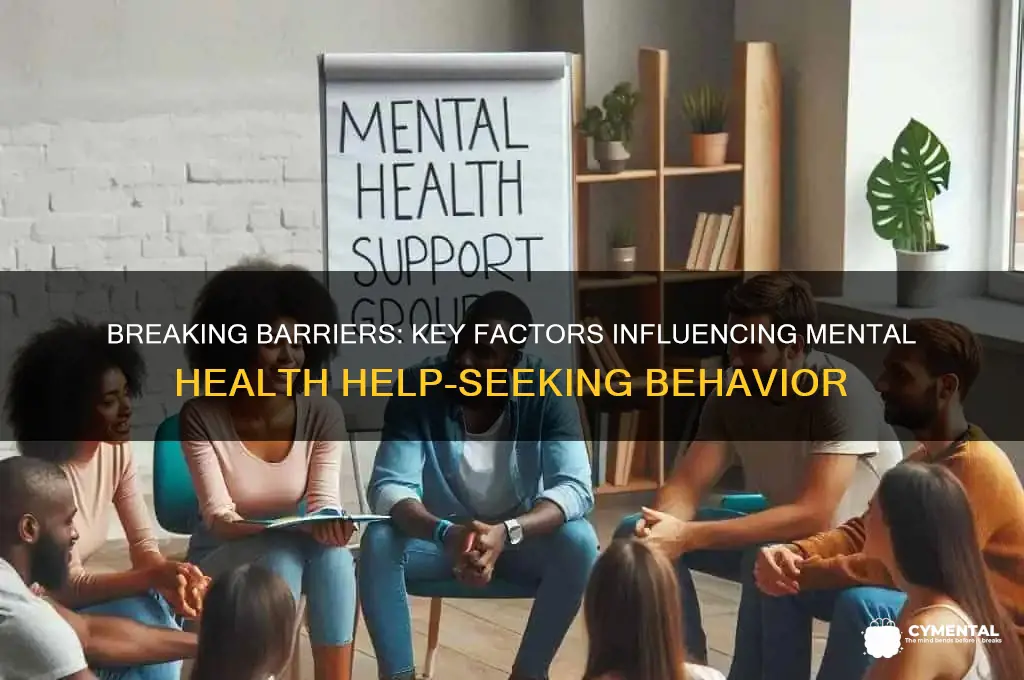
Seeking mental health help is a complex decision influenced by a myriad of factors, including cultural stigma, personal beliefs, and socioeconomic barriers. Cultural norms often dictate perceptions of mental illness, with some societies viewing it as a sign of weakness or a taboo subject, deterring individuals from reaching out. Personal beliefs, such as self-reliance or fear of judgment, can also play a significant role in delaying or avoiding treatment. Additionally, socioeconomic factors like limited access to affordable care, lack of insurance, or insufficient mental health resources in certain areas create practical obstacles. Education and awareness about mental health, supportive social networks, and encouraging environments can, however, empower individuals to overcome these barriers and seek the help they need.
Explore related products


What You'll Learn
- Stigma and societal attitudes: Fear of judgment or discrimination often prevents individuals from seeking mental health support
- Cultural beliefs: Cultural norms and values can shape perceptions of mental illness and help-seeking behaviors
- Lack of awareness: Insufficient knowledge about mental health resources and services may hinder help-seeking
- Cost and accessibility: Financial barriers and limited access to mental health care can discourage individuals from seeking help
- Personal beliefs and attitudes: Individual beliefs about mental illness, self-reliance, and vulnerability can impact help-seeking decisions

Stigma and societal attitudes: Fear of judgment or discrimination often prevents individuals from seeking mental health support
Stigma acts as an invisible barrier, deterring countless individuals from accessing mental health care. Consider this: a 2019 study published in the *Journal of Affective Disorders* found that 40% of participants delayed seeking help due to fear of being labeled "weak" or "crazy." This statistic underscores how deeply societal attitudes can internalize shame, transforming a rational need for support into a source of personal failure. The irony lies in the fact that such stigma often originates from outdated misconceptions about mental illness, perpetuated by media portrayals and cultural narratives that equate mental health struggles with moral failing or danger.
To dismantle this barrier, we must first acknowledge its complexity. Stigma operates on multiple levels: public stigma, where society discriminates against those with mental health issues; self-stigma, where individuals internalize these negative beliefs; and structural stigma, embedded in policies and institutions that limit access to care. For instance, workplace cultures that penalize employees for taking mental health days reinforce structural stigma, while personal fears of being seen as "unreliable" exemplify self-stigma. Addressing these layers requires targeted strategies: public awareness campaigns, policy reforms, and individual empowerment through education.
A practical step toward reducing stigma involves reframing the narrative around mental health. Instead of viewing therapy or medication as signs of weakness, encourage their perception as tools for self-improvement, akin to physical exercise or education. For parents, this could mean normalizing conversations about emotions with children, using age-appropriate language to explain that "everyone’s brain needs care sometimes." Employers can implement policies like anonymous mental health resources and mandatory anti-stigma training for managers, ensuring employees feel safe seeking help without career repercussions.
Comparatively, cultures that prioritize collective well-being over individualism often report lower stigma rates. In Japan, for example, the concept of *gaman* (enduring hardship with dignity) has historically discouraged mental health discussions, but recent campaigns like "Kokoro no Mimamori" (Caring for the Heart) aim to shift this by emphasizing community support. Such initiatives highlight the importance of tailoring anti-stigma efforts to cultural contexts, rather than adopting one-size-fits-all approaches.
Ultimately, combating stigma requires collective action and individual courage. Start small: challenge stigmatizing language when you hear it, share your own mental health journey if comfortable, and advocate for systemic changes in your community. Remember, every conversation, policy, or personal choice that normalizes mental health care chips away at the stigma, making it easier for someone else to reach out. The goal isn’t to eliminate fear overnight but to create an environment where fear no longer dictates decisions about seeking help.
Deleting Social Media: A Path to Improved Mental Well-being?
You may want to see also
Explore related products


Cultural beliefs: Cultural norms and values can shape perceptions of mental illness and help-seeking behaviors
Cultural beliefs act as a lens through which individuals interpret mental health struggles, often determining whether they seek help or suffer in silence. In collectivist cultures, where family honor and social harmony are paramount, mental illness may be viewed as a private shame, a weakness, or even a result of spiritual failing. This stigma discourages open discussion and delays treatment, as seen in studies showing lower rates of mental health service utilization among Asian and Hispanic communities compared to their Western counterparts. Conversely, cultures that emphasize individual resilience might foster a "pull yourself up by your bootstraps" mentality, leading people to internalize their struggles and avoid seeking professional support.
Consider the example of depression. In some African cultures, symptoms like sadness and fatigue might be attributed to ancestral curses or spiritual imbalance, leading individuals to seek traditional healers instead of psychiatrists. While these practices can offer comfort and community support, they may not address the underlying biochemical imbalances associated with clinical depression. This highlights the importance of culturally sensitive mental health services that integrate traditional beliefs with evidence-based treatments. For instance, incorporating spiritual leaders or traditional healing practices into therapy sessions can bridge the gap between cultural norms and modern mental health care.
To navigate these cultural barriers, mental health professionals must adopt a culturally competent approach. This involves understanding the specific beliefs and values of the communities they serve, using language and metaphors that resonate with clients, and involving family members or community leaders in the treatment process when appropriate. For example, a therapist working with a Latino client might frame therapy as a way to strengthen family bonds rather than focusing solely on individual symptoms. Similarly, providing educational materials in native languages and offering group therapy sessions that emphasize collective healing can make mental health services more accessible and acceptable.
However, cultural sensitivity must be balanced with ethical considerations. While respecting cultural beliefs is essential, it’s equally important to ensure that clients receive effective, evidence-based care. For instance, if a cultural practice delays necessary medical intervention, mental health professionals must find ways to address this without alienating the client. One practical tip is to use motivational interviewing techniques to explore the client’s ambivalence about seeking help and collaboratively identify solutions that align with their cultural values.
Ultimately, cultural beliefs are not static; they evolve as societies become more interconnected and informed. Public health campaigns that challenge stigma, promote mental health literacy, and celebrate diverse approaches to well-being can shift cultural norms over time. For example, initiatives like the World Health Organization’s Mental Health Gap Action Programme (mhGAP) have successfully integrated cultural perspectives into mental health interventions in low-resource settings. By acknowledging the power of culture in shaping help-seeking behaviors, we can create more inclusive and effective mental health systems that honor individuality while fostering collective healing.
Seeking Support: A Guide to Accessing Mental Health Assistance
You may want to see also
Explore related products


Lack of awareness: Insufficient knowledge about mental health resources and services may hinder help-seeking
A staggering number of individuals struggling with mental health issues never seek professional help, and a significant barrier is simply not knowing where to turn. Imagine experiencing overwhelming anxiety or persistent sadness but having no clue about the existence of therapists, support groups, or crisis hotlines. This lack of awareness about available resources leaves people feeling isolated and helpless, perpetuating their suffering.
Many assume mental health services are limited to expensive therapy sessions or hospital stays. In reality, a spectrum of options exists, from free peer support groups and online counseling platforms to community mental health centers offering sliding-scale fees. Without knowledge of these diverse resources, individuals may wrongly believe help is financially out of reach.
Consider a young adult experiencing their first episode of depression. They might withdraw from friends, struggle academically, and feel constantly exhausted. Without understanding that these could be symptoms of a treatable condition, they may attribute their struggles to personal weakness or temporary stress. This lack of awareness delays intervention, allowing the depression to worsen. Early intervention is crucial for effective treatment, yet many miss this window due to insufficient knowledge about mental health conditions and available support systems.
Public awareness campaigns play a vital role in bridging this knowledge gap. Campaigns like Mental Health Awareness Month and initiatives by organizations like NAMI (National Alliance on Mental Illness) aim to educate the public about common mental health issues, dispel stigma, and promote available resources. These efforts are essential in empowering individuals to recognize signs of distress and seek appropriate help.
Increasing awareness isn't just about listing resources; it's about fostering a culture where seeking help is normalized. Schools, workplaces, and community organizations can contribute by incorporating mental health education into their programs. Providing information about local resources, hosting workshops on stress management and self-care, and encouraging open conversations about mental well-being can all contribute to a more informed and supportive environment. By addressing the lack of awareness, we can remove a significant barrier to accessing mental health care and ensure that those in need receive the support they deserve.
Supporting Your Mentally Ill Son: Compassionate Strategies for Families
You may want to see also
Explore related products


Cost and accessibility: Financial barriers and limited access to mental health care can discourage individuals from seeking help
Financial barriers to mental health care are a stark reality for millions worldwide. In the United States, for instance, nearly 10% of individuals with a mental health condition report unmet treatment needs due to cost, according to the National Alliance on Mental Illness (NAMI). This statistic underscores a critical issue: even when people recognize their need for help, the financial burden can be insurmountable. Insurance plans often provide inadequate coverage for mental health services, leaving individuals to shoulder high out-of-pocket costs for therapy sessions, medications, or specialized treatments. For those without insurance, the situation is even more dire, as the full cost of care can be prohibitively expensive.
Consider the case of a 28-year-old professional earning a modest salary. After deducting rent, utilities, and groceries, they might have little disposable income left. A single therapy session, averaging $100–$200 per hour, could represent a significant portion of their monthly budget. Over time, the cumulative cost of ongoing treatment becomes unsustainable, forcing them to choose between mental health care and other essential expenses. This financial strain is exacerbated for individuals with chronic conditions requiring long-term therapy or medication, such as depression or anxiety disorders. For example, a month’s supply of common antidepressants like sertraline can cost $50–$100 without insurance, a recurring expense that adds up quickly.
Limited access to mental health care compounds these financial barriers, particularly in rural or underserved areas. In the U.S., over 120 million people live in areas with a shortage of mental health professionals, as reported by the Health Resources and Services Administration (HRSA). This scarcity forces individuals to travel long distances, take time off work, or rely on telehealth services, which may not be covered by their insurance. For instance, a resident of a small town in Montana might need to drive two hours to the nearest psychiatrist, incurring transportation costs and lost wages. Even telehealth, while convenient, requires reliable internet access and technological literacy, which are not universal.
To address these challenges, practical steps can be taken. First, individuals should explore low-cost or sliding-scale therapy options, often available through community health centers or university training clinics. For example, some clinics offer sessions with graduate students in psychology or counseling for as little as $20–$40 per hour. Second, prescription assistance programs, such as those offered by pharmaceutical companies or nonprofits like NeedyMeds, can reduce medication costs. For instance, Eli Lilly’s patient assistance program provides free antidepressants like Cymbalta to eligible individuals earning below 250% of the federal poverty level. Third, advocacy for policy changes, such as expanding Medicaid coverage for mental health services or mandating parity between mental and physical health care in insurance plans, can create systemic solutions.
Ultimately, the intersection of cost and accessibility creates a double bind for those seeking mental health care. While financial barriers limit who can afford treatment, limited access ensures that even those with resources may struggle to find it. Addressing these issues requires both individual resourcefulness and collective action. By leveraging affordable options, seeking assistance programs, and advocating for systemic change, individuals can navigate these barriers more effectively. However, the onus should not rest solely on those in need—policymakers, healthcare providers, and insurers must also prioritize making mental health care affordable and accessible to all.
Navigating Mental Health Recovery: Key Factors That Help or Hinder
You may want to see also
Explore related products


$9.99 $9.99


Personal beliefs and attitudes: Individual beliefs about mental illness, self-reliance, and vulnerability can impact help-seeking decisions
Personal beliefs and attitudes act as silent gatekeepers, often determining whether someone walks through the door of mental health support or turns away. Consider the case of a 35-year-old professional who views therapy as a sign of weakness, rooted in a childhood belief that "real strength means handling problems alone." This internalized stigma transforms vulnerability into a liability, delaying help-seeking until symptoms become unmanageable. Such self-reliance, while admirable in moderation, can morph into isolation when it clashes with the reality of mental health struggles.
To dismantle these barriers, start by examining the narratives you’ve absorbed about mental illness. Are they rooted in facts or fear? For instance, if you believe seeking help means admitting defeat, reframe it as an act of courage akin to treating a physical injury. Practical tip: Write down three reasons why prioritizing mental health is a strength, not a flaw. For younger adults (ages 18–25), peer discussions or social media campaigns challenging stigma can normalize help-seeking behaviors.
Now, let’s compare two scenarios. Person A believes mental illness is a permanent character flaw, so they avoid diagnosis altogether. Person B sees it as a treatable condition, akin to diabetes, and seeks therapy promptly. The outcome? Person B experiences symptom reduction within 6–8 weeks of consistent treatment, while Person A’s untreated anxiety escalates into panic attacks. The takeaway is clear: beliefs shape actions, and actions determine recovery trajectories.
Finally, cultivate self-compassate attitudes toward vulnerability. Research shows that individuals who view vulnerability as a pathway to connection are 40% more likely to seek mental health support. Start small: Share one struggle with a trusted friend or journal about it. For those over 50, who may hold deeply ingrained beliefs about self-sufficiency, consider joining support groups where shared experiences challenge outdated notions. Remember, seeking help isn’t a surrender—it’s a strategic step toward reclaiming your well-being.
Dark Chocolate's Role in Supporting Mental Health: Fact or Fiction?
You may want to see also
Frequently asked questions
Stigma creates fear of judgment, shame, or discrimination, leading individuals to avoid seeking help to protect their reputation or avoid being labeled as "weak" or "unstable."
Cultural beliefs about mental health, such as viewing it as a personal failing or a spiritual issue, can discourage individuals from seeking professional help, as can a lack of culturally sensitive resources.
High costs, lack of insurance coverage, or limited affordable options make mental health care inaccessible for many, forcing them to prioritize financial stability over their mental well-being.
Negative experiences, such as feeling dismissed, misunderstood, or mistreated, can erode trust and discourage individuals from seeking help in the future.
Limited knowledge about available services, how to access them, or what to expect can prevent individuals from taking the first step toward seeking mental health support.