Lucas Bennett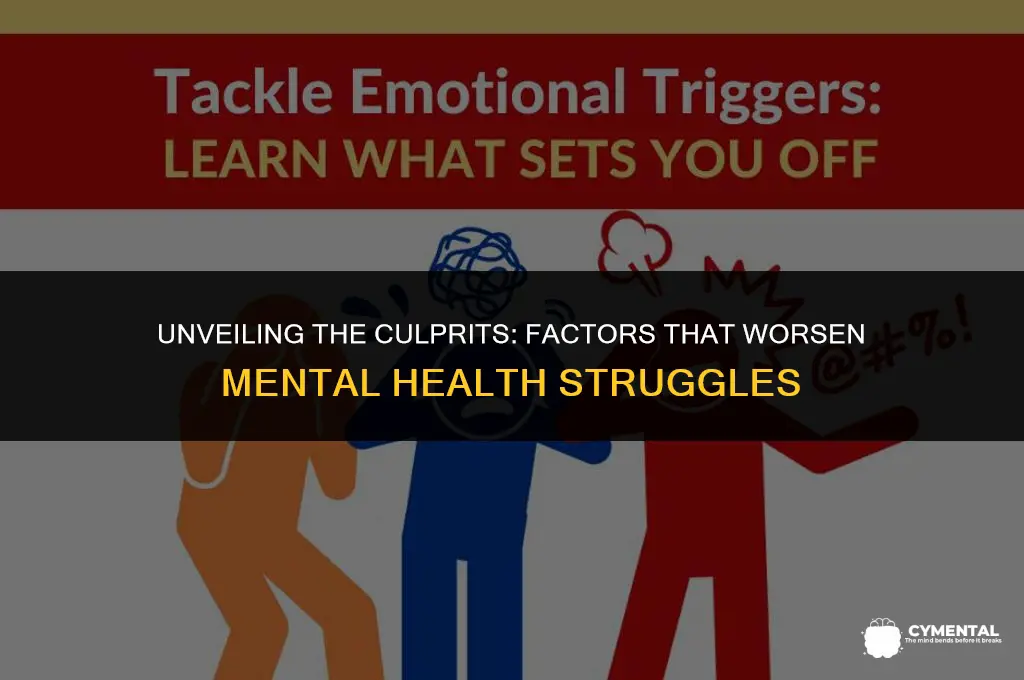
Mental health issues can be exacerbated by a variety of factors, including chronic stress, social isolation, and lack of access to mental health care. Additionally, certain lifestyle choices, such as excessive alcohol or drug use, poor diet, and lack of exercise, can also contribute to the development or worsening of mental health conditions. Furthermore, traumatic events, such as abuse, neglect, or the loss of a loved one, can have a profound impact on an individual's mental well-being. It is important to be aware of these risk factors and to take steps to mitigate their effects in order to maintain good mental health.
Explore related products


$6.79 $14.99


What You'll Learn
- Social Media Usage: Excessive use can lead to anxiety, depression, and feelings of isolation
- Stressful Life Events: Major changes or traumas, such as job loss or bereavement, can exacerbate mental health conditions
- Lack of Sleep: Chronic sleep deprivation is linked to increased symptoms of anxiety and depression
- Substance Abuse: Misuse of drugs and alcohol can worsen existing mental health issues and create new ones
- Poor Diet: A diet high in processed foods and low in nutrients can negatively impact mental well-being

Social Media Usage: Excessive use can lead to anxiety, depression, and feelings of isolation
Excessive social media usage has been linked to a myriad of mental health issues, including anxiety, depression, and feelings of isolation. This is particularly concerning given the pervasive nature of social media in modern society. A study by the Royal Society for Public Health found that social media use is associated with increased feelings of loneliness, anxiety, and depression, especially among young people. This can be attributed to the constant comparison and competition that social media platforms foster, leading to a sense of inadequacy and low self-esteem.
One of the key factors contributing to these negative effects is the addictive nature of social media. Platforms are designed to keep users engaged for as long as possible, using techniques such as infinite scrolling, notifications, and personalized content. This can lead to compulsive checking and excessive time spent on social media, which in turn can interfere with daily life and responsibilities. Furthermore, the curated nature of social media content can create unrealistic expectations and promote a culture of perfectionism, which can be detrimental to mental health.
To mitigate these risks, it is important to establish healthy boundaries with social media. This can include setting limits on daily usage, taking regular breaks, and being mindful of the content consumed. Additionally, it is crucial to foster real-life connections and engage in activities that promote mental well-being, such as exercise, hobbies, and spending time with loved ones. By striking a balance between social media use and other aspects of life, individuals can reduce the negative impact of excessive social media usage on their mental health.
Mental Health vs. Disease: Understanding the Difference and Impact
You may want to see also
Explore related products



Stressful Life Events: Major changes or traumas, such as job loss or bereavement, can exacerbate mental health conditions
Major life changes and traumatic events can significantly impact mental health, often exacerbating existing conditions or triggering new ones. Job loss, for instance, can lead to financial insecurity, loss of identity, and social isolation, all of which are potent stressors. Bereavement, another profound stressor, not only involves the emotional pain of losing a loved one but also often entails practical challenges such as navigating legal and financial matters.
The physiological response to such stressors involves the release of hormones like cortisol and adrenaline, which prepare the body for a 'fight or flight' response. While this is a natural and necessary reaction in the face of immediate danger, prolonged exposure to these hormones can have detrimental effects on both physical and mental health. Chronic stress can lead to anxiety, depression, and even physical ailments such as cardiovascular disease and compromised immune function.
Moreover, stressful life events can disrupt daily routines and coping mechanisms, making it more challenging for individuals to manage their mental health. For example, the loss of a job might lead to a decrease in physical activity, poor eating habits, and increased substance use, all of which can negatively impact mental wellbeing. Similarly, bereavement might result in changes to sleep patterns, social withdrawal, and a loss of interest in previously enjoyable activities.
It is crucial to recognize the signs of stress-related mental health issues and seek appropriate support. This might involve reaching out to friends and family, engaging in stress-reducing activities such as meditation or exercise, or seeking professional help from a therapist or counselor. In some cases, medication might be necessary to manage symptoms of anxiety or depression.
In conclusion, while it is impossible to avoid all stressful life events, understanding their potential impact on mental health and taking proactive steps to manage stress can help mitigate their effects. By fostering resilience and seeking support when needed, individuals can better navigate the challenges posed by major life changes and traumas.
Unraveling the Complexities: What Triggers Mental Processing Challenges?
You may want to see also
Lack of Sleep: Chronic sleep deprivation is linked to increased symptoms of anxiety and depression
Chronic sleep deprivation has been identified as a significant contributor to the exacerbation of mental health issues, particularly anxiety and depression. Research indicates that individuals who consistently fail to obtain adequate sleep are at a higher risk of developing these conditions. The relationship between sleep and mental health is complex, with sleep deprivation affecting neurotransmitter function, stress response, and cognitive processes, all of which can contribute to the onset or worsening of anxiety and depressive symptoms.
One of the key mechanisms by which sleep deprivation impacts mental health is through the disruption of the body's stress response system. During sleep, the body is able to regulate stress hormones such as cortisol, which helps to maintain a state of homeostasis. However, when sleep is consistently inadequate, the body's ability to manage stress is compromised, leading to elevated levels of cortisol and other stress hormones. This chronic state of heightened stress can contribute to the development of anxiety disorders, as well as exacerbate existing depressive symptoms.
Furthermore, sleep deprivation has been shown to affect the function of neurotransmitters such as serotonin and dopamine, which play crucial roles in mood regulation. Reduced levels of these neurotransmitters have been linked to increased symptoms of depression and anxiety. Additionally, sleep deprivation can impair cognitive function, including attention, memory, and decision-making abilities, which can further contribute to the development of mental health issues.
It is also important to consider the bidirectional relationship between sleep and mental health. While sleep deprivation can contribute to the onset of anxiety and depression, these conditions can also lead to difficulties with sleep. This can create a vicious cycle, where sleep disturbances exacerbate mental health symptoms, which in turn can lead to further sleep problems. Breaking this cycle often requires a comprehensive approach that addresses both sleep and mental health concerns simultaneously.
In conclusion, chronic sleep deprivation is a significant risk factor for the development and exacerbation of anxiety and depression. Understanding the complex interplay between sleep and mental health is crucial for developing effective interventions and promoting overall well-being. By prioritizing sleep hygiene and addressing sleep disturbances, individuals can take an important step in maintaining their mental health and reducing the risk of anxiety and depressive disorders.
Minnesota's Medical Assistance: Effective Mental Health Support or Not?
You may want to see also
Substance Abuse: Misuse of drugs and alcohol can worsen existing mental health issues and create new ones
Substance abuse, particularly the misuse of drugs and alcohol, can significantly exacerbate existing mental health issues and contribute to the development of new ones. This is due to the complex interplay between psychoactive substances and the brain's neurochemistry. For instance, alcohol, which is a depressant, can worsen symptoms of depression and anxiety by altering the levels of neurotransmitters such as serotonin and dopamine. Similarly, drugs like cocaine and methamphetamine, which are stimulants, can lead to heightened states of paranoia and psychosis.
The impact of substance abuse on mental health is not limited to the immediate effects of intoxication. Long-term use can lead to structural changes in the brain, affecting areas responsible for mood regulation, decision-making, and impulse control. This can result in a vicious cycle where mental health issues fuel substance abuse, and vice versa. For example, individuals with untreated depression may turn to alcohol as a form of self-medication, but this can ultimately worsen their depressive symptoms and lead to alcohol dependence.
Moreover, substance abuse can also create new mental health issues. Hallucinogens, such as LSD and PCP, can induce acute psychotic episodes that may persist even after the drug has left the system. In some cases, these episodes can develop into chronic conditions like schizophrenia. Additionally, the stress and paranoia associated with drug use can lead to anxiety disorders, while the secrecy and isolation often accompany substance abuse can contribute to feelings of loneliness and low self-esteem.
It is crucial to address substance abuse as a key factor in mental health treatment. Integrated treatment approaches that combine substance abuse counseling with mental health therapy can be highly effective in breaking the cycle of addiction and improving overall well-being. Such treatments often involve behavioral therapies, such as cognitive-behavioral therapy (CBT) and motivational interviewing, as well as medication-assisted treatment for certain types of addiction.
In conclusion, substance abuse is a significant risk factor for mental health issues, capable of both worsening pre-existing conditions and creating new ones. Understanding the complex relationship between substance use and mental health is essential for developing effective treatment strategies and promoting better outcomes for individuals struggling with these challenges.
Understanding Mental Health: A Compassionate Guide to Awareness and Support
You may want to see also
Poor Diet: A diet high in processed foods and low in nutrients can negatively impact mental well-being
A diet high in processed foods and low in nutrients can significantly exacerbate mental health issues. Processed foods, which are often high in sugar, unhealthy fats, and artificial additives, can lead to inflammation in the body. This inflammation has been linked to an increased risk of depression and anxiety. Furthermore, a diet lacking in essential nutrients such as omega-3 fatty acids, vitamin D, and B vitamins can impair brain function and contribute to the development of mental health disorders.
The impact of poor diet on mental well-being is particularly concerning given the prevalence of unhealthy eating habits in modern society. Many people rely on convenience foods that are high in calories but low in nutritional value. This can lead to a vicious cycle where poor diet contributes to mental health issues, which in turn can lead to emotional eating and further dietary neglect.
Research has shown that improving diet can have a positive impact on mental health. For example, a study published in the journal PLOS ONE found that a Mediterranean diet, which is rich in fruits, vegetables, whole grains, and healthy fats, was associated with a lower risk of depression. Similarly, a review of studies published in the journal Nutrients found that omega-3 fatty acid supplementation was effective in reducing symptoms of depression.
To mitigate the negative impact of poor diet on mental health, it is important to adopt healthy eating habits. This can include incorporating more whole foods into the diet, such as fruits, vegetables, whole grains, and lean proteins. It is also important to limit the consumption of processed foods and sugary beverages. Additionally, individuals may benefit from consulting with a healthcare professional or registered dietitian to develop a personalized nutrition plan that supports mental well-being.
In conclusion, the relationship between diet and mental health is complex and multifaceted. A diet high in processed foods and low in nutrients can contribute to the development and exacerbation of mental health issues, while a healthy diet can support mental well-being. By making informed dietary choices, individuals can take an important step towards maintaining their mental health.
Institutionalization: A Mental Health Crisis or Necessary Care?
You may want to see also
Frequently asked questions
Common factors that can exacerbate mental health issues include chronic stress, lack of sleep, poor diet, substance abuse, social isolation, and exposure to traumatic events.
Excessive social media usage has been linked to increased symptoms of anxiety, depression, and loneliness. Comparing oneself to others online, cyberbullying, and the constant stream of information can contribute to negative mental health outcomes.
Regular physical activity can help reduce symptoms of anxiety and depression, improve mood, and enhance overall mental well-being. Exercise releases endorphins, which are natural mood-lifters, and can also provide a sense of accomplishment and social connection.