Ava Ramirez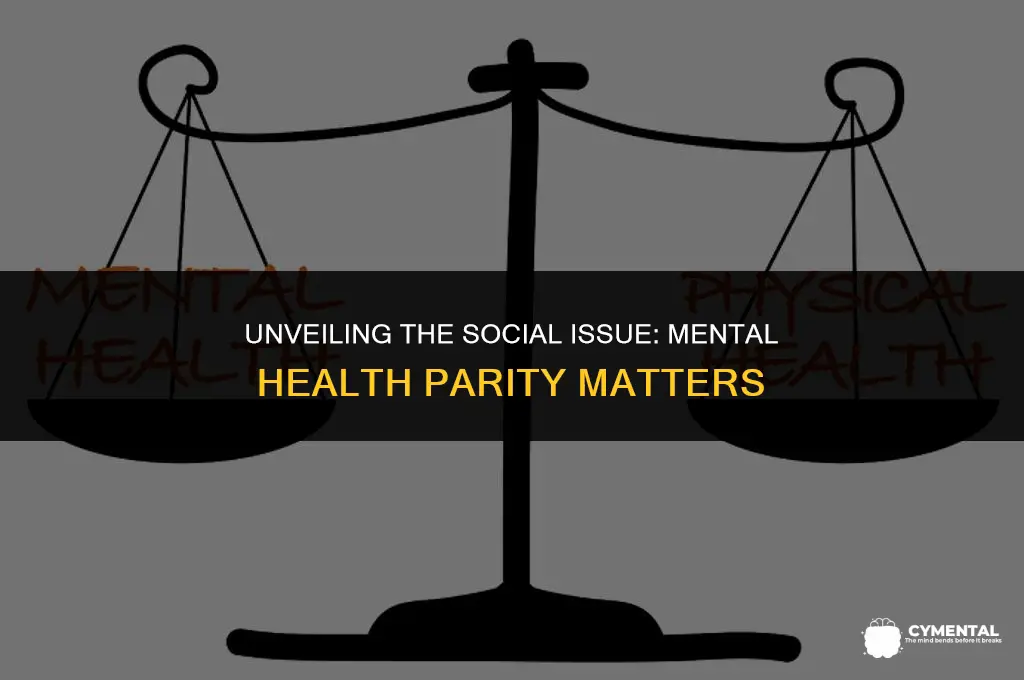
Mental health parity is a critical social issue that addresses the equitable treatment of mental health conditions in comparison to physical health conditions within healthcare systems. Despite significant advancements in mental health awareness and treatment, disparities persist in access to care, insurance coverage, and societal attitudes. This issue is multifaceted, involving policy, economics, culture, and individual perceptions. Achieving parity requires a concerted effort to dismantle stigmas, ensure equal insurance benefits, and provide accessible, high-quality mental health services to all individuals, regardless of their socioeconomic status or background.
| Characteristics | Values |
|---|---|
| Definition | Mental health parity refers to the equal treatment of mental health conditions and substance use disorders in comparison to physical health conditions. |
| Importance | Ensures that individuals with mental health conditions receive the same level of care and coverage as those with physical health conditions. |
| Legal Framework | The Mental Health Parity and Addiction Equity Act (MHPAEA) of 2008 is a federal law in the United States that mandates parity in health insurance coverage. |
| Coverage | Mental health parity covers various aspects such as inpatient and outpatient services, medication, and therapy sessions. |
| Challenges | Despite legal mandates, there are still disparities in coverage and access to mental health services. |
| Impact on Individuals | Lack of parity can lead to higher out-of-pocket costs, limited access to care, and poorer health outcomes for individuals with mental health conditions. |
| Economic Impact | Mental health parity can reduce the economic burden on society by improving productivity and reducing healthcare costs associated with untreated mental health conditions. |
| Advocacy | Organizations such as the National Alliance on Mental Illness (NAMI) and the American Psychological Association (APA) advocate for mental health parity. |
| Awareness | Raising awareness about mental health parity is crucial to ensure that individuals understand their rights and can access the care they need. |
| Future Directions | Continued efforts are needed to enforce parity laws, increase access to mental health services, and reduce stigma associated with mental health conditions. |
Explore related products


What You'll Learn
- Stigma and Discrimination: Mental health stigma leads to discrimination, hindering access to care and support
- Access to Care: Unequal access to mental health services creates disparities in treatment and outcomes
- Insurance Coverage: Inadequate insurance coverage for mental health services perpetuates financial barriers to care
- Cultural Competence: Lack of culturally competent care prevents effective treatment for diverse populations
- Integration with Primary Care: Poor integration of mental health services with primary care limits holistic health approaches

Stigma and Discrimination: Mental health stigma leads to discrimination, hindering access to care and support
Mental health stigma is a pervasive issue that leads to discrimination, significantly hindering individuals' access to necessary care and support. This stigma manifests in various forms, including negative attitudes, beliefs, and behaviors towards people experiencing mental health conditions. It often results in social exclusion, marginalization, and a lack of understanding from others, which can exacerbate the mental health challenges faced by individuals.
One of the primary ways stigma impacts access to care is by discouraging individuals from seeking help. Fear of being judged, labeled, or ostracized can prevent people from reaching out to mental health professionals or support groups. This reluctance to seek assistance can lead to untreated conditions, worsening symptoms, and a decreased quality of life. Furthermore, stigma can influence healthcare providers themselves, leading to inadequate care or a lack of empathy for patients with mental health issues.
Discrimination stemming from mental health stigma can also affect various aspects of an individual's life, including employment, education, and social relationships. For instance, employers may be hesitant to hire someone with a known mental health condition, fearing potential productivity issues or workplace disruptions. Similarly, students with mental health challenges may face barriers in educational settings, such as lack of accommodations or understanding from teachers and peers.
Addressing mental health stigma and discrimination requires a multifaceted approach. Public awareness campaigns can help educate people about mental health conditions, dispelling myths and promoting understanding. Policy changes can also play a crucial role, ensuring that individuals with mental health issues are protected from discrimination in areas such as employment and education. Additionally, fostering open conversations about mental health can help reduce stigma by normalizing the discussion of mental health challenges and encouraging empathy and support.
In conclusion, mental health stigma and discrimination are significant social issues that hinder access to care and support for individuals experiencing mental health conditions. By addressing these challenges through education, policy changes, and open dialogue, we can work towards creating a more inclusive and supportive society for those affected by mental health issues.
Revolutionizing Healthcare: A Unified Approach to All Health Issues
You may want to see also
Explore related products


Access to Care: Unequal access to mental health services creates disparities in treatment and outcomes
Unequal access to mental health services is a pervasive issue that significantly impacts treatment outcomes. This disparity is evident in various forms, including differences in the availability of mental health professionals, the quality of care provided, and the affordability of services. In many underserved communities, there is a severe shortage of psychiatrists, psychologists, and other mental health practitioners, leading to long wait times and inadequate care. Furthermore, individuals from marginalized groups, such as racial and ethnic minorities, LGBTQ+ individuals, and those with lower socioeconomic status, often face additional barriers in accessing mental health services.
One of the primary drivers of unequal access to mental health care is socioeconomic status. Individuals with higher incomes and better insurance coverage are more likely to receive timely and effective treatment, while those with limited financial resources often struggle to afford necessary care. This economic disparity is further exacerbated by the stigma surrounding mental illness, which can prevent individuals from seeking help or disclosing their mental health struggles to employers or insurance providers.
Geographic location also plays a significant role in determining access to mental health services. Rural areas and regions with limited healthcare infrastructure often have fewer mental health professionals and resources available. This can result in individuals having to travel long distances to receive care, which can be both time-consuming and costly. Additionally, cultural and linguistic barriers can further impede access to mental health services in diverse communities, as individuals may struggle to find providers who speak their language or understand their cultural background.
Addressing unequal access to mental health services requires a multifaceted approach that includes increasing the availability of mental health professionals, improving the quality of care, and reducing financial barriers. This can be achieved through initiatives such as expanding Medicaid coverage for mental health services, providing incentives for mental health professionals to work in underserved areas, and implementing culturally competent care practices. By taking these steps, we can work towards ensuring that all individuals have equal access to the mental health care they need to thrive.
Unraveling the Complex Factors Behind Amanda Bynes' Mental Health Struggles
You may want to see also
Explore related products


Insurance Coverage: Inadequate insurance coverage for mental health services perpetuates financial barriers to care
In the United States, mental health parity laws were enacted to ensure that insurance coverage for mental health services is on par with that for physical health services. However, despite these laws, inadequate insurance coverage for mental health services continues to perpetuate financial barriers to care. This is evident in the fact that many insurance plans still impose higher copays, deductibles, and out-of-pocket limits for mental health services compared to physical health services.
One of the main reasons for this disparity is the lack of enforcement of mental health parity laws. Insurance companies often find loopholes in these laws, allowing them to continue to discriminate against mental health services. Additionally, the stigma surrounding mental health issues can lead to insurers being less willing to cover mental health services, as they may view them as less essential or less effective than physical health services.
The consequences of inadequate insurance coverage for mental health services are far-reaching. Many individuals who need mental health care are unable to afford it, leading to delayed or forgone treatment. This can result in worsening mental health conditions, increased risk of suicide, and higher overall healthcare costs. Furthermore, the financial burden of mental health care can lead to significant stress and anxiety for individuals and their families, exacerbating the mental health issues they are already facing.
To address this issue, it is essential to increase awareness of mental health parity laws and to advocate for their enforcement. Additionally, efforts should be made to reduce the stigma surrounding mental health issues and to educate insurers and policymakers about the importance of covering mental health services. By taking these steps, we can work towards ensuring that all individuals have access to the mental health care they need, regardless of their financial situation.
Supporting Mental Health: Practical Ways to Help Others Heal and Thrive
You may want to see also
Explore related products

$90.2 $94.95


Cultural Competence: Lack of culturally competent care prevents effective treatment for diverse populations
Cultural competence in mental health care is crucial for providing effective treatment to diverse populations. However, a significant lack of culturally competent care persists, creating barriers to mental health parity. This issue stems from a variety of factors, including inadequate training for mental health professionals, insufficient representation of diverse populations in the mental health workforce, and a lack of understanding of the unique cultural and social contexts that influence mental health.
One of the primary consequences of this lack of cultural competence is the misdiagnosis and mistreatment of mental health conditions in diverse populations. For example, research has shown that African Americans are more likely to be misdiagnosed with schizophrenia and less likely to receive treatment for depression compared to white Americans. Similarly, Latinx individuals may be more likely to experience anxiety and depression due to cultural and social stressors, but may not receive appropriate treatment due to language barriers and cultural misunderstandings.
To address this issue, it is essential to increase the representation of diverse populations in the mental health workforce. This can be achieved through targeted recruitment and retention efforts, as well as through the development of culturally competent training programs for mental health professionals. Additionally, mental health services must be tailored to meet the unique needs of diverse populations, taking into account cultural and social contexts that influence mental health.
Another critical step is to improve access to mental health care for diverse populations. This can be achieved through the development of community-based mental health services, as well as through the use of technology to provide remote access to care. Furthermore, mental health professionals must be trained to recognize and address the social determinants of health that contribute to mental health disparities, such as poverty, discrimination, and lack of access to education and employment opportunities.
Ultimately, achieving mental health parity requires a concerted effort to address the lack of cultural competence in mental health care. By increasing the representation of diverse populations in the mental health workforce, tailoring services to meet their unique needs, and improving access to care, we can begin to close the gap in mental health outcomes and ensure that all individuals have access to effective treatment.
Beyond Mental Health: Reclaiming the Word 'Triggered' in Everyday Language
You may want to see also
Explore related products


$37.99 $39.99


Integration with Primary Care: Poor integration of mental health services with primary care limits holistic health approaches
The lack of integration between mental health services and primary care is a significant barrier to achieving holistic health approaches. This disconnect often results in fragmented care, where patients' mental and physical health needs are addressed separately, rather than as interconnected aspects of overall well-being. For instance, a patient with diabetes may receive treatment for their physical symptoms but not for the depression that often accompanies the condition. This separation can lead to suboptimal health outcomes, as mental health issues can exacerbate physical health problems and vice versa.
One of the primary reasons for this poor integration is the historical separation of mental health care from general medical care. Mental health services have traditionally been provided by specialists in separate settings, rather than as part of a unified healthcare system. This has created a silo effect, where primary care providers and mental health professionals operate independently, with limited communication and collaboration. As a result, patients may struggle to navigate the healthcare system, facing delays in receiving comprehensive care.
Another contributing factor is the shortage of mental health professionals, particularly in primary care settings. Many primary care providers lack the training and resources to effectively address mental health issues, leading to a reliance on referrals to specialists. However, the demand for mental health services often outstrips the availability of specialists, resulting in long wait times and limited access to care. This can be particularly problematic in rural or underserved areas, where mental health resources are scarce.
To address these challenges, efforts are underway to integrate mental health services into primary care settings. One approach is the collaborative care model, which involves the co-location of mental health professionals within primary care clinics. This allows for more seamless coordination between providers and can improve patient outcomes. Additionally, initiatives such as mental health first aid training for primary care providers can help bridge the gap between physical and mental health care.
Ultimately, improving the integration of mental health services with primary care is essential for promoting holistic health approaches. By addressing mental and physical health needs simultaneously, healthcare providers can offer more comprehensive and effective care, leading to better health outcomes for patients. This integration requires a multifaceted approach, including policy changes, increased funding for mental health services, and a shift in the way healthcare providers are trained and practice.
Understanding LGBTQ+ Identities: Debunking the Mental Health Misconception
You may want to see also