Harper Lewis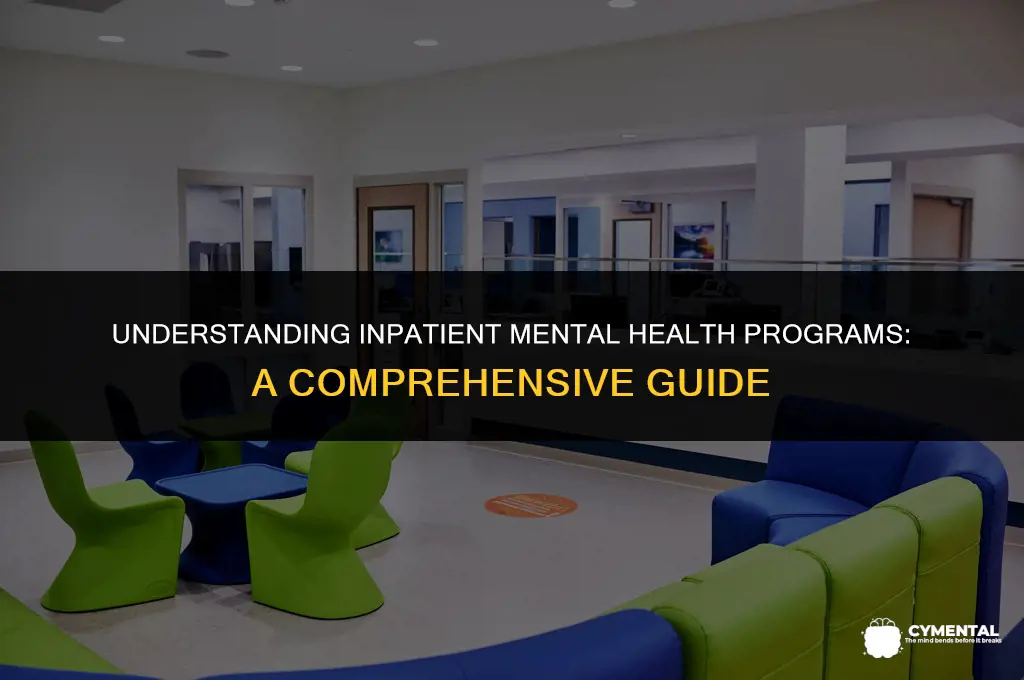
An inpatient program for mental health issues is commonly referred to as a psychiatric inpatient program or a mental health inpatient unit. These programs provide intensive, 24-hour care and supervision for individuals experiencing severe mental health symptoms that require a higher level of support than outpatient services can offer. Inpatient programs typically involve a multidisciplinary team of psychiatrists, psychologists, nurses, and other mental health professionals who work together to develop and implement individualized treatment plans. The goal of these programs is to stabilize patients, address their acute symptoms, and equip them with the necessary skills and resources to manage their mental health effectively upon discharge.
Explore related products


$29.99 $32


What You'll Learn
- Residential Treatment: Provides 24-hour care in a live-in setting for individuals with severe mental health issues
- Partial Hospitalization: Offers intensive daytime treatment, usually 4-6 hours a day, without overnight stays
- Intensive Outpatient Programs (IOPs): Structured treatment sessions, typically 3 hours a day, 3-5 days a week
- Dual Diagnosis Treatment: Specialized care for individuals with both mental health disorders and substance abuse issues
- Crisis Stabilization Units: Short-term, acute care for individuals experiencing a mental health crisis, usually 5-7 days

Residential Treatment: Provides 24-hour care in a live-in setting for individuals with severe mental health issues
Residential treatment centers offer a structured environment where individuals can focus on their recovery without the distractions and stressors of everyday life. These facilities typically provide a range of therapeutic services, including individual and group therapy, medication management, and life skills training. The goal is to help residents develop the tools and strategies they need to manage their symptoms and improve their overall quality of life.
One of the key benefits of residential treatment is the 24-hour support and supervision it provides. This is particularly important for individuals with severe mental health issues who may be at risk of self-harm or suicide. The constant presence of trained staff ensures that residents receive the care and attention they need, even during times of crisis.
Residential treatment programs can vary in length, depending on the individual's needs and the severity of their condition. Some programs are short-term, lasting only a few weeks, while others can be long-term, lasting several months or even years. The length of the program is typically determined by a team of mental health professionals who assess the individual's progress and determine the appropriate level of care.
In addition to providing therapeutic services, residential treatment centers also focus on helping individuals develop the skills they need to live independently. This may include teaching residents how to manage their finances, cook meals, clean their living space, and engage in social activities. By learning these skills, residents can gain the confidence and independence they need to successfully transition back into their communities.
Overall, residential treatment is a critical component of the mental health care system, providing a safe and supportive environment for individuals with severe mental health issues to receive the care and treatment they need.
Navigating Mental Health Disclosure in the Workplace: A Guide
You may want to see also
Explore related products


$111.88 $139.99


Partial Hospitalization: Offers intensive daytime treatment, usually 4-6 hours a day, without overnight stays
Partial hospitalization programs (PHPs) provide a structured and intensive treatment option for individuals struggling with mental health issues. These programs typically offer daytime treatment, usually lasting 4-6 hours a day, without the need for overnight stays. This format allows patients to receive comprehensive care while still maintaining their daily routines and responsibilities.
One of the key benefits of PHPs is the ability to provide a higher level of care than traditional outpatient therapy, without the commitment of a full inpatient program. This makes PHPs an ideal option for individuals who require more intensive treatment than weekly therapy sessions can offer, but who are not in need of 24-hour supervision or residential care.
PHPs often include a variety of therapeutic modalities, such as individual therapy, group therapy, family therapy, and medication management. These programs may also incorporate specialized treatments, such as cognitive-behavioral therapy (CBT), dialectical behavior therapy (DBT), or trauma-focused therapies, depending on the specific needs of the patient population.
The length of a PHP can vary depending on the individual's needs and treatment goals. Some programs may last for a few weeks, while others may extend for several months. The treatment team will work with each patient to develop a personalized treatment plan that outlines the expected duration of the program and the specific objectives to be achieved.
It's important to note that PHPs are not suitable for everyone. Individuals who are experiencing severe symptoms, such as suicidal ideation or psychosis, may require a higher level of care, such as a full inpatient program. Additionally, PHPs may not be appropriate for individuals who are unable to commit to the daily treatment schedule or who do not have a stable living environment.
In conclusion, partial hospitalization programs offer a valuable treatment option for individuals who require intensive mental health care, but who do not need the full-time supervision of an inpatient program. These programs provide a structured and supportive environment for patients to address their mental health concerns while still maintaining their daily routines and responsibilities.
Unveiling the Silent Struggles: America's Most Pressing Mental Health Concerns
You may want to see also
Explore related products


$87.09 $109.99


Intensive Outpatient Programs (IOPs): Structured treatment sessions, typically 3 hours a day, 3-5 days a week
Intensive Outpatient Programs (IOPs) offer a structured approach to mental health treatment, providing individuals with the support and therapy they need while allowing them to maintain their daily routines. These programs typically involve attending treatment sessions for 3 hours a day, 3-5 days a week, making them an ideal option for those who require a higher level of care than traditional outpatient services but do not need the 24/7 supervision of an inpatient program.
One of the key benefits of IOPs is their flexibility. Unlike inpatient programs, which require individuals to stay at a treatment facility for an extended period, IOPs allow patients to return home after each session. This can be particularly advantageous for those who have work or family commitments, as it enables them to balance their treatment with their other responsibilities. Additionally, IOPs often offer a variety of therapeutic approaches, such as individual therapy, group therapy, and medication management, which can be tailored to meet the unique needs of each patient.
Another important aspect of IOPs is their focus on providing a supportive community. Through group therapy sessions, individuals can connect with others who are facing similar challenges, fostering a sense of camaraderie and understanding. This can be a powerful tool in the recovery process, as it helps to combat feelings of isolation and stigma that are often associated with mental health issues.
In terms of duration, IOPs can vary depending on the individual's needs and progress. Some programs may last for a few weeks, while others may extend for several months. The goal is to provide the necessary support and treatment to help individuals achieve their recovery goals and develop the skills they need to maintain their mental health in the long term.
Overall, Intensive Outpatient Programs offer a valuable alternative to inpatient treatment for those who require a higher level of care but do not need 24/7 supervision. By providing structured treatment sessions, a supportive community, and the flexibility to maintain daily routines, IOPs can be an effective option for individuals seeking to address their mental health issues while still being able to participate in their everyday lives.
Navigating Mental Health: Strategies for Resilience and Healing in Daily Life
You may want to see also
Explore related products


$90.18 $99.99


Dual Diagnosis Treatment: Specialized care for individuals with both mental health disorders and substance abuse issues
Individuals struggling with both mental health disorders and substance abuse issues require specialized care that addresses both conditions simultaneously. Dual diagnosis treatment is a comprehensive approach designed to meet the unique needs of these individuals. This type of treatment is crucial because it helps to break the cycle of addiction and manage mental health symptoms, leading to better overall outcomes.
Inpatient programs for dual diagnosis treatment provide a structured and supportive environment where individuals can focus on their recovery. These programs typically involve a multidisciplinary team of professionals, including psychiatrists, psychologists, social workers, and addiction counselors. The team works together to develop a personalized treatment plan that addresses both the mental health disorder and the substance abuse issue.
One of the key components of dual diagnosis treatment is detoxification, which is the process of safely removing substances from the body. This is often followed by a combination of individual and group therapy sessions, as well as medication management to address mental health symptoms. Inpatient programs may also incorporate alternative therapies, such as art therapy or mindfulness practices, to support overall well-being.
The length of stay in an inpatient dual diagnosis treatment program can vary depending on individual needs and the severity of the conditions. However, research has shown that longer stays in treatment are generally associated with better outcomes. After completing an inpatient program, individuals are often encouraged to continue with outpatient treatment and support groups to maintain their recovery and prevent relapse.
In conclusion, dual diagnosis treatment is a specialized approach that provides comprehensive care for individuals with both mental health disorders and substance abuse issues. Inpatient programs offer a structured and supportive environment where individuals can receive the intensive treatment they need to address both conditions and achieve lasting recovery.
Supporting Employee Mental Health: Strategies for Compassionate Workplace Management
You may want to see also
Explore related products


Crisis Stabilization Units: Short-term, acute care for individuals experiencing a mental health crisis, usually 5-7 days
Crisis Stabilization Units (CSUs) are specialized inpatient programs designed to provide short-term, acute care for individuals experiencing a mental health crisis. These units typically offer treatment for a duration of 5 to 7 days, focusing on stabilizing patients and addressing their immediate needs. CSUs are often part of larger psychiatric hospitals or integrated into emergency departments, providing a critical service for those in urgent need of mental health support.
The primary goal of a CSU is to rapidly assess and treat individuals who are experiencing severe psychiatric symptoms, such as suicidal ideation, psychosis, or acute anxiety. Upon admission, patients undergo a comprehensive evaluation to determine the nature and severity of their crisis. This assessment informs the development of a personalized treatment plan, which may include medication, therapy, and other interventions tailored to the individual's specific needs.
One of the key features of CSUs is their focus on providing a safe and supportive environment for patients. The units are typically staffed by a multidisciplinary team of mental health professionals, including psychiatrists, nurses, social workers, and therapists. This team works collaboratively to ensure that patients receive the highest quality of care and are supported throughout their stay. In addition to medical and therapeutic interventions, CSUs often incorporate activities and programs aimed at promoting relaxation, stress reduction, and overall well-being.
CSUs play a vital role in the continuum of mental health care, serving as a bridge between emergency services and longer-term treatment options. By providing intensive, short-term care, these units help to prevent the escalation of mental health crises and reduce the need for prolonged hospitalization. Following discharge from a CSU, patients are typically referred to outpatient services or other levels of care to continue their treatment and support.
In summary, Crisis Stabilization Units are essential components of the mental health care system, offering rapid, intensive care for individuals in the midst of a psychiatric crisis. Through their focused approach and multidisciplinary staffing, CSUs provide a critical service that helps to stabilize patients, address their immediate needs, and facilitate a smooth transition to ongoing care and support.
Guiding Through Crisis: Steps to Commit Someone for Mental Health Support
You may want to see also
Frequently asked questions
An inpatient program for mental health issues is typically referred to as an inpatient psychiatric program or inpatient mental health treatment.
The duration of an inpatient mental health program varies depending on individual needs and the severity of the condition, but it can range from a few days to several weeks or even months.
Inpatient treatment may be necessary for a range of mental health issues, including severe depression, anxiety disorders, bipolar disorder, schizophrenia, substance abuse disorders, and suicidal ideation.
Inpatient mental health programs provide a controlled environment where patients can receive intensive therapy, medication management, and 24-hour supervision. This can lead to improved symptom management, increased safety, and better overall mental health outcomes.
Signs that may indicate the need for inpatient mental health treatment include severe or worsening symptoms, suicidal thoughts or behaviors, inability to care for oneself, and significant impairment in daily functioning. It's important to consult with a mental health professional for an accurate assessment.