Madison Cole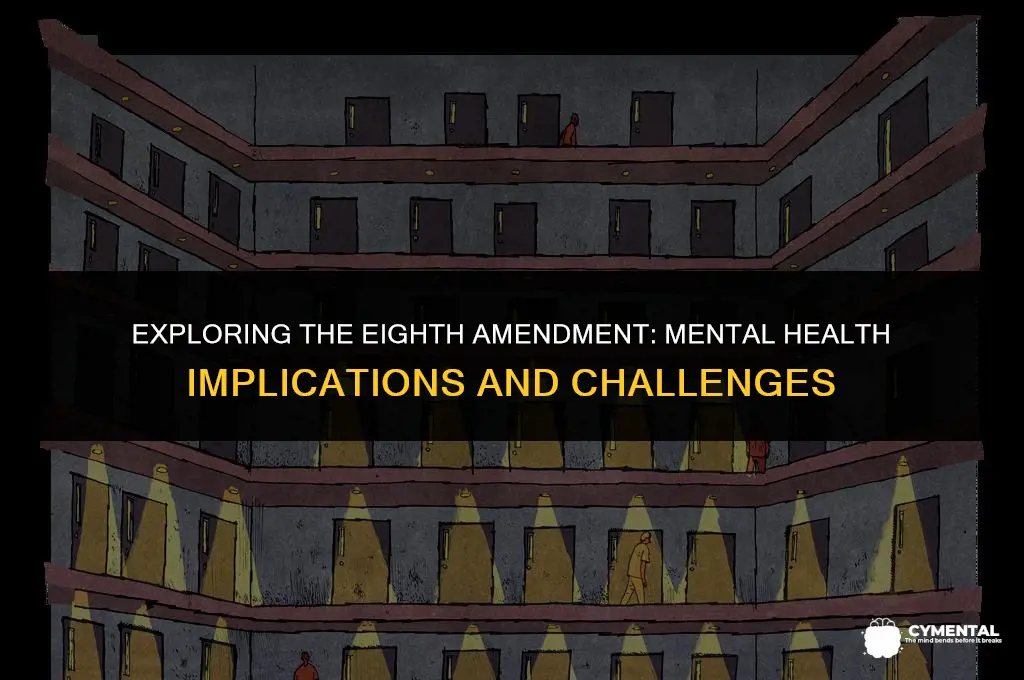
The Eighth Amendment to the United States Constitution prohibits the imposition of excessive bail, excessive fines, and cruel and unusual punishments. In the context of mental health issues, this amendment has significant implications for the treatment and rights of individuals with mental illnesses within the criminal justice system. It raises important questions about the humane treatment of mentally ill inmates, the appropriateness of capital punishment for individuals with mental health disorders, and the need for adequate mental health care in correctional facilities. The intersection of the Eighth Amendment and mental health issues is a complex and evolving area of law and policy, with ongoing debates about how to balance public safety, individual rights, and the need for compassionate and effective mental health interventions.
Explore related products


What You'll Learn
- Cruel and Unusual Punishment: The Eighth Amendment prohibits cruel and unusual punishment, which can be relevant to mental health issues in the context of prison conditions and treatment of mentally ill inmates
- Mental Health in Prisons: This subtopic explores the prevalence of mental health issues among incarcerated individuals and the challenges faced by correctional facilities in providing adequate mental health care
- Right to Refuse Treatment: Individuals, including those in prison, generally have the right to refuse mental health treatment. This subtopic discusses the legal and ethical implications of this right
- Mental Health Evaluations: The process of evaluating an individual's mental health status in the context of the Eighth Amendment, including the criteria used to determine if someone is mentally fit for trial or execution
- Advocacy and Reform: Efforts to reform the criminal justice system to better address the needs of individuals with mental health issues, including changes to policies, practices, and laws

Cruel and Unusual Punishment: The Eighth Amendment prohibits cruel and unusual punishment, which can be relevant to mental health issues in the context of prison conditions and treatment of mentally ill inmates
The Eighth Amendment to the United States Constitution is a critical safeguard against the infliction of cruel and unusual punishment. In the context of mental health issues within the prison system, this amendment takes on a particularly significant role. It mandates that the treatment and conditions faced by mentally ill inmates must adhere to standards of decency and humane treatment, ensuring that their mental health needs are addressed without resorting to punitive measures that could exacerbate their conditions.
One of the key challenges in applying the Eighth Amendment to mental health issues in prisons is the need to balance security concerns with the provision of adequate mental health care. Prisons are inherently restrictive environments, and the measures taken to maintain order and safety can sometimes conflict with the therapeutic needs of mentally ill inmates. For instance, solitary confinement, while sometimes necessary for disciplinary reasons, can have severe negative impacts on the mental health of prisoners, particularly those with pre-existing psychiatric conditions.
To address these challenges, courts have established that the Eighth Amendment requires prisons to provide mentally ill inmates with access to adequate mental health care. This includes not only the provision of psychiatric medications and counseling but also the implementation of policies and procedures that minimize the risk of harm to these vulnerable individuals. For example, prisons may be required to provide specialized housing units that offer a more supportive and less restrictive environment for mentally ill inmates, as well as to ensure that these inmates are not subjected to excessive force or punitive measures that could worsen their mental health.
In addition to these substantive requirements, the Eighth Amendment also imposes procedural safeguards to protect the rights of mentally ill inmates. For instance, prisons may be required to conduct regular mental health evaluations to identify inmates who are in need of treatment, and to provide these inmates with the opportunity to challenge their conditions of confinement if they believe that their mental health needs are not being adequately addressed.
Overall, the Eighth Amendment serves as a vital protection for mentally ill inmates, ensuring that they are treated with dignity and respect, and that their mental health needs are addressed in a manner that is consistent with humane standards of care. By holding prisons accountable for the treatment of mentally ill inmates, the Eighth Amendment helps to promote a more just and compassionate criminal justice system.
Breaking Free: Addressing Social Media Dependence as a Mental Health Concern
You may want to see also
Explore related products


$11.15 $19.95


$9.99


Mental Health in Prisons: This subtopic explores the prevalence of mental health issues among incarcerated individuals and the challenges faced by correctional facilities in providing adequate mental health care
The prevalence of mental health issues among incarcerated individuals is a significant concern within the criminal justice system. Studies have consistently shown that the rate of mental illness in prisons is substantially higher than in the general population. This disparity underscores the need for specialized mental health care services tailored to the unique needs of prisoners. Correctional facilities face numerous challenges in providing adequate mental health care, including limited resources, understaffing, and the complex nature of treating individuals with co-occurring disorders.
One of the primary challenges is the lack of trained mental health professionals in prisons. Many facilities struggle to recruit and retain qualified staff, leading to inadequate care for inmates with mental health needs. Furthermore, the stigma associated with mental illness can deter prisoners from seeking help, exacerbating their conditions. The physical environment of prisons, characterized by confinement and lack of privacy, can also contribute to the deterioration of mental health.
Another critical issue is the prevalence of substance abuse disorders among incarcerated individuals. The intersection of mental health and substance abuse complications requires integrated treatment approaches, which are often lacking in prison settings. Inmates with dual diagnoses face significant barriers to recovery, as traditional treatment models may not address the complexity of their conditions.
Innovative solutions are needed to address these challenges. Telepsychiatry, for instance, can provide access to mental health services in remote or understaffed facilities. Additionally, peer support programs and therapeutic activities can help reduce stigma and promote mental wellness among prisoners. Addressing the mental health needs of incarcerated individuals is not only a humanitarian imperative but also a critical component of reducing recidivism and promoting public safety.
Are Mental Health Disorders Passed Down Through Families?
You may want to see also
Explore related products


$24.65 $25.95



Right to Refuse Treatment: Individuals, including those in prison, generally have the right to refuse mental health treatment. This subtopic discusses the legal and ethical implications of this right
Individuals, including those incarcerated, possess the fundamental right to refuse mental health treatment. This right is grounded in the principle of bodily autonomy and the Eighth Amendment's prohibition against cruel and unusual punishment. The legal and ethical implications of this right are multifaceted, involving considerations of patient autonomy, the state's duty to provide adequate medical care, and the potential consequences of refusing treatment.
From a legal standpoint, the right to refuse treatment is well-established in both civil and criminal contexts. In Estelle v. Gamble (1976), the Supreme Court held that the Eighth Amendment requires the state to provide adequate medical care to prisoners. This includes respecting a prisoner's informed decision to refuse treatment, absent a compelling state interest in overriding that decision. Similarly, in civil contexts, individuals have the right to make informed decisions about their medical care, including the right to refuse treatment, as long as they are deemed competent to make such decisions.
Ethically, the right to refuse treatment raises complex questions about the balance between patient autonomy and the state's duty to protect individuals from harm. On one hand, respecting an individual's decision to refuse treatment upholds their autonomy and dignity. On the other hand, refusing treatment can lead to deterioration in mental health, potentially resulting in harm to the individual or others. In cases where an individual's refusal of treatment poses a significant risk of harm, the state may have a compelling interest in overriding that refusal, particularly in the prison context where the state has a heightened duty to ensure the safety and well-being of inmates.
In practice, the exercise of the right to refuse treatment can have significant consequences. For example, in cases where an individual refuses treatment for a mental health condition that renders them incompetent to stand trial, the court may order involuntary treatment to restore competency. Similarly, in the prison context, refusal of treatment may lead to disciplinary action or transfer to a higher security facility if the refusal is deemed to pose a risk to the safety and security of the institution.
In conclusion, the right to refuse mental health treatment is a fundamental aspect of bodily autonomy, protected by the Eighth Amendment. However, this right is not absolute and must be balanced against the state's duty to provide adequate medical care and protect individuals from harm. The legal and ethical implications of this right are complex and multifaceted, requiring careful consideration of the specific circumstances in each case.
Exploring Gender Differences in Mental Health Vulnerability
You may want to see also
Explore related products

$9.99 $9.99


Mental Health Evaluations: The process of evaluating an individual's mental health status in the context of the Eighth Amendment, including the criteria used to determine if someone is mentally fit for trial or execution
The process of evaluating an individual's mental health status in the context of the Eighth Amendment is a critical and complex task. It involves a thorough assessment of the person's psychological state to determine their fitness for trial or execution. This evaluation is grounded in the legal principle that executing someone who is mentally incompetent would be a violation of the Eighth Amendment's prohibition against cruel and unusual punishment.
Mental health evaluations in this context typically involve a multidisciplinary team of professionals, including psychiatrists, psychologists, and social workers. They use a variety of assessment tools and techniques, such as clinical interviews, psychological testing, and review of medical and legal records. The evaluators look for signs of mental illness, intellectual disability, or other conditions that could impair the individual's ability to understand the legal proceedings or the consequences of their actions.
One of the key criteria used in these evaluations is the individual's ability to comprehend the nature and purpose of the legal proceedings against them. This includes understanding the charges, the possible defenses, and the potential outcomes. Evaluators also assess the person's ability to communicate effectively with their legal counsel and to make rational decisions about their case.
Another important criterion is the individual's emotional and psychological stability. Evaluators look for signs of severe emotional distress, such as depression, anxiety, or psychosis, which could interfere with the person's ability to participate in their trial or understand the gravity of their situation. They also consider the person's history of mental health treatment and any current medications or therapies they are receiving.
The outcome of a mental health evaluation can have significant legal implications. If the individual is found to be mentally incompetent, the legal proceedings may be suspended or modified to accommodate their needs. In some cases, the person may be committed to a mental health facility for treatment until they are deemed fit to proceed. If the individual is found to be mentally competent, the legal process will continue as usual, with the person facing trial and potential execution if convicted.
In conclusion, mental health evaluations in the context of the Eighth Amendment are a crucial safeguard to ensure that individuals facing trial or execution are mentally fit to participate in the legal process. These evaluations are complex and multifaceted, involving a range of professionals and assessment tools to provide a comprehensive picture of the individual's mental health status. The outcomes of these evaluations can have far-reaching consequences, both for the individual and for the broader legal system.
Mindful Scrolling: Strategies to Safeguard Mental Health on Social Media
You may want to see also
Explore related products





Advocacy and Reform: Efforts to reform the criminal justice system to better address the needs of individuals with mental health issues, including changes to policies, practices, and laws
Recent years have seen a growing recognition of the need to reform the criminal justice system to better address the needs of individuals with mental health issues. Advocacy groups, policymakers, and mental health professionals have been working together to implement changes that aim to improve outcomes for these individuals. One key area of focus has been on diverting individuals with mental health issues away from the criminal justice system and into mental health treatment programs. This approach, known as diversion, aims to reduce the number of individuals with mental health issues who are incarcerated and instead provide them with the support and treatment they need.
Another important area of reform has been the development of specialized courts, such as mental health courts and veterans' courts, which are designed to handle cases involving individuals with mental health issues in a more compassionate and effective manner. These courts often provide access to mental health services, substance abuse treatment, and other support programs that can help individuals address the underlying issues that led to their involvement in the criminal justice system.
In addition to these reforms, there has also been a push to improve the training and education of law enforcement officers, prosecutors, and judges on mental health issues. This training aims to help these professionals better understand the complexities of mental health issues and how to respond to individuals in crisis in a way that is both safe and effective.
Furthermore, policymakers have been working to pass legislation that would improve the treatment of individuals with mental health issues in the criminal justice system. For example, some states have passed laws that prohibit the use of solitary confinement for individuals with serious mental health issues, while others have implemented programs that provide mental health services to individuals on probation or parole.
Overall, these efforts to reform the criminal justice system represent a significant step forward in addressing the needs of individuals with mental health issues. By providing access to treatment, support, and specialized services, these reforms aim to reduce the number of individuals with mental health issues who are incarcerated and improve outcomes for those who do enter the criminal justice system.
Supporting Refugee Mental Health: Strategies for Inclusive and Compassionate Care
You may want to see also
Frequently asked questions
The Eighth Amendment to the United States Constitution prohibits cruel and unusual punishment. In the context of mental health, it has been interpreted to mean that individuals with mental illness should not be subjected to inhumane treatment or conditions in prisons or other institutions.
The Eighth Amendment has been used to challenge the constitutionality of laws and practices that allow for the execution of individuals with mental illness. It has also been invoked to improve conditions for mentally ill inmates, such as providing adequate mental health care and preventing solitary confinement.
Some notable cases include *Ford v. Wainwright* (1986), which held that executing an individual who is insane is unconstitutional, and *Estelle v. Gamble* (1976), which established that deliberate indifference to an inmate's serious medical needs, including mental health needs, violates the Eighth Amendment.
The Eighth Amendment has significant implications for mental health policy and practice, particularly in the criminal justice system. It has led to the development of specialized mental health courts, diversion programs, and treatment facilities aimed at addressing the needs of individuals with mental illness who come into contact with the law.
The Eighth Amendment serves as a constitutional framework for advocating for mental health reform. It underscores the importance of ensuring that individuals with mental illness are treated humanely and provided with appropriate care, rather than being punished or incarcerated without adequate support. This has informed efforts to improve mental health services, reduce stigma, and promote a more compassionate approach to mental health issues.