Ava Ramirez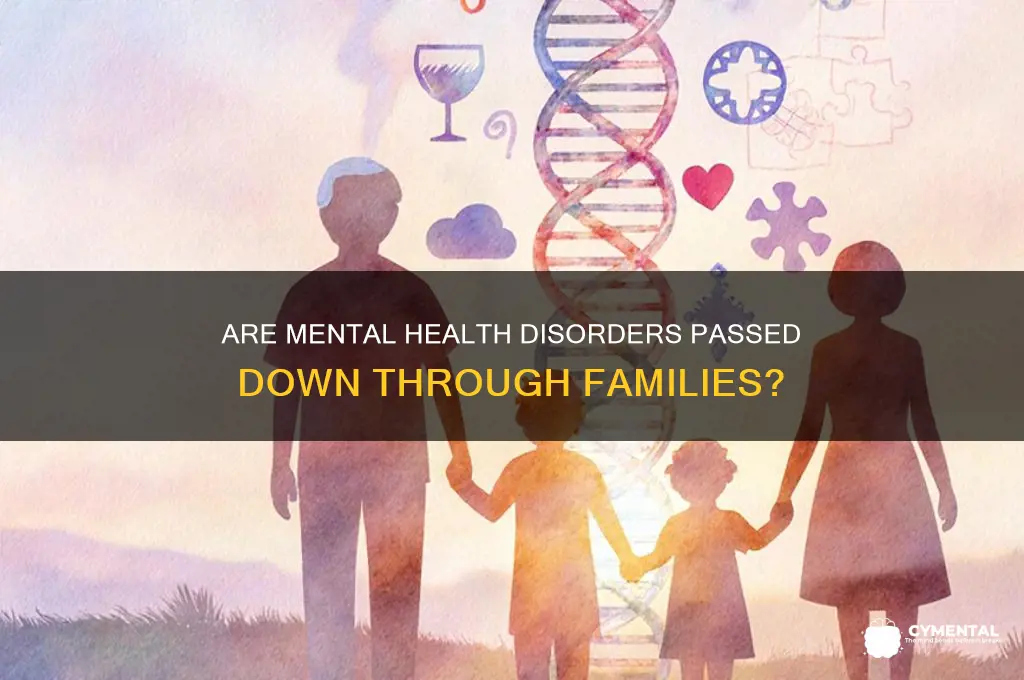
The question of whether mental health issues are hereditary is a complex and multifaceted one, rooted in the interplay between genetics, environment, and lifestyle. Research suggests that certain mental disorders, such as depression, anxiety, schizophrenia, and bipolar disorder, have a genetic component, with individuals having a family history of these conditions being at a higher risk. However, genetics alone do not determine the development of mental health issues; environmental factors, such as stress, trauma, and social support, also play a significant role. Studies have shown that while specific genes may increase susceptibility, the expression of these genes can be influenced by external factors, highlighting the importance of a holistic approach to understanding mental health. As scientists continue to unravel the intricate relationship between heredity and mental well-being, it becomes increasingly clear that addressing mental health requires a nuanced perspective that considers both genetic predispositions and environmental influences.
| Characteristics | Values |
|---|---|
| Heritability | Many mental health disorders have a genetic component, with heritability estimates ranging from 30-80% depending on the disorder. |
| Common Disorders | Schizophrenia (60-80%), Bipolar Disorder (60-85%), Major Depressive Disorder (30-40%), Anxiety Disorders (30-67%), ADHD (70-80%). |
| Genetic Variants | No single gene causes mental illness; multiple genes interact with environmental factors. Common variants (SNPs) contribute to risk. |
| Family Risk | Having a first-degree relative with a mental disorder increases risk (e.g., 10-20% for schizophrenia vs. 1% in general population). |
| Environmental Influence | Genetics alone do not determine outcome; factors like trauma, stress, substance abuse, and upbringing play significant roles. |
| Epigenetics | Environmental factors can alter gene expression without changing DNA, influencing mental health risk across generations. |
| Twin Studies | Monozygotic (identical) twins show higher concordance rates for mental disorders than dizygotic (fraternal) twins, supporting genetic influence. |
| Polygenic Risk Scores | Emerging tools to predict mental health risk based on multiple genetic variants, though still in early stages of development. |
| Non-Heritable Factors | Socioeconomic status, access to healthcare, lifestyle, and early life experiences significantly impact mental health outcomes. |
| Research Gaps | Limited diversity in genetic studies (mostly European ancestry), incomplete understanding of gene-environment interactions. |
Explore related products


What You'll Learn

Genetic Predisposition to Mental Illness
Mental illnesses often run in families, but this doesn't mean a direct inheritance like eye color. Instead, research suggests a complex interplay of genetic variations that increase susceptibility. Studies on twins and adopted individuals reveal a higher concordance rate for conditions like schizophrenia, bipolar disorder, and major depression among relatives. For instance, if one identical twin has schizophrenia, the other has a 40-50% chance of developing it, compared to 6-8% in the general population. This highlights a strong genetic component, though it’s not the sole determinant.
Understanding genetic predisposition requires grasping the concept of polygenic risk. Mental illnesses are not caused by a single gene but by multiple genes, each contributing a small effect. For example, genome-wide association studies (GWAS) have identified over 100 genetic variants linked to schizophrenia, yet each variant individually increases risk by less than 1%. This cumulative effect means individuals inherit a "risk profile" rather than a definitive fate. Environmental factors, such as stress, trauma, or substance use, often act as triggers that manifest these latent vulnerabilities.
Practical implications of genetic predisposition include early intervention and personalized treatment. For families with a history of mental illness, monitoring children for early signs—such as social withdrawal, mood swings, or cognitive changes—can lead to timely support. Genetic testing, though not diagnostic for mental illness, can identify risk factors and guide preventive strategies. For example, individuals with a family history of bipolar disorder might avoid stimulants, which can precipitate manic episodes. Similarly, those predisposed to depression may benefit from lifestyle modifications like regular exercise and mindfulness practices.
However, genetic predisposition is not destiny. Epigenetics—how genes are expressed in response to environment—plays a crucial role. For instance, studies show that childhood trauma can alter the expression of genes related to stress response, increasing vulnerability to anxiety or depression later in life. Conversely, positive environments, such as supportive relationships or enriched learning experiences, can mitigate genetic risks. This underscores the importance of addressing both nature and nurture in mental health care.
In conclusion, genetic predisposition to mental illness is a nuanced, multifaceted phenomenon. While genes contribute significantly, their expression is influenced by environmental and lifestyle factors. By understanding this interplay, individuals and healthcare providers can adopt proactive measures, from early screening to tailored interventions. The goal is not to predict inevitability but to empower informed choices that foster resilience and well-being.
Supporting Your Partner Through Mental Health Challenges: A Compassionate Guide
You may want to see also
Explore related products


Twin Studies on Mental Health
Twin studies have long been a cornerstone in unraveling the genetic underpinnings of mental health disorders. By comparing the prevalence of conditions in identical (monozygotic) twins, who share 100% of their genes, and fraternal (dizygotic) twins, who share approximately 50%, researchers can estimate the heritability of specific disorders. For instance, schizophrenia shows a concordance rate of 40-65% in identical twins compared to 5-15% in fraternal twins, suggesting a strong genetic influence. However, these findings also highlight that genetics alone do not determine outcome, as even identical twins often differ in their mental health trajectories.
One of the most instructive aspects of twin studies is their ability to disentangle genetic factors from environmental influences. For example, in studies of depression, identical twins raised apart exhibit similar rates of the disorder, indicating that shared genes play a significant role. Yet, not all identical twins develop depression, which points to the importance of non-genetic factors such as stress, trauma, or lifestyle. This duality underscores the complex interplay between nature and nurture in mental health.
A critical takeaway from twin studies is their limitation in providing actionable insights for individuals. While they establish heritability, they do not identify specific genes or predict individual risk. For instance, knowing that anxiety disorders have a heritability of 30-67% does not mean a person with a family history is destined to develop the condition. Instead, such knowledge should encourage proactive measures, such as early screening, stress management, and access to mental health resources.
Despite their value, twin studies are not without challenges. Sample sizes are often small, and findings can be influenced by factors like age, gender, and cultural differences. Additionally, the assumption that environmental factors are equal for twins raised together may not always hold true. For example, one twin might experience unique stressors, such as bullying or academic pressure, that the other does not. These nuances remind us that twin studies are a piece of the puzzle, not the entire picture.
In practical terms, twin studies serve as a reminder that mental health is multifaceted. For families with a history of mental illness, understanding the genetic component can reduce stigma and encourage open conversations. However, it’s essential to focus on modifiable factors, such as building resilience, fostering supportive relationships, and seeking early intervention. While genetics may load the gun, environment often pulls the trigger, and twin studies reinforce the need for a holistic approach to mental well-being.
Mental Health Crisis: A Social Issue for College Students?
You may want to see also
Explore related products


Family History and Risk Factors
Mental health conditions often run in families, but this doesn't mean a diagnosis is inevitable. Understanding the role of family history is about identifying *risk factors*, not predicting destiny. Think of it like height: if both your parents are tall, you're more likely to be tall, but nutrition and environment also play a role. Similarly, a family history of depression or anxiety increases your risk, but it's not the sole determinant.
Step 1: Identify Patterns. Start by mapping your family’s mental health history. Include first-degree relatives (parents, siblings) and, if possible, second-degree relatives (grandparents, aunts/uncles). Look for recurring conditions like depression, bipolar disorder, or schizophrenia. Note age of onset and severity. For example, if multiple family members experienced major depressive episodes in their 20s, this could signal a genetic predisposition.
Caution: Don’t Self-Diagnose. Family history is a clue, not a diagnosis. Genetic risk is complex and interacts with environmental factors like stress, trauma, or substance use. Avoid assuming you’ll develop a condition based solely on family patterns. Instead, use this information to inform proactive steps, such as regular mental health screenings or early intervention strategies.
Practical Tips for Mitigation. If you identify a strong family history, consider these actionable steps:
- Monitor Early Signs: Be vigilant for symptoms like persistent sadness, changes in sleep, or withdrawal. Early detection can lead to better outcomes.
- Adopt Protective Habits: Regular exercise, a balanced diet, and adequate sleep can reduce risk. For example, studies show that 30 minutes of moderate exercise 5x/week can lower depression risk by up to 26%.
- Seek Genetic Counseling: If multiple family members have severe conditions like schizophrenia, consult a genetic counselor to understand your risk and options.
- Build a Support Network: Strong social connections act as a buffer against mental health challenges. Prioritize relationships and consider joining support groups.
Supporting Employees: Compassionate Conversations About Mental Health at Work
You may want to see also
Explore related products


Epigenetics and Mental Disorders
Mental health disorders often run in families, but the story isn't as simple as inheriting a single "depression gene." Epigenetics, the study of how our environment and experiences influence gene expression, offers a fascinating lens to understand this complexity. Imagine your genes as a piano – epigenetics determines which keys are played, how loudly, and in what sequence.
Traumatic experiences, chronic stress, and even prenatal environment can act as conductors, altering the epigenetic "sheet music" and potentially leading to mental health vulnerabilities.
Consider this: studies show that children of Holocaust survivors exhibit altered stress hormone patterns and increased risk for anxiety and depression. This isn't due to inherited DNA changes, but rather epigenetic modifications passed down through generations. Similarly, research on rats demonstrates that maternal care directly impacts the offspring's stress response system through epigenetic mechanisms. Pups receiving high levels of licking and grooming show lower stress hormone levels and more resilient behavior, while neglected pups exhibit the opposite.
These examples highlight how environmental factors can leave lasting marks on our epigenome, influencing mental health outcomes.
Understanding epigenetics opens up exciting possibilities for prevention and treatment. For instance, research suggests that early intervention programs aimed at reducing childhood stress and promoting healthy attachment can potentially mitigate epigenetic changes associated with mental health risks. Additionally, emerging therapies like epigenetic drugs aim to reverse harmful epigenetic modifications, offering hope for more targeted and effective treatments.
While still in its early stages, the field of epigenetics holds immense promise for unraveling the complex interplay between genes and environment in mental health, paving the way for a more personalized and preventative approach to care.
Understanding ADHD: Mental Health Condition or Neurodevelopmental Difference?
You may want to see also
Explore related products


Inherited vs. Environmental Influences
Mental health disorders often run in families, but this doesn't mean they're solely inherited. While genes play a significant role, environmental factors can significantly influence whether these genes are expressed. For instance, studies on twins have shown that if one identical twin has schizophrenia, the other has a 40-50% chance of developing it, compared to a 6% chance in the general population. However, this leaves a substantial portion of risk unaccounted for by genetics alone, highlighting the interplay between inherited predispositions and environmental triggers.
Consider the case of depression. Research indicates that individuals with a first-degree relative (parent or sibling) diagnosed with depression are two to three times more likely to develop the condition themselves. Yet, not everyone with this genetic predisposition becomes depressed. Stressful life events, such as trauma, loss, or chronic stress, often act as catalysts. For example, a person with a family history of depression might remain asymptomatic until they experience a significant life upheaval, such as a divorce or job loss. This suggests that while genes load the gun, environment pulls the trigger.
To mitigate risks, especially in those with a family history, proactive steps can be taken. For children of parents with anxiety disorders, teaching stress management techniques early can be beneficial. Mindfulness practices, such as guided meditation or deep breathing exercises, have been shown to reduce anxiety symptoms. Similarly, maintaining a stable routine, ensuring adequate sleep (7-9 hours for adults, 9-11 hours for school-aged children), and fostering strong social connections can act as protective factors against inherited vulnerabilities.
However, environmental influences aren’t always external. Prenatal factors, like maternal stress or exposure to toxins, can alter gene expression in the developing fetus, increasing susceptibility to mental health issues later in life. For instance, children exposed to high levels of cortisol (a stress hormone) in utero are at greater risk for conditions like ADHD. This underscores the complexity of the inherited vs. environmental debate, as even before birth, the environment begins shaping genetic outcomes.
Ultimately, understanding the balance between inherited and environmental influences empowers individuals to take informed action. Genetic testing can identify predispositions, but it’s the lifestyle choices and environmental modifications that often determine outcomes. For families with a history of mental health issues, regular mental health screenings, early intervention, and creating a supportive environment are key. While genes may set the stage, it’s the environment that directs the play.
Understanding Furry Fandom: Mental Health Stigma or Harmless Hobby?
You may want to see also
Frequently asked questions
No, mental health issues are not solely determined by genetics. While there is a hereditary component, environmental factors, lifestyle, and personal experiences also play significant roles in the development of mental health conditions.
Yes, there is evidence that certain mental illnesses can have a genetic predisposition, meaning they can be passed down from parents to children. However, having a genetic predisposition does not guarantee that a person will develop the condition.
The percentage varies depending on the specific mental health condition. Some studies suggest that genetics can account for 20-50% of the risk for conditions like depression, anxiety, and schizophrenia, while environmental and other factors contribute to the remaining risk.
Not necessarily. While having a family history of mental health issues can increase your risk, it does not guarantee that you will develop a mental health condition. Many people with a family history of mental illness never experience any issues themselves, thanks to a combination of genetic resilience and supportive environmental factors.