Noah Parker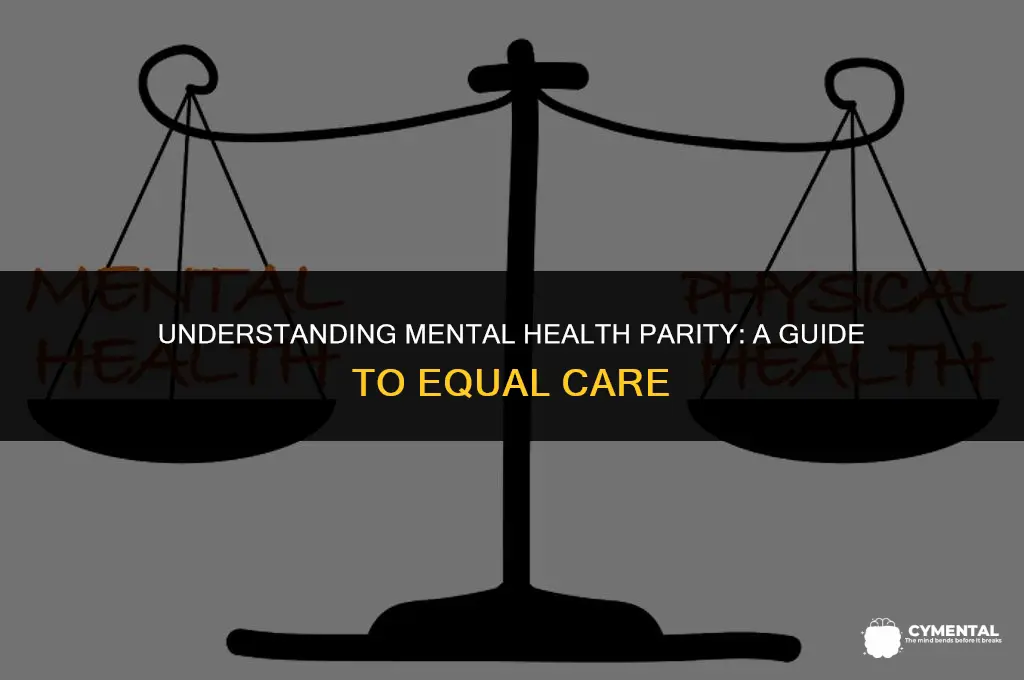
Mental health parity refers to the principle that mental health services should be treated equally to physical health services in terms of insurance coverage and access to care. This concept aims to eliminate disparities between mental and physical health care, ensuring that individuals have equal opportunities to receive necessary treatment and support for their mental well-being. Despite significant progress in recent years, mental health parity remains a critical issue, as many individuals still face barriers to accessing comprehensive mental health care. This paragraph will explore the importance of mental health parity, the challenges that persist, and the efforts being made to achieve equal treatment for mental health conditions.
Explore related products


What You'll Learn
- Definition: Mental health parity refers to equal access and treatment for mental health conditions compared to physical health
- Legislation: Laws like the Mental Health Parity Act aim to ensure insurance coverage for mental health is on par with medical care
- Insurance Coverage: Parity means insurance plans must cover mental health services at the same level as other medical treatments
- Treatment Equality: Patients should receive the same quality of care for mental health issues as they would for physical ailments
- Advocacy: Mental health parity is a key focus for advocates seeking to reduce stigma and improve access to psychological care

Definition: Mental health parity refers to equal access and treatment for mental health conditions compared to physical health
Mental health parity is a critical concept in the healthcare landscape, advocating for the equitable treatment and access to care for mental health conditions on par with physical health. This principle is rooted in the understanding that mental health is an integral part of overall well-being and should be afforded the same priority and resources as physical health. Despite growing awareness and legislative efforts, achieving true parity remains a challenge, with significant disparities persisting in areas such as insurance coverage, treatment availability, and societal attitudes.
One of the key aspects of mental health parity is ensuring that insurance plans cover mental health services to the same extent as physical health services. This includes eliminating discriminatory practices such as higher copays, deductibles, or limitations on the number of therapy sessions or psychiatric medications covered. The Affordable Care Act (ACA) in the United States, for example, has made strides in this area by requiring insurance plans to cover mental health and substance use disorder services as essential health benefits. However, enforcement and compliance with these regulations can vary widely among states and insurance providers.
Another crucial component of mental health parity is increasing access to mental health professionals and services, particularly in underserved communities. This involves addressing the shortage of mental health providers, improving telehealth infrastructure, and reducing stigma associated with seeking mental health care. Innovative approaches such as integrating mental health services into primary care settings, training non-specialist healthcare workers in mental health first aid, and leveraging technology for remote therapy sessions can help bridge the gap in access to care.
Moreover, mental health parity extends beyond healthcare settings to encompass broader societal changes. This includes promoting mental health literacy, combating stigma through public awareness campaigns, and fostering supportive environments in workplaces, schools, and communities. By recognizing mental health as a fundamental human right and a vital component of public health, societies can work towards creating a more inclusive and compassionate approach to mental health care.
In conclusion, mental health parity is a multifaceted issue that requires a comprehensive and sustained effort across various sectors. While progress has been made in recent years, significant work remains to be done to ensure that individuals with mental health conditions receive the same level of care, respect, and support as those with physical health conditions. By prioritizing mental health parity, we can move closer to a more equitable and just healthcare system that truly serves the needs of all individuals.
Unveiling the Salary Potential for Mental Health Counselors
You may want to see also
Explore related products


Legislation: Laws like the Mental Health Parity Act aim to ensure insurance coverage for mental health is on par with medical care
The Mental Health Parity Act (MHPA) is a pivotal piece of legislation in the United States that seeks to address disparities in insurance coverage between mental health and medical care. Enacted in 2008, the MHPA requires health insurance plans to provide equal coverage for mental health and substance use disorder services as they do for medical and surgical services. This means that insurance companies cannot impose higher deductibles, copays, or coinsurance rates for mental health services compared to physical health services. The act also prohibits insurers from limiting the number of inpatient days or outpatient visits for mental health care.
One of the key aspects of the MHPA is its focus on ensuring that mental health services are accessible and affordable for all individuals. By mandating parity in insurance coverage, the act aims to reduce the financial burden on those seeking mental health treatment, which can often be a significant barrier to care. Additionally, the MHPA helps to combat the stigma associated with mental illness by treating it as a legitimate health condition that deserves the same level of insurance coverage as physical ailments.
Despite the progress made by the MHPA, there are still challenges in achieving true parity in mental health coverage. Some insurance plans may find ways to circumvent the law, such as by imposing indirect limits on mental health services or by categorizing certain treatments as experimental or not medically necessary. Furthermore, the act does not address the issue of provider shortages in mental health care, which can make it difficult for individuals to find qualified professionals to treat their conditions.
To address these ongoing challenges, policymakers and advocates continue to push for stronger enforcement of the MHPA and for additional legislation to improve mental health care access. For example, the 21st Century Cures Act, enacted in 2016, includes provisions to strengthen the enforcement of mental health parity laws and to increase funding for mental health research and services. Additionally, there is a growing movement to integrate mental health care into primary care settings, which could help to address provider shortages and improve access to care.
In conclusion, the Mental Health Parity Act represents a significant step forward in ensuring that mental health services are covered equally under insurance plans. However, there is still work to be done to achieve true parity and to address the broader issues surrounding mental health care access. By continuing to advocate for stronger legislation and innovative solutions, we can work towards a future where mental health care is accessible, affordable, and free from stigma.
Understanding PHP in Mental Health: A Comprehensive Guide
You may want to see also
Explore related products


Insurance Coverage: Parity means insurance plans must cover mental health services at the same level as other medical treatments
Insurance coverage parity for mental health services is a critical aspect of ensuring equitable access to healthcare. This principle mandates that insurance plans cover mental health treatments on par with other medical services, without discrimination. This means that the benefits, limitations, and financial requirements for mental health services should be identical to those for physical health services. For instance, if an insurance plan covers 80% of the cost for a physical therapy session, it should also cover 80% of the cost for a psychotherapy session.
The implementation of mental health parity laws has been a significant step towards addressing the historical disparities in mental health care. These laws, such as the Mental Health Parity and Addiction Equity Act in the United States, require insurance providers to offer mental health benefits that are comparable to medical/surgical benefits. This includes coverage for diagnosis, treatment, and ongoing care for mental health conditions.
Despite the existence of these laws, achieving true parity remains a challenge. Insurance companies may impose stricter utilization review processes for mental health services, limit the number of therapy sessions, or require higher copays and deductibles compared to physical health services. Additionally, there may be disparities in the provider networks, with fewer mental health professionals included in insurance plans.
To ensure that mental health parity is effectively implemented, it is essential to monitor and enforce compliance with these laws. This involves regular audits of insurance plans to verify that they are meeting the parity requirements. Furthermore, educating healthcare providers, insurance companies, and the public about the importance of mental health parity can help to reduce stigma and promote equal access to care.
In conclusion, mental health parity is a fundamental right that ensures individuals receive the care they need without discrimination. While significant progress has been made, continued efforts are necessary to overcome the remaining barriers and achieve true parity in insurance coverage for mental health services.
Exploring Mental Health Themes in Young Adult Literature
You may want to see also
Explore related products


Treatment Equality: Patients should receive the same quality of care for mental health issues as they would for physical ailments
Despite the growing awareness and acceptance of mental health issues, there remains a significant disparity in the quality of care provided for mental versus physical health conditions. This inequality, often referred to as mental health parity, is a critical issue that affects millions of individuals worldwide. At its core, mental health parity advocates for the equal treatment and coverage of mental health services, ensuring that patients receive the same level of care and support as those with physical ailments.
One of the primary challenges in achieving mental health parity lies in the historical stigma and misconceptions surrounding mental illness. For far too long, mental health conditions have been viewed as less legitimate or serious than physical illnesses, leading to inadequate funding, research, and resources allocated to mental health care. This has resulted in a shortage of mental health professionals, limited access to treatment, and a lack of comprehensive insurance coverage for mental health services.
Another significant barrier to mental health parity is the fragmented nature of the healthcare system. In many countries, mental health services are provided separately from physical health care, often by different providers and under different insurance plans. This separation can lead to a lack of coordination and communication between healthcare providers, resulting in inadequate or inconsistent care for patients with co-occurring mental and physical health conditions.
To address these challenges and achieve mental health parity, it is essential to implement comprehensive reforms that integrate mental health care into the broader healthcare system. This includes increasing funding for mental health research and services, expanding insurance coverage for mental health treatments, and promoting greater collaboration between mental health professionals and primary care providers. Additionally, efforts to reduce stigma and increase awareness about mental health issues can help to foster a more supportive and understanding environment for those seeking care.
Ultimately, achieving mental health parity is not only a matter of fairness and equality but also a critical step in improving overall public health and well-being. By ensuring that patients receive the same quality of care for mental health issues as they would for physical ailments, we can help to alleviate the suffering of millions of individuals and promote a more compassionate and inclusive society.
Unraveling the Mental Health Bill Opposition: A Deep Dive
You may want to see also
Explore related products


Advocacy: Mental health parity is a key focus for advocates seeking to reduce stigma and improve access to psychological care
Advocates for mental health parity are pushing for a fundamental shift in how society views and treats mental illness. By seeking to reduce stigma and improve access to psychological care, they aim to create a more equitable healthcare system where mental health is given the same importance as physical health. This movement is gaining momentum as more people become aware of the devastating impact of untreated mental illness and the need for better support and resources.
One key aspect of mental health parity is ensuring that insurance coverage for mental health services is on par with that of physical health services. This means that insurance companies should not impose higher deductibles, copays, or limits on mental health care, and that mental health professionals should be reimbursed at the same rate as physical health providers. By achieving parity in insurance coverage, advocates hope to remove a significant barrier to accessing mental health care and encourage more people to seek the help they need.
Another important focus of mental health parity advocates is reducing the stigma associated with mental illness. This stigma can manifest in many ways, from negative attitudes and beliefs held by individuals and society at large, to discrimination in the workplace and social exclusion. By challenging these harmful stereotypes and promoting a more compassionate and understanding view of mental illness, advocates aim to create a more supportive environment for those struggling with mental health issues.
In addition to these efforts, mental health parity advocates are also working to improve access to psychological care by increasing the availability of mental health professionals, particularly in underserved areas. This could involve incentivizing more students to pursue careers in mental health, providing training and support for existing professionals, and developing innovative models of care that leverage technology and other resources to reach more people.
Ultimately, the goal of mental health parity is to create a society where mental health is valued and prioritized, and where individuals have equal access to the care and support they need to thrive. By continuing to push for these changes, advocates are helping to pave the way for a more compassionate and equitable future for all.
Effective Strategies for Marketing Mental Health Services
You may want to see also
Frequently asked questions
Mental health parity refers to the equal treatment of mental health conditions and substance use disorders in comparison to physical health conditions in terms of health insurance coverage and benefits.
Mental health parity is crucial because it ensures that individuals with mental health conditions receive the same level of care and coverage as those with physical health conditions, promoting fairness and reducing stigma associated with mental illness.
Mental health parity laws require insurance plans to cover mental health and substance use disorder treatments at the same level as medical/surgical benefits. This means that deductibles, copays, and coverage limits for mental health services must be equal to those for physical health services.
While mental health parity laws aim to provide equal coverage, there may be some exceptions. For instance, certain plans might have different cost-sharing requirements for mental health services compared to medical services, as long as these differences are not discriminatory. Additionally, some plans may have limitations on the number of therapy sessions or inpatient days covered, but these restrictions must apply equally to mental and physical health benefits.