Ava Ramirez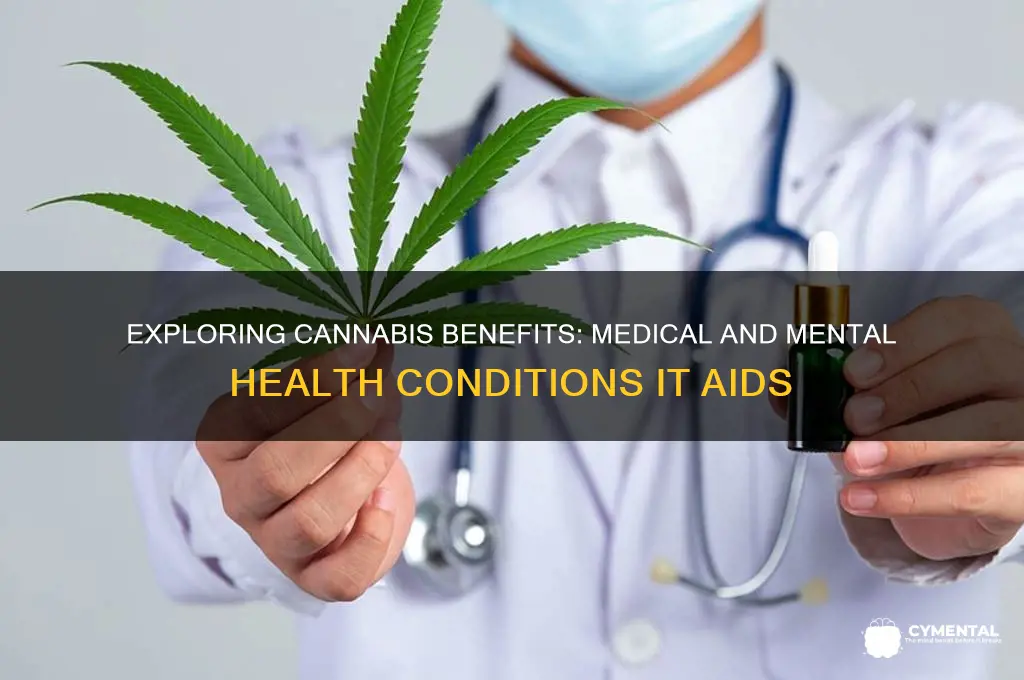
Cannabis, commonly known as pot, has gained significant attention for its potential therapeutic benefits in addressing various medical and mental health issues. Research suggests that it can help alleviate chronic pain, reduce inflammation, and manage symptoms of conditions like multiple sclerosis and epilepsy. In the realm of mental health, pot has shown promise in reducing anxiety, alleviating symptoms of depression, and providing relief for individuals with PTSD. Additionally, it is often used to stimulate appetite in patients undergoing chemotherapy and to mitigate nausea. However, its efficacy and safety vary depending on the individual, dosage, and method of consumption, making it essential to consult healthcare professionals for personalized guidance.
Explore related products

$15.99 $27


What You'll Learn
- Chronic Pain Relief: Reduces inflammation, alleviates neuropathic pain, and decreases reliance on opioids
- Anxiety and Stress: Moderates symptoms, promotes relaxation, but may worsen anxiety in high doses
- Epilepsy Treatment: CBD reduces seizure frequency and severity in treatment-resistant epilepsy cases
- Cancer Symptom Management: Eases chemotherapy side effects like nausea, vomiting, and appetite loss
- PTSD Symptoms: Helps manage flashbacks, nightmares, and anxiety in PTSD patients with controlled use

Chronic Pain Relief: Reduces inflammation, alleviates neuropathic pain, and decreases reliance on opioids
Chronic pain affects millions worldwide, often diminishing quality of life and leading to dependency on opioids. Cannabis, with its anti-inflammatory and analgesic properties, offers a promising alternative. Studies show that cannabinoids like THC and CBD interact with the body’s endocannabinoid system to reduce inflammation, a key driver of chronic pain. For instance, a 2020 study published in *Pain Medicine* found that cannabis use was associated with a 64% decrease in opioid use among chronic pain patients. This suggests that cannabis not only alleviates pain but also addresses the opioid crisis by providing a safer, non-addictive option.
Neuropathic pain, a particularly stubborn form of chronic pain caused by nerve damage, often responds poorly to traditional medications. Cannabis, however, has shown efficacy in this area. A 2018 review in the *European Journal of Pain* concluded that cannabis-based medicines significantly reduced neuropathic pain intensity. Patients reported improvements in sleep and overall well-being, which are often disrupted by chronic pain. For practical use, starting with a low dose of CBD-dominant products (e.g., 10–20 mg daily) and gradually increasing under medical supervision can help manage symptoms without overwhelming psychoactive effects.
One of the most compelling benefits of cannabis for chronic pain is its potential to reduce reliance on opioids. Opioids, while effective, carry significant risks of addiction, overdose, and side effects. Cannabis, on the other hand, has a far lower risk profile. A 2019 study in *JAMA Internal Medicine* found that states with medical cannabis laws saw a 6.38% lower rate of opioid prescribing. This highlights cannabis’s role as a harm reduction tool. For patients transitioning from opioids, combining THC and CBD in a 1:1 ratio (e.g., 5 mg each) can provide balanced pain relief while minimizing withdrawal symptoms.
Despite its benefits, using cannabis for chronic pain requires caution. Dosage and strain selection are critical, as individual responses vary. For example, THC-dominant strains may be more effective for severe pain but can cause psychoactive effects, while CBD-dominant strains offer relief without intoxication. Patients should also be aware of potential side effects, such as dizziness or dry mouth, and consult a healthcare provider to avoid interactions with other medications. Additionally, long-term use should be monitored to ensure efficacy and prevent tolerance.
Incorporating cannabis into a chronic pain management plan can be transformative, but it’s not a one-size-fits-all solution. Patients should start with low doses, track their symptoms, and adjust as needed. For instance, a daily regimen of 10–20 mg of CBD oil, combined with topical applications for localized pain, can provide sustained relief. Combining cannabis with other therapies, such as physical therapy or mindfulness practices, can further enhance outcomes. Ultimately, cannabis offers a viable, natural alternative for those seeking to reclaim their lives from chronic pain.
Boost Your Mood: Exercise's Powerful Impact on Mental Health
You may want to see also
Explore related products

$11.61 $16.95


Anxiety and Stress: Moderates symptoms, promotes relaxation, but may worsen anxiety in high doses
Cannabis, often referred to as pot, has a complex relationship with anxiety and stress. For many, it serves as a natural remedy, offering a sense of calm and relaxation. However, this effect is not universal, and the line between relief and exacerbation is thin, often dictated by dosage and individual sensitivity. Understanding this duality is crucial for anyone considering cannabis as a tool to manage anxiety or stress.
Moderating Symptoms and Promoting Relaxation
At low to moderate doses, cannabis can act as a soothing agent, helping to quiet the mind and ease tension. The compound CBD (cannabidiol), in particular, is known for its anxiolytic properties, reducing symptoms without the psychoactive effects associated with THC (tetrahydrocannabinol). For instance, a 2019 study published in *The Permanente Journal* found that 79% of participants experienced improved anxiety levels after using CBD. Practical tips for those seeking relaxation include starting with a low dose (5–10 mg of THC or 10–20 mg of CBD) and opting for strains high in CBD and low in THC, such as ACDC or Charlotte’s Web. Consuming cannabis in the evening can also enhance its calming effects, promoting better sleep and reducing nighttime anxiety.
The Risk of Worsening Anxiety in High Doses
While cannabis can be a balm for anxiety, high doses—particularly of THC—can have the opposite effect. Excessive THC can trigger paranoia, rapid heartbeat, and heightened anxiety, especially in inexperienced users or those predisposed to anxiety disorders. A dose above 20–30 mg of THC is often cited as the threshold where anxiety may worsen. For example, a 2017 study in *Clinical Psychology Review* highlighted that while low doses of THC can reduce stress, higher doses can amplify it. To mitigate this risk, users should adhere to the "start low and go slow" principle, gradually increasing dosage while monitoring their response. Avoiding high-THC strains like Ghost Train Haze or Gorilla Glue is also advisable for anxiety-prone individuals.
Practical Takeaways for Effective Use
For those exploring cannabis to manage anxiety or stress, personalization is key. Age, tolerance, and medical history play significant roles in determining the right approach. Younger users (under 25) and those with a history of anxiety disorders should exercise caution, as their brains may be more susceptible to adverse effects. Combining cannabis with mindfulness practices, such as deep breathing or meditation, can enhance its relaxing properties. Additionally, keeping a journal to track dosage, strain, and effects can help identify what works best. If anxiety persists or worsens, consulting a healthcare professional is essential, as cannabis is not a one-size-fits-all solution.
Balancing Benefits and Risks
Cannabis’s potential to alleviate anxiety and stress is undeniable, but it requires a nuanced approach. By understanding the interplay between dosage, compounds, and individual factors, users can harness its benefits while minimizing risks. Whether through microdosing, selecting specific strains, or integrating complementary practices, the goal is to achieve a state of relaxation without tipping into discomfort. In the end, cannabis is a tool—one that, when used thoughtfully, can offer relief in an increasingly stressful world.
Supporting Children Through Mental Abuse: A Guide for Caring Adults
You may want to see also
Explore related products


Epilepsy Treatment: CBD reduces seizure frequency and severity in treatment-resistant epilepsy cases
CBD, a non-psychoactive compound derived from cannabis, has emerged as a groundbreaking treatment for epilepsy, particularly in cases resistant to traditional therapies. Clinical trials, including the landmark study published in *The New England Journal of Medicine*, demonstrated that CBD significantly reduces seizure frequency in patients with Dravet syndrome and Lennox-Gastaut syndrome, two severe forms of epilepsy. For instance, in the Dravet syndrome trial, patients receiving CBD experienced a median reduction in convulsive seizures of 39%, compared to 13% in the placebo group. This data underscores CBD’s potential to transform lives where other treatments fail.
Administering CBD for epilepsy requires precision. The FDA-approved medication Epidiolex, a purified form of CBD, is typically started at a low dose of 2.5 mg/kg twice daily, gradually increasing to a maintenance dose of 5–10 mg/kg twice daily, depending on patient response and tolerance. It’s crucial to monitor liver enzymes periodically, as CBD can interact with other anti-seizure medications. Parents and caregivers should also be aware that CBD’s efficacy may vary by age; children and adolescents often respond more favorably than adults, though individual results differ.
One of the most compelling aspects of CBD is its ability to improve quality of life beyond seizure reduction. Patients and families report better sleep, enhanced mood, and increased alertness, which are often compromised in treatment-resistant epilepsy. For example, a 2019 study in *Epilepsy & Behavior* found that 70% of caregivers observed overall improvements in their child’s condition after CBD treatment. These holistic benefits highlight CBD’s role not just as a seizure suppressant, but as a catalyst for broader well-being.
Despite its promise, CBD is not without challenges. Side effects such as drowsiness, diarrhea, and decreased appetite are common, though generally mild. Cost remains a barrier, as Epidiolex is expensive and insurance coverage varies. Additionally, the legal status of CBD differs by region, complicating access for some patients. Advocates emphasize the need for standardized dosing guidelines and expanded research to address these issues, ensuring CBD’s benefits reach those who need it most.
In conclusion, CBD represents a paradigm shift in epilepsy treatment, offering hope to those with few options. Its efficacy in reducing seizure frequency and severity, coupled with its potential to enhance overall quality of life, positions it as a vital tool in neurology. However, careful dosing, monitoring, and advocacy are essential to maximize its impact. For families navigating treatment-resistant epilepsy, CBD is not just a medication—it’s a lifeline.
Supporting Incarcerated Individuals: Accessing Mental Health Care in Jail
You may want to see also
Explore related products


Cancer Symptom Management: Eases chemotherapy side effects like nausea, vomiting, and appetite loss
Chemotherapy, while a cornerstone of cancer treatment, often brings a barrage of debilitating side effects that can significantly diminish a patient's quality of life. Nausea, vomiting, and appetite loss are among the most common and distressing symptoms, making it difficult for patients to maintain their strength and continue treatment. Medical cannabis has emerged as a promising adjunct therapy to alleviate these symptoms, offering relief where traditional medications sometimes fall short. Its active compounds, particularly THC and CBD, interact with the body’s endocannabinoid system to modulate nausea, stimulate appetite, and reduce inflammation, providing a multifaceted approach to symptom management.
Consider the case of a 45-year-old breast cancer patient undergoing chemotherapy who experiences persistent nausea and vomiting despite antiemetic medications. Introducing a low-dose THC/CBD oral spray (e.g., 2.7 mg THC and 2.5 mg CBD per dose) every 4–6 hours can provide significant relief. This method allows for precise dosing and avoids the irritants associated with smoking. For patients with appetite loss, THC-dominant edibles (starting with 2.5–5 mg THC) taken 30–60 minutes before meals can stimulate hunger and improve food intake. However, it’s crucial to monitor for potential side effects, such as dizziness or anxiety, especially in older adults or those new to cannabis.
The science behind cannabis’ efficacy in this context is rooted in its interaction with CB1 receptors in the brain and gastrointestinal tract, which play a key role in regulating nausea and appetite. Studies, such as those published in the *Journal of Pain and Symptom Management*, have demonstrated that cannabis can reduce chemotherapy-induced nausea and vomiting by up to 50% in some patients. Additionally, THC’s ability to activate ghrelin, the “hunger hormone,” makes it particularly effective for combating appetite loss. For patients who struggle with oral intake, vaporized cannabis (1–3 inhalations of a 1:1 THC/CBD strain) offers rapid relief, with effects onset within minutes.
Despite its benefits, integrating cannabis into cancer care requires careful consideration. Patients should consult their oncologist and a cannabis-knowledgeable healthcare provider to ensure compatibility with their treatment plan. Dosage should be titrated slowly, starting with the lowest effective dose, to minimize psychoactive effects. For instance, a 60-year-old lung cancer patient with no prior cannabis experience might begin with 1 mg THC daily, gradually increasing as tolerated. Practical tips include keeping a symptom journal to track effectiveness and side effects, and choosing high-quality, lab-tested products to ensure consistency and safety.
In conclusion, cannabis offers a valuable tool for managing the harsh side effects of chemotherapy, particularly nausea, vomiting, and appetite loss. Its ability to provide symptom relief can improve patients’ overall well-being and treatment adherence, making it a worthy consideration in comprehensive cancer care. However, individualized dosing, professional guidance, and careful monitoring are essential to maximize benefits while minimizing risks. As research continues to evolve, cannabis stands as a testament to the potential of natural therapies in modern medicine.
Boost Your Mind and Body: Coffee's Surprising Performance-Enhancing Benefits
You may want to see also
Explore related products


PTSD Symptoms: Helps manage flashbacks, nightmares, and anxiety in PTSD patients with controlled use
Post-traumatic stress disorder (PTSD) is a debilitating condition that can leave individuals trapped in a cycle of fear and distress, reliving traumatic events through flashbacks, nightmares, and overwhelming anxiety. For those grappling with these symptoms, cannabis has emerged as a potential ally in reclaiming a sense of calm and control. Research suggests that controlled use of pot, particularly strains high in CBD and low in THC, can help modulate the body’s stress response, reducing the frequency and intensity of flashbacks and nightmares. A 2019 study published in the *Journal of Alternative and Complementary Medicine* found that PTSD patients who used cannabis reported a 75% reduction in symptoms like intrusive memories and hyperarousal.
To harness these benefits, dosage and strain selection are critical. Start with a low dose—around 5–10 mg of THC—and gradually increase as needed, monitoring for side effects like paranoia or increased anxiety. CBD-dominant strains, such as ACDC or Charlotte’s Web, are often recommended for their anxiolytic properties without the psychoactive effects of high-THC varieties. For nightmares, a small dose of cannabis before bed may improve sleep quality, though it’s essential to avoid strains that exacerbate anxiety or disrupt REM sleep.
While cannabis shows promise, it’s not a one-size-fits-all solution. Individual responses vary, and some users may experience heightened anxiety or dependency with prolonged use. Combining cannabis with evidence-based therapies like cognitive-behavioral therapy (CBT) or eye movement desensitization and reprocessing (EMDR) can enhance its effectiveness. For instance, a 2020 study in *Psychopharmacology* highlighted that PTSD patients using cannabis alongside therapy reported greater symptom relief than those using cannabis alone.
Practical tips for PTSD patients considering cannabis include keeping a symptom journal to track effects, consulting a healthcare provider to avoid drug interactions, and choosing reputable dispensaries that provide lab-tested products. For veterans and older adults, who often comprise a significant portion of PTSD cases, starting with microdoses (2.5 mg THC) and prioritizing CBD-rich options can minimize risks. While cannabis isn’t a cure, its role in managing PTSD symptoms offers a glimmer of hope for those seeking relief from the shadows of trauma.
Can Mental Health Case Managers Assist in Securing Disability Benefits?
You may want to see also
Frequently asked questions
Yes, marijuana is often used to alleviate chronic pain, particularly neuropathic pain, due to its cannabinoids like THC and CBD, which interact with the body’s endocannabinoid system to reduce pain signals.
Marijuana can provide temporary relief for some individuals with anxiety and depression, but its effects vary. Low doses of THC or CBD-dominant strains may help, while high THC doses can worsen anxiety in some cases.
Yes, CBD, a non-psychoactive component of marijuana, has been proven effective in reducing seizures, particularly in rare forms of epilepsy like Dravet syndrome and Lennox-Gastaut syndrome.
Marijuana, especially indica strains or those high in CBN, can promote relaxation and improve sleep for some individuals. However, long-term use may lead to dependence or disrupted sleep patterns.
Marijuana, particularly strains high in THC, may help reduce symptoms of PTSD such as nightmares, anxiety, and hyperarousal by modulating the body’s stress response. However, its effectiveness varies among individuals.