Caleb Wright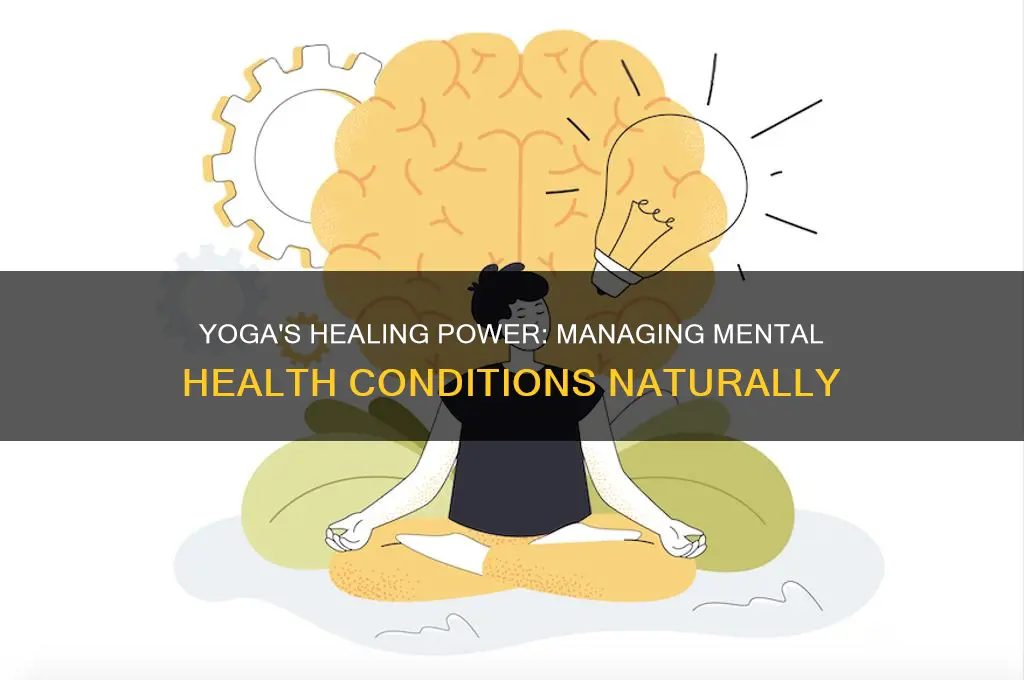
Yoga, an ancient practice combining physical postures, breathing techniques, and meditation, has gained recognition as a complementary therapy for various mental health conditions. Research suggests that yoga can be beneficial in managing symptoms of anxiety disorders, depression, post-traumatic stress disorder (PTSD), and even attention-deficit/hyperactivity disorder (ADHD). By promoting mindfulness, reducing stress hormones, and enhancing emotional regulation, yoga helps individuals cultivate a sense of calm and improve their overall mental well-being. Its holistic approach addresses both the mind and body, making it a valuable tool in the treatment and prevention of several mental illnesses.
| Characteristics | Values |
|---|---|
| Anxiety Disorders | Yoga reduces symptoms of generalized anxiety disorder (GAD) by promoting relaxation and mindfulness. |
| Depression | Regular yoga practice can alleviate depressive symptoms by increasing serotonin levels and reducing cortisol. |
| Post-Traumatic Stress Disorder (PTSD) | Yoga helps manage PTSD symptoms by improving emotional regulation and reducing hyperarousal. |
| Stress | Yoga lowers stress levels through deep breathing, meditation, and physical postures. |
| Attention Deficit Hyperactivity Disorder (ADHD) | Yoga enhances focus and reduces impulsivity in individuals with ADHD. |
| Insomnia | Yoga improves sleep quality by calming the mind and relaxing the body. |
| Bipolar Disorder | Yoga supports mood stabilization and reduces the severity of mood swings. |
| Obsessive-Compulsive Disorder (OCD) | Yoga helps reduce obsessive thoughts and compulsive behaviors through mindfulness practices. |
| Schizophrenia | Yoga complements treatment by reducing stress and improving overall well-being. |
| Eating Disorders | Yoga promotes body awareness and self-acceptance, aiding recovery from eating disorders. |
| Burnout | Yoga alleviates burnout symptoms by restoring energy and reducing emotional exhaustion. |
| Chronic Pain | Yoga reduces pain perception and improves mental resilience in individuals with chronic pain. |
| Substance Abuse | Yoga supports recovery by reducing cravings and improving emotional regulation. |
| Mild Cognitive Impairment | Yoga enhances cognitive function and memory in individuals with mild cognitive impairment. |
Explore related products


What You'll Learn

Anxiety and Stress Reduction
Yoga's ability to reduce anxiety and stress is rooted in its unique combination of physical postures, breath control, and mindfulness. Studies show that regular yoga practice can lower cortisol levels, the body’s primary stress hormone, by engaging the parasympathetic nervous system, which promotes relaxation. For instance, a 2018 meta-analysis published in the *Journal of Clinical Psychology* found that participants who practiced yoga for 60–90 minutes, three times a week, experienced significant reductions in anxiety symptoms compared to control groups. This suggests that consistency and duration are key factors in achieving measurable benefits.
Consider the practical application of yoga for stress reduction: start with simple poses like Child’s Pose or Forward Fold, which activate the body’s relaxation response. Pair these with deep, diaphragmatic breathing—inhale for a count of four, hold for four, exhale for six—to further calm the mind. For those with busy schedules, even 10–15 minutes of daily practice can yield noticeable improvements. Apps like *Insight Timer* or *YogaGlo* offer guided sessions tailored to stress relief, making it accessible for beginners. However, avoid overexertion; yoga should feel soothing, not strenuous, especially when managing anxiety.
Comparatively, yoga offers a holistic approach to stress reduction that differs from traditional interventions like medication or therapy. While medications like SSRIs target chemical imbalances, yoga addresses the mind-body connection, fostering resilience to stressors over time. Similarly, therapy focuses on cognitive reframing, whereas yoga emphasizes embodied awareness—a tactile way to "feel" calm rather than just think it. This makes yoga particularly effective for individuals who struggle with verbalizing their emotions or prefer movement-based practices.
A cautionary note: yoga is not a one-size-fits-all solution. For those with severe anxiety disorders, it should complement, not replace, professional treatment. Additionally, certain poses or classes may trigger discomfort if they feel too intense or competitive. Opt for restorative or Yin yoga styles, which use props and longer holds to encourage deep relaxation. Finally, consistency is more important than intensity; daily micro-practices, like a 5-minute breathing exercise, can be just as impactful as longer sessions.
In conclusion, yoga’s efficacy in reducing anxiety and stress lies in its ability to synchronize physical movement, breath, and mindfulness. By incorporating specific poses, breathing techniques, and mindful practices into a regular routine, individuals can cultivate a sustainable tool for managing daily stressors. Whether practiced for 10 minutes or an hour, yoga offers a tangible, accessible way to reclaim calm in an often chaotic world.
Empowering Middle Schoolers: Practical Tips for Boosting Mental Health
You may want to see also
Explore related products


Depression Symptom Management
Yoga's ability to modulate the hypothalamic-pituitary-adrenal (HPA) axis, a key player in stress response, makes it a promising adjunctive therapy for depression symptom management. Chronic stress, a common precursor to depression, leads to prolonged cortisol release, disrupting neuroendocrine balance. Studies show that regular yoga practice, particularly styles emphasizing mindfulness and breath control (pranayama), reduces cortisol levels. A 2017 meta-analysis in the *Journal of Psychiatric Practice* found that participants practicing yoga for 60-90 minutes, 3-5 times weekly, experienced significant decreases in depressive symptoms compared to control groups. This suggests a direct link between yoga's stress-reducing mechanisms and its efficacy in alleviating depression.
While medication and therapy remain cornerstones of depression treatment, yoga offers a complementary approach by addressing the mind-body connection. Unlike passive interventions, yoga actively engages individuals in self-regulation. Poses (asanas) like forward folds and restorative postures stimulate the parasympathetic nervous system, promoting relaxation. Breathwork techniques, such as diaphragmatic breathing, increase oxygenation and reduce hyperventilation, common in anxious depression. Incorporating yoga into a treatment plan requires personalization: gentle Hatha or Yin yoga suits beginners or those with fatigue, while Vinyasa or Power yoga may benefit individuals seeking more dynamic movement.
Consider the case of a 35-year-old woman with treatment-resistant depression. After adding 45 minutes of daily Iyengar yoga, focusing on alignment and precision, she reported improved sleep quality and reduced rumination within six weeks. Her therapist noted increased emotional resilience during sessions. This example highlights yoga's potential to enhance traditional treatments, particularly in cases where standard interventions fall short. However, it's crucial to approach yoga as a supplement, not a replacement, for evidence-based therapies.
Implementing yoga for depression management requires practical considerations. Start with short, guided sessions (15-20 minutes) to build consistency. Use props like blocks and straps to modify poses, ensuring accessibility for all fitness levels. Avoid overexertion, especially in individuals experiencing depressive fatigue. Online platforms or local studios offer specialized classes for mental health, often led by instructors trained in trauma-informed practices. Tracking progress through mood journals can help individuals and clinicians assess the impact of yoga on symptom severity over time.
In conclusion, yoga's multifaceted approach—combining physical movement, breath control, and mindfulness—positions it as a valuable tool in depression symptom management. Its ability to regulate stress responses, foster self-awareness, and complement existing treatments makes it a compelling option for individuals seeking holistic support. By tailoring practices to individual needs and integrating them thoughtfully into broader treatment plans, yoga can contribute meaningfully to the journey toward mental well-being.
Building Resilience: How Legos Enhance Mental Health and Well-being
You may want to see also
Explore related products



PTSD and Trauma Healing
Post-traumatic stress disorder (PTSD) often traps survivors in a cycle of hypervigilance, flashbacks, and emotional numbness, making it difficult to feel safe in their own bodies. Yoga intervenes by recalibrating the nervous system, offering a somatic pathway to healing. Unlike talk therapy, which engages the cognitive mind, yoga works through the body, helping individuals reconnect with physical sensations without fear. Practices like grounding poses (Mountain Pose, Child’s Pose) and mindful breathing activate the parasympathetic nervous system, counteracting the fight-or-flight response common in PTSD. For instance, a 2018 study in the *Journal of Traumatic Stress* found that veterans practicing yoga twice weekly for six weeks reported reduced hyperarousal symptoms and improved sleep.
To integrate yoga into trauma recovery, start with short, gentle sessions (15–20 minutes) focused on breathwork and static poses. Avoid intense flows or competitive environments, as these can trigger overwhelm. Incorporate props like blankets or blocks to enhance comfort and control. For example, in Child’s Pose, encourage the use of a bolster to support the forehead, fostering a sense of safety. Pair physical practice with trauma-informed language: instructors should avoid surprises, offer choices, and emphasize consent (e.g., “If it feels okay, you can…”). This approach respects the survivor’s autonomy and rebuilds trust in bodily experiences.
Comparing yoga to traditional PTSD treatments highlights its unique value. While medications like SSRIs target symptom management, yoga addresses the root of trauma by fostering embodiment—the ability to inhabit one’s body without distress. Similarly, cognitive-behavioral therapy (CBT) focuses on reframing thoughts, but yoga complements this by regulating the physiological responses that often drive traumatic reactions. A 2014 study in *Psychiatric Research* demonstrated that trauma-sensitive yoga reduced PTSD symptoms by 30% more than CBT alone, underscoring its role as a holistic adjunct therapy.
Practitioners should be mindful of potential triggers. Dynamic movements or deep stretches might inadvertently activate trauma responses, so prioritize stillness and predictability. For instance, holding a seated forward fold for several breaths can help release tension without overwhelming the system. Encourage journaling after sessions to process emotions that arise, bridging the somatic and cognitive aspects of healing. Over time, as the body learns to feel safe, more complex practices can be introduced, but always at the survivor’s pace.
In conclusion, yoga for PTSD is not about achieving poses but about reclaiming the body as a source of strength and peace. By combining breath, movement, and mindfulness, it offers a non-invasive, empowering tool for trauma survivors. Whether practiced in a studio or at home, its adaptability makes it accessible to diverse populations, from combat veterans to survivors of interpersonal violence. With consistent, trauma-informed guidance, yoga can transform the body’s response to stress, paving the way for deeper emotional and psychological healing.
Media's Role in Shattering Mental Health Stigma: Strategies for Change
You may want to see also
Explore related products




ADHD Focus Improvement
Yoga's structured movements and breath control can significantly enhance focus and concentration in individuals with ADHD. The practice engages multiple senses simultaneously, providing the brain with the stimulation it craves while teaching it to filter out distractions. For instance, holding a pose like Tree Pose requires balance, coordination, and mental focus, effectively training the mind to stay present. Studies suggest that regular yoga practice, even as little as 20 minutes daily, can improve attention span and reduce hyperactivity in both children and adults with ADHD.
Incorporating specific yoga techniques can amplify these benefits. Pranayama, or yogic breathing, is particularly effective. Techniques like alternate nostril breathing (Nadi Shodhana) balance the brain’s hemispheres, promoting mental clarity. For children, make it playful: use a feather to track their breath or have them imagine blowing out candles. Adults might benefit from a more structured approach, such as counting breaths or using a guided meditation app. Pairing these practices with mindfulness exercises, like focusing on the sensation of each inhale and exhale, further enhances concentration.
While yoga is beneficial, it’s essential to tailor the practice to individual needs. For hyperactive individuals, dynamic styles like Vinyasa or Power Yoga can help burn off excess energy before settling into focus-oriented poses. Conversely, those with inattentive ADHD may benefit from slower, more meditative practices like Yin or Restorative Yoga. Consistency is key—aim for 3–4 sessions per week, each lasting 20–30 minutes. Parents or caregivers can integrate yoga into daily routines, such as starting the day with Sun Salutations or ending it with a calming forward fold like Child’s Pose.
One often-overlooked aspect is the role of environment. Creating a dedicated, clutter-free space for yoga can minimize distractions and signal to the brain that it’s time to focus. Use props like blocks or straps to modify poses, ensuring comfort and confidence. For children, incorporate sensory tools like textured mats or soft music. Adults might find that journaling after practice helps track progress and reinforces mindfulness. Combining yoga with other ADHD management strategies, such as medication or therapy, can create a holistic approach to improving focus and overall well-being.
Finally, it’s crucial to manage expectations. Yoga is not a cure for ADHD but a complementary tool that builds focus over time. Results vary, and patience is essential. Encourage self-compassion, especially on days when concentration feels elusive. Celebrate small victories, like maintaining focus for an extra minute or mastering a new pose. By integrating yoga into a consistent routine, individuals with ADHD can cultivate a calmer, more focused mind, improving their ability to navigate daily challenges with greater ease.
Healing Through Support: Mental Health Initiatives Aid School Shooting Survivors
You may want to see also
Explore related products


Insomnia and Sleep Quality
Insomnia affects up to 30% of adults globally, disrupting not just sleep but overall mental and physical health. Yoga, with its focus on relaxation and mindfulness, has emerged as a promising intervention. Studies suggest that consistent yoga practice can improve sleep quality by reducing cortisol levels, calming the nervous system, and promoting a state of relaxation conducive to rest. For instance, a 2019 study published in the *Journal of Clinical Sleep Medicine* found that participants who practiced yoga for 20–30 minutes daily experienced significant improvements in sleep onset latency and total sleep time compared to control groups.
To harness yoga’s benefits for insomnia, focus on restorative poses and breathwork. Start with *Legs-Up-the-Wall* (Viparita Karani) for 5–10 minutes to reduce anxiety and improve circulation. Follow with *Child’s Pose* (Balasana) to release tension in the back and shoulders. Incorporate *Pranayama* techniques like *Nadi Shodhana* (alternate nostril breathing) for 5 minutes to balance the autonomic nervous system. Avoid stimulating poses like inversions or intense flows close to bedtime, as they may increase alertness. Consistency is key—aim for a nightly routine at least 1–2 hours before sleep to signal to your body that it’s time to wind down.
Comparing yoga to other sleep interventions highlights its unique advantages. Unlike sleep medications, yoga addresses the root causes of insomnia, such as stress and hyperarousal, without side effects. While cognitive-behavioral therapy for insomnia (CBT-I) is highly effective, it requires specialized training and time. Yoga, on the other hand, is accessible, cost-effective, and can be self-taught through online resources or classes. However, yoga may not be a standalone solution for severe insomnia cases, and combining it with CBT-I or medical advice is often recommended for comprehensive care.
For older adults, who are disproportionately affected by insomnia due to age-related changes in sleep architecture, yoga offers a gentle yet effective solution. A 2018 study in the *International Journal of Geriatric Psychiatry* found that seniors practicing yoga for 12 weeks reported improved sleep efficiency and reduced nighttime awakenings. Modifications, such as using props like blankets or chairs for support, make yoga accessible for this demographic. Caregivers and family members can also benefit from guiding older adults through simple routines, fostering both physical and emotional well-being.
Incorporating yoga into your sleep hygiene routine requires mindfulness and patience. Begin with short sessions and gradually increase duration as your body adapts. Track your progress using a sleep diary to note changes in sleep quality, mood, and energy levels. Remember, yoga is not a quick fix but a holistic practice that cultivates long-term resilience against insomnia. By integrating it into your lifestyle, you can transform your relationship with sleep, moving from restlessness to restorative rest.
Occupational Therapy: Unlocking Mental Wellness Through Purposeful Activities
You may want to see also
Frequently asked questions
Yes, yoga can help reduce symptoms of anxiety disorders by promoting relaxation, improving mindfulness, and regulating the body’s stress response through breathing techniques and gentle movement.
A: Yes, yoga can be beneficial for depression by boosting mood, increasing serotonin levels, and fostering a sense of calm and well-being through physical postures, meditation, and breath control.
Yes, yoga can help manage PTSD by reducing hyperarousal, improving emotional regulation, and encouraging grounding techniques through mindful movement and breathwork.
Yes, yoga can help individuals with ADHD by improving focus, reducing restlessness, and enhancing self-regulation through structured poses, breathing exercises, and mindfulness practices.
Yes, yoga can improve sleep quality by reducing stress, calming the nervous system, and promoting relaxation through restorative poses, meditation, and bedtime routines.