Lucas Bennett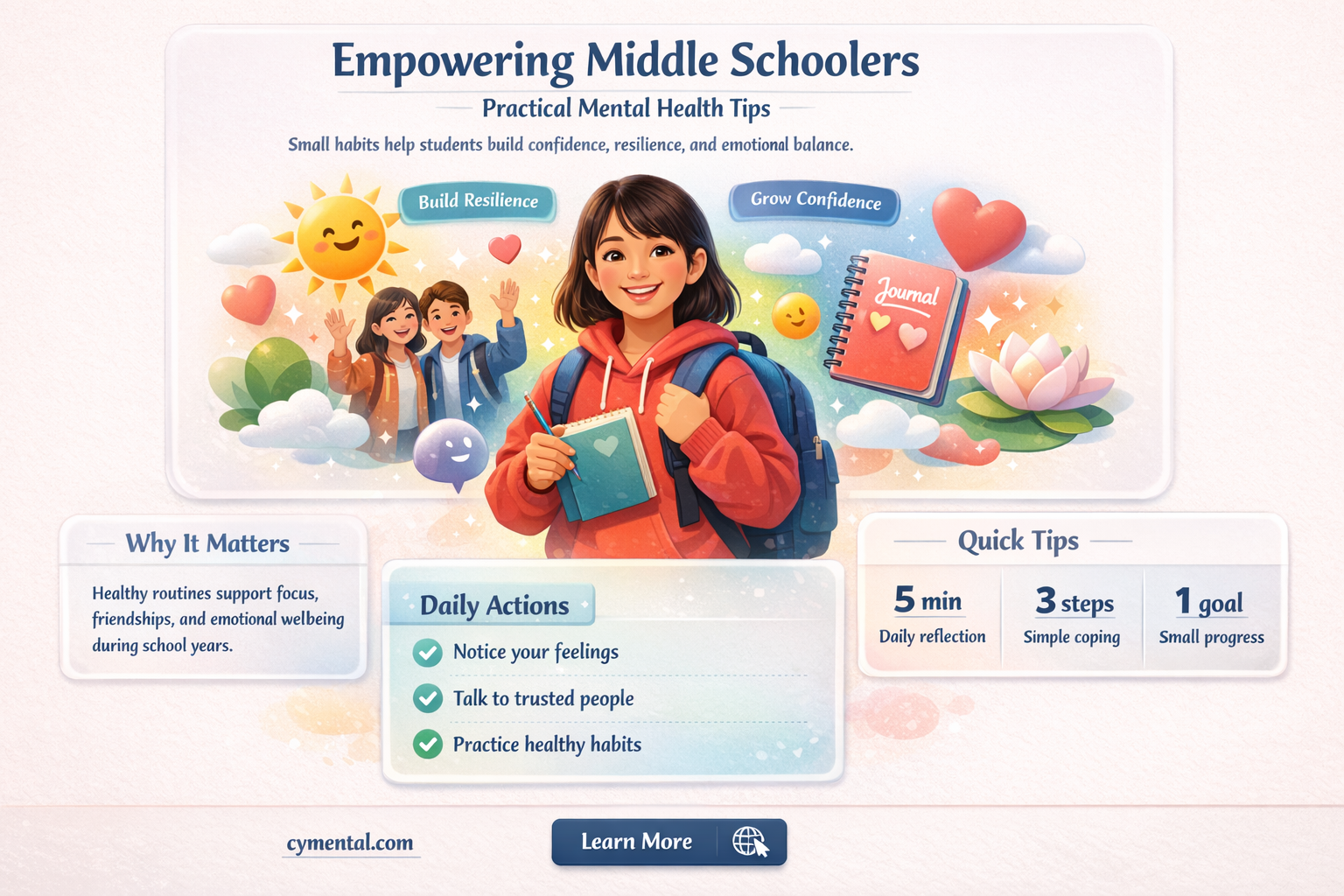
Middle school is a pivotal time for adolescents, marked by significant physical, emotional, and social changes, which can often impact their mental health. As students navigate academic pressures, peer relationships, and self-discovery, it becomes crucial to equip them with tools and strategies to support their well-being. By fostering open conversations about mental health, encouraging healthy habits like regular exercise and adequate sleep, and teaching stress management techniques, middle schoolers can develop resilience and coping skills. Additionally, creating a supportive environment at home and school, where they feel safe to express their feelings and seek help, plays a vital role in promoting their mental health. Empowering students with these resources not only helps them thrive during these formative years but also lays a foundation for long-term emotional and psychological well-being.
Explore related products

$7.97 $18.99


What You'll Learn
- Practice Mindfulness Daily: Spend 5-10 minutes daily on breathing exercises or meditation to reduce stress
- Stay Physically Active: Engage in regular exercise like walking, dancing, or sports to boost mood
- Limit Screen Time: Set boundaries on social media and screens to avoid overwhelm and negativity
- Build a Support System: Connect with friends, family, or a trusted adult for emotional support
- Prioritize Sleep: Aim for 9-11 hours of sleep nightly to improve focus and emotional well-being

Practice Mindfulness Daily: Spend 5-10 minutes daily on breathing exercises or meditation to reduce stress
Middle schoolers face a whirlwind of academic, social, and emotional demands, making stress an unwelcome but common companion. Amid this chaos, mindfulness offers a simple yet powerful tool to regain control. By dedicating just 5-10 minutes daily to breathing exercises or meditation, students can activate their body’s relaxation response, counteracting the physiological effects of stress. This practice isn’t about emptying the mind but training it to observe thoughts without judgment, fostering resilience in the face of pressure.
To begin, find a quiet space where distractions are minimal. Sit comfortably, close your eyes, and focus on your breath. Inhale deeply through your nose for a count of four, hold for a count of four, then exhale slowly through your mouth for a count of six. This 4-4-6 pattern slows the heart rate and signals to the brain that it’s safe to relax. If your mind wanders—and it will—gently bring your attention back to your breath. Consistency is key; practicing at the same time daily, such as right after waking up or before bed, helps build a habit.
Skeptics might question whether such a brief practice can yield meaningful results. Research, however, supports its effectiveness. Studies show that even 5-10 minutes of daily mindfulness can reduce cortisol levels, improve focus, and enhance emotional regulation—critical benefits for middle schoolers navigating hormonal changes and academic challenges. Apps like Calm or Headspace offer guided meditations tailored for teens, making the practice accessible and engaging.
One practical tip is to pair mindfulness with existing routines. For instance, use the first five minutes of homework time to center yourself, or practice deep breathing while walking to class. For those who find stillness difficult, incorporating movement—like mindful walking or stretching—can make the practice more enjoyable. The goal isn’t perfection but progress, so start small and gradually increase the duration as it feels natural.
In a world that glorifies busyness, mindfulness reminds middle schoolers that slowing down isn’t laziness—it’s self-care. By carving out a few minutes daily to reconnect with their breath, they cultivate a sense of calm that extends beyond the practice itself. Over time, this habit becomes a mental anchor, helping them navigate stress with greater ease and clarity. It’s a small investment with big returns, equipping them with a lifelong skill to protect their mental health.
Social Media's Role in Supporting Mental Health and Well-being
You may want to see also
Explore related products

$14.69 $15.97


Stay Physically Active: Engage in regular exercise like walking, dancing, or sports to boost mood
Physical activity isn’t just about building muscles or losing weight—it’s a powerful tool for middle schoolers to manage stress, improve focus, and stabilize emotions. Studies show that even 30 minutes of moderate exercise daily can increase serotonin levels, the brain chemical linked to mood regulation. For teens aged 11 to 14, this could mean a brisk walk during lunch, a dance session after school, or joining a soccer team. The key is consistency, not intensity. Skipping a day won’t derail progress, but making it a habit can transform how a student handles daily pressures.
Consider the variety of options available to stay active. Dancing, for instance, combines creativity with movement, allowing self-expression while releasing endorphins. Sports, whether team-based or individual, foster social connections and teach resilience. Even walking to school or taking the stairs instead of the elevator counts. The goal is to find an activity that feels less like a chore and more like a break. For middle schoolers juggling academics and social life, this approach ensures exercise becomes a natural part of their routine, not an added burden.
However, overdoing it can backfire. Pushing too hard or comparing oneself to peers can lead to burnout or negative self-image. Middle schoolers should aim for balance—focus on how their body feels during and after exercise, not just the calories burned or miles logged. Parents and educators can help by encouraging participation without emphasizing performance. For example, instead of asking, “Did you win the game?” try, “Did you have fun?” This shifts the focus from outcomes to enjoyment, reinforcing a healthy mindset.
Practical tips can make staying active more achievable. Set small, achievable goals, like walking 10,000 steps a day or mastering a new dance move weekly. Use technology, such as fitness trackers or workout apps, to track progress and stay motivated. Incorporate movement into daily tasks—study breaks can include jumping jacks or stretching. Schools can play a role too, by offering diverse physical education classes or after-school clubs that cater to different interests. By making exercise accessible and enjoyable, middle schoolers are more likely to stick with it and reap the mental health benefits.
Supporting Your Girlfriend’s Mental Health: Practical Ways to Show You Care
You may want to see also
Explore related products


Limit Screen Time: Set boundaries on social media and screens to avoid overwhelm and negativity
Excessive screen time has been linked to increased anxiety, depression, and sleep disturbances in middle schoolers, according to a 2021 study by the American Psychological Association. The constant stream of information, curated highlights, and pressure to compare oneself to others online can overwhelm developing brains. Setting clear boundaries around social media and screen use isn’t about deprivation—it’s about creating space for healthier habits and a more balanced mindset.
Start by auditing your daily screen habits. Track how much time you spend on social media, gaming, and streaming each day for a week. Most devices have built-in screen time trackers, or you can use apps like Screen Time (iOS) or Digital Wellbeing (Android). Aim to reduce total screen time to 2 hours per day, as recommended by the World Health Organization for adolescents. For social media, limit usage to 30 minutes per platform daily, focusing on meaningful interactions rather than mindless scrolling.
Designate tech-free zones and times in your daily routine. For example, keep phones out of bedrooms to improve sleep quality—the blue light from screens interferes with melatonin production, disrupting sleep patterns. Establish a "no screens during meals" rule to encourage face-to-face conversations and mindful eating. Similarly, create a 1-hour buffer before bed without screens to signal to your brain that it’s time to wind down. Use this time for reading, journaling, or light stretching instead.
Replacing screen time with offline activities is key to making boundaries stick. Swap Instagram scrolling for drawing, TikTok binges for playing an instrument, or gaming sessions for outdoor sports. Joining a club or volunteering can also provide social connections without the pressure of curated online personas. For example, a 2020 study found that middle schoolers who spent more time on creative hobbies reported higher levels of life satisfaction and lower stress.
Resistance to limiting screen time is normal, especially when peers are constantly online. Start small—reduce screen time by 15 minutes daily and gradually increase. Use apps like Freedom or Cold Turkey to block distracting sites during study or family time. Involve parents or guardians in setting boundaries, such as using family tech agreements to align on rules. Remember, the goal isn’t to eliminate screens entirely but to use them intentionally, ensuring they don’t dominate your mental space. By reclaiming time from screens, you create room for activities that nurture your mental health and well-being.
Counseling Conversations: Effective Therapy for Mental Health Recovery and Wellness
You may want to see also
Explore related products


$14.99

$11.56 $18.99


Build a Support System: Connect with friends, family, or a trusted adult for emotional support
Middle schoolers often face a whirlwind of emotions and challenges, from academic pressures to social dynamics. Building a support system can act as a buffer against stress, providing a safety net during turbulent times. Start by identifying who in your life makes you feel heard and valued—whether it’s a friend who listens without judgment, a family member who offers steady advice, or a teacher who genuinely cares. These relationships don’t need to be perfect; they just need to be reliable. For instance, a daily check-in with a friend during lunch or a weekly conversation with a parent can create consistency in emotional support. The key is to foster connections that feel safe and reciprocal, where both parties can share vulnerabilities without fear of dismissal.
Consider the quality of these interactions over quantity. A single deep conversation with a trusted adult can be more impactful than dozens of superficial exchanges. For example, if you’re struggling with anxiety, confiding in a school counselor or a favorite aunt might provide both immediate relief and long-term strategies. Similarly, friends who share similar experiences can offer unique perspectives and solidarity. However, be mindful of oversharing with peers who might not have the emotional maturity to handle sensitive topics. Instead, balance peer support with guidance from adults who can provide wisdom and resources. Practical tip: Keep a small list of go-to people for different needs—one for academic stress, one for family issues, and one for social struggles.
Building a support system isn’t just about receiving help; it’s also about giving it. Middle schoolers can strengthen their connections by being active listeners and showing empathy. For instance, if a friend is going through a tough time, ask open-ended questions like, “How are you feeling about that?” rather than offering quick fixes. This not only deepens the bond but also reinforces the idea that support is a two-way street. Caution: Avoid becoming the sole emotional crutch for someone else, as this can lead to burnout. Set boundaries by communicating when you’re available to talk and when you need space.
Finally, don’t underestimate the power of non-verbal support. Sometimes, just being in the presence of someone you trust can provide comfort without words. For example, studying alongside a supportive friend or spending quiet time with a family member can reduce feelings of isolation. Incorporate these moments into your routine—perhaps a weekly movie night with a sibling or a walk with a parent after school. Over time, these small, consistent actions build resilience and remind you that you’re not alone. Conclusion: A strong support system isn’t built overnight, but by intentionally nurturing these relationships, middle schoolers can create a foundation of emotional stability that lasts well beyond their adolescent years.
Martial Arts and Mental Health: Unlocking Inner Peace and Resilience
You may want to see also
Explore related products


Prioritize Sleep: Aim for 9-11 hours of sleep nightly to improve focus and emotional well-being
Middle schoolers often underestimate the power of a good night's sleep, but it’s one of the most effective tools for boosting mental health. The National Sleep Foundation recommends 9–11 hours of sleep for children aged 11–13, yet many fall short due to homework, screens, or social pressures. This deficit doesn’t just cause tiredness—it disrupts focus, amplifies mood swings, and weakens stress resilience. Prioritizing sleep isn’t lazy; it’s a strategic investment in emotional and cognitive well-being.
To achieve this, start by setting a consistent bedtime and wake-up time, even on weekends. For example, if school starts at 8:00 a.m., aim for lights out by 9:30 p.m. at the latest. Create a calming pre-sleep routine: dim lights, avoid screens at least an hour before bed, and incorporate relaxing activities like reading or journaling. Keep the bedroom cool, dark, and quiet—think of it as a sanctuary for rest, not a second study hall or gaming zone.
One common pitfall is the misconception that "catching up" on sleep during weekends undoes weekday deficits. While extra rest helps, it doesn’t fully reverse the cumulative effects of chronic sleep loss. Instead, treat sleep as a daily non-negotiable, like brushing teeth or eating breakfast. Parents and caregivers can support this by modeling healthy sleep habits and limiting late-night activities that interfere with bedtime.
The benefits of adequate sleep are immediate and measurable. Studies show that middle schoolers who consistently get 9–11 hours of sleep perform better academically, handle stress more effectively, and report higher levels of happiness. For instance, a student who prioritizes sleep might find it easier to concentrate during math class or feel less overwhelmed by a looming project. Sleep isn’t just downtime—it’s when the brain processes emotions, consolidates memories, and repairs itself.
In a world that glorifies busyness, prioritizing sleep can feel countercultural. But for middle schoolers navigating the challenges of adolescence, it’s a simple yet transformative act of self-care. By treating sleep as a priority, not an afterthought, they lay the foundation for better mental health, sharper focus, and greater emotional resilience. The question isn’t whether they can afford the time—it’s whether they can afford to skip it.
Hop to Happiness: How Rabbits Can Boost Your Mental Health
You may want to see also
Frequently asked questions
Middle schoolers can improve their mental health by establishing consistent daily habits like getting 8–10 hours of sleep, eating balanced meals, and engaging in regular physical activity. Additionally, setting aside time for hobbies, mindfulness, or journaling can help reduce stress and promote emotional well-being.
Social connection is crucial for mental health. Middle schoolers should spend quality time with friends and family, join clubs or teams, and communicate openly with trusted adults. Building a supportive network helps reduce feelings of loneliness and boosts self-esteem.
Middle schoolers can manage stress and anxiety by practicing relaxation techniques like deep breathing, meditation, or yoga. Breaking tasks into smaller steps, setting realistic goals, and limiting screen time before bed can also help. Talking to a counselor or trusted adult is another effective way to cope.
Setting boundaries helps middle schoolers protect their mental and emotional well-being. They can do this by learning to say "no" when overwhelmed, limiting time spent on social media, and prioritizing activities that bring them joy. Communicating their needs clearly to others is also key.