Lucas Bennett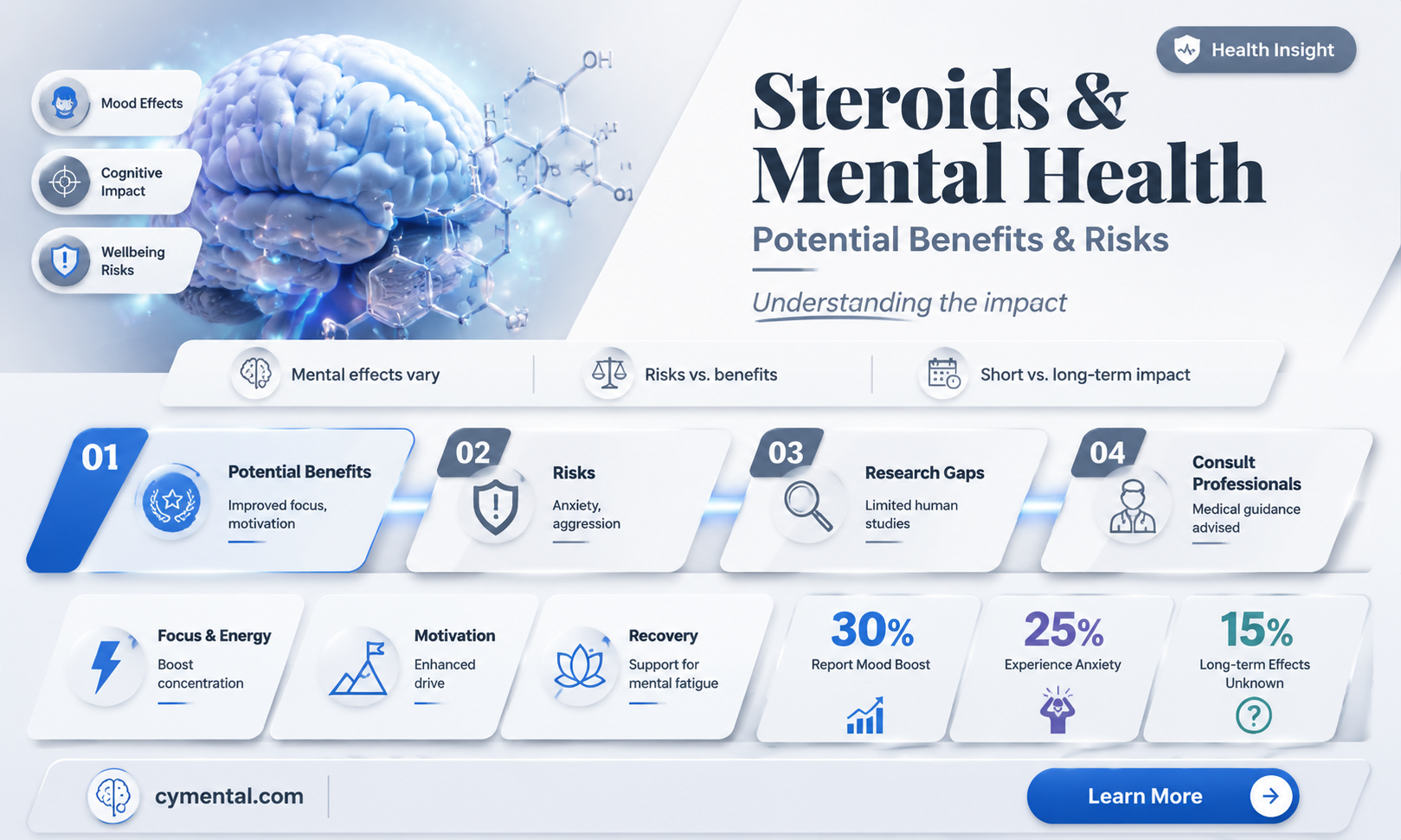
Steroids, commonly associated with physical performance enhancement, have sparked interest in their potential impact on mental health. While primarily known for their muscle-building properties, certain types of steroids, such as corticosteroids and anabolic-androgenic steroids, have been studied for their effects on mood, cognition, and overall mental well-being. Some research suggests that corticosteroids, often prescribed for inflammatory conditions, may alleviate symptoms of depression and anxiety in some individuals. Conversely, anabolic steroids, frequently misused in athletic and bodybuilding contexts, have been linked to mood swings, aggression, and even depressive episodes. This duality raises important questions about the role of steroids in mental health treatment and the potential risks associated with their use, prompting further investigation into their psychological effects and therapeutic applications.
| Characteristics | Values |
|---|---|
| Short-Term Effects | Steroids (corticosteroids) can provide rapid relief from symptoms of depression, anxiety, and mood disorders in some individuals due to their anti-inflammatory and neuroactive properties. |
| Mechanism of Action | Steroids modulate neurotransmitter systems (e.g., serotonin, dopamine) and reduce inflammation in the brain, which may improve mood and cognitive function. |
| Conditions Treated | Used in treatment-resistant depression, bipolar disorder, and psychotic depression when other treatments fail. |
| Limitations | Not a first-line treatment for mental health due to potential side effects and lack of long-term efficacy. |
| Side Effects | Short-term use may cause mood swings, insomnia, irritability, and increased anxiety. Long-term use can lead to severe psychiatric symptoms like mania, psychosis, and dependency. |
| Research Findings | Studies show mixed results; some indicate temporary improvement in mood, while others highlight risks of psychiatric adverse effects. |
| Alternative Treatments | Preferred options include antidepressants, therapy, lifestyle changes, and non-steroidal anti-inflammatory drugs (NSAIDs) for inflammation-related mental health issues. |
| Medical Supervision | Steroids for mental health should only be used under strict medical supervision due to risks and limited evidence of long-term benefits. |
| Population-Specific Risks | Higher risks for individuals with pre-existing psychiatric conditions, adolescents, and those with a history of substance abuse. |
| Conclusion | Steroids may offer short-term mental health benefits in specific cases but are not a safe or effective long-term solution due to significant risks and side effects. |
Explore related products


What You'll Learn
- Steroids and mood enhancement: Potential benefits for depression and anxiety symptoms
- Risks of steroid use: Psychological side effects like aggression and mood swings
- Steroids in therapy: Limited medical use for specific mental health conditions
- Performance anxiety: Mental health impact of steroid use in athletes
- Withdrawal effects: Mental health challenges during steroid cessation and recovery

Steroids and mood enhancement: Potential benefits for depression and anxiety symptoms
Steroids, often associated with physical performance enhancement, have a lesser-known but intriguing relationship with mental health. Emerging research suggests that certain types of steroids, particularly glucocorticoids and some anabolic steroids, may influence mood and alleviate symptoms of depression and anxiety. This potential dual role—physical and psychological—opens up new avenues for understanding and treating mental health disorders.
Consider the case of glucocorticoids, a class of steroids naturally produced by the body in response to stress. Synthetic versions, such as prednisone, are commonly prescribed for inflammatory conditions but have also shown mood-enhancing effects. Studies indicate that low-dose glucocorticoids can reduce symptoms of depression in some individuals, particularly those with treatment-resistant depression. For instance, a 2020 study published in *Psychoneuroendocrinology* found that a 5-10 mg daily dose of prednisone significantly improved depressive symptoms in patients who had not responded to traditional antidepressants. However, this approach is not without risks; prolonged use of glucocorticoids can lead to side effects like weight gain, insomnia, and mood swings, necessitating careful monitoring by healthcare providers.
Anabolic steroids, typically linked to muscle growth, also warrant attention in the context of mental health. While their use is controversial and often illegal without a prescription, some users report improved mood and reduced anxiety. This phenomenon may be attributed to the steroids’ ability to increase dopamine levels, a neurotransmitter associated with pleasure and reward. However, the psychological benefits are often overshadowed by severe risks, including aggression, dependency, and long-term brain changes. For example, a 2018 study in *Biological Psychiatry* highlighted that while anabolic steroids may provide short-term mood enhancement, they can exacerbate anxiety and depression upon withdrawal, creating a dangerous cycle of use and relapse.
For those considering steroids as a potential adjunct to mental health treatment, it’s crucial to approach this option with caution and under professional guidance. Dosage precision is paramount; even slight variations can lead to vastly different outcomes. For glucocorticoids, starting with the lowest effective dose (e.g., 2.5-5 mg daily) and gradually tapering off can minimize side effects while maximizing benefits. Anabolic steroids, given their risks, should only be considered in controlled clinical settings, if at all. Additionally, combining steroids with traditional therapies, such as cognitive-behavioral therapy or SSRIs, may yield better results than relying on steroids alone.
In conclusion, while steroids show promise in enhancing mood and alleviating symptoms of depression and anxiety, their use is not a one-size-fits-all solution. The benefits must be weighed against potential risks, and treatment should be tailored to individual needs. As research progresses, steroids may emerge as a valuable tool in the mental health toolkit, but for now, they remain a complex and nuanced option requiring careful consideration and expert oversight.
Boost Mental Health, Shed Pounds: The Mind-Body Weight Loss Connection
You may want to see also
Explore related products


Risks of steroid use: Psychological side effects like aggression and mood swings
Steroids, particularly anabolic-androgenic steroids (AAS), are often associated with physical enhancements, but their psychological impact can be equally profound and far-reaching. While some users report improved mood and confidence initially, the risks of psychological side effects, such as aggression and mood swings, are well-documented and cannot be ignored. These effects can manifest even in individuals with no prior history of mental health issues, making them a critical consideration for anyone contemplating steroid use.
Consider the mechanism behind these psychological changes. Steroids alter the body’s hormone levels, particularly testosterone, which plays a significant role in regulating mood and behavior. Elevated testosterone levels can lead to increased irritability, impulsivity, and aggression, a phenomenon often referred to as "roid rage." For instance, a study published in *Psychotherapy and Psychosomatics* found that even short-term steroid use could induce manic or hypomanic episodes in some users. Adolescents and young adults, whose brains are still developing, are particularly vulnerable to these effects, as hormonal fluctuations during this period can exacerbate emotional instability.
To mitigate these risks, it’s essential to approach steroid use with caution, especially regarding dosage and duration. Medical professionals typically prescribe anabolic steroids at doses ranging from 5 to 60 mg/day for legitimate conditions like hormone deficiencies. However, non-medical users often exceed these amounts, sometimes consuming up to 100 times the recommended dose. Such high dosages significantly increase the likelihood of psychological side effects. If you’re considering steroids for performance or aesthetic reasons, consult a healthcare provider to understand the potential risks and explore safer alternatives.
Practical tips for managing psychological side effects include monitoring mood changes regularly and maintaining open communication with a trusted friend or therapist. Incorporating stress-reduction techniques, such as mindfulness or exercise, can also help stabilize emotions. However, if aggression or mood swings become severe, discontinuing steroid use under medical supervision is crucial. Remember, the temporary gains in physical appearance or performance are not worth the long-term damage to mental health.
In conclusion, while steroids may offer perceived mental health benefits like increased confidence, their psychological risks—particularly aggression and mood swings—are substantial and often unpredictable. Understanding these risks and taking proactive steps to minimize them is essential for anyone considering steroid use. Prioritize your mental well-being and explore holistic approaches to health that do not compromise your emotional stability.
Dogs and Mental Health: How Canines Provide Emotional Support and Healing
You may want to see also
Explore related products

$13.99 $16.95


Steroids in therapy: Limited medical use for specific mental health conditions
Steroids, often associated with physical performance enhancement, have a lesser-known role in mental health treatment. While not a first-line therapy, certain types of steroids, specifically glucocorticoids, have shown efficacy in treating specific mental health conditions under strict medical supervision. This application is highly specialized and limited to cases where conventional treatments have proven ineffective.
Example: In severe, treatment-resistant depression, low-dose dexamethasone (0.5 mg daily) has been explored as an adjunctive therapy. Studies suggest it can accelerate the antidepressant response when combined with traditional SSRIs, particularly in elderly patients over 65 who often exhibit slower responses to standard treatments.
Analysis: The mechanism behind this effect lies in glucocorticoids' ability to modulate the hypothalamic-pituitary-adrenal (HPA) axis, which is often dysregulated in depression. However, long-term use is contraindicated due to significant side effects like osteoporosis, immunosuppression, and metabolic disturbances.
Takeaway: Glucocorticoids offer a potential, albeit limited, tool for psychiatrists managing treatment-resistant depression, especially in older adults. Strict monitoring and short-term use are crucial to balance potential benefits against risks.
Another area of interest is the use of steroids in managing psychotic symptoms, particularly in conditions like schizophrenia. Here, the focus shifts to mineralocorticoid receptors, which play a role in stress response and cognitive function. Comparative Approach: Unlike glucocorticoids, which primarily act on glucocorticoid receptors, mineralocorticoid receptor agonists like spironolactone (typically used as a diuretic) have shown promise in reducing negative symptoms of schizophrenia, such as social withdrawal and apathy. This off-label use involves low doses (25-50 mg daily) and is often combined with antipsychotic medication.
Caution: While initial studies are encouraging, larger clinical trials are needed to establish safety and efficacy. Potential side effects include hyperkalemia, requiring regular electrolyte monitoring.
The application of steroids in mental health therapy highlights the complexity of the brain and the need for personalized treatment approaches. Descriptive Insight: Imagine a finely tuned orchestra where each musician represents a neurotransmitter or hormonal pathway. Steroids, in this analogy, act as a conductor who can temporarily adjust the tempo for specific sections, but prolonged intervention risks disrupting the entire symphony.
Practical Tip: Patients considering steroid therapy for mental health should engage in open dialogue with their psychiatrist, discussing potential benefits, risks, and alternative treatment options. Close monitoring of physical health parameters is essential throughout the treatment course.
Mental Health Support: A Key to Stable Housing Solutions
You may want to see also
Explore related products



Performance anxiety: Mental health impact of steroid use in athletes
Steroid use among athletes often aims to enhance physical performance, but its mental health implications, particularly performance anxiety, are less discussed yet profoundly impactful. Athletes under pressure to maintain peak performance may turn to anabolic steroids, believing they provide a competitive edge. However, the psychological toll can manifest as heightened anxiety, especially when results fall short of expectations. This anxiety is exacerbated by the fear of being outperformed, the pressure to justify steroid use, and the constant worry of detection. For instance, a study published in the *Journal of Sports Sciences* found that 60% of steroid-using athletes reported increased pre-competition anxiety compared to their non-using counterparts.
Consider the cycle of dependency that often accompanies steroid use. Athletes may start with low doses, such as 10–50 mg of Dianabol daily, to improve strength and endurance. Over time, tolerance builds, leading to higher doses and more frequent use. This escalation can create a psychological reliance, where athletes feel incapable of performing without steroids. The resulting performance anxiety becomes a self-fulfilling prophecy: fear of failure drives steroid use, which in turn amplifies anxiety. For younger athletes, aged 18–25, this cycle can be particularly damaging, as their brains are still developing, making them more susceptible to mood disorders and anxiety.
To mitigate performance anxiety in steroid-using athletes, a multi-faceted approach is essential. First, education is key. Athletes must understand the mental health risks associated with steroid use, including increased anxiety, depression, and aggression. Second, psychological support should be integrated into training programs. Cognitive-behavioral therapy (CBT) has proven effective in managing anxiety by challenging negative thought patterns and fostering healthier coping mechanisms. For example, athletes can practice mindfulness techniques, such as deep breathing or visualization, to reduce pre-competition jitters. Third, coaches and trainers should monitor athletes for signs of steroid abuse, such as sudden mood swings or obsessive behavior, and intervene early.
Comparing steroid-induced anxiety to other forms of performance anxiety reveals unique challenges. Unlike anxiety stemming from natural competition, steroid-related anxiety is often compounded by guilt, secrecy, and fear of consequences. For instance, a track athlete using steroids might experience anxiety not only about their race time but also about failing a drug test. This dual pressure distinguishes steroid-induced anxiety and requires tailored interventions. Support groups specifically for athletes dealing with substance abuse can provide a safe space to share experiences and strategies for managing anxiety.
In conclusion, while steroids may offer temporary physical gains, their mental health impact, particularly on performance anxiety, cannot be overlooked. Athletes must weigh the short-term benefits against the long-term psychological risks. By addressing the root causes of anxiety, implementing preventive measures, and offering targeted support, the athletic community can help mitigate the mental health toll of steroid use. Practical steps, such as setting realistic performance goals and fostering open dialogue about mental health, can empower athletes to compete without compromising their well-being.
Dogs as Healers: Boosting Mental Health Through Canine Companionship
You may want to see also
Explore related products


Withdrawal effects: Mental health challenges during steroid cessation and recovery
Steroids, particularly anabolic-androgenic steroids (AAS), are often associated with physical performance enhancement, but their impact on mental health is a double-edged sword. While some users report improved mood and confidence during use, cessation can trigger a cascade of mental health challenges. Withdrawal from steroids is not merely a physical ordeal; it’s a psychological battleground where mood swings, depression, anxiety, and even suicidal ideation can emerge. Understanding these withdrawal effects is crucial for anyone considering or undergoing steroid cessation, as it highlights the need for comprehensive support during recovery.
The psychological toll of steroid withdrawal stems from the body’s readjustment to natural hormone levels. During use, exogenous steroids suppress the body’s natural production of testosterone, leading to dependence. Upon cessation, hormone levels plummet, often below baseline, causing a condition known as hypogonadism. This hormonal imbalance can manifest as severe depression, irritability, and fatigue. For instance, a study published in *Psychotherapy and Psychosomatics* found that 32% of steroid users experienced clinical depression during withdrawal, with symptoms peaking 1–3 weeks after discontinuation. Practical tips for managing this phase include gradual tapering of steroid doses under medical supervision, rather than abrupt cessation, to minimize hormonal shock.
Anxiety is another common withdrawal symptom, often exacerbated by the physical changes users experience during recovery. Muscle loss, weight gain, and reduced physical performance can trigger body dysmorphia and low self-esteem, particularly in individuals who used steroids for aesthetic purposes. A comparative analysis of steroid users in the *Journal of Addiction Medicine* revealed that those who relied on steroids for body image enhancement were more likely to experience anxiety during withdrawal than those who used them for athletic performance. To mitigate this, incorporating therapy or counseling during cessation can help address underlying psychological dependencies and rebuild self-worth independent of physical appearance.
Suicidal ideation is perhaps the most alarming mental health challenge during steroid withdrawal, particularly in long-term users or those with pre-existing mental health conditions. The abrupt loss of the euphoric and confidence-boosting effects of steroids, coupled with hormonal fluctuations, can create a perfect storm for despair. A case study in the *American Journal of Psychiatry* documented a 28-year-old male bodybuilder who attempted suicide two weeks after discontinuing a high-dose steroid cycle (500 mg/week of testosterone enanthate). This underscores the importance of monitoring mental health closely during cessation, especially for high-risk individuals. Support groups, medication, and regular check-ins with mental health professionals can provide a safety net during this vulnerable period.
In conclusion, steroid withdrawal is not just a physical challenge but a mental health crisis waiting to be addressed. By recognizing the specific psychological symptoms associated with cessation—depression, anxiety, and suicidal ideation—individuals and healthcare providers can take proactive steps to ensure a safer recovery. Gradual tapering, therapy, and vigilant monitoring are not just recommendations; they are essential tools in navigating the mental health challenges of steroid cessation. Recovery is possible, but it requires a holistic approach that prioritizes both the body and the mind.
Fasting and Mental Health: Unlocking the Mind's Potential Through Abstinence
You may want to see also
Frequently asked questions
Steroids, particularly corticosteroids, can temporarily improve mood in some individuals due to their anti-inflammatory effects, but they are not a primary treatment for depression. Anabolic steroids may provide a short-term mood boost for some users, but they often lead to long-term mental health issues like mood swings, aggression, and depression.
Corticosteroids may be prescribed for conditions like severe depression with inflammation, but this is rare and not standard practice. Anabolic steroids are not prescribed for mental health and are illegal for non-medical use. Always consult a healthcare professional for appropriate mental health treatments.
Yes, anabolic steroids can cause or worsen mental health issues such as anxiety, depression, paranoia, and manic episodes. Prolonged use may lead to dependence and severe mood disorders. Corticosteroids can also cause psychological side effects like irritability, insomnia, and mood swings.
Steroids do not treat anxiety or stress and can actually worsen these conditions. Anabolic steroids may increase anxiety and aggression, while corticosteroids can cause restlessness and insomnia. Effective treatments for anxiety and stress include therapy, medication, and lifestyle changes, not steroids.