Madison Cole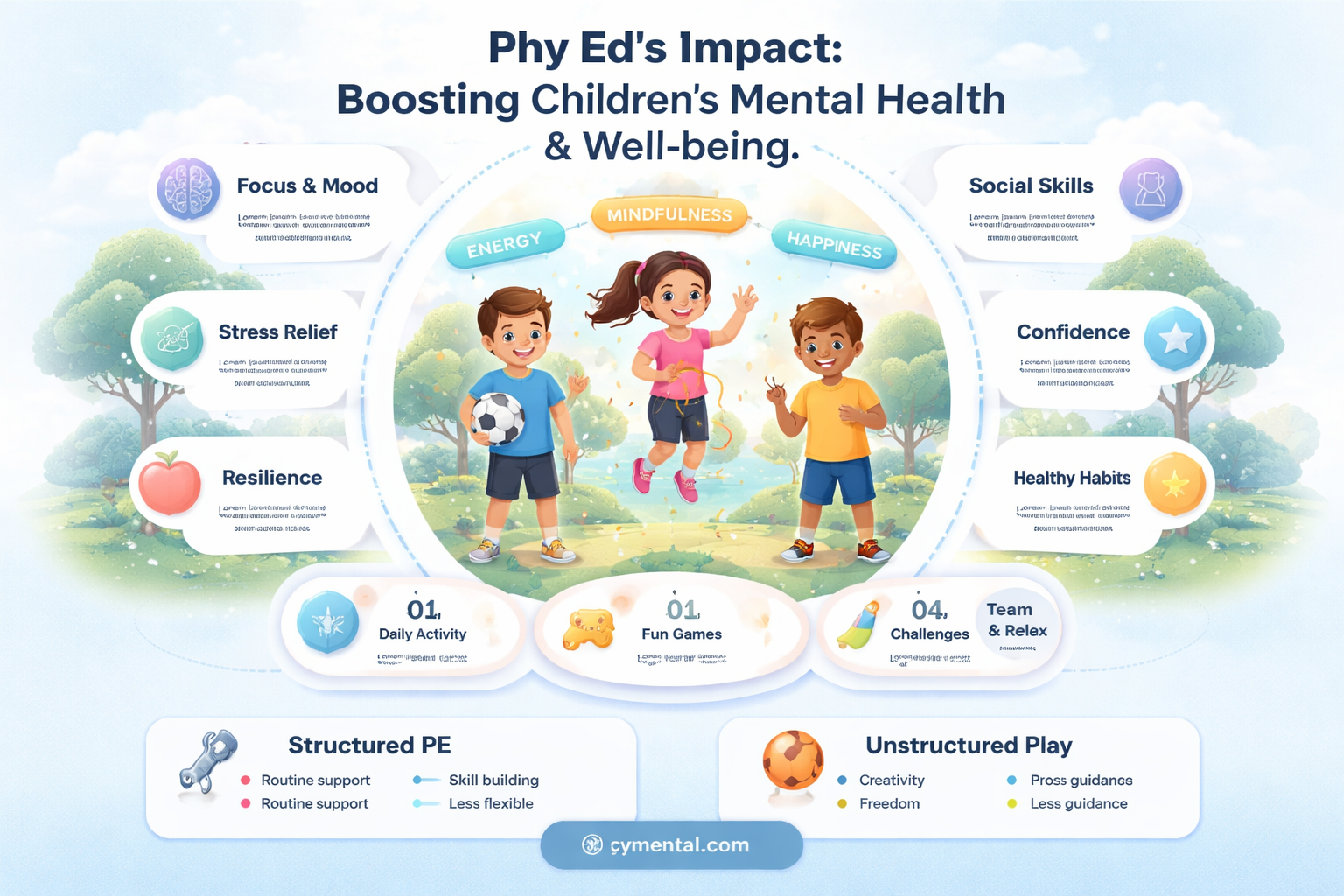
Physical education (PE) plays a crucial role in supporting children’s mental health by providing a structured outlet for physical activity, stress relief, and social interaction. Regular participation in PE has been linked to reduced anxiety, improved mood, and enhanced self-esteem, as exercise stimulates the release of endorphins and other neurotransmitters that promote emotional well-being. Additionally, PE fosters teamwork, resilience, and a sense of accomplishment, which can boost confidence and coping skills. By integrating physical activity into children’s routines, PE not only strengthens their bodies but also nurtures their mental and emotional resilience, making it an essential component of holistic child development.
| Characteristics | Values |
|---|---|
| Stress Reduction | Physical activity stimulates the release of endorphins, which act as natural stress relievers, reducing anxiety and improving mood. |
| Improved Mood | Regular physical education has been linked to increased levels of serotonin and dopamine, neurotransmitters associated with feelings of happiness and well-being. |
| Enhanced Self-Esteem | Mastering physical skills and achieving goals in PE can boost children's confidence and self-worth. |
| Better Sleep | Regular exercise promotes healthier sleep patterns, which are crucial for emotional regulation and overall mental health. |
| Social Connection | PE provides opportunities for teamwork, cooperation, and social interaction, combating feelings of loneliness and isolation. |
| Cognitive Benefits | Physical activity improves focus, concentration, and memory, leading to better academic performance and reduced symptoms of ADHD. |
| Reduced Risk of Depression | Studies suggest that regular physical activity can lower the risk of developing depression in children and adolescents. |
| Improved Emotional Regulation | PE helps children learn to manage their emotions and cope with challenges in a healthy way. |
| Increased Resilience | Physical activity can build mental toughness and resilience, helping children bounce back from setbacks and adversity. |
| Long-Term Mental Health Benefits | Establishing healthy exercise habits in childhood can contribute to better mental health throughout life. |
Explore related products



What You'll Learn

Physical activity reduces stress and anxiety in children
Children who engage in regular physical activity exhibit lower levels of cortisol, the body's primary stress hormone. Studies show that even moderate exercise, such as a 30-minute brisk walk or a game of tag during recess, can significantly reduce cortisol levels in children aged 8–12. This physiological response is not just a short-term fix; consistent physical activity helps regulate the body's stress response over time, making children more resilient to anxiety-inducing situations. For parents and educators, incorporating daily movement—whether structured sports or unstructured play—can be a powerful tool to mitigate stress in children.
Consider the classroom setting, where stress and anxiety often peak during exam periods or transitions. A 10-minute physical activity break, such as jumping jacks, yoga stretches, or a quick game of Simon Says, can reset a child's mental state. Research from the American Psychological Association highlights that these "movement snacks" improve focus and reduce anxiety by increasing blood flow to the brain and releasing endorphins. Teachers can strategically schedule these breaks before tests or after challenging lessons to create a calmer, more productive learning environment.
Comparing sedentary children to their active peers reveals stark differences in anxiety levels. A 2021 study published in *Pediatrics* found that children who engaged in at least 60 minutes of moderate-to-vigorous physical activity daily reported 20% lower anxiety scores than those who were inactive. This isn’t about elite sports training—simple activities like cycling, dancing, or playing basketball count. The key is consistency. For families, setting a routine that includes outdoor play or family walks can make a measurable difference in a child’s mental well-being.
Practical implementation is crucial. For younger children (ages 3–6), unstructured play—like running in a park or playing on a jungle gym—is ideal. Older children (ages 10–14) may benefit from team sports or martial arts, which combine physical activity with social interaction and skill-building. Caution should be taken to avoid over-scheduling, as this can negate the stress-reducing benefits. Instead, prioritize activities that the child enjoys and allow for flexibility. For example, swapping a competitive soccer league for a casual game of frisbee golf can reduce pressure while maintaining activity levels.
In conclusion, physical activity is a proven, accessible strategy to reduce stress and anxiety in children. By understanding the science behind it and implementing practical, age-appropriate activities, parents and educators can empower children to manage their mental health effectively. The goal isn’t perfection but progress—small, consistent steps toward a more active, less anxious childhood.
Nourish Your Mind: How Healthy Eating Boosts Mental Well-Being
You may want to see also
Explore related products


Exercise boosts mood and emotional well-being in students
Physical activity isn't just about building muscles or improving athletic performance; it's a powerful tool for enhancing students' mental health. Numerous studies have shown that regular exercise can significantly boost mood and emotional well-being in children and adolescents. For instance, a 2019 meta-analysis published in the *British Journal of Sports Medicine* found that physical activity interventions led to reduced symptoms of depression and anxiety in young people. This isn’t just anecdotal—it’s backed by science. When students engage in activities like running, swimming, or even team sports, their brains release endorphins, often referred to as "feel-good" hormones, which act as natural stress relievers.
To harness these benefits, educators and parents should aim to incorporate at least 60 minutes of moderate-to-vigorous physical activity into a student’s daily routine, as recommended by the World Health Organization. This doesn’t mean every child needs to join a sports team; activities like brisk walking, dancing, or even active play during recess can suffice. For younger children (ages 5–12), unstructured play that encourages movement—like tag or obstacle courses—can be particularly effective. Adolescents (ages 13–18) may benefit from more structured activities, such as yoga or team sports, which also foster social connections and a sense of belonging.
However, it’s crucial to approach this with sensitivity. Not all students enjoy traditional sports, and forcing participation can backfire, leading to increased stress or anxiety. Instead, offer a variety of options and emphasize the mental health benefits rather than physical outcomes. For example, a mindfulness-based movement class can combine physical activity with stress-reduction techniques, appealing to students who might otherwise avoid gym class. Additionally, integrating short movement breaks into academic lessons—like a 5-minute dance session or stretching routine—can improve focus and mood without disrupting the schedule.
One practical tip is to model this behavior. Teachers and parents who prioritize their own physical activity can inspire students to do the same. For instance, a teacher who takes a brisk walk during lunch or shares their own experiences with exercise can make it feel more relatable. Schools can also create supportive environments by offering after-school clubs, ensuring recess isn’t cut for academic time, and celebrating physical achievements alongside academic ones. By making exercise accessible, enjoyable, and meaningful, we can help students develop a lifelong habit that supports both their physical and mental well-being.
Police Assistance for Mentally Ill Neighbors: Options and Limitations
You may want to see also
Explore related products


Phy ed improves focus and cognitive function in kids
Physical education (PE) isn’t just about running laps or mastering a sport—it’s a powerful tool for sharpening a child’s focus and cognitive abilities. Research shows that regular physical activity increases blood flow to the brain, delivering essential oxygen and nutrients that enhance neural function. For instance, a study published in the *Journal of Pediatrics* found that children who engaged in 60 minutes of moderate-to-vigorous physical activity daily demonstrated improved attention spans and problem-solving skills compared to their less active peers. This isn’t just a short-term boost; consistent PE participation can lead to long-term cognitive benefits, including better memory retention and academic performance.
Consider the classroom implications: a child who starts the day with a 30-minute PE session is more likely to stay engaged during lessons. Physical activity triggers the release of neurotransmitters like dopamine and serotonin, which regulate mood and focus. Teachers often report that students who participate in morning or mid-day physical activities exhibit fewer signs of restlessness and are better equipped to handle complex tasks. For younger children (ages 5–10), incorporating games that require coordination and strategy, such as tag variations or obstacle courses, can double as cognitive exercises, teaching them to think on their feet while staying active.
However, not all PE programs are created equal. To maximize cognitive benefits, activities should be structured to challenge both the body and mind. For example, sports that require teamwork and quick decision-making, like soccer or basketball, engage executive functions like planning and impulse control. Even individual activities, such as gymnastics or martial arts, can improve focus by demanding precision and concentration. Parents and educators can amplify these effects by ensuring children participate in at least 3–4 PE sessions per week, each lasting 45–60 minutes, tailored to their age and developmental stage.
Critics might argue that prioritizing PE could detract from academic time, but evidence suggests the opposite. A comparative study in *Health Psychology* revealed that schools with robust PE programs saw a 10–15% increase in test scores across subjects. The key is balance—integrating physical activity into the daily routine without overloading children. For adolescents (ages 11–14), combining aerobic exercises with mindfulness practices, such as yoga or tai chi, can further enhance cognitive function by reducing stress and improving mental clarity.
Incorporating PE into a child’s life doesn’t require elaborate equipment or expensive programs. Simple, consistent activities like jumping rope, dancing, or even brisk walking can yield significant cognitive benefits. The takeaway is clear: physical education isn’t a luxury—it’s a necessity for nurturing focused, resilient, and intellectually capable young minds. By making it a priority, we’re not just building stronger bodies; we’re building sharper brains.
Collagen and Mental Health: Unraveling the Mind-Body Connection
You may want to see also
Explore related products



Team sports foster social skills and self-esteem
Children who participate in team sports are more likely to develop essential social skills such as communication, cooperation, and conflict resolution. These skills are honed through the inherent structure of team sports, where success depends on effective interaction with peers. For instance, a soccer player must learn to pass the ball at the right moment, requiring both verbal and non-verbal communication with teammates. Research from the *Journal of Youth and Adolescence* highlights that adolescents involved in team sports exhibit higher levels of empathy and social competence compared to their non-athletic peers. This is particularly evident in children aged 8–12, a critical period for social development.
Consider the role of feedback in team sports, which serves as a powerful tool for building self-esteem. Constructive criticism from coaches and peers, when delivered in a supportive environment, helps children understand their strengths and areas for improvement. For example, a basketball player who receives praise for their defensive skills but guidance on shooting accuracy learns to value their contributions while striving for growth. This balance of positive reinforcement and constructive feedback is crucial for fostering resilience and self-worth. Studies suggest that children who receive regular, specific feedback in team settings show a 25% increase in self-esteem over a six-month period.
To maximize the benefits of team sports for social skills and self-esteem, parents and educators should focus on creating inclusive environments. Encourage children to participate in sports that emphasize teamwork over individual performance, such as volleyball or rowing. Ensure that the focus remains on effort and improvement rather than winning. For younger children (ages 6–10), start with non-competitive leagues where the emphasis is on fun and learning. For older children (ages 11–14), introduce more structured competitions while maintaining a supportive atmosphere. Practical tips include setting team goals, rotating leadership roles, and organizing post-game discussions to reflect on teamwork and individual contributions.
A comparative analysis reveals that team sports offer unique advantages over individual sports in fostering social skills and self-esteem. While individual sports like tennis or swimming build discipline and self-reliance, team sports provide a platform for interpersonal growth. For example, a child in a swimming class may improve their technique but miss out on the collaborative problem-solving required in a soccer match. Team sports also offer a sense of belonging, which is critical for mental health. A study from *Pediatrics* found that children in team sports report higher levels of social acceptance and lower rates of anxiety compared to those in individual sports. This underscores the importance of integrating team activities into physical education curricula.
In conclusion, team sports are a powerful vehicle for developing social skills and self-esteem in children. By fostering communication, providing constructive feedback, and creating inclusive environments, these activities address key aspects of mental health. For optimal results, tailor participation to age-appropriate levels of competition and ensure a focus on teamwork. Whether through soccer, basketball, or rowing, the lessons learned on the field translate into lifelong social and emotional benefits.
Nature's Healing Power: Can Outdoor Therapy Ease Mental Illness?
You may want to see also
Explore related products


Regular movement helps manage symptoms of childhood depression
Childhood depression is a growing concern, with symptoms often manifesting as persistent sadness, irritability, and withdrawal. Regular physical activity, a cornerstone of physical education (PE), has emerged as a powerful tool in managing these symptoms. Studies show that aerobic exercise, in particular, stimulates the release of endorphins, neurotransmitters that act as natural mood lifters. For children aged 6–17, the American Academy of Pediatrics recommends at least 60 minutes of moderate-to-vigorous physical activity daily. This "dose" of movement can significantly reduce depressive symptoms by promoting emotional resilience and providing a healthy outlet for stress.
Consider the case of structured PE programs that incorporate team sports, dance, or circuit training. These activities not only improve physical fitness but also foster social interaction and a sense of accomplishment. For instance, a 12-week study involving adolescents with mild depression found that those participating in thrice-weekly PE sessions reported a 30% reduction in depressive symptoms compared to a control group. The combination of physical exertion and social engagement creates a dual benefit, addressing both the physiological and psychological aspects of depression.
However, implementing movement as a therapeutic tool requires careful consideration. Not all children respond equally to the same types of activity. While some may thrive in competitive sports, others might benefit more from individual pursuits like yoga or swimming. PE instructors and parents should observe children’s preferences and adapt activities accordingly. For younger children (ages 3–5), unstructured play—such as running, jumping, or climbing—can be just as effective in boosting mood and cognitive function. The key is consistency; regular movement, rather than sporadic bursts, yields the most significant mental health benefits.
Critics might argue that PE alone cannot replace traditional therapies for childhood depression. While true, movement should be viewed as a complementary strategy rather than a standalone solution. Incorporating physical activity into a child’s routine can enhance the effectiveness of other treatments, such as cognitive-behavioral therapy or medication. For example, a child undergoing therapy might find that regular exercise helps them better process emotions and apply coping strategies learned in sessions. This synergistic approach maximizes the potential for recovery.
In practical terms, schools and families can take simple steps to integrate movement into daily life. Schools could offer "brain breaks" during lessons, allowing students to stretch or engage in quick physical activities. At home, parents can encourage active play by limiting screen time and providing access to outdoor spaces. Even small changes, like walking to school instead of driving, can contribute to a child’s overall well-being. By prioritizing regular movement, we equip children with a lifelong tool to manage not only depression but also the stresses of everyday life.
Mental Illness Diagnosis: A Lifeline or a Label?
You may want to see also
Frequently asked questions
Yes, PE has been shown to improve children's mental health by reducing stress, anxiety, and symptoms of depression while boosting mood and self-esteem.
Physical activity stimulates the release of endorphins, which act as natural stress relievers, and promotes better sleep, both of which help reduce anxiety levels in children.
Yes, regular physical activity in PE enhances cognitive function, improves concentration, and increases blood flow to the brain, which can positively impact academic performance.
Absolutely, PE encourages teamwork, communication, and cooperation, which helps children develop social skills and build confidence through achievement and participation.
Yes, consistent participation in PE can foster lifelong habits of physical activity, which are linked to reduced risk of mental health disorders and improved overall well-being in adulthood.