Madison Cole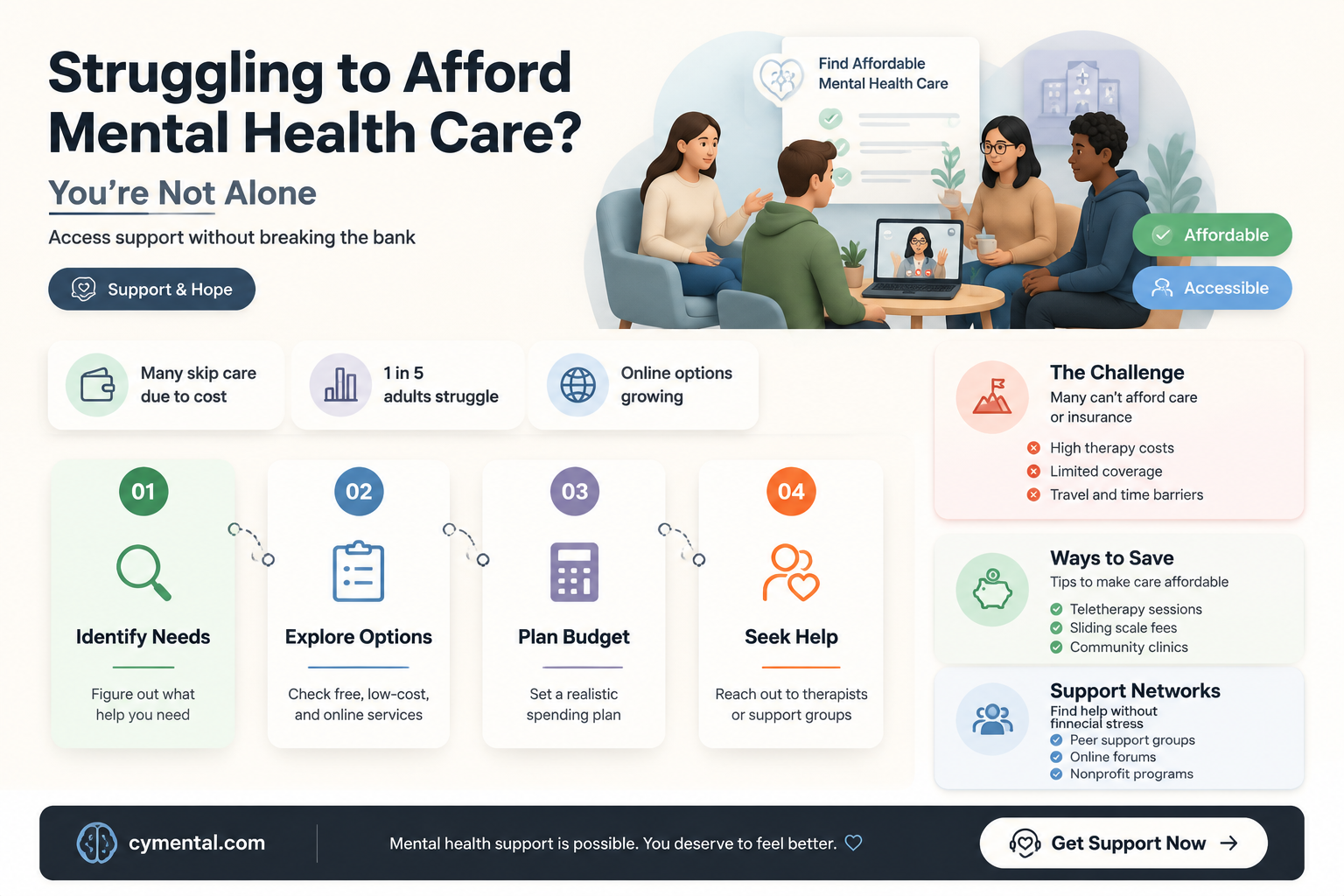
Many individuals struggling with mental health issues face a significant barrier to accessing care: the cost. Mental health services, including therapy, medication, and counseling, can be prohibitively expensive, leaving those who cannot afford them without the support they desperately need. This financial obstacle exacerbates the suffering of those already dealing with conditions like depression, anxiety, or PTSD, often leading to a worsening of symptoms and a decreased quality of life. The lack of affordable mental health resources highlights a critical gap in healthcare systems, where the most vulnerable populations are often left behind, emphasizing the urgent need for more accessible and affordable mental health solutions.
| Characteristics | Values |
|---|---|
| Prevalence | Approximately 1 in 5 adults in the U.S. experience mental illness each year, but only 43.3% receive treatment (SAMHSA, 2023). |
| Financial Barriers | - Lack of insurance coverage for mental health services. - High out-of-pocket costs (e.g., therapy sessions can range from $65 to $250 per session without insurance). - Limited availability of sliding-scale or low-cost clinics. |
| Demographic Impact | - Lower-income individuals are less likely to access mental health care. - Racial and ethnic minorities face disparities in access due to cost and systemic barriers. - Young adults (18-25) are more likely to report unmet mental health needs due to cost. |
| Geographic Disparities | Rural areas have fewer mental health providers and limited access to affordable services compared to urban areas. |
| Policy Gaps | Inadequate implementation of the Mental Health Parity and Addiction Equity Act, leading to unequal insurance coverage for mental health vs. physical health. |
| Consequences | - Worsening mental health conditions. - Increased risk of homelessness, unemployment, and substance abuse. - Higher societal costs due to untreated mental illness. |
| Alternative Solutions | - Teletherapy platforms offering lower-cost sessions. - Community health centers providing subsidized care. - Nonprofit organizations offering free or low-cost counseling. |
| Global Perspective | Low- and middle-income countries face even greater challenges, with <10% of people with mental health conditions receiving treatment (WHO, 2023). |
Explore related products

$9.79 $17.99


$6.79 $14.99


What You'll Learn
- Financial Barriers to Therapy: High costs of sessions, lack of insurance coverage, and limited sliding scale options
- Alternative Affordable Resources: Free support groups, online therapy platforms, and community mental health clinics
- Self-Help Strategies: Mindfulness, journaling, exercise, and DIY coping techniques for managing mental health
- Systemic Issues: Inadequate healthcare policies, stigma, and lack of accessible mental health services
- Crisis Support Options: Hotlines, crisis text lines, and emergency mental health resources for immediate help

Financial Barriers to Therapy: High costs of sessions, lack of insurance coverage, and limited sliding scale options
The average cost of a therapy session in the United States ranges from $60 to $250 per hour, a price tag that immediately excludes many individuals and families living paycheck to paycheck. For someone earning minimum wage, a single session could consume an entire day’s earnings, making regular therapy financially unsustainable. This high cost is not merely a barrier—it’s a wall, particularly for those without employer-sponsored insurance or savings to draw from. When mental health crises require weekly or bi-weekly sessions, the cumulative expense becomes insurmountable, forcing many to choose between therapy and basic necessities like rent or groceries.
Insurance coverage, often touted as a solution, is riddled with gaps that leave even insured individuals struggling. Many plans cap the number of therapy sessions per year (commonly 20–30), offer inadequate reimbursement rates, or exclude certain diagnoses from coverage. For example, someone with a complex trauma history might require long-term therapy, but their insurance may only cover short-term treatment modalities. Additionally, high deductibles mean that out-of-pocket costs remain prohibitive until the deductible is met, a threshold many never reach. The result? A system that promises access but delivers it selectively, often favoring those with comprehensive corporate plans over individuals purchasing insurance independently.
Sliding scale fees, where therapists adjust session costs based on income, are theoretically a lifeline for low-income clients. However, these options are limited and often oversubscribed. Therapists can only offer so many reduced-fee slots before their own financial viability is threatened, as they too have bills to pay. Nonprofit clinics and community mental health centers sometimes fill this gap, but they are frequently underfunded and overwhelmed by demand. For instance, a single clinic in a mid-sized city might serve hundreds of clients annually but still turn away many due to lack of resources. This scarcity leaves countless individuals on waiting lists, delaying care that could be life-altering.
To navigate these barriers, practical strategies are essential. First, research local community health centers or university training clinics, which often provide low-cost services staffed by supervised graduate students. Second, inquire about payment plans or pro bono sessions directly with therapists—some may offer flexibility not advertised online. Third, explore online therapy platforms that provide subscription-based models, though these may lack the depth of in-person care. Finally, advocate for policy changes: support legislation that mandates comprehensive mental health coverage and funds sliding scale programs. While these steps won’t dismantle the system overnight, they can create temporary bridges for those drowning in the financial currents of mental health care.
Exercise and Mental Health: Unlocking the Mind-Body Connection for Wellness
You may want to see also
Explore related products

$10.99 $18.99


Alternative Affordable Resources: Free support groups, online therapy platforms, and community mental health clinics
For those struggling with mental health but facing financial barriers, the landscape of affordable resources is both diverse and accessible. Free support groups, for instance, offer a lifeline by connecting individuals with shared experiences in a judgment-free environment. Organizations like the National Alliance on Mental Illness (NAMI) host peer-led groups nationwide, providing weekly meetings where participants can share coping strategies, emotional support, and practical advice. These groups often focus on specific issues, such as anxiety, depression, or grief, ensuring relevance and resonance. Unlike formal therapy, they require no fees, insurance, or long-term commitments, making them an ideal starting point for those seeking immediate relief.
Online therapy platforms have emerged as a cost-effective alternative to traditional in-person sessions, with monthly subscriptions often costing less than a single therapy visit. Platforms like BetterHelp and Talkspace connect users with licensed therapists via text, video, or audio chats, offering flexibility for busy schedules or those in remote areas. While prices vary, many platforms provide financial aid or sliding-scale fees for low-income individuals. However, it’s crucial to verify a therapist’s credentials and ensure the platform complies with privacy laws like HIPAA. For mild to moderate mental health concerns, these platforms can be a practical solution, though severe cases may still require in-person care.
Community mental health clinics serve as a vital resource for those without insurance or with limited budgets. Funded by government grants, donations, and sliding-scale fees, these clinics offer therapy, medication management, and crisis intervention at reduced costs. For example, a session at a community clinic might range from $10 to $50, compared to $100–$200 at a private practice. To access these services, individuals typically need to provide proof of income and residency. While waitlists can be long, many clinics prioritize urgent cases, ensuring timely care for those in crisis. Additionally, clinics often provide group therapy sessions, further reducing costs while fostering community support.
Combining these resources can create a comprehensive yet affordable mental health care plan. For instance, someone might join a free NAMI support group for weekly peer interaction, use an online therapy platform for biweekly professional guidance, and visit a community clinic for medication management. This hybrid approach maximizes accessibility while addressing diverse needs. However, it’s essential to assess each resource’s fit for your specific situation—what works for one person may not work for another. By leveraging these alternatives, financial constraints no longer have to be a barrier to mental health care.
Finding Support: A Guide to Getting Help for Schizophrenia
You may want to see also
Explore related products


Self-Help Strategies: Mindfulness, journaling, exercise, and DIY coping techniques for managing mental health
Mental health struggles don’t pause for financial constraints. When therapy or medication feels out of reach, self-help strategies become lifelines. Mindfulness, journaling, exercise, and DIY coping techniques aren’t just buzzwords—they’re accessible tools that can stabilize emotions, clarify thoughts, and rebuild resilience. These practices don’t replace professional care, but they offer immediate, cost-free ways to manage symptoms and reclaim agency over your well-being.
Consider mindfulness, the art of anchoring yourself in the present moment. Start small: dedicate 5 minutes daily to focus on your breath. Inhale for 4 counts, hold for 4, exhale for 6. This simple technique, backed by studies, reduces cortisol levels and calms the nervous system. Apps like Insight Timer or YouTube guided meditations are free resources, but you don’t need them—a quiet corner and your breath suffice. Pair this with a journaling habit to externalize racing thoughts. Write freely for 10 minutes each morning or night, no filters. Research shows this practice improves emotional regulation and helps identify triggers. Use a cheap notebook or a notes app—the medium matters less than the act itself.
Exercise is another powerhouse tool, releasing endorphins and restructuring negative thought patterns. You don’t need a gym membership: 30 minutes of brisk walking, bodyweight squats, or yoga stretches daily can significantly reduce anxiety and depression symptoms. The key is consistency, not intensity. For DIY coping techniques, create a sensory toolkit: keep a textured object (like a smooth stone), a soothing scent (lavender oil), or a playlist of calming songs. When overwhelmed, engage one sense at a time to ground yourself. These techniques are particularly effective for panic attacks or sudden emotional spikes.
While these strategies are powerful, they’re not one-size-fits-all. Mindfulness might feel frustrating for someone with severe ADHD, and journaling could retraumatize without proper boundaries. Experiment to find what works for you, and remember: self-help is an act of self-preservation, not self-punishment. It’s about building a toolkit, one free or low-cost tool at a time, to navigate the storm until the clouds part.
Running for Mental Health: How Lacing Up Boosts Your Mind
You may want to see also
Explore related products


Systemic Issues: Inadequate healthcare policies, stigma, and lack of accessible mental health services
The cost of mental health treatment often exceeds what many individuals can afford, but the problem isn’t just about price tags. Systemic barriers—inadequate healthcare policies, pervasive stigma, and a scarcity of accessible services—create a perfect storm that leaves millions without the care they need. For instance, in the U.S., nearly 60% of counties have no practicing psychiatrists, therapists, or psychologists, according to the American Psychological Association. This geographic disparity forces individuals to travel long distances or go without treatment altogether, exacerbating their struggles.
Consider the role of healthcare policies in this crisis. Many insurance plans treat mental health as a secondary concern, imposing higher copays, stricter session limits, or excluding certain therapies altogether. For example, while antidepressants might be covered, critical services like cognitive-behavioral therapy (CBT) or dialectical behavior therapy (DBT) often require out-of-pocket payments that can range from $100 to $250 per session. For someone earning minimum wage, this is an impossible expense. Even Medicaid, which covers low-income individuals, varies drastically by state, leaving some with better access than others. This patchwork system fails those who need it most.
Stigma compounds these policy failures by discouraging individuals from seeking help in the first place. Fear of judgment, discrimination, or being labeled as "weak" prevents many from even exploring their options. For marginalized communities—such as LGBTQ+ individuals, racial minorities, or those with disabilities—this stigma is often amplified by systemic biases within healthcare itself. A 2021 study found that Black Americans are 20% less likely to receive mental health treatment than their white counterparts, even when symptoms are identical. This isn't just a personal barrier; it's a societal one that perpetuates inequality.
To address these issues, practical steps must be taken. First, advocate for policy reforms that mandate parity between mental and physical healthcare coverage. This means pushing for laws like the Mental Health Parity and Addiction Equity Act to be enforced rigorously. Second, invest in community-based programs that bring affordable or free services to underserved areas. Telehealth platforms, while not a complete solution, can bridge some gaps, but only if internet access and digital literacy are also addressed. Finally, combat stigma through education and representation. Campaigns featuring diverse individuals sharing their mental health journeys can normalize seeking help and reduce fear.
The takeaway is clear: the inability to afford mental health care isn’t just a personal failure—it’s a systemic one. By dismantling policy barriers, increasing accessibility, and challenging stigma, we can create a framework where mental health care is a right, not a privilege. Until then, the cost—both financial and human—will continue to rise.
Finding Mental Health Support: Where to Go for Help and Healing
You may want to see also
Explore related products



Crisis Support Options: Hotlines, crisis text lines, and emergency mental health resources for immediate help
In moments of acute distress, when the weight of mental health challenges feels unbearable, immediate support can be a lifeline. Crisis hotlines, text lines, and emergency resources are designed to provide instant, confidential assistance, often free of charge, ensuring that financial barriers don’t prevent access to help. These services are staffed by trained professionals who can de-escalate crises, offer coping strategies, and connect individuals to longer-term resources.
Steps to Access Immediate Help:
- Call a Crisis Hotline: Dial well-known numbers like the National Suicide Prevention Lifeline (988 in the U.S.) or the Crisis Text Line (text HOME to 741741). These services are available 24/7 and cater to all ages. For veterans, the Veterans Crisis Line (press 1 after dialing 988) offers specialized support.
- Use Crisis Text Lines: Text-based services are ideal for those who find speaking difficult or prefer written communication. Responses typically arrive within minutes, providing real-time support.
- Visit Emergency Mental Health Clinics: In severe cases, walk-in clinics or hospital emergency departments can provide immediate psychiatric evaluation and stabilization. Some cities offer mobile crisis units that come to your location.
Cautions and Considerations:
While these resources are invaluable, they are not substitutes for ongoing therapy or medication management. They are best used as temporary bridges to long-term care. Additionally, response times may vary depending on demand, so patience is key. For non-English speakers, some services offer multilingual support, but availability can be limited.
Practical Tips for Effective Use:
- Be Honest: Share your feelings openly; the more information you provide, the better the support.
- Prepare Key Details: Have basic information ready, such as your location (for emergency services) or any immediate safety concerns.
- Follow Up: After using a crisis resource, seek follow-up care through community mental health centers or low-cost clinics to address underlying issues.
Takeaway: Crisis support options are a critical, cost-free tool for anyone facing mental health emergencies. They provide immediate relief and guidance, ensuring that financial constraints don’t stand in the way of getting help when it’s needed most. Knowing how to access these resources can save lives and serve as a first step toward healing.
Can Ibuprofen Ease Mental Pain? Exploring Science and Limits
You may want to see also
Frequently asked questions
Explore low-cost or free resources like community health clinics, non-profit organizations, sliding-scale therapists, or online therapy platforms. Some therapists offer reduced rates based on income.
Yes, many organizations provide free services, such as crisis hotlines (e.g., 988 in the U.S.), support groups, and community mental health centers funded by government programs.
Absolutely. Look for clinics that offer services on a sliding scale, government-funded programs, or telehealth platforms that provide affordable options for uninsured individuals.
Ask your doctor about generic versions of medications, patient assistance programs offered by pharmaceutical companies, or discount prescription cards to reduce costs.
Check local universities for training clinics with low fees, search online directories like Psychology Today (filter by sliding scale), or contact your local health department for referrals.