Madison Cole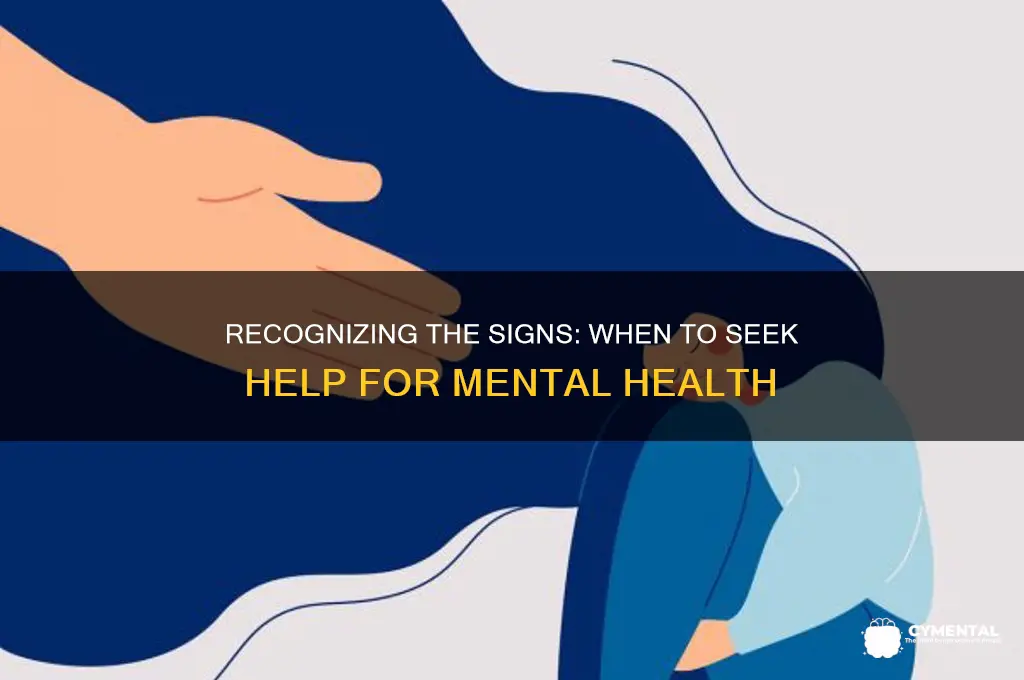
Recognizing when to seek help for mental illness is crucial for maintaining overall well-being, as early intervention can significantly improve outcomes. If you or someone you know is experiencing persistent symptoms such as prolonged sadness, anxiety, irritability, changes in sleep or appetite, difficulty concentrating, or thoughts of self-harm, it may be time to consult a mental health professional. Additionally, if these symptoms interfere with daily functioning, relationships, or work, seeking help becomes even more urgent. Mental health challenges are common and treatable, and reaching out to a therapist, counselor, or doctor is a proactive step toward recovery and a healthier life.
Explore related products


What You'll Learn

Recognizing severe symptoms
Severe symptoms of mental illness often manifest as drastic changes in behavior, mood, or functioning that disrupt daily life. For instance, a person experiencing persistent suicidal thoughts, severe panic attacks multiple times a week, or an inability to leave the house due to overwhelming anxiety may be in crisis. These symptoms are not merely fleeting discomforts but indicators of a deeper issue requiring immediate attention. Recognizing them early can prevent escalation and provide a pathway to recovery.
Analyzing the severity of symptoms involves distinguishing between typical stress responses and clinical indicators. For example, while occasional sadness is normal, persistent feelings of hopelessness lasting more than two weeks could signal depression. Similarly, psychotic symptoms like hallucinations or delusions are red flags that demand urgent intervention. Tracking these changes through journaling or self-assessment tools can help individuals and their loved ones identify patterns and decide when professional help is necessary.
Persuasively, ignoring severe symptoms can lead to long-term consequences, including physical health deterioration, strained relationships, and reduced quality of life. For adolescents, untreated mental illness can disrupt developmental milestones, while in older adults, it may exacerbate chronic conditions like heart disease. Seeking help is not a sign of weakness but a proactive step toward reclaiming stability and well-being. Early intervention often leads to better outcomes, making timely recognition of severe symptoms critical.
Comparatively, severe symptoms in mental illness can be likened to physical health emergencies like chest pain or sudden vision loss—both require immediate attention. Just as one would not delay treatment for a broken bone, mental health crises should not be postponed. Practical steps include contacting a mental health professional, visiting an emergency room, or using crisis hotlines like the National Suicide Prevention Lifeline (988). These resources provide guidance and support tailored to the urgency of the situation.
Descriptively, severe symptoms often create a sense of isolation and despair, making it difficult for individuals to advocate for themselves. Loved ones play a crucial role in recognizing signs like drastic weight changes, social withdrawal, or aggressive behavior. Offering nonjudgmental support and encouraging professional help can be life-saving. Remember, severe mental health symptoms are treatable, and recovery is possible with the right interventions and a supportive network.
Vacations and Mental Health: Unwinding for a Healthier Mind
You may want to see also
Explore related products


Impact on daily life
Mental health struggles often manifest in subtle disruptions to daily routines, but when these disruptions become persistent, they signal a need for intervention. For instance, a person who once managed a full workday might find themselves exhausted after just a few hours, unable to concentrate or complete tasks. This isn’t merely a bad day; it’s a symptom of a deeper issue when it recurs weekly or daily. Similarly, social withdrawal—canceling plans, avoiding calls, or neglecting hobbies—can indicate depression or anxiety. These changes aren’t just inconvenient; they erode relationships and personal fulfillment. Recognizing these patterns early is crucial, as untreated mental illness can amplify their severity over time.
Consider the physical toll: insomnia, chronic fatigue, or unexplained aches can accompany mental health issues, creating a vicious cycle. For example, anxiety may trigger sleep disturbances, which in turn worsen anxiety, making it harder to function at work or home. Practical steps like maintaining a sleep schedule or limiting caffeine can help, but when self-care measures fail, professional help becomes necessary. A therapist might recommend cognitive-behavioral therapy (CBT) or medication, such as selective serotonin reuptake inhibitors (SSRIs), to address both mental and physical symptoms. Ignoring these signs risks long-term health consequences, including weakened immunity or cardiovascular problems.
Daily life also suffers when mental illness affects decision-making and self-care. Someone with severe depression might neglect hygiene, skip meals, or ignore medical appointments, leading to deteriorating health. Similarly, a person with untreated ADHD may struggle with time management, missing deadlines or forgetting commitments. These aren’t moral failings but symptoms of a condition that requires targeted treatment. For ADHD, stimulant medications like methylphenidate or non-stimulants like atomoxetine can improve focus, while therapy teaches organizational strategies. Addressing these issues restores not just productivity but also self-esteem and independence.
Finally, the emotional toll of mental illness on daily life cannot be overstated. Persistent feelings of hopelessness, irritability, or fear can make even mundane tasks feel insurmountable. For a parent, this might mean snapping at children over small mistakes; for a student, it could mean avoiding classes due to overwhelming anxiety. These reactions strain relationships and create guilt, further deepening the struggle. Seeking help—whether through therapy, support groups, or medication—breaks this cycle. For instance, dialectical behavior therapy (DBT) teaches emotional regulation skills, while antidepressants like sertraline can stabilize mood. Taking action isn’t a sign of weakness but a step toward reclaiming control over one’s life.
Supporting Mr. Robot: How Friends Can Aid Dissociative Identity Disorder
You may want to see also
Explore related products





Persistent feelings of hopelessness
Hopelessness often manifests in subtle yet profound ways: a lack of motivation to pursue goals, withdrawal from social activities, or a pervasive belief that nothing will ever improve. It’s not just sadness; it’s a deep-seated conviction that life is inherently meaningless. For instance, someone might stop applying for jobs after a few rejections, not out of laziness, but because they believe they’ll never succeed. This mindset can spiral into more severe mental health issues if left unaddressed.
Seeking help for persistent hopelessness isn’t a sign of weakness—it’s a proactive step toward healing. Start by consulting a mental health professional, such as a therapist or psychiatrist, who can assess whether this feeling stems from conditions like depression, anxiety, or burnout. Evidence-based treatments like cognitive-behavioral therapy (CBT) or medication (e.g., selective serotonin reuptake inhibitors, or SSRIs, at dosages tailored to individual needs) can be highly effective. Pairing professional help with self-care practices, such as regular exercise, mindfulness, or journaling, can also provide relief.
Comparing hopelessness to physical pain can help illustrate its urgency. Just as you’d seek medical attention for persistent back pain, mental anguish deserves the same priority. Ignoring it can lead to worsening symptoms, including suicidal ideation. For example, studies show that prolonged hopelessness is a significant predictor of suicide risk, particularly in adults over 30. Early intervention isn’t just beneficial—it’s critical.
Finally, remember that hopelessness doesn’t define you; it’s a symptom, not your identity. Practical steps like setting small, achievable goals, connecting with supportive individuals, or engaging in activities that once brought joy can help break the cycle. If you’re unsure where to start, hotlines like the National Suicide Prevention Lifeline (988 in the U.S.) offer immediate guidance. Persistent hopelessness may feel insurmountable, but with the right support, recovery is not only possible—it’s probable.
Black Music's Healing Power: Boosting Mental Health and Well-being
You may want to see also
Explore related products


Thoughts of self-harm
Recognizing the signs of self-harm ideation requires vigilance. Common indicators include frequent discussions about death, sudden withdrawal from social activities, visible injuries without clear explanations, or giving away prized possessions. For adolescents, who are particularly vulnerable, changes in behavior such as declining academic performance or increased irritability may also signal distress. Parents, friends, and caregivers should approach these signs with empathy rather than judgment, encouraging open dialogue while avoiding accusatory tones.
Seeking help for self-harm thoughts involves a multi-step process. Start by contacting a mental health professional, such as a therapist or psychiatrist, who can provide a safe space to explore underlying issues. Crisis hotlines (e.g., the National Suicide Prevention Lifeline at 988 in the U.S.) offer immediate support and guidance. In emergencies, visiting an emergency room is non-negotiable—delaying care can be life-threatening. Additionally, involving trusted individuals in your support network can provide ongoing accountability and emotional reinforcement.
Treatment for self-harm ideation often combines therapy and medication tailored to individual needs. Cognitive Behavioral Therapy (CBT) is highly effective in challenging harmful thought patterns, while Dialectical Behavior Therapy (DBT) teaches coping skills for emotional regulation. Antidepressants or anti-anxiety medications may be prescribed to manage symptoms, though dosages and types vary based on age, medical history, and severity of the condition. For instance, adolescents typically start with lower doses of SSRIs under strict monitoring to mitigate side effects.
Preventing self-harm begins with fostering a supportive environment. Encourage healthy coping mechanisms like journaling, exercise, or mindfulness practices. Limit access to potential tools of harm, such as sharp objects or medications, especially in moments of heightened risk. Schools and workplaces can play a role by implementing mental health awareness programs and reducing stigma. Ultimately, addressing self-harm thoughts requires compassion, proactive measures, and a commitment to prioritizing mental well-being above all else.
Seeking Help: A Powerful Step Toward Healing Mental Illness
You may want to see also
Explore related products


$10.49 $21


Concern from loved ones
Loved ones often notice changes in behavior, mood, or functioning before the individual themselves do. This external perspective can be invaluable, as mental illness frequently clouds self-awareness. For instance, a partner might observe increased irritability, a friend might notice social withdrawal, or a parent might see declining academic performance. These observations, when communicated with empathy, can serve as early warning signs that professional help is needed. Ignoring such concerns can delay treatment, allowing symptoms to worsen.
When a loved one expresses worry about your mental health, it’s crucial to listen without defensiveness. Their concern stems from care, not judgment. Instead of dismissing their observations, reflect on specific examples they provide. For instance, if a sibling mentions you’ve stopped attending family gatherings, ask yourself why. Is it fatigue, anxiety, or something else? This self-reflection can bridge the gap between their observation and your internal experience, making it easier to recognize the need for help.
Not all concerns from loved ones are created equal. Some may overreact to minor changes, while others may underestimate the severity of a situation. To assess the validity of their worries, consider the context and consistency of their feedback. For example, if multiple people from different areas of your life (e.g., a coworker, a friend, and a parent) express similar concerns, it’s more likely to be a red flag. Additionally, if their observations align with measurable changes—like decreased productivity at work or increased conflict in relationships—take them seriously.
Engaging with loved ones’ concerns doesn’t mean immediately seeking therapy or medication. It can start with small, collaborative steps. For instance, if a friend suggests you seem overwhelmed, propose a joint activity that promotes relaxation, like a walk or a movie night. If a family member notices you’re isolating yourself, commit to attending one social event together. These actions not only address their worries but also test whether their observations resonate with your own feelings. If the concerns persist despite these efforts, it’s a strong indicator that professional intervention is warranted.
Boost Your Mood: The Mental Health Benefits of Eating Vegetables
You may want to see also
Frequently asked questions
You should seek professional help if you experience persistent symptoms like prolonged sadness, anxiety, difficulty functioning in daily life, changes in sleep or appetite, or thoughts of self-harm. Trust your instincts—if you feel something is wrong, reaching out is a sign of strength.
The right time to seek help is as soon as you notice symptoms affecting your well-being or daily life. Early intervention can prevent symptoms from worsening and improve outcomes. There’s no need to wait until a crisis occurs.
If you’re unsure, it’s still worth consulting a mental health professional. They can assess your situation and provide guidance. Even mild symptoms can benefit from support, and addressing concerns early can prevent them from becoming more severe.