Caleb Wright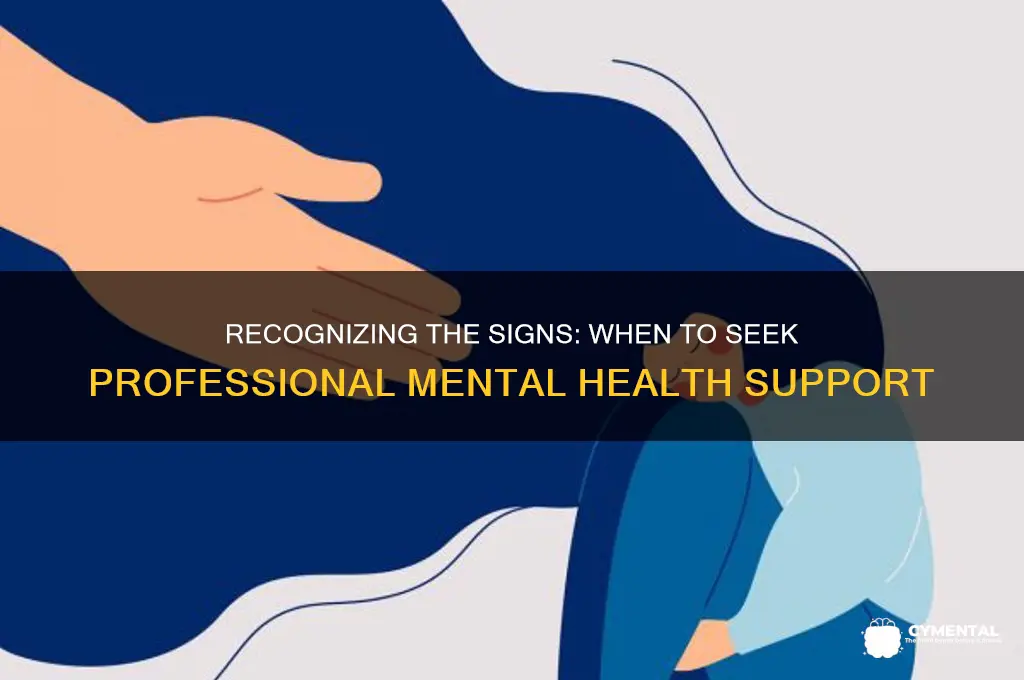
Recognizing when to seek professional help for mental health is crucial for overall well-being, as untreated conditions can significantly impact daily life, relationships, and physical health. While occasional stress or sadness is normal, persistent symptoms such as prolonged sadness, anxiety, difficulty functioning, or thoughts of self-harm warrant attention. Key indicators include changes in sleep or appetite, withdrawal from social activities, overwhelming emotions, or a decline in work or academic performance. Seeking help is a sign of strength, and professionals like therapists, counselors, or psychiatrists can provide tailored support, therapy, or medication to address underlying issues. Early intervention often leads to better outcomes, fostering resilience and improved quality of life.
Explore related products


$93.5 $100.95


What You'll Learn

Persistent sadness or hopelessness lasting more than two weeks
Persistent sadness or hopelessness that lingers for more than two weeks is a red flag signaling the need for professional intervention. This duration is not arbitrary; it aligns with clinical criteria for diagnosing major depressive disorder (MDD), a condition affecting over 280 million people globally, according to the World Health Organization. While fleeting feelings of sadness are a normal part of life, their prolonged presence can disrupt daily functioning, relationships, and overall well-being. Ignoring these symptoms often leads to worsening mental health, making early action critical.
Consider this scenario: A 32-year-old professional notices they’ve lost interest in hobbies, struggle to concentrate at work, and feel a constant heaviness despite no apparent external stressors. They brush it off as a "phase," but after three weeks, their sleep patterns deteriorate, and they begin isolating themselves. This progression illustrates how untreated persistent sadness can spiral into more severe symptoms. The two-week marker serves as a practical threshold to differentiate between transient emotional states and potential clinical depression, urging individuals to seek help before the condition deepens.
From a practical standpoint, recognizing this symptom requires self-awareness and honesty. Keep a journal to track mood changes, energy levels, and sleep patterns over two weeks. Note if sadness persists across different environments (e.g., home, work, social settings) or if it interferes with responsibilities. For adolescents and young adults, parents or caregivers should watch for irritability, academic decline, or withdrawal, as these age groups often express depression differently. If symptoms persist beyond the two-week mark, schedule an appointment with a mental health professional, such as a therapist or psychiatrist, who can provide a thorough assessment and tailored treatment plan.
Comparatively, while over-the-counter remedies or lifestyle changes like exercise and meditation can alleviate mild mood fluctuations, they are insufficient for addressing persistent sadness. Professional help offers evidence-based interventions like cognitive-behavioral therapy (CBT) or antidepressant medication, which have proven efficacy in managing MDD. For instance, selective serotonin reuptake inhibitors (SSRIs) are commonly prescribed but require 4–6 weeks to take full effect, underscoring the importance of early intervention. Delaying treatment not only prolongs suffering but also increases the risk of complications like anxiety disorders or suicidal ideation.
In conclusion, persistent sadness or hopelessness lasting more than two weeks is not a condition to endure silently. It is a clear indicator to seek professional help, backed by clinical guidelines and global health recommendations. By acting promptly, individuals can access effective treatments, prevent symptom escalation, and reclaim their mental health. Remember, acknowledging the need for help is not a sign of weakness but a step toward healing and resilience.
Samurai Spirituality: Religions and Mental Training for Warrior Discipline
You may want to see also
Explore related products


Thoughts of self-harm or suicide, even fleetingly
Experiencing thoughts of self-harm or suicide, even fleetingly, is a critical signal that professional intervention is necessary. These thoughts, regardless of their frequency or intensity, should never be dismissed as mere passing feelings. They are often indicators of underlying mental health issues such as depression, anxiety, or trauma, which require expert assessment and treatment. Ignoring these signs can lead to escalation, making timely action essential.
Consider the following scenario: a 28-year-old professional begins noticing occasional thoughts of self-harm during moments of stress. Initially, they brush it off as a result of exhaustion or temporary overwhelm. However, these thoughts persist and intensify over weeks. This progression highlights a common pattern—what starts as fleeting can evolve into a persistent crisis without intervention. If you or someone you know experiences such thoughts, contacting a mental health professional or crisis hotline immediately is crucial. Resources like the National Suicide Prevention Lifeline (988 in the U.S.) offer 24/7 support and guidance.
Analyzing the nature of these thoughts reveals their complexity. Fleeting suicidal ideation is not always accompanied by a clear plan or intent, but it still signifies distress. Research shows that even passive thoughts of self-harm correlate with higher risks of future attempts. Professionals use tools like the Columbia-Suicide Severity Rating Scale to assess risk levels, considering factors such as frequency, duration, and presence of preparatory actions. Understanding this framework underscores why early intervention is vital—it allows for targeted strategies to mitigate risk before it escalates.
Persuasively, seeking help for these thoughts is not a sign of weakness but a proactive step toward recovery. Many hesitate due to stigma or fear of judgment, but mental health professionals are trained to approach these issues with empathy and confidentiality. Therapy modalities like Cognitive Behavioral Therapy (CBT) or Dialectical Behavior Therapy (DBT) have proven effective in addressing self-harm and suicidal ideation. Medication, such as antidepressants, may also be prescribed in conjunction with therapy, depending on the individual’s needs. The goal is not just to suppress the thoughts but to address their root causes and build coping mechanisms.
Practically, here are actionable steps to take if you experience these thoughts: first, acknowledge them without self-judgment. Second, reach out to a trusted person or professional immediately. Third, remove access to potential means of self-harm as a temporary safety measure. Fourth, engage in grounding techniques, such as deep breathing or sensory exercises, to stabilize in the moment. Finally, commit to ongoing professional support to develop long-term strategies for managing mental health. Remember, these thoughts are treatable, and recovery is possible with the right help.
Nutrition for Mental Health: Foods to Support Emotional Recovery
You may want to see also
Explore related products


Inability to perform daily tasks or maintain relationships
One of the most alarming signs that professional mental health intervention is necessary is when an individual struggles to perform basic daily tasks or maintain healthy relationships. This isn’t about occasional forgetfulness or a fleeting argument with a loved one; it’s about persistent, pervasive difficulties that disrupt life’s foundations. For example, someone might find themselves unable to get out of bed, cook a meal, or respond to messages from friends, not out of laziness, but because their mental state feels paralyzing. These symptoms often indicate conditions like depression, anxiety, or burnout, which can erode functional capacity over time.
Consider the practical implications: missing work deadlines, neglecting personal hygiene, or withdrawing from social interactions aren’t just personal failures—they’re red flags. A study published in the *Journal of Affective Disorders* found that individuals with untreated depression were 50% more likely to report significant impairments in daily functioning compared to those receiving therapy or medication. Similarly, relationship strain—whether with partners, family, or friends—can stem from untreated mental health issues. For instance, someone with unmanaged anxiety might become overly irritable or distant, pushing loved ones away without intending to. These patterns create a vicious cycle: isolation worsens mental health, which further impairs functioning.
To address this, start by tracking specific behaviors. Keep a journal for a week, noting instances where mental health interferes with tasks or relationships. For example, write down how long it takes to start a simple chore or how often you cancel plans due to overwhelming emotions. This data provides concrete evidence to discuss with a professional. Next, prioritize self-care as a form of damage control: set small, achievable goals like showering daily or texting one friend per day. While these steps are helpful, they aren’t substitutes for professional treatment. Cognitive Behavioral Therapy (CBT) has been shown to improve daily functioning in 50–75% of patients with depression and anxiety, often within 12–16 sessions.
A cautionary note: don’t wait for a crisis to seek help. Many people assume they need to hit rock bottom before reaching out, but early intervention is far more effective. For instance, a 2020 study in *Psychiatry Research* revealed that individuals who sought help within three months of noticing functional decline experienced faster recovery than those who waited six months or longer. Additionally, avoid self-diagnosing or relying solely on online resources. While apps like Calm or Headspace can complement treatment, they lack the personalized strategies a therapist provides.
In conclusion, the inability to perform daily tasks or maintain relationships isn’t a character flaw—it’s a symptom demanding attention. By recognizing these signs, tracking their impact, and seeking timely professional help, individuals can reclaim their functionality and reconnect with their lives. Remember, mental health treatment isn’t a luxury; it’s a necessity for restoring balance and fostering resilience.
Basketball's Impact: Boosting Mental Health Through Physical Activity and Teamwork
You may want to see also
Explore related products


Severe anxiety disrupting work, sleep, or social life
Anxiety becomes a red flag when it morphs from occasional worry into a persistent saboteur of daily life. Imagine this: deadlines loom, but panic attacks paralyze you. Social gatherings feel like minefields, triggering nausea and racing thoughts. Nights stretch endlessly, insomnia fueled by intrusive worries. This isn't just "stress" – it's severe anxiety demanding professional intervention.
Recognizing the Tipping Point
Work performance suffers when anxiety hijacks focus. Simple tasks feel insurmountable, meetings trigger dread, and productivity plummets. Sleep, vital for recovery, becomes a battleground. Racing thoughts, nightmares, or physical tension keep you wired despite exhaustion. Socially, avoidance becomes the default. Canceling plans, isolating, or enduring events with silent terror signal anxiety's grip. If these disruptions persist for weeks, not days, it's time to act.
The Professional Toolkit
Therapists often start with Cognitive Behavioral Therapy (CBT), proven to reframe anxiety-driven thought patterns. For severe cases, medication like SSRIs (e.g., 10–20 mg/day of escitalopram) may be prescribed, though dosage varies by individual. Lifestyle adjustments – 7–9 hours of sleep, 30 minutes of daily exercise, and mindfulness practices – complement treatment. Apps like Headspace or Calm offer guided techniques, but they’re no substitute for clinical care.
Barriers to Overcome
Stigma silences many. Fear of judgment or appearing "weak" delays help-seeking. Practical hurdles – cost, time, or finding the right provider – add layers of stress. Start small: Telehealth platforms offer affordable, accessible options. Employee Assistance Programs (EAPs) often provide free counseling sessions. Remember, untreated anxiety can escalate into depression or physical ailments, making early intervention cost-effective in the long run.
The Path Forward
Acknowledge the severity. Severe anxiety isn’t a character flaw; it’s a treatable condition. Reach out to a primary care physician or mental health hotline for guidance. Online directories like Psychology Today filter therapists by specialty and insurance. Recovery isn’t linear, but with professional support, work, sleep, and social life can regain balance. The first step? Recognizing that today is the day to prioritize your mental health.
Mastering Self-Regulation: Empowering Mental Health and Emotional Resilience
You may want to see also
Explore related products


Substance abuse as a coping mechanism for emotional distress
Substance abuse often begins as a temporary escape from emotional pain, but it quickly spirals into a destructive cycle. Individuals facing trauma, chronic stress, or unresolved grief may turn to alcohol, opioids, or benzodiazepines to numb their feelings. For example, someone experiencing severe anxiety might find that a couple of drinks in the evening alleviates their racing thoughts—initially. However, the brain adapts to the presence of these substances, requiring higher doses to achieve the same effect. A single glass of wine becomes a bottle, or occasional use of prescription pills turns into daily reliance. This escalation is a red flag signaling the need for professional intervention before physical dependence and mental health deterioration become irreversible.
Consider the case of a 28-year-old professional who, after a painful divorce, starts using cocaine on weekends to "feel alive again." What begins as a recreational outlet soon becomes a crutch to avoid confronting loneliness and self-doubt. The temporary euphoria provided by the drug masks deeper emotional wounds, delaying necessary healing. Over time, the individual may experience heightened paranoia, financial strain, and strained relationships—all while believing the substance is their only source of relief. This pattern underscores the importance of recognizing when self-medication crosses the line into self-destruction.
Breaking the cycle of substance abuse as a coping mechanism requires more than willpower; it demands targeted therapeutic strategies. Cognitive Behavioral Therapy (CBT) is often employed to help individuals identify triggers and develop healthier coping skills, such as mindfulness or journaling. For those with severe addiction, medically supervised detoxification may be necessary, followed by long-term support through programs like Alcoholics Anonymous or SMART Recovery. It’s critical to address both the addiction and the underlying emotional distress simultaneously—a dual approach that professionals are trained to provide.
One practical tip for those questioning their substance use is to track patterns in a journal. Note the frequency, amount, and emotional state preceding each use. For instance, if you notice that 70% of alcohol consumption occurs after arguments or work stress, it’s a clear indicator that drinking is being used to cope with unresolved emotions. Sharing this data with a therapist can provide a concrete starting point for treatment. Early intervention is key; the longer the behavior persists, the harder it is to untangle the web of dependency.
Ultimately, substance abuse as a coping mechanism is a symptom of deeper emotional struggles, not a solution. While it may offer fleeting relief, the long-term consequences—physical health decline, damaged relationships, and exacerbated mental health issues—far outweigh the temporary benefits. Seeking professional help is not a sign of weakness but a proactive step toward reclaiming control and building sustainable, healthy coping strategies. If you or someone you know is relying on substances to manage emotional distress, reaching out to a mental health professional or addiction specialist is not just advisable—it’s essential.
Volunteering for Mental Health: How to Make a Positive Impact
You may want to see also
Frequently asked questions
It’s time to seek help if you experience persistent symptoms like prolonged sadness, anxiety, irritability, changes in sleep or appetite, difficulty functioning in daily life, or thoughts of self-harm. Trust your instincts—if you feel something is wrong, reaching out is a sign of strength.
Red flags include severe mood swings, withdrawal from social activities, substance abuse, inability to cope with stress, persistent nightmares or flashbacks, and thoughts of suicide or harm to others. These signs suggest professional intervention is necessary.
While some mild symptoms may improve with time, waiting too long can worsen the condition. Early intervention often leads to better outcomes. If symptoms persist for two weeks or more, or interfere with your life, it’s best to seek help promptly.
The type of professional depends on your needs. Therapists or counselors provide talk therapy, psychologists offer assessments and therapy, and psychiatrists can prescribe medication. Start with a primary care doctor or therapist, who can guide you to the right specialist.
Yes, you don’t need to wait until your problems feel overwhelming. Mental health support is for anyone seeking to improve their well-being, manage stress, or address personal challenges. There’s no threshold for “seriousness”—your concerns are valid and deserve attention.


![Help![Blu-ray]](https://m.media-amazon.com/images/I/6155cLsT0HL._AC_UY218_.jpg)


![Help! [LP]](https://m.media-amazon.com/images/I/71Lo3XMoSlL._AC_UY218_.jpg)