Caleb Wright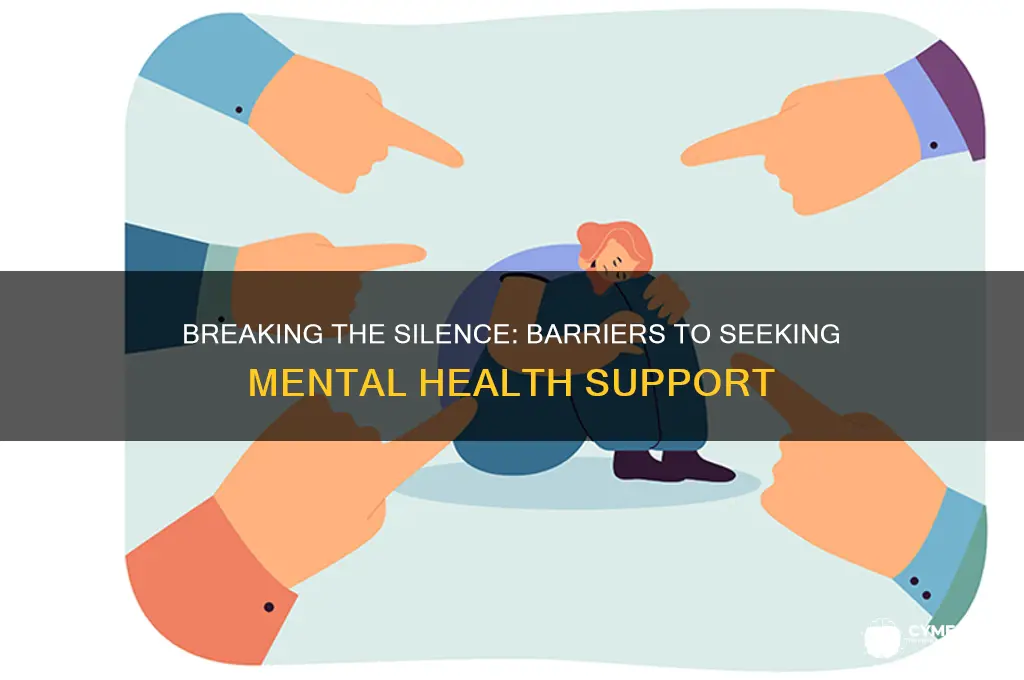
Many individuals with mental disorders hesitate to seek help due to a complex interplay of factors, including stigma, fear of judgment, and a lack of awareness about available resources. Societal misconceptions often lead to self-blame or shame, causing people to internalize their struggles rather than reaching out. Additionally, logistical barriers such as cost, accessibility, and uncertainty about where to start can deter individuals from pursuing treatment. Some may also downplay their symptoms, believing they can manage on their own or that their condition is not severe enough to warrant intervention. Cultural beliefs and past negative experiences with mental health systems further contribute to this reluctance, creating a cycle of silence and untreated suffering.
Explore related products


What You'll Learn

Stigma and shame associated with mental illness
Stigma and shame act as invisible barriers, often preventing individuals from seeking help for mental health disorders. Consider this: a person experiencing persistent anxiety might fear being labeled as "weak" or "overly emotional," internalizing societal judgments that equate mental illness with personal failure. This internalized stigma can lead to self-blame, secrecy, and avoidance of treatment, exacerbating the very condition they’re struggling with. Research shows that up to 60% of individuals with mental health issues delay or forgo treatment due to stigma, highlighting its profound impact on behavior.
To dismantle stigma, start by challenging its roots. Stigma thrives on misinformation and stereotypes, such as the myth that mental illness is a sign of moral failing or lack of willpower. Educate yourself and others by sharing accurate, evidence-based information about mental health. For instance, emphasize that conditions like depression and anxiety are medical disorders with biological and environmental causes, not character flaws. Use platforms like social media or community forums to amplify stories of recovery, normalizing the conversation around mental health struggles.
Practical steps can also mitigate the effects of stigma. If you’re supporting someone hesitant to seek help, avoid judgmental language and instead use empathetic phrases like, "I’m here for you" or "It’s okay to ask for help." Encourage small, manageable actions, such as scheduling a single therapy session or joining a support group, to reduce the overwhelming pressure of starting treatment. For adolescents, who are particularly vulnerable to stigma, schools can implement mental health literacy programs to foster understanding and reduce peer-based discrimination.
Finally, systemic change is essential. Advocate for policies that integrate mental health care into primary care settings, reducing the perceived "otherness" of psychiatric treatment. Workplace initiatives, such as mental health days and confidential counseling services, can also normalize seeking help. By addressing stigma at both individual and societal levels, we create an environment where mental health care is accessible, accepted, and free from shame.
Oxytocin's Role in Boosting Mental Health and Emotional Well-Being
You may want to see also
Explore related products


Fear of being judged or misunderstood by others
Stigma surrounding mental health issues often silences those who need support the most. One of the most paralyzing fears is the fear of being judged or misunderstood by others. This fear is not unfounded; societal attitudes often label mental illness as a sign of weakness, lack of willpower, or even a moral failing. For someone already grappling with internal struggles, the prospect of external criticism can feel insurmountable. Imagine confessing to a friend or family member that you’re battling anxiety or depression, only to be met with dismissive comments like, “Just snap out of it,” or “Everyone feels that way sometimes.” Such responses reinforce the belief that their experiences are invalid, pushing them further into isolation.
Consider the case of a 28-year-old professional who avoids seeking therapy for her generalized anxiety disorder. She fears that disclosing her struggles to her colleagues or even her manager might jeopardize her career. In high-pressure work environments, mental health issues are often seen as liabilities rather than legitimate health concerns. This fear is not irrational; studies show that employees who disclose mental health issues are sometimes passed over for promotions or treated differently by coworkers. The fear of being labeled as “unstable” or “unreliable” creates a barrier to seeking help, even when professional support could significantly improve their quality of life.
To address this fear, it’s essential to normalize conversations about mental health and educate others on the validity of these experiences. For instance, workplaces can implement training programs that teach employees how to respond empathetically to disclosures of mental health struggles. Phrases like, “I’m here for you,” or “How can I support you?” can make a world of difference. Additionally, sharing stories of public figures who have openly discussed their mental health battles can help reduce stigma. When individuals see that others have sought help and thrived, they may feel more empowered to do the same.
Practical steps can also be taken to mitigate the fear of judgment. Start small by confiding in a trusted friend or family member who has demonstrated empathy in the past. If face-to-face conversations feel daunting, consider writing a letter or using anonymous online support groups as a stepping stone. For those in professional settings, researching company policies on mental health and confidentiality can provide reassurance. Remember, seeking help is a sign of strength, not weakness, and the right support system can transform fear into hope.
Understanding the Right Terms for Those Needing Mental Health Support
You may want to see also
Explore related products


Lack of awareness about available resources or treatment options
A staggering number of individuals struggling with mental health issues never reach out for professional help. One critical barrier is the simple lack of awareness about the resources and treatment options available to them. Many people assume therapy is only for severe cases or that medication is the only solution, unaware of the diverse range of approaches like cognitive-behavioral therapy, mindfulness-based interventions, or even digital mental health platforms. This knowledge gap often stems from limited public discourse and education on mental health, leaving individuals feeling isolated and unsure of where to turn.
Consider the case of a young adult experiencing anxiety but believing their symptoms are just "normal stress." Without exposure to information about anxiety disorders or the effectiveness of treatments like exposure therapy, they may never seek help. Similarly, older adults might dismiss their depressive symptoms as a natural part of aging, unaware of geriatric psychiatry services tailored to their needs. Even when resources exist, they are often inaccessible to those who don’t know they exist, creating a cycle of silence and suffering.
To bridge this gap, proactive education is essential. Schools, workplaces, and community centers should integrate mental health literacy programs that outline available resources, from local clinics to telehealth services. For instance, teaching individuals how to access free or low-cost counseling through university programs or nonprofit organizations can empower them to take the first step. Additionally, public campaigns could highlight success stories of individuals who benefited from lesser-known treatments, such as art therapy or peer support groups, to broaden awareness.
However, awareness alone isn’t enough. Practical barriers like location, cost, and stigma still deter many from seeking help. For example, someone in a rural area might be unaware of teletherapy options, while another might assume therapy is prohibitively expensive without knowing about sliding-scale fees. Addressing these misconceptions requires targeted outreach—distributing resource guides in healthcare settings, offering workshops in underserved communities, and leveraging social media to share actionable information.
Ultimately, closing the awareness gap is a collective responsibility. By equipping individuals with knowledge about the variety and accessibility of mental health resources, we can dismantle the barriers that prevent them from seeking help. Whether through education, advocacy, or community engagement, every effort to illuminate these options brings us closer to a world where no one suffers in silence due to lack of information.
Do Therapists Truly Help? Exploring Mental Health Therapy's Impact and Benefits
You may want to see also
Explore related products


Financial barriers or limited access to affordable mental health care
Financial barriers to mental health care are a stark reality for millions, often turning a treatable condition into a lifelong struggle. Consider this: in the United States, nearly 10 million adults with a mental illness are uninsured, and even those with insurance face high out-of-pocket costs for therapy or medication. For instance, a single psychotherapy session can range from $65 to $250, and a month’s supply of antidepressants like sertraline can cost up to $100 without insurance. For someone earning minimum wage, this represents a significant portion of their income, forcing them to choose between mental health care and basic needs like rent or groceries.
The disparity in access is even more pronounced in rural or underserved areas, where mental health providers are scarce. In such regions, individuals may need to travel hours to reach a therapist or psychiatrist, adding transportation costs to an already expensive endeavor. Telehealth has emerged as a partial solution, but it requires reliable internet access—a luxury not everyone has. For example, in rural Appalachia, only 65% of households have broadband access, limiting the feasibility of virtual care. Without affordable, accessible options, many simply forgo treatment altogether.
To address these barriers, policymakers and healthcare providers must take targeted action. First, expanding Medicaid coverage to include comprehensive mental health services would ensure that low-income individuals have access to care. Second, capping out-of-pocket costs for therapy and medication would make treatment more affordable for those with insurance. For instance, setting a maximum copay of $25 per therapy session could remove a significant financial hurdle. Third, incentivizing mental health professionals to practice in underserved areas through loan forgiveness programs or salary supplements could increase provider availability.
Despite these potential solutions, challenges remain. Insurance companies often impose strict limits on the number of therapy sessions covered annually, typically capping them at 20–30 visits. This is insufficient for many individuals with chronic conditions like depression or PTSD, who may require long-term care. Additionally, the stigma surrounding mental health can deter employers from offering robust mental health benefits in their insurance plans. Until these systemic issues are addressed, financial barriers will continue to prevent people from seeking the help they need.
In conclusion, the financial barriers to mental health care are not just a matter of cost—they are a matter of equity. When treatment is unaffordable or inaccessible, the most vulnerable populations suffer disproportionately. By implementing policy changes, reducing costs, and increasing provider availability, we can begin to dismantle these barriers. Until then, the question remains: how many more will be left untreated because they cannot afford to heal?
Supporting Your Mentally Ill Daughter: Practical Ways to Help and Heal
You may want to see also
Explore related products


Belief in self-reliance or that the issue will resolve on its own
The belief in self-reliance as a barrier to seeking help for mental health issues often stems from cultural narratives that glorify independence. In many societies, admitting vulnerability is seen as a weakness, and individuals are encouraged to "tough it out" or "handle it on their own." This mindset can be particularly pervasive in communities where emotional struggles are dismissed as temporary setbacks rather than legitimate health concerns. For example, phrases like "just snap out of it" or "everyone goes through this" reinforce the idea that mental health challenges are not worthy of professional intervention. Such attitudes can lead individuals to internalize their pain, fearing judgment or failure if they reach out for support.
Consider the case of a 28-year-old professional who experiences persistent anxiety but avoids therapy because they believe "real strength means dealing with it myself." This self-reliance, while admirable in some contexts, can become a double-edged sword when it prevents someone from accessing effective treatment. Research shows that untreated anxiety disorders often worsen over time, with symptoms escalating from mild unease to debilitating panic attacks. Practical steps to counteract this mindset include reframing self-reliance as a collaborative effort—acknowledging that seeking help is not a sign of weakness but a strategic move toward recovery. For instance, setting small goals like scheduling a single consultation can make the process feel less overwhelming.
Another factor tied to self-reliance is the assumption that mental health issues will resolve on their own, given enough time. This belief is often rooted in the misconception that emotional pain is transient and not indicative of a deeper problem. For instance, a college student might dismiss prolonged sadness as "just stress" from exams, expecting it to disappear once the semester ends. However, untreated depression can persist and intensify, affecting academic performance, relationships, and overall quality of life. A practical tip here is to track symptoms over time—keeping a journal to note changes in mood, sleep, or energy levels can provide clarity and motivate action.
Comparatively, physical health issues are rarely ignored under the assumption they’ll self-resolve. Few would delay treatment for a broken bone, yet the same urgency is often absent for mental health. This disparity highlights the need to normalize mental health care as a routine aspect of self-care. One actionable strategy is to integrate mental health check-ins into existing habits, such as discussing emotional well-being during annual physicals or incorporating mindfulness practices into daily routines. By treating mental health with the same proactive approach as physical health, individuals can overcome the inertia of self-reliance.
Ultimately, the belief in self-reliance or self-resolution is a significant but surmountable barrier to mental health care. It requires a shift in perspective—from viewing help-seeking as a failure to recognizing it as a vital tool for resilience. For those hesitant to start, beginning with low-stakes steps, like joining a support group or using mental health apps, can ease the transition. The takeaway is clear: self-reliance should not mean isolation; it can, and should, include leveraging available resources to foster healing and growth.
Managing Chronic Pain and Mental Health: Strategies for Healing and Hope
You may want to see also
Frequently asked questions
Stigma surrounding mental health can lead to fear of judgment, discrimination, or being labeled as "weak," causing individuals to avoid seeking help to protect their reputation or self-image.
Lack of awareness about mental health symptoms or available resources can prevent individuals from recognizing their condition or knowing where to turn for support, leading to untreated disorders.
High costs of therapy, medication, or lack of insurance coverage can deter individuals from seeking professional help, especially if they are already facing financial stress or instability.


![Shame (The Criterion Collection) [Blu-ray]](https://m.media-amazon.com/images/I/81L-2w6IK0L._AC_UY218_.jpg)