Noah Parker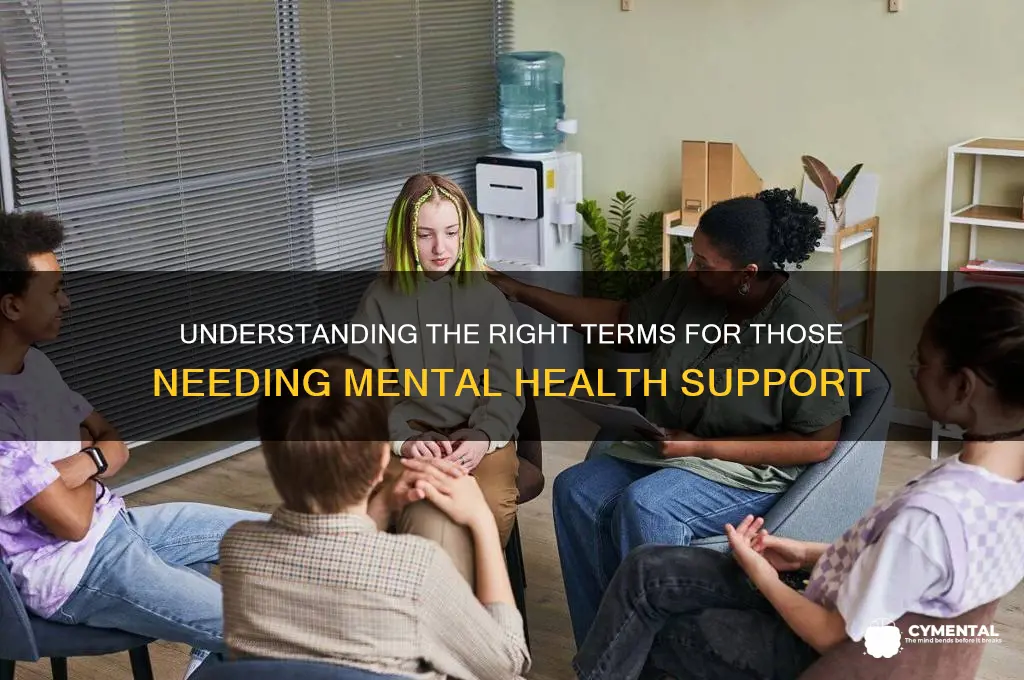
The topic of what to call a person who needs mental help is a sensitive and important one, as language plays a crucial role in shaping perceptions and reducing stigma. Historically, terms like crazy or insane have been used, but these are often derogatory and harmful. More appropriate and respectful terms include individual experiencing mental health challenges, person with a mental health condition, or simply someone seeking mental health support. These phrases emphasize the person’s humanity and the temporary or manageable nature of their struggles, fostering empathy and understanding. Using such language is essential in promoting a compassionate and inclusive approach to mental health conversations.
Explore related products


What You'll Learn
- Stigma Around Mental Health: Societal misconceptions often prevent individuals from seeking necessary mental health support
- Types of Mental Health Professionals: Psychiatrists, psychologists, therapists, and counselors offer specialized care for various needs
- Signs Someone Needs Help: Persistent sadness, withdrawal, or drastic behavior changes indicate a need for intervention
- Barriers to Seeking Help: Fear, cost, and lack of awareness hinder access to mental health services
- Supportive Language: Using empathetic terms like someone seeking support reduces stigma and encourages help-seeking

Stigma Around Mental Health: Societal misconceptions often prevent individuals from seeking necessary mental health support
Language matters, and the words we use to describe someone struggling with their mental health can either build bridges or reinforce walls. A quick search reveals a disturbing trend: terms like "crazy," "nuts," or even "attention-seeking" are still thrown around casually, reflecting a deep-seated stigma that labels those in need of support as weak, dangerous, or simply "other." This isn’t just hurtful—it’s dangerous. Research shows that 40% of people with mental health conditions avoid seeking help due to fear of judgment or discrimination.
Consider this: if someone had a broken leg, we wouldn’t call them "lazy" for using crutches. Yet, when it comes to mental health, society often equates seeking help with personal failure. This misconception stems from a lack of understanding and outdated beliefs that mental illness is a choice or a character flaw. For instance, phrases like "just snap out of it" or "toughen up" minimize the complexity of conditions like depression or anxiety, which affect over 264 million people globally, according to the World Health Organization.
The stigma doesn’t just stop at words; it manifests in systemic ways. Employers may hesitate to hire someone who discloses a mental health history, fearing unpredictability. Schools might overlook students showing signs of distress, attributing their behavior to "teenage moodiness." Even within families, conversations about therapy or medication are often met with silence or shame. These barriers create a cycle where individuals feel isolated, believing their struggles are unspeakable or unfixable.
Breaking this cycle starts with reframing how we talk about mental health. Instead of asking, "What’s wrong with you?" try, "How can I support you?" Normalize phrases like "mental health care" over "mental illness," emphasizing treatment as a proactive step, not a last resort. For parents, educators, and employers, integrating mental health first-aid training can provide practical tools to recognize signs of distress and respond empathetically.
Ultimately, the stigma around mental health isn’t just a personal issue—it’s a societal one. By challenging misconceptions, using compassionate language, and advocating for systemic change, we can create an environment where seeking help is seen as a sign of strength, not weakness. After all, a person needing mental health support isn’t "broken"—they’re human, and they deserve the same care and respect as anyone else.
Positive Relationships and Mental Health: Insights from Scholarly Research
You may want to see also
Explore related products


Types of Mental Health Professionals: Psychiatrists, psychologists, therapists, and counselors offer specialized care for various needs
Individuals seeking mental health support often encounter a range of professionals, each with distinct roles and expertise. Understanding these differences is crucial for finding the right care. Psychiatrists, psychologists, therapists, and counselors all contribute uniquely to mental health treatment, but their qualifications, methods, and scope of practice vary significantly.
Psychiatrists are medical doctors who specialize in mental health. After completing medical school, they undergo residency training in psychiatry, equipping them to diagnose and treat complex mental illnesses. Their medical background allows them to prescribe medications, such as antidepressants or antipsychotics, often in dosages tailored to the patient’s needs (e.g., starting with 10 mg of Lexapro for anxiety, adjusting as necessary). Psychiatrists are ideal for individuals with severe conditions like bipolar disorder or schizophrenia, where medication management is essential. However, they may spend less time on talk therapy, focusing instead on symptom stabilization.
Psychologists hold doctoral degrees (PhD or PsyD) in psychology and are experts in human behavior and mental processes. Unlike psychiatrists, they do not prescribe medication but excel in psychological testing and therapy. Cognitive Behavioral Therapy (CBT), for instance, is a common approach psychologists use to help patients reframe negative thought patterns. Psychologists often work with individuals across all age groups, from children to older adults, addressing issues like trauma, anxiety, or relationship difficulties. Their sessions typically last 45–60 minutes and may occur weekly or biweekly, depending on the patient’s needs.
Therapists and counselors often have master’s degrees in fields like counseling, social work, or marriage and family therapy. While their training may be less extensive than psychologists, they provide valuable support through talk therapy. Therapists frequently specialize in areas such as addiction, grief, or couples counseling, offering practical strategies for managing daily challenges. For example, a counselor might teach mindfulness techniques to a client experiencing stress or guide a couple through communication exercises. Sessions are usually 50–60 minutes, with frequency determined by the client’s goals and progress.
Choosing the right professional depends on the nature of the mental health concern. For medication-related needs, a psychiatrist is essential. For in-depth therapy or psychological assessments, a psychologist may be the best fit. Therapists and counselors are excellent for targeted, solution-focused support. Regardless of the provider, the goal is the same: to offer specialized care that promotes mental well-being. Understanding these roles empowers individuals to make informed decisions about their treatment journey.
Accessing Mental Health Support: Affordable Options for the Uninsured
You may want to see also
Explore related products





Signs Someone Needs Help: Persistent sadness, withdrawal, or drastic behavior changes indicate a need for intervention
Persistent sadness, withdrawal, or drastic behavior changes are red flags that someone may be struggling with their mental health. These signs often indicate a need for intervention, yet they can be subtle or easily dismissed. For instance, a person might appear fine on the surface but exhibit prolonged periods of low mood, isolate themselves from social activities, or suddenly adopt risky behaviors. Recognizing these patterns early can be the difference between timely support and a deepening crisis.
Analyzing these signs requires a nuanced approach. Persistent sadness, for example, goes beyond fleeting feelings of unhappiness. It’s a prolonged state of despair that interferes with daily functioning, often accompanied by changes in sleep, appetite, or energy levels. Withdrawal, on the other hand, isn’t just about needing alone time; it’s a consistent avoidance of social interactions, hobbies, or responsibilities. Drastic behavior changes—such as sudden aggression, recklessness, or neglect of self-care—signal a breakdown in coping mechanisms. Together, these indicators suggest a person may be overwhelmed and unable to manage their mental health independently.
Intervening effectively starts with observation and empathy. Approach the person in a non-judgmental way, expressing concern without minimizing their experience. For example, instead of saying, “You just need to cheer up,” try, “I’ve noticed you seem really down lately, and I’m here if you want to talk.” Encourage professional help by offering to assist with finding a therapist or mental health resource. Practical steps, like suggesting a joint activity to ease social re-engagement or helping them set small, achievable goals, can also provide structure and support.
A comparative perspective highlights the importance of context. What constitutes a drastic behavior change varies by individual—a once-social person becoming reclusive is different from an introvert needing solitude. Age and life stage matter too; a teenager withdrawing might be mistaken for typical adolescent behavior, while an older adult isolating could be overlooked as a preference for quiet. Tailoring your response to the person’s baseline behavior ensures a more accurate assessment and appropriate intervention.
Finally, the takeaway is clear: these signs are not to be ignored. Mental health struggles are not always visible, but persistent sadness, withdrawal, or drastic behavior changes are cries for help. By acting with compassion, offering practical support, and encouraging professional intervention, you can play a vital role in helping someone regain stability. Remember, early action can prevent a manageable issue from becoming a crisis.
Seeking Support: How to Ask a Friend for Mental Health Help
You may want to see also
Explore related products


Barriers to Seeking Help: Fear, cost, and lack of awareness hinder access to mental health services
Stigma silences. Fear of judgment, whether from oneself or others, is a formidable barrier to seeking mental health support. Imagine a young adult struggling with anxiety, labeled as "weak" or "overly sensitive" by peers. This internalized stigma can lead to self-blame and avoidance of professional help. Research shows that 40% of individuals with mental health conditions delay seeking treatment due to fear of discrimination. This hesitation exacerbates symptoms, turning manageable issues into chronic conditions. To combat this, public campaigns must normalize vulnerability, emphasizing that seeking help is a sign of strength, not weakness.
Cost cripples access. Mental health services, from therapy sessions to medication, can be prohibitively expensive. For instance, a single therapy session in the U.S. averages $100–$200, and many insurance plans offer limited coverage. Low-income individuals, who are disproportionately affected by mental health issues, often face impossible choices between paying for treatment and covering basic needs. Even in countries with universal healthcare, long wait times and limited resources create barriers. Solutions include sliding-scale fees, telehealth options, and government subsidies to ensure affordability for all.
Lack of awareness blinds. Many people don’t recognize the signs of mental distress in themselves or others, mistaking symptoms like fatigue, irritability, or withdrawal for temporary mood swings. For example, a middle-aged man experiencing persistent sadness might attribute it to "midlife stress" rather than depression. Without awareness, these individuals never reach out for help. Educational initiatives, such as school-based mental health programs and workplace training, can bridge this knowledge gap. Simple tools like self-assessment quizzes or symptom checklists can empower people to take the first step toward seeking support.
Fear, cost, and lack of awareness form a trifecta of barriers that trap individuals in cycles of suffering. Addressing these requires systemic change: destigmatizing mental health through storytelling and media representation, making services financially accessible, and equipping communities with knowledge. Until these barriers are dismantled, the question of "what do you call a person that needs mental help?" will remain less about labels and more about the silent struggles of millions who cannot access the care they deserve.
Unaddressed Mental Health: Societal Consequences of Avoiding Psychological Support
You may want to see also
Explore related products


Supportive Language: Using empathetic terms like someone seeking support reduces stigma and encourages help-seeking
Language shapes perception, and when discussing mental health, the words we choose can either build bridges or erect barriers. Consider the difference between labeling someone as "crazy" versus acknowledging them as "someone experiencing distress." The former stigmatizes, while the latter humanizes. This isn’t merely semantics; it’s a critical tool in fostering empathy and encouraging individuals to seek the help they need. Research shows that stigmatizing language discourages people from accessing mental health services, fearing judgment or rejection. Conversely, supportive language creates a safe space, signaling that seeking help is a sign of strength, not weakness.
To adopt supportive language, start by replacing clinical or derogatory terms with person-first language. Instead of saying "a schizophrenic," say "a person living with schizophrenia." This small shift emphasizes the individual’s humanity over their condition. Similarly, avoid phrases like "committed suicide," which carry blame, and opt for "died by suicide," which focuses on the act rather than the person. These changes may seem minor, but they accumulate to create a more compassionate narrative around mental health.
Empathetic language also involves active listening and validation. When someone shares their struggles, respond with phrases like, "That sounds really hard," or "I’m here for you." Avoid minimizing their experience with statements like, "Just stay positive," or "Everyone goes through this." Such responses, though well-intentioned, can invalidate their feelings and discourage further openness. Instead, acknowledge their pain and affirm their right to feel supported.
Practical tips for implementing supportive language include educating yourself on mental health terminology and being mindful of tone. For instance, instead of asking, "What’s wrong with you?" try, "How can I support you right now?" Additionally, model this language in everyday conversations to normalize empathy. Parents, educators, and leaders play a crucial role here—children and peers often mirror the language they hear. By consistently using supportive terms, we contribute to a culture that values mental well-being.
Ultimately, supportive language is a powerful tool in reducing stigma and fostering a society where seeking help is encouraged, not feared. It’s not about being politically correct; it’s about recognizing the dignity of individuals facing mental health challenges. Every word matters, and by choosing them thoughtfully, we can create pathways to healing and understanding.
Altruism's Impact: How Helping Others Boosts Your Mental Well-Being
You may want to see also
Frequently asked questions
A person who needs mental help is often referred to as someone experiencing mental health challenges or in need of mental health support.
While there’s no single term, they are often called a "client," "patient," or "individual in therapy," depending on the context.
No, such labels are stigmatizing and inappropriate. It’s better to use respectful terms like "someone experiencing mental health issues."
They are often referred to as someone with a "mental health disorder" or "psychiatric condition," but it’s important to focus on the person, not the diagnosis.
Use neutral and empathetic language, such as "someone going through a difficult time" or "a person seeking mental health support."