Lucas Bennett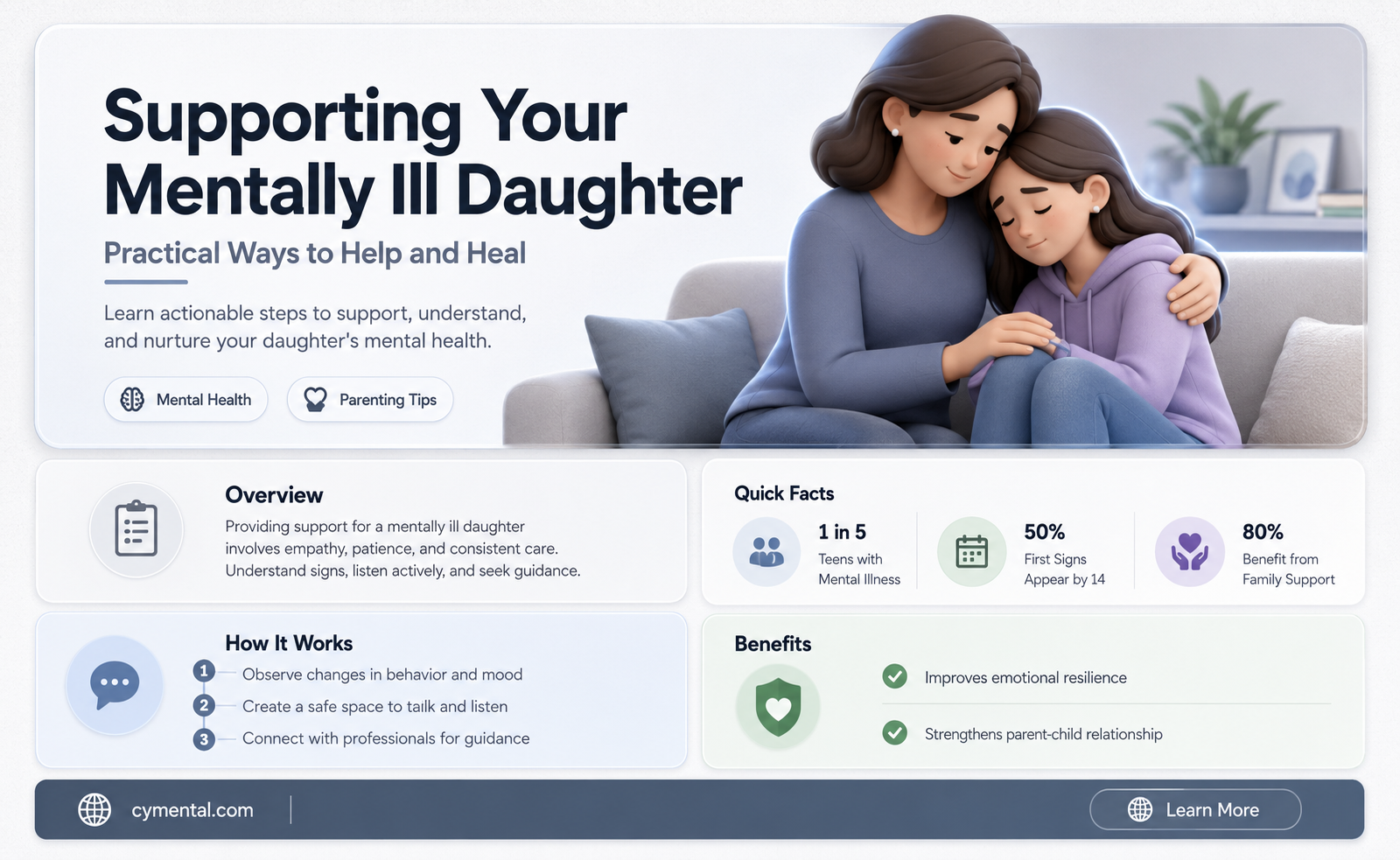
Supporting a mentally ill daughter requires patience, understanding, and a proactive approach. Begin by educating yourself about her specific condition to better comprehend her experiences and challenges. Foster open communication, creating a safe space for her to express her feelings without fear of judgment. Encourage professional help, such as therapy or medication, while also being her advocate in navigating the healthcare system. Establish a stable and supportive home environment, maintaining routines and setting realistic expectations. Prioritize self-care for both yourself and your daughter, as mental health affects the entire family. Finally, seek support from local or online communities to connect with others who understand your journey, ensuring you don’t feel alone in this process.
| Characteristics | Values |
|---|---|
| Educate Yourself | Learn about her specific mental health condition, symptoms, and treatments. Use reputable sources like NAMI (National Alliance on Mental Illness) or WHO (World Health Organization). |
| Open Communication | Create a safe, non-judgmental space for her to express her feelings. Listen actively without interrupting. |
| Encourage Professional Help | Support her in finding a qualified therapist, psychiatrist, or counselor. Offer to accompany her to appointments. |
| Promote Self-Care | Encourage healthy habits like regular sleep, balanced diet, exercise, and mindfulness practices. |
| Be Patient and Understanding | Avoid blaming or shaming. Acknowledge her struggles and validate her emotions. |
| Set Boundaries | Establish clear, respectful boundaries to protect your own mental health while supporting her. |
| Involve Her in Decision-Making | Include her in discussions about her treatment and care, respecting her autonomy. |
| Monitor for Crisis Signs | Learn warning signs of worsening mental health (e.g., suicidal thoughts) and have a crisis plan in place. |
| Build a Support Network | Connect with support groups, family, or friends who can provide additional help and understanding. |
| Celebrate Small Victories | Acknowledge and praise her progress, no matter how small, to boost her confidence. |
| Avoid Enabling | Support her without shielding her from natural consequences of her actions. |
| Practice Self-Care for Yourself | Prioritize your own mental and physical health to avoid burnout and provide effective support. |
| Stay Informed About Medications | Understand her medications, potential side effects, and ensure adherence to prescribed regimens. |
| Reduce Stigma | Challenge stereotypes and educate others to create a supportive environment for her. |
| Encourage Social Engagement | Help her maintain social connections and engage in activities she enjoys. |
| Be Consistent | Provide stable and predictable support, as mental illness often thrives on unpredictability. |
Explore related products


What You'll Learn
- Educate Yourself: Learn about her diagnosis, symptoms, and effective coping strategies to better support her
- Encourage Treatment: Help her access therapy, medication, and support groups tailored to her needs
- Foster Open Communication: Create a safe, non-judgmental space for her to express her feelings
- Promote Self-Care: Encourage healthy habits like sleep, nutrition, and exercise to support her mental health
- Set Boundaries: Balance support with self-care to avoid burnout while helping her effectively

Educate Yourself: Learn about her diagnosis, symptoms, and effective coping strategies to better support her
Understanding your daughter's mental health diagnosis is the cornerstone of effective support. Each condition—whether it’s depression, anxiety, bipolar disorder, or schizophrenia—comes with its own set of symptoms, triggers, and treatment approaches. For instance, knowing that major depressive disorder often involves persistent sadness, fatigue, and loss of interest can help you recognize when your daughter is struggling, even if she doesn’t vocalize it. Similarly, understanding the cyclical nature of bipolar disorder can prepare you for both manic and depressive episodes, allowing you to respond with empathy rather than confusion or frustration. Start by consulting reputable sources like the National Institute of Mental Health (NIMH) or the American Psychiatric Association (APA) for accurate, evidence-based information.
Once you grasp the diagnosis, delve into the specific symptoms your daughter experiences. Mental illnesses often manifest differently in individuals, so what you read in general terms may not fully capture her unique experience. For example, while generalized anxiety disorder typically includes excessive worry, your daughter might also exhibit physical symptoms like stomachaches or insomnia. Keep a journal to track patterns in her behavior, mood, and triggers. This not only helps you identify early warning signs but also provides valuable insights for her treatment team. Remember, mental health is not one-size-fits-all; personalization is key.
Learning effective coping strategies is equally vital. These strategies can range from mindfulness techniques and cognitive-behavioral therapy (CBT) exercises to lifestyle adjustments like regular exercise and sleep hygiene. For instance, if your daughter struggles with panic attacks, teach her the 4-7-8 breathing technique: inhale for 4 seconds, hold for 7 seconds, exhale for 8 seconds. This simple practice can help calm her nervous system during moments of acute anxiety. Additionally, explore resources like apps (e.g., Headspace, Calm) or local support groups that align with her needs. Your role is not to be her therapist but to empower her with tools she can use independently.
However, educating yourself is not without challenges. Misinformation abounds, and it’s easy to feel overwhelmed by conflicting advice or stigmatizing narratives. Stick to peer-reviewed studies, licensed professionals, and trusted organizations. Be cautious of anecdotal advice or miracle cures, which often lack scientific backing. Moreover, avoid the trap of over-identifying with her condition; while empathy is essential, maintaining your own mental health is crucial for sustaining your support. Set boundaries, seek your own support system, and remember that you cannot “fix” her—but you can be a steady, informed presence in her journey.
In conclusion, educating yourself about your daughter’s mental health is an ongoing process that requires curiosity, patience, and humility. By understanding her diagnosis, recognizing her unique symptoms, and equipping her with practical coping strategies, you become a more effective ally in her recovery. This investment not only strengthens your relationship but also fosters a sense of hope and resilience for both of you. After all, knowledge is not just power—it’s compassion in action.
Vitamins and Mental Health: Exploring Their Role in Managing Illness
You may want to see also
Explore related products


Encourage Treatment: Help her access therapy, medication, and support groups tailored to her needs
One of the most effective ways to support your mentally ill daughter is by actively encouraging and facilitating her access to professional treatment. Mental health conditions often require a combination of therapy, medication, and peer support, each playing a unique role in her recovery journey. Start by researching qualified therapists who specialize in her specific diagnosis or age group—adolescents, for example, may benefit from cognitive-behavioral therapy (CBT) or dialectical behavior therapy (DBT), which are evidence-based approaches for conditions like depression, anxiety, or borderline personality disorder. If medication is recommended, collaborate with her psychiatrist to understand potential side effects, dosage adjustments, and long-term benefits. For instance, selective serotonin reuptake inhibitors (SSRIs) are commonly prescribed for depression and anxiety but may take 4–6 weeks to show noticeable effects.
Support groups can complement formal treatment by providing a sense of community and shared understanding. Look for local or online groups tailored to her condition or age, such as Anxiety and Depression Association of America (ADAA) peer support programs or National Alliance on Mental Illness (NAMI) family groups. Encourage her participation without forcing it, as peer connections can reduce feelings of isolation and stigma. However, be mindful of the group’s dynamics—ensure it’s moderated by a professional or experienced facilitator to maintain a safe and constructive environment.
Practical steps can make treatment more accessible. Offer to accompany her to initial appointments if she feels anxious, but respect her autonomy as she grows more comfortable. Help her organize a medication schedule using apps like Medisafe or physical pill organizers to ensure consistency. If cost is a barrier, explore sliding-scale therapy options, community mental health centers, or insurance coverage for telehealth services, which can be particularly helpful for teens who prefer remote sessions.
While encouraging treatment, be prepared for resistance or setbacks. Mental health recovery is rarely linear, and your daughter may express skepticism about therapy or struggle with medication side effects. Validate her concerns without dismissing the importance of treatment. For example, if she complains about feeling "numb" on antidepressants, discuss this with her doctor rather than advising her to stop abruptly, as discontinuation syndromes can occur with SSRIs. Your role is to provide steady, nonjudgmental support while emphasizing that treatment is a collaborative process, not a one-size-fits-all solution.
Finally, model patience and persistence. Mental health treatment often requires trial and error—a therapist who doesn’t resonate, a medication that needs adjustment, or a support group that feels uncomfortable at first. Celebrate small victories, like attending a therapy session or sharing in a group, and remind her that progress is measured in steps, not leaps. By actively engaging in her treatment journey, you’re not only addressing her immediate needs but also teaching her the value of seeking help and prioritizing her mental well-being for the long term.
Summer Programs: A Lifeline for Mental Health and Suicide Prevention?
You may want to see also
Explore related products





Foster Open Communication: Create a safe, non-judgmental space for her to express her feelings
One of the most powerful ways to support a mentally ill daughter is to become her safe harbor—a place where she feels unconditionally accepted, no matter what she’s experiencing. Mental illness often comes with a storm of emotions: fear, shame, anger, or confusion. When she knows she can share these without fear of judgment, criticism, or dismissal, she’ll be more likely to open up. Start by actively listening without interrupting or offering solutions. Let her lead the conversation, and validate her feelings with phrases like, “That sounds really hard,” or “I can see why you’d feel that way.” Avoid saying, “It’s not that bad,” or “Just think positively,” as these minimize her experience and shut down communication.
Creating a non-judgmental space requires intentional effort. Set aside dedicated time for conversations, free from distractions like phones or TV. Use open-ended questions like, “How are you feeling today?” or “What’s been on your mind?” instead of yes-or-no questions, which can feel dismissive. If she hesitates to share, don’t push—let her know you’re there when she’s ready. Be mindful of your tone and body language; a tense posture or impatient sigh can signal judgment, even if your words are kind. Consistency is key: show her that this safe space is always available, even on days when her struggles feel overwhelming.
A practical tool to foster open communication is the “emotion wheel,” a visual aid that helps identify and name feelings. For teens and young adults, who often struggle to articulate emotions, this can be particularly helpful. Sit together and explore the wheel, encouraging her to pinpoint what she’s experiencing. For example, instead of saying, “I’m sad,” she might realize she feels “disappointed” or “overwhelmed.” This precision deepens understanding and makes her feel truly heard. Pair this with a journal where she can write freely, knowing you won’t read it unless invited—another way to reinforce trust and safety.
Finally, model vulnerability yourself. Share age-appropriate, relevant struggles of your own (e.g., “I felt really anxious before that meeting yesterday”) to show that emotions are normal and manageable. This normalizes her experiences and strengthens your bond. However, avoid oversharing or making the conversation about you—the focus should remain on her. By fostering open communication, you’re not just offering support; you’re teaching her how to express herself healthily, a skill that will benefit her throughout life. Remember, this isn’t about fixing her problems—it’s about letting her know she’s not alone in facing them.
Do Mentally Ill Individuals Seek Support? Breaking Barriers and Stigma
You may want to see also
Explore related products




Promote Self-Care: Encourage healthy habits like sleep, nutrition, and exercise to support her mental health
Mental health struggles often disrupt basic routines, leaving individuals vulnerable to a downward spiral of fatigue, poor nutrition, and inactivity. This vicious cycle exacerbates symptoms, making it crucial to re-establish healthy habits as a foundation for recovery.
The Science Behind Self-Care:
Research consistently links sleep deprivation to heightened anxiety, depression, and cognitive impairment. Aim for 8-10 hours of quality sleep for adolescents and young adults, creating a consistent bedtime routine that limits screen time at least an hour before sleep. Nutrition plays an equally vital role; a diet rich in omega-3 fatty acids (found in salmon, walnuts, flaxseeds) and complex carbohydrates (whole grains, legumes) stabilizes mood and energy levels. Conversely, processed foods and excessive sugar can trigger inflammation and worsen mental health symptoms. Exercise, even in moderate doses (30 minutes of brisk walking, 5 days a week), releases endorphins, reduces stress hormones, and improves sleep quality.
Practical Strategies for Implementation:
Start small and specific. Instead of vague encouragement, suggest a 10-minute evening walk together or prepare a meal incorporating leafy greens and lean protein. Use positive reinforcement, celebrating progress rather than focusing on setbacks. For sleep, invest in blackout curtains, a white noise machine, or a weighted blanket to create a calming environment. If your daughter resists exercise, frame it as a social activity—join a yoga class together or suggest dancing to her favorite playlist.
Addressing Common Barriers:
Resistance to change is natural, especially when mental illness drains motivation. Avoid forcing habits; instead, involve her in decision-making. Let her choose recipes or workout routines she finds appealing. Be mindful of her energy levels—on particularly difficult days, prioritize rest over rigid schedules. If disordered eating is a concern, consult a dietitian specializing in mental health to create a safe, nourishing plan.
Long-Term Takeaway:
Self-care isn’t a quick fix but a sustainable practice that empowers your daughter to take control of her well-being. By fostering these habits, you provide her with tools to manage symptoms, build resilience, and cultivate a sense of agency in her recovery journey. Consistency, patience, and compassion are key—both for her and for yourself as a caregiver.
Mounjaro's Impact: Exploring Mental Health Benefits and Potential Effects
You may want to see also
Explore related products


Set Boundaries: Balance support with self-care to avoid burnout while helping her effectively
Caring for a mentally ill daughter often blurs the line between unconditional love and unsustainable sacrifice. Without clear boundaries, your support can morph into enabling, and compassion into exhaustion. This isn’t about withdrawing care but redefining its terms to ensure both your well-being and hers.
Step 1: Define Emotional and Temporal Limits
Start by identifying non-negotiables. For instance, allocate specific hours for crisis support (e.g., 7–9 PM) and communicate them firmly. If she calls outside these hours, redirect her to a helpline or pre-recorded message of reassurance. Emotional boundaries are equally critical. Phrases like, *"I’m here to listen, but I won’t engage in arguments about your treatment plan,"* establish respect for both parties.
Caution: Avoid Ambiguity
Vague boundaries breed resentment. Instead of saying, *"I need time for myself,"* specify, *"I’ll check in after my morning run at 9 AM."* Ambiguity invites guilt-tripping or misinterpretation, undermining the very structure meant to protect you.
Step 2: Prioritize Physical Self-Care as a Boundary Tool
Your body’s resilience directly impacts your ability to provide consistent support. Dedicate 30 minutes daily to non-negotiable self-care: a walk, meditation, or even a nap. Treat this as a boundary, not a luxury. For example, if your daughter interrupts your exercise time, respond with, *"I’ll address this after my workout—it’s essential for me to stay healthy for both of us."*
Analysis: The Interdependence Paradox
Boundaries aren’t selfish; they’re strategic. A 2020 study in *Family Process* found that caregivers who maintained structured self-care routines reported 40% lower burnout rates and improved patient outcomes. Your daughter needs a stable anchor, not a sinking ship.
Step 3: Model Healthy Coping Mechanisms
Boundaries become more effective when paired with actionable alternatives. If you can’t be available, provide her with a "coping toolkit": a list of distractions (e.g., journaling prompts, breathing exercises), emergency contacts, or pre-recorded affirmations from you. This shifts the focus from your presence to her autonomy.
Ultimately, boundaries transform caregiving from a one-way street into a sustainable partnership. They teach your daughter to respect her own limits while ensuring you remain a reliable source of support. Remember: saying "no" to over-extension today means saying "yes" to long-term resilience for both of you.
Can Hospitals Provide Effective Mental Health Support and Treatment?
You may want to see also
Frequently asked questions
Provide consistent emotional support, maintain open communication, and help her stick to treatment plans, such as medication and therapy. Encourage healthy habits like regular sleep, exercise, and balanced meals, and be patient as recovery takes time.
Approach the topic with empathy and understanding, expressing concern without judgment. Offer to accompany her to appointments and explore options together. If she remains resistant, consult a mental health professional for guidance on how to intervene effectively.
Prioritize self-care by setting boundaries, seeking support from friends, family, or support groups, and practicing stress-management techniques like mindfulness or exercise. Remember, you cannot pour from an empty cup.
Use calm, non-confrontational language, listen actively without interrupting, and validate her feelings. Avoid blaming or minimizing her struggles, and focus on problem-solving together rather than imposing solutions.
Advocate for accommodations like a 504 plan or ADA protections, help her organize tasks to reduce stress, and encourage her to communicate her needs to teachers or employers. Provide reassurance and celebrate small achievements to boost her confidence.