Lucas Bennett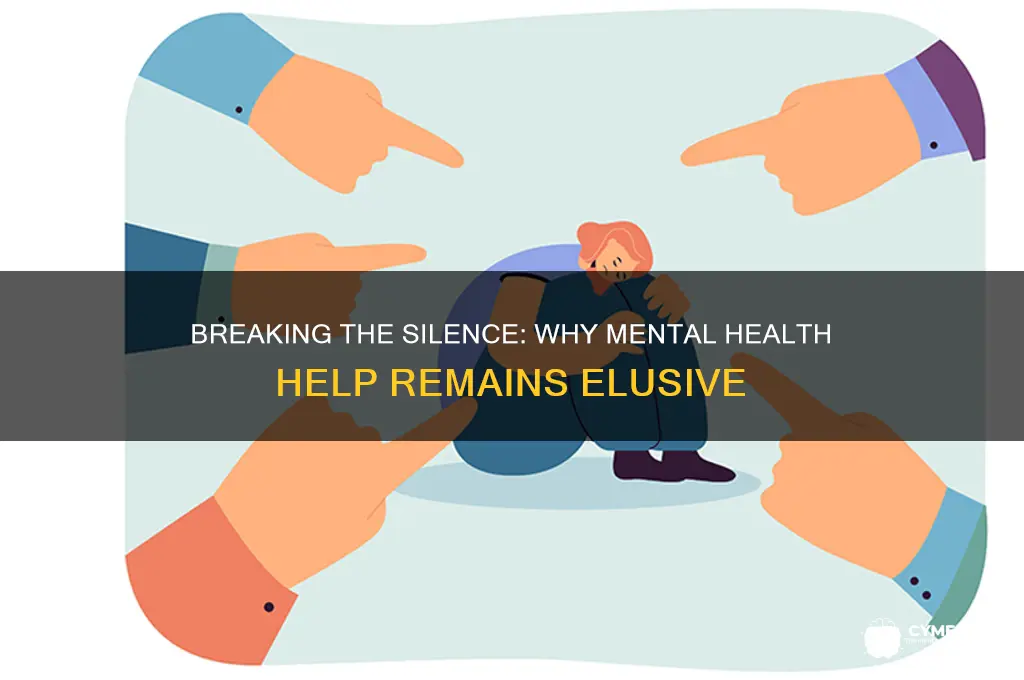
Many individuals struggling with mental health issues often avoid seeking help due to a combination of stigma, fear of judgment, and a lack of awareness about available resources. Societal misconceptions about mental illness can lead to feelings of shame or weakness, causing people to internalize their struggles rather than reaching out. Additionally, the high cost of therapy, limited access to mental health professionals, and concerns about confidentiality further deter individuals from pursuing support. Cultural barriers and the normalization of suffering in silence also play a significant role, as many believe they should handle their problems independently. These factors collectively create a pervasive reluctance to seek help, perpetuating a cycle of untreated mental health challenges.
Explore related products


What You'll Learn
- Stigma and Shame: Fear of judgment prevents individuals from seeking mental health support openly
- Lack of Awareness: Many don’t recognize symptoms or know where to find help
- Financial Barriers: High costs of therapy and treatment make it inaccessible for many
- Cultural Beliefs: Some cultures view mental health issues as personal weaknesses or taboos
- Systemic Failures: Limited resources and long wait times discourage people from seeking care

Stigma and Shame: Fear of judgment prevents individuals from seeking mental health support openly
Stigma acts as an invisible barrier, trapping individuals in silence and preventing them from seeking the mental health support they desperately need. Consider this: a 2021 study by the American Psychological Association found that 57% of adults with mental illness reported experiencing stigma, with 40% citing fear of judgment as a primary reason for avoiding treatment. This fear isn’t unfounded; societal misconceptions often label those with mental health issues as "weak," "unstable," or "dangerous," creating a culture of shame that silences even the most urgent cries for help.
To dismantle this barrier, start by normalizing conversations about mental health in everyday settings. For instance, workplaces can implement policies like mandatory mental health training for managers, ensuring employees feel safe discussing their struggles without fear of repercussions. Schools can integrate mental health education into curricula, teaching students from ages 10 and up that seeking help is a sign of strength, not failure. Practical steps like these shift the narrative, replacing judgment with empathy and understanding.
Compare this to physical health: no one hesitates to seek treatment for a broken leg, yet a broken spirit often goes untreated. The disparity lies in perception. While physical ailments are visible and universally acknowledged, mental health struggles are often dismissed as "all in your head." This double standard perpetuates stigma, leaving individuals to battle their demons alone. To bridge this gap, public campaigns can highlight the biological basis of mental health conditions, emphasizing that they are as valid and treatable as any physical illness.
Finally, for those struggling, here’s a tangible tip: begin small. Share your feelings with one trusted person—a friend, family member, or even a helpline operator. Organizations like the National Alliance on Mental Illness (NAMI) offer anonymous support, providing a safe space to express yourself without fear of judgment. Remember, seeking help isn’t a sign of weakness; it’s the first step toward reclaiming your well-being. By challenging stigma one conversation at a time, we can create a world where no one feels ashamed to ask for the support they deserve.
Dropping Mental Filters: Unveiling New Perspectives on Everyday Experiences
You may want to see also
Explore related products


Lack of Awareness: Many don’t recognize symptoms or know where to find help
A startling number of people experience mental health struggles without ever realizing it. Subtle shifts in mood, energy, or behavior often go unnoticed, dismissed as mere "bad days" or temporary stress. This lack of awareness stems partly from the insidious nature of mental illness itself. Symptoms can be highly individualized, manifesting as irritability in one person, social withdrawal in another, or physical aches and pains without clear medical cause. Without a clear understanding of these diverse presentations, individuals may attribute their distress to external factors, never connecting the dots to an underlying mental health condition.
For instance, a young adult experiencing persistent sadness and difficulty concentrating might blame academic pressure or relationship issues, unaware that these could be symptoms of depression. Similarly, an older adult struggling with anxiety might attribute their racing heart and sleepless nights to age-related changes, delaying necessary intervention.
This lack of symptom recognition is compounded by a pervasive knowledge gap regarding available resources. Many individuals simply don't know where to turn for help. Traditional mental health services, often shrouded in stigma and perceived as inaccessible, remain out of reach for many. The complexity of navigating insurance systems, finding affordable care, and identifying qualified professionals further discourages seeking help. This is particularly true for marginalized communities who face additional barriers due to cultural stigma, language barriers, or lack of culturally competent care.
Imagine a single mother working multiple jobs, struggling with overwhelming anxiety but unsure if therapy is covered by her insurance or even where to find a therapist who understands her cultural background. The sheer effort required to access help can feel insurmountable, leading to a cycle of silence and suffering.
Bridging this awareness gap requires a multi-pronged approach. Public education campaigns need to move beyond generic slogans and provide concrete examples of how mental health conditions manifest in everyday life. Schools, workplaces, and community centers should offer workshops and resources that demystify mental health, normalize seeking help, and provide clear information on accessing local services. Online platforms and apps can play a crucial role in reaching younger generations, offering anonymous screenings, peer support forums, and directories of mental health professionals.
Ultimately, addressing the lack of awareness surrounding mental health requires a cultural shift. We need to foster an environment where open conversations about mental well-being are encouraged, where seeking help is seen as a sign of strength, and where accessing support is as straightforward as seeking treatment for a physical ailment. Only then can we break down the barriers that prevent individuals from recognizing their struggles and receiving the help they deserve.
Staying Active: How Keeping Busy Boosts Mental Health and Well-being
You may want to see also
Explore related products



Financial Barriers: High costs of therapy and treatment make it inaccessible for many
The average cost of a single therapy session in the United States ranges from $100 to $250, with specialized treatments like cognitive behavioral therapy (CBT) or eye movement desensitization and reprocessing (EMDR) often exceeding $300 per session. For individuals without insurance or with high-deductible plans, this expense quickly becomes prohibitive. Consider a person earning minimum wage, roughly $15,080 annually. Allocating just $100 weekly for therapy would consume over a third of their monthly income, leaving little for essentials like rent, food, or transportation. This financial strain forces many to choose between mental health care and basic survival, effectively barring access to treatment.
Insurance coverage, while intended to mitigate costs, often falls short. Many plans require patients to meet high deductibles before benefits kick in, or they limit the number of covered sessions per year. For instance, a common cap is 20 sessions annually, insufficient for long-term conditions like depression or PTSD. Even with coverage, copays of $20 to $50 per session add up, particularly for those undergoing multiple sessions weekly. Additionally, not all therapists accept insurance, leaving patients to navigate out-of-network reimbursement processes that are time-consuming and often result in partial repayment. These systemic gaps ensure that financial barriers persist, even for the insured.
For low-income individuals, the situation is dire. Community mental health centers, often touted as affordable alternatives, are chronically underfunded and overwhelmed. Wait times can stretch to months, and services are frequently limited to crisis intervention rather than ongoing care. Sliding-scale clinics, which adjust fees based on income, are scarce and often fully booked. Meanwhile, medication costs compound the issue. A month’s supply of common antidepressants like sertraline or fluoxetine can range from $10 to $100, depending on insurance and pharmacy, but newer or brand-name medications can cost upwards of $500. Without consistent access to both therapy and medication, many are left with incomplete or ineffective treatment plans.
To address these barriers, practical steps can be taken. First, advocate for policy changes that mandate comprehensive mental health coverage, including removing session caps and reducing out-of-pocket costs. Second, explore telehealth platforms, which often offer lower-cost therapy options, though this requires reliable internet access. Third, inquire about pharmaceutical assistance programs, such as those offered by drug manufacturers, which provide discounted or free medications to eligible individuals. Finally, consider group therapy or support groups, which are typically more affordable than individual sessions. While these solutions are not perfect, they offer pathways to care for those facing financial constraints.
Nutrition's Power: How Healthy Foods Boost Mental Health and Well-being
You may want to see also
Explore related products





Cultural Beliefs: Some cultures view mental health issues as personal weaknesses or taboos
In many cultures, mental health struggles are seen as a private battle, a silent war waged within the confines of one's mind. This perception often stems from the deeply ingrained belief that seeking help for such issues is an admission of personal failure or weakness. For instance, in some Asian communities, mental health problems are frequently attributed to a lack of willpower or moral fortitude, leading individuals to suffer in silence rather than risk the stigma associated with reaching out. This cultural narrative not only isolates those in need but also perpetuates a cycle of shame and secrecy, making it increasingly difficult for individuals to acknowledge their struggles and seek professional intervention.
Consider the case of a young adult in a traditional African household, where mental health discussions are often met with skepticism or outright dismissal. Here, emotional distress might be interpreted as a sign of spiritual imbalance or a result of personal shortcomings, rather than a treatable condition. The pressure to maintain a facade of strength and resilience can be overwhelming, leaving individuals trapped in a web of unspoken pain. To address this, it is crucial to implement culturally sensitive educational programs that reframe mental health as a universal human experience, not a personal defect. Schools, community centers, and religious institutions can serve as platforms to disseminate accurate information, fostering a more compassionate and informed perspective.
A persuasive argument can be made for the role of media in challenging these cultural taboos. Television shows, films, and social media campaigns that portray mental health struggles with empathy and authenticity can help normalize the conversation. For example, a popular soap opera in India recently featured a storyline about a character battling depression, sparking nationwide discussions and encouraging viewers to reconsider their preconceived notions. Such initiatives not only humanize mental health issues but also provide a sense of validation for those who may be hesitant to seek help. By leveraging the power of storytelling, societies can begin to dismantle the stigma that has long surrounded mental health.
Comparatively, cultures that integrate mental well-being into their traditional practices offer valuable lessons. Indigenous communities, for instance, often view emotional and psychological health as interconnected with physical and spiritual wellness. Healing practices may include communal rituals, herbal remedies, and counseling by elders, emphasizing the importance of collective support. Western societies can draw inspiration from these holistic approaches, incorporating elements of community-based care into modern mental health services. This not only makes treatment more accessible but also aligns with cultural values that prioritize unity and shared responsibility.
To bridge the gap between cultural beliefs and mental health care, practical steps can be taken at both individual and institutional levels. For families, initiating open conversations about emotions and well-being can create a safe space for members to express themselves without fear of judgment. At the institutional level, healthcare providers should offer training in cultural competency, ensuring that services are tailored to the unique needs and beliefs of diverse populations. Additionally, policymakers can allocate resources to fund research on culturally specific interventions, paving the way for more inclusive and effective mental health strategies. By addressing these cultural barriers head-on, we can create a world where seeking help is not a sign of weakness, but a courageous step toward healing.
Supporting Your Roommate: Practical Tips for Mental Health Assistance
You may want to see also
Explore related products


Systemic Failures: Limited resources and long wait times discourage people from seeking care
The mental health care system is crumbling under the weight of demand. Imagine a hospital with only one doctor for every 100 patients, all critically ill. This isn't a dystopian scenario; it's the reality for many seeking mental health treatment. In the United States, for example, nearly 122 million people live in areas with a shortage of mental health professionals. This dire lack of resources translates to wait times stretching into months, even for those in acute distress.
A 2022 study found that the average wait time for a therapy appointment in major US cities was 48 days, with some specialties, like child psychiatry, exceeding 60 days. These delays are more than just inconvenient; they're dangerous.
Consider a young adult experiencing their first psychotic episode. Every day without intervention increases the risk of self-harm, hospitalization, and long-term disability. For someone battling severe depression, a month-long wait for treatment can feel like an eternity, pushing them further into despair. The system, designed to heal, becomes a barrier, exacerbating the very conditions it aims to treat.
This isn't merely a matter of inconvenience; it's a matter of life and death. Studies show that long wait times are a significant predictor of treatment dropout, with up to 30% of patients abandoning care altogether due to delays.
The consequences ripple outwards, impacting not just individuals but families, communities, and society as a whole. Untreated mental illness contributes to homelessness, unemployment, and increased healthcare costs. It's a vicious cycle: limited resources lead to long wait times, which discourage people from seeking help, further straining the system.
Breaking this cycle requires a multi-pronged approach. Firstly, we need a massive investment in mental health infrastructure. This means increasing funding for training programs to expand the workforce, incentivizing providers to work in underserved areas, and integrating mental health services into primary care settings. Telehealth, while not a panacea, can bridge the gap by providing remote access to care, particularly in rural areas.
Additionally, we need to rethink how we deliver mental health services. Group therapy, peer support programs, and online interventions can reach more people at a lower cost. Finally, we must address the stigma surrounding mental illness, which often prevents people from seeking help in the first place. Public awareness campaigns and education initiatives are crucial in creating a culture where seeking help is seen as a sign of strength, not weakness.
Pets and Mental Health: Which Companion Offers the Most Support?
You may want to see also
Frequently asked questions
Many avoid seeking help due to stigma, fear of judgment, or the belief that mental health struggles are a sign of weakness. Additionally, lack of awareness about available resources and the cost of treatment can deter individuals from reaching out.
Societal stigma often associates mental health issues with personal failure or instability, leading to feelings of shame or embarrassment. Cultural norms that prioritize self-reliance can also make individuals hesitant to admit they need help.
There’s a common misconception that mental health struggles are temporary or can be overcome with willpower alone. This belief, combined with a lack of education about the chronic nature of some conditions, leads many to avoid seeking professional help.


![Shame (The Criterion Collection) [Blu-ray]](https://m.media-amazon.com/images/I/81L-2w6IK0L._AC_UY218_.jpg)