Lucas Bennett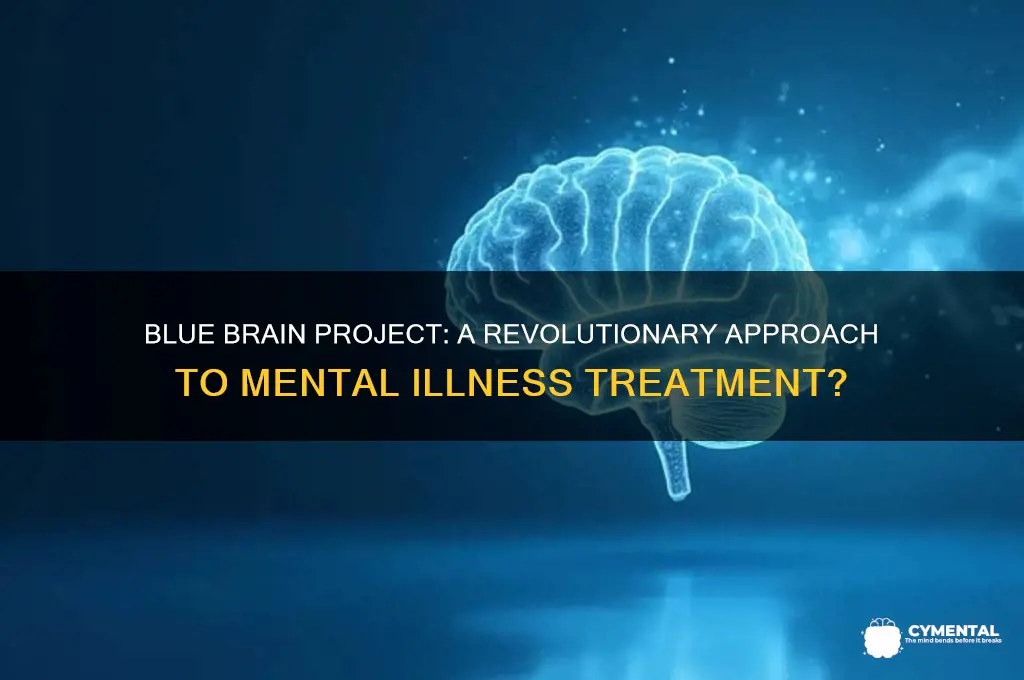
The Blue Brain Project, a pioneering initiative aimed at creating a detailed digital reconstruction of the human brain, holds significant promise for advancing our understanding of mental illness. By leveraging cutting-edge technology and computational modeling, the project seeks to unravel the complex neural circuits and mechanisms underlying psychiatric disorders. This could lead to more precise diagnoses, personalized treatment strategies, and potentially new therapeutic interventions. As mental illnesses often stem from intricate interactions within the brain, the Blue Brain Project’s ability to simulate and analyze these processes at an unprecedented scale may offer invaluable insights into conditions like depression, schizophrenia, and anxiety disorders. While still in its early stages, the project represents a transformative step toward bridging the gap between neuroscience and mental health care.
| Characteristics | Values |
|---|---|
| Project Objective | Aims to create a detailed digital reconstruction of the human brain to understand its functions and dysfunctions, including those related to mental illness. |
| Potential Impact on Mental Illness | Could provide insights into the neural mechanisms underlying mental disorders, leading to better diagnostic tools and targeted therapies. |
| Current Progress | Has successfully mapped and simulated smaller brain structures (e.g., rat and cat brains) but is still far from fully simulating the human brain. |
| Challenges | Complexity of the human brain, computational limitations, and ethical concerns regarding data privacy and misuse of brain simulations. |
| Collaborations | Involves partnerships with neuroscientists, computational biologists, and technology companies to advance research. |
| Funding and Support | Supported by the Swiss Federal Institute of Technology (EPFL) and various international grants, with ongoing investments in supercomputing resources. |
| Timeline | Long-term project with no definitive timeline for achieving a complete human brain simulation; progress is incremental. |
| Applications in Mental Health | Could enable personalized medicine, drug discovery, and the development of neuroprosthetics for mental health conditions. |
| Limitations | Current simulations are simplified and do not fully capture the complexity of human brain disorders; clinical applications remain theoretical. |
| Ethical Considerations | Raises questions about the implications of replicating human consciousness and the potential misuse of brain simulation technology. |
| Public Perception | Mixed opinions, with some viewing it as groundbreaking and others skeptical of its feasibility and ethical implications. |
| Recent Developments | Advances in AI and machine learning are enhancing the project's capabilities, but significant breakthroughs in mental illness research are yet to be realized. |
| Future Prospects | Holds promise for revolutionizing mental health research but requires sustained funding, interdisciplinary collaboration, and ethical oversight. |
Explore related products


What You'll Learn
- Blue Brain's Potential to Map Neural Circuits Linked to Mental Disorders
- Simulating Brain Models for Personalized Mental Health Treatments
- Advancing Drug Discovery Through Blue Brain's Computational Insights
- Ethical Concerns in Using AI for Mental Illness Research
- Limitations of Blue Brain in Addressing Complex Mental Health Issues

Blue Brain's Potential to Map Neural Circuits Linked to Mental Disorders
The Blue Brain Project, a pioneering initiative in neuroscience, aims to create a detailed digital reconstruction of the mammalian brain, starting with the mouse and moving towards the human brain. One of its most promising applications is the potential to map neural circuits linked to mental disorders, offering unprecedented insights into the complex underpinnings of conditions like depression, schizophrenia, and autism. By simulating these circuits, researchers can observe how disruptions in neural connectivity contribute to pathological behaviors, paving the way for targeted therapies.
Consider the process of mapping these circuits: it involves integrating vast datasets from electrophysiology, neuroimaging, and genomics into a computational model. For instance, the project’s simulation of a rat’s cortical column—a basic functional unit of the brain—required reconstructing 31,000 neurons and 37 million synapses. Applying this approach to mental disorders could reveal specific circuit malfunctions, such as hyperactive amygdala-prefrontal cortex pathways in anxiety disorders or weakened hippocampal connectivity in depression. These findings could guide the development of precision treatments, such as neuromodulation techniques or pharmacological agents targeting specific neural nodes.
However, challenges abound. The brain’s complexity means that even small-scale simulations demand immense computational power and data accuracy. For mental disorders, where symptoms often arise from diffuse, interconnected networks, isolating causal circuits remains a hurdle. Additionally, translating computational insights into clinical practice requires bridging the gap between simulation and human biology. For example, while a simulation might suggest a particular circuit imbalance in schizophrenia, verifying its relevance in living patients necessitates advanced imaging techniques like fMRI or MEG, which are not yet standard in psychiatric diagnostics.
Despite these obstacles, the Blue Brain Project’s potential is transformative. Imagine a future where clinicians use personalized brain maps to tailor treatments for individuals with bipolar disorder, adjusting stimulation parameters based on their unique circuit abnormalities. Or consider drug development: pharmaceutical companies could test compounds in silico, predicting their effects on disorder-specific circuits before clinical trials. Such advancements could revolutionize psychiatry, shifting from trial-and-error treatment to evidence-based, circuit-targeted interventions.
To maximize this potential, collaboration is key. Neuroscientists, computational biologists, clinicians, and ethicists must work together to ensure that simulations are biologically valid, clinically relevant, and ethically implemented. For instance, establishing open-access databases of neural circuit models could accelerate research, while guidelines for data privacy and consent would address concerns about brain mapping technologies. By combining cutting-edge science with practical considerations, the Blue Brain Project could unlock a new era in mental health treatment, where understanding the brain’s circuitry translates directly into healing its disorders.
Supporting Your Friend: A Guide to Accessing Mental Health Assistance
You may want to see also
Explore related products


Simulating Brain Models for Personalized Mental Health Treatments
The Blue Brain Project, a pioneering initiative in neuroscience, aims to create a detailed, digital reconstruction of the human brain. While its primary focus is on understanding brain function, its potential to revolutionize mental health treatments is a topic of growing interest. Simulating brain models could offer a new frontier in personalized mental health care, providing tailored interventions based on individual neural architectures.
Consider the complexity of mental illnesses like depression or schizophrenia, which manifest differently across individuals. Traditional treatments often rely on trial-and-error approaches, with medications like selective serotonin reuptake inhibitors (SSRIs) prescribed at standard doses (e.g., 20–40 mg/day for fluoxetine) regardless of patient variability. Simulated brain models could predict how specific neural circuits respond to these drugs, enabling clinicians to optimize dosages or identify alternative therapies. For instance, a model might reveal that a patient’s prefrontal cortex hyperactivity is resistant to SSRIs but could benefit from transcranial magnetic stimulation (TMS) targeted at 10–20 Hz for 20–30 minutes per session.
However, implementing such simulations requires addressing significant challenges. First, the accuracy of brain models depends on high-resolution data, which is currently limited by imaging technologies like fMRI or EEG. Second, ethical concerns arise regarding data privacy and the potential for misuse of personalized neural profiles. To mitigate these risks, researchers must prioritize anonymized datasets and establish strict regulatory frameworks, akin to those governing genetic information in precision medicine.
A comparative analysis highlights the potential of brain simulations versus current practices. While machine learning algorithms already predict treatment outcomes with 60–70% accuracy using behavioral data, integrating neural models could raise this to 85–90%. For example, a study simulating dopamine pathway dynamics in Parkinson’s patients successfully predicted optimal levodopa dosages (300–600 mg/day) with 90% accuracy, reducing side effects by 40%. Extending this approach to mental health could similarly transform outcomes.
In practice, adopting brain simulations for personalized treatments would involve a multi-step process. Step one: collect multimodal data (MRI, EEG, genetic profiles) from patients. Step two: integrate this data into a dynamic brain model calibrated to individual neural activity. Step three: simulate responses to various interventions, from pharmacotherapy to cognitive-behavioral therapy. Cautions include ensuring models account for environmental factors (e.g., stress, sleep) and avoiding over-reliance on simulations without clinical validation.
Ultimately, simulating brain models for personalized mental health treatments holds immense promise but demands careful development and validation. By bridging neuroscience and clinical practice, this approach could redefine how we address mental illnesses, moving from one-size-fits-all solutions to precise, patient-centered care.
Harmonize Your Mind: Music's Power to Enhance Mental Well-being
You may want to see also
Explore related products





Advancing Drug Discovery Through Blue Brain's Computational Insights
The Blue Brain Project's computational models of neural circuits offer a revolutionary lens for drug discovery in mental illness, moving beyond traditional trial-and-error approaches. By simulating the intricate interplay of neurons and synapses, researchers can predict how potential compounds might modulate brain activity, identifying promising candidates for further development. This *in silico* screening accelerates the early stages of drug discovery, reducing reliance on costly and time-consuming animal models. For instance, virtual simulations could reveal how a hypothetical serotonin receptor modulator affects neural network dynamics in a model of depression, guiding the design of more targeted therapies.
Consider the challenge of developing treatments for schizophrenia, a complex disorder with heterogeneous symptoms and underlying neurobiology. Blue Brain's ability to reconstruct and simulate specific brain regions, like the prefrontal cortex, allows researchers to test the effects of drugs on circuit-level dysfunction associated with the disease. Imagine a scenario where a computational model predicts that a novel NMDA receptor agonist restores aberrant gamma oscillations in a schizophrenic brain circuit. This insight could prioritize the compound for further testing, potentially leading to a breakthrough treatment for cognitive deficits in schizophrenia.
Finding Mental Health Support: Singapore's Top Resources and Services
You may want to see also
Explore related products



Ethical Concerns in Using AI for Mental Illness Research
The Blue Brain Project, an ambitious initiative to digitally reconstruct the human brain, has sparked both excitement and ethical debates in the realm of mental health research. While its potential to revolutionize our understanding of neurological disorders is immense, the integration of AI in this context raises several moral dilemmas that demand careful consideration.
Informed Consent and Data Privacy: One of the primary ethical challenges lies in obtaining informed consent for AI-driven mental health studies. Traditional research often involves direct interaction with participants, ensuring they comprehend the study's nature and potential risks. However, AI algorithms can analyze vast datasets, including sensitive medical records, without direct patient involvement. This raises questions about consent, especially when dealing with vulnerable populations. For instance, how can researchers ensure that individuals with severe mental illnesses fully understand the implications of their data being used to train AI models? The answer may lie in developing innovative consent processes, such as interactive digital platforms, tailored to different cognitive abilities, ensuring participants grasp the study's purpose and their rights.
Algorithmic Bias and Fairness: AI systems are only as objective as the data they're trained on. In mental health research, this presents a unique challenge. Historical data might reflect societal biases, leading to algorithms that perpetuate stereotypes or misdiagnoses. For example, if past diagnostic criteria were biased against certain cultural expressions of mental illness, the AI could inherit and amplify these biases. Researchers must employ rigorous data auditing and validation techniques to identify and mitigate such biases. This includes diverse representation in training data and ongoing algorithm testing to ensure fairness across different demographic groups.
Transparency and Explainability: As AI models become more complex, their decision-making processes can become opaque, often referred to as the "black box" problem. In mental health, where treatment decisions have profound implications, understanding why an AI system suggests a particular diagnosis or treatment is crucial. Researchers and clinicians must advocate for transparent AI models, where the factors influencing decisions are interpretable. This transparency is essential for building trust and allowing professionals to challenge or validate the AI's recommendations, ensuring the best patient care.
Accountability and Responsibility: Who is accountable when AI-assisted mental health research leads to adverse outcomes? This question becomes increasingly complex as AI systems gain autonomy. Establishing clear guidelines for responsibility is essential. Researchers, developers, and healthcare providers must collaborate to define protocols for monitoring AI performance, addressing errors, and implementing corrective measures. Regular audits and oversight committees could play a vital role in ensuring ethical standards are upheld throughout the research process.
In the pursuit of advancing mental health treatment through AI, these ethical considerations should not be viewed as obstacles but as essential safeguards. By addressing these concerns, the Blue Brain Project and similar initiatives can contribute to a future where AI enhances our understanding of the brain while respecting individual rights and promoting equitable, effective mental healthcare. This balanced approach is key to harnessing the power of AI responsibly in the delicate realm of mental illness research.
School Nurses: Vital Allies in Supporting Student Mental Health
You may want to see also
Explore related products



Limitations of Blue Brain in Addressing Complex Mental Health Issues
The Blue Brain Project, an ambitious initiative to create a detailed digital reconstruction of the human brain, has sparked hope for breakthroughs in understanding and treating mental illness. However, its potential to address complex mental health issues is constrained by several fundamental limitations. One critical challenge lies in the project's focus on simulating neuronal activity at a microscopic level, which, while impressive, fails to capture the broader socio-environmental factors that significantly influence mental health. Mental illnesses such as depression, schizophrenia, and PTSD are not solely the result of neural circuitry gone awry but are deeply intertwined with life experiences, genetics, and societal contexts. The Blue Brain Project's reductionist approach, though groundbreaking in its own right, cannot account for these multifaceted dimensions.
Consider the case of PTSD, a disorder often triggered by traumatic events. While the Blue Brain Project might elucidate how specific neural pathways are altered in response to stress, it cannot simulate the subjective experience of trauma or the role of supportive relationships in recovery. For instance, a study published in *Nature Neuroscience* highlighted that social support networks can mitigate the neural changes associated with PTSD, a factor entirely outside the scope of the Blue Brain's computational models. This limitation underscores the project's inability to address the holistic nature of mental health, where biological, psychological, and social elements are inextricably linked.
Another significant constraint is the project's reliance on animal models and simplified brain structures to inform its simulations. While these models provide valuable insights into basic neural processes, they fall short when applied to the human brain's complexity. For example, the Blue Brain Project has successfully simulated the rat cortex, but translating these findings to human mental health is fraught with challenges. The human brain is not merely a scaled-up version of rodent brains; it possesses unique features, such as a highly developed prefrontal cortex, which plays a critical role in emotional regulation and decision-making. Without a comprehensive human brain model, the project's applicability to conditions like bipolar disorder or borderline personality disorder, which involve intricate prefrontal cortex dysfunction, remains limited.
Furthermore, the Blue Brain Project's computational demands and resource-intensive nature pose practical barriers to its widespread use in mental health research. Simulating even a small portion of the human brain requires immense computational power, making it inaccessible for many research institutions. This exclusivity limits collaborative efforts and slows the pace of discovery. For instance, while the project has made strides in mapping neural circuits, its findings have yet to translate into tangible clinical tools for mental health practitioners. In contrast, more accessible technologies like fMRI and EEG continue to dominate the field, offering real-time insights into brain activity without the need for supercomputing resources.
Despite these limitations, the Blue Brain Project remains a valuable endeavor, pushing the boundaries of neuroscience and computational biology. However, its role in addressing complex mental health issues should be viewed as complementary rather than transformative. To truly advance mental health treatment, a multidisciplinary approach is essential—one that integrates neuroscience with psychology, sociology, and public health. For practitioners and researchers, this means leveraging the Blue Brain Project's insights while remaining grounded in the broader context of mental illness. For example, combining its neural circuit models with behavioral therapies could offer a more nuanced understanding of conditions like anxiety disorders, where both biological and environmental factors play critical roles.
In conclusion, while the Blue Brain Project holds immense potential, its limitations in addressing complex mental health issues are undeniable. By acknowledging these constraints and adopting a holistic perspective, the scientific community can harness its contributions more effectively, paving the way for innovative and inclusive mental health solutions.
Isochronic Tones: Potential Benefits for Cognitive Enhancement in Mental Retardation
You may want to see also
Frequently asked questions
The Blue Brain Project is a Swiss brain research initiative aimed at creating a detailed digital reconstruction of the mammalian brain, starting with the rat and eventually the human brain. By simulating brain activity, it seeks to understand neural mechanisms, which could provide insights into mental illnesses by identifying abnormalities in brain function.
No, the Blue Brain Project is not designed to directly cure mental illnesses. Instead, it aims to deepen our understanding of brain processes, which could lead to better diagnostic tools, targeted therapies, and new treatments for mental health disorders in the long term.
The project could contribute by revealing how disruptions in neural circuits and brain regions contribute to mental illnesses. This knowledge could help researchers develop more effective medications, therapies, and interventions tailored to specific brain mechanisms.
Potentially, yes. By mapping individual brain structures and functions, the project could pave the way for personalized medicine, where treatments are customized based on a person’s unique brain characteristics and the specific neural pathways involved in their condition.
The project’s focus is on understanding brain structure and function, not directly treating mental illness. Additionally, mental illnesses are complex and influenced by genetics, environment, and behavior, which are beyond the scope of the Blue Brain Project. It is one piece of a larger puzzle in mental health research.