Noah Parker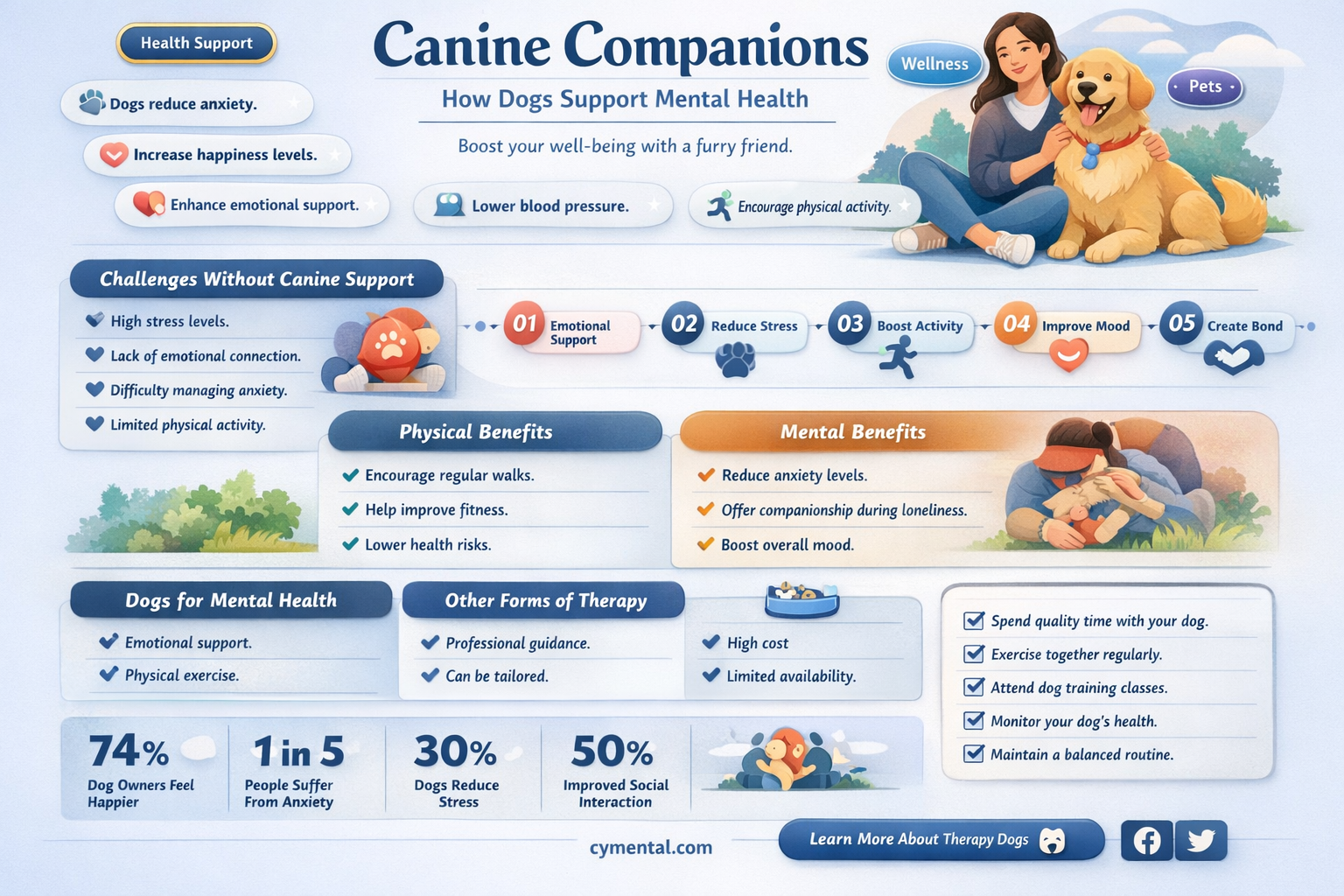
Dogs have long been recognized as more than just pets; they are often referred to as man's best friend due to their profound impact on human mental health. Research has shown that dogs can significantly alleviate symptoms of anxiety, depression, and stress through their companionship, unconditional love, and ability to provide emotional support. Their presence encourages physical activity, fosters social interaction, and promotes a sense of responsibility, all of which contribute to improved mental well-being. Additionally, therapy dogs and emotional support animals are increasingly being utilized in clinical settings, schools, and workplaces to help individuals cope with mental health challenges. The bond between humans and dogs is not only heartwarming but also scientifically proven to be a powerful tool in enhancing mental health and overall quality of life.
| Characteristics | Values |
|---|---|
| Emotional Support | Dogs provide companionship, reduce feelings of loneliness, and offer unconditional love, which can alleviate symptoms of depression and anxiety. |
| Stress Reduction | Interacting with dogs lowers cortisol (stress hormone) levels and increases oxytocin, promoting relaxation and emotional bonding. |
| Social Facilitation | Dogs encourage social interaction, helping individuals with social anxiety or isolation to engage with others more comfortably. |
| Routine and Structure | Caring for a dog establishes a daily routine, which can improve mental stability and provide a sense of purpose. |
| Physical Activity | Dog ownership promotes exercise (e.g., walking), which boosts mood, reduces stress, and improves overall mental health. |
| PTSD Assistance | Trained service dogs can help individuals with PTSD by providing comfort, interrupting nightmares, and creating a sense of security. |
| Anxiety Reduction | Dogs have a calming presence and can help reduce anxiety through physical touch and distraction from negative thoughts. |
| Cognitive Benefits | Interacting with dogs can improve cognitive function, particularly in older adults, by stimulating mental engagement. |
| Non-Judgmental Presence | Dogs offer a safe, non-judgmental space for individuals to express emotions without fear of criticism or rejection. |
| Therapeutic Interventions | Dogs are used in animal-assisted therapy to support mental health treatment for conditions like depression, anxiety, and trauma. |
Explore related products


What You'll Learn
- Emotional Support Dogs: Provide comfort, reduce anxiety, and offer companionship to individuals with mental health issues
- Therapy Dogs in PTSD: Assist in calming PTSD symptoms, improving emotional regulation, and reducing flashbacks
- Dogs and Depression: Encourage routine, physical activity, and social interaction, alleviating depressive symptoms
- Anxiety Reduction: Presence of dogs lowers cortisol levels, promoting relaxation and reducing stress responses
- Social Facilitation: Dogs help individuals with mental health issues connect with others, reducing isolation

Emotional Support Dogs: Provide comfort, reduce anxiety, and offer companionship to individuals with mental health issues
Dogs have an extraordinary ability to sense human emotions, often responding with unconditional affection and calm presence. This innate quality makes them ideal candidates for emotional support roles, particularly for individuals grappling with mental health challenges. Unlike service dogs, which are trained to perform specific tasks, emotional support dogs (ESDs) provide comfort through their mere presence, offering a sense of security and companionship that can be transformative for those struggling with anxiety, depression, or PTSD. Their non-judgmental nature allows individuals to feel understood and accepted, fostering an environment conducive to emotional healing.
Consider the case of a 28-year-old woman diagnosed with generalized anxiety disorder. After adopting a Golden Retriever as an emotional support dog, she reported a significant reduction in panic attacks and an improved ability to manage daily stressors. The dog’s routine—requiring walks, feeding, and playtime—created structure in her day, while the physical act of petting the dog lowered her cortisol levels, as studies have shown. This example underscores the dual benefit of ESDs: they provide emotional solace while encouraging healthy habits that indirectly support mental well-being.
However, integrating an emotional support dog into one’s life requires careful consideration. Prospective owners must assess their lifestyle, living situation, and financial capacity to care for a dog long-term. For instance, individuals living in apartments should verify pet policies, while those with busy schedules must ensure they can dedicate sufficient time to the dog’s needs. Additionally, consulting a mental health professional is crucial to determine if an ESD is the right fit, as they are not a substitute for therapy or medication but rather a complementary tool.
Critics often question the legitimacy of emotional support dogs, particularly in public spaces, but research supports their efficacy. A 2018 study published in the *Journal of Psychiatric Research* found that individuals with ESDs experienced lower levels of anxiety and depression compared to those without. Practical tips for maximizing the benefits of an ESD include establishing a consistent routine, incorporating the dog into mindfulness practices (e.g., deep breathing while petting), and using the dog as a social bridge to connect with others, thereby combating feelings of isolation.
In conclusion, emotional support dogs are not just pets; they are allies in the battle against mental health struggles. By providing comfort, reducing anxiety, and offering unwavering companionship, they fill a unique niche in the spectrum of therapeutic interventions. For those who find solace in their presence, ESDs can be a lifeline, offering both emotional relief and a renewed sense of purpose.
Melodies of Healing: Music's Powerful Impact on Mental Well-Being
You may want to see also
Explore related products



Therapy Dogs in PTSD: Assist in calming PTSD symptoms, improving emotional regulation, and reducing flashbacks
Dogs have an extraordinary ability to sense human emotions, a skill that has been harnessed in the field of mental health, particularly for individuals suffering from Post-Traumatic Stress Disorder (PTSD). Therapy dogs are not just pets; they are trained companions that can significantly impact the lives of those struggling with this debilitating condition. The presence of a therapy dog can be a powerful tool in managing PTSD symptoms, offering a unique and effective form of support.
Calming the Storm: Reducing PTSD Symptoms
For individuals with PTSD, the world can feel like a constant battle against intrusive memories and heightened anxiety. Here's where therapy dogs step in as four-legged heroes. These dogs are trained to provide deep pressure stimulation, often by lying across a person's lap or chest, which has been shown to decrease arousal and promote a sense of calm. This simple act can help reduce the frequency and intensity of PTSD symptoms, such as hypervigilance and panic attacks. A study published in the *Journal of Consulting and Clinical Psychology* found that veterans with PTSD who had service dogs experienced significantly lower levels of anxiety and depression compared to those on a waitlist for a service dog. The dogs' ability to provide comfort and a sense of security is a powerful tool in managing the disorder.
Emotional Regulation: A Tail-Wagging Approach
Emotional regulation is a significant challenge for PTSD sufferers, often leading to mood swings and difficulty managing emotions. Therapy dogs offer a unique solution by providing a consistent and non-judgmental source of emotional support. The routine of caring for a dog, such as feeding, grooming, and walking, can help establish a sense of structure and purpose. This daily interaction encourages responsibility and can improve overall mood and emotional stability. For instance, a therapy dog might be trained to respond to its handler's emotional cues, offering comfort during moments of distress. Over time, this can help individuals with PTSD develop healthier coping mechanisms and improve their ability to regulate emotions.
Flashback Interruption: A Canine Intervention
One of the most distressing symptoms of PTSD is the occurrence of flashbacks, where individuals relive traumatic events. Therapy dogs can be trained to intervene during these episodes, providing a crucial distraction and grounding technique. For example, a dog might be taught to respond to a specific command or signal, such as turning on a light or bringing a favorite toy, to interrupt the flashback and bring the person back to the present. This technique, known as 'grounding,' is a powerful tool in managing PTSD. The dog's presence and actions can help individuals refocus and reorient themselves, reducing the intensity and duration of flashbacks.
Incorporating therapy dogs into PTSD treatment plans offers a holistic approach to healing. While medication and therapy are essential, the addition of a canine companion can provide unique benefits. It is important to note that therapy dogs are not a one-size-fits-all solution, and the effectiveness may vary from person to person. However, with proper training and integration, these dogs can become invaluable allies in the journey towards managing PTSD symptoms and improving overall mental well-being. This innovative approach to mental health treatment highlights the incredible bond between humans and dogs, showcasing how our furry friends can truly make a difference in our lives.
Seeking Support: A Guide to Asking for Mental Health Assistance
You may want to see also
Explore related products




Dogs and Depression: Encourage routine, physical activity, and social interaction, alleviating depressive symptoms
Depression often disrupts daily routines, leaving individuals feeling aimless and unmotivated. Dogs, with their innate need for structure, can reintroduce predictability into a person’s life. Feeding, walking, and grooming a dog require consistency, forcing individuals to adhere to a schedule even when they feel overwhelmed. For example, a morning walk for the dog becomes a non-negotiable activity, anchoring the day and providing a sense of purpose. Studies show that maintaining a routine can reduce feelings of helplessness, a common symptom of depression. To maximize this benefit, establish a clear daily schedule for your dog’s care, ensuring it aligns with your own needs for stability.
Physical activity is a proven mood booster, yet depression often saps the energy required to exercise. Dogs act as natural motivators, demanding movement through walks, play, or even fetch. A 20- to 30-minute walk twice daily not only meets a dog’s exercise needs but also exposes their owner to sunlight and fresh air, both of which combat depressive symptoms. Research indicates that regular physical activity can increase serotonin levels, improving mood and reducing anxiety. Start small: even a 10-minute stroll around the block can make a difference. Gradually increase duration and intensity as energy levels improve.
Depression thrives in isolation, but dogs are social creatures that encourage interaction. Whether it’s a trip to the dog park, a training class, or simply a neighbor stopping to pet your dog, these moments foster human connection. Dogs also provide unconditional emotional support, reducing feelings of loneliness. A study published in the *Journal of Personality and Social Psychology* found that pet owners reported higher levels of social support compared to non-pet owners. To leverage this, join dog-centric communities or volunteer at shelters, amplifying both your social circle and sense of belonging.
Combining routine, physical activity, and social interaction, dogs offer a multifaceted approach to alleviating depression. Their presence alone can provide comfort, but actively engaging with them amplifies these benefits. For those struggling with depression, adopting or spending time with a dog can be a practical, non-pharmacological strategy. However, it’s essential to ensure the responsibility of pet ownership doesn’t become overwhelming. Start with manageable commitments, like dog-sitting or fostering, before making a long-term decision. With consistency and care, dogs can be powerful allies in the journey toward mental wellness.
Nurturing Mental Well-Being: Essential Strategies for a Healthier Mind
You may want to see also
Explore related products





Anxiety Reduction: Presence of dogs lowers cortisol levels, promoting relaxation and reducing stress responses
The mere presence of a dog can trigger a physiological response in humans, specifically a decrease in cortisol, often referred to as the stress hormone. This isn't just anecdotal; numerous studies have quantified this effect. For instance, research conducted in 2019 found that employees who interacted with dogs during their workday experienced a significant drop in cortisol levels, with some participants showing reductions of up to 20%. This biological shift is a cornerstone of understanding how dogs can mitigate anxiety.
Imagine a scenario where a person, feeling overwhelmed by a looming deadline, takes a short break to pet their dog. This simple act can initiate a chain reaction: the tactile sensation of fur, the rhythmic motion of stroking, and the dog's calm demeanor collectively signal to the brain that the environment is safe. Consequently, the body's fight-or-flight response, often hyperactive in anxious individuals, begins to subside. This is not merely a mental trick; it's a measurable physiological change that can be observed in real-time through saliva or blood tests measuring cortisol levels.
To harness this benefit effectively, consider structured interactions with dogs. For adults, spending 15–30 minutes daily engaging with a dog—whether through play, grooming, or simply sitting together—can yield noticeable results. Children, particularly those aged 8–12, may benefit from shorter, more frequent interactions, as their attention spans and stress triggers differ. It's crucial, however, to ensure the dog is receptive and comfortable, as a stressed dog can inadvertently transfer anxiety. Practical tips include establishing a routine, such as a morning or evening "dog time," and incorporating activities that both the human and dog enjoy, like fetch or gentle walks.
While the science is compelling, it's essential to approach this as a complementary strategy rather than a standalone solution. For individuals with severe anxiety disorders, professional intervention remains paramount. However, integrating dogs into therapeutic settings or daily life can enhance traditional treatments. For example, therapy dogs in clinical environments have been shown to lower patients' cortisol levels by an average of 15%, creating a more receptive state for therapy. This synergy between canine companionship and professional care underscores the multifaceted role dogs can play in mental health support.
Incorporating dogs into anxiety management requires mindfulness of both human and canine needs. Dogs, like humans, have limits, and over-reliance on them can lead to stress for the animal. Signs of canine discomfort include excessive yawning, lip licking, or avoidance behaviors. By respecting these boundaries and ensuring mutual benefit, the relationship can remain a source of calm and support. Ultimately, the presence of a dog offers a natural, accessible tool for anxiety reduction, grounded in both emotional connection and tangible biological changes.
Supporting Through Crisis: Essential Steps to Aid Mental Health Emergencies
You may want to see also
Explore related products


Social Facilitation: Dogs help individuals with mental health issues connect with others, reducing isolation
Dogs, often referred to as "man's best friend," play a pivotal role in breaking down social barriers for individuals grappling with mental health issues. Their innate ability to foster connections is rooted in their non-judgmental nature and their capacity to serve as social catalysts. For instance, a person walking a dog is significantly more likely to engage in conversations with strangers than someone walking alone. This simple act of interaction, though seemingly trivial, can be a lifeline for someone experiencing isolation due to anxiety, depression, or other mental health challenges. Studies show that dog owners are 60% more likely to interact with neighbors, a statistic that underscores the pet’s role as a social facilitator.
Consider the mechanics of this phenomenon. Dogs act as neutral third parties, diffusing the pressure of direct human interaction. For someone with social anxiety, initiating a conversation can feel paralyzing, but responding to a comment about their dog is far less daunting. This dynamic is particularly evident in public spaces like parks or cafes, where dogs naturally attract attention. A 2019 study published in the *Journal of Psychiatric Research* found that individuals with therapy dogs reported a 40% increase in social interactions compared to those without. The takeaway is clear: dogs don’t just provide emotional support; they actively create opportunities for human connection.
However, leveraging dogs for social facilitation requires intentionality. For maximum benefit, individuals should incorporate their pets into routines that involve public spaces. For example, replacing solitary walks with visits to dog parks or pet-friendly events can amplify social exposure. It’s also crucial to train dogs to be approachable—a calm, well-behaved pet is more likely to invite positive interactions. For those with severe anxiety, starting small—like sitting on a park bench with their dog—can be a manageable first step. The key is consistency; over time, these micro-interactions accumulate, gradually rebuilding social confidence.
One cautionary note: reliance on dogs as sole facilitators of social connection can backfire if not balanced with human-centered efforts. While dogs open doors, it’s up to the individual to step through them. For instance, a dog might initiate a conversation, but the owner must sustain it. Therapists often recommend pairing pet ownership with structured social activities, such as group dog training classes or volunteer work at animal shelters. This dual approach ensures that the dog’s role complements, rather than replaces, human interaction.
In conclusion, dogs are not just companions; they are social bridges. By reducing the friction of initial interactions, they empower individuals with mental health issues to re-engage with the world. Yet, their effectiveness hinges on strategic integration into daily life and a commitment to building upon the connections they facilitate. For those struggling with isolation, a dog might just be the first step toward reclaiming a sense of community.
Nurturing Your Mind: Practical Strategies for Better Mental Health
You may want to see also
Frequently asked questions
Yes, dogs can significantly help with mental health issues. Their presence provides emotional support, reduces stress, and promotes feelings of calmness. Activities like petting a dog release oxytocin, a hormone associated with bonding and relaxation, while decreasing cortisol, the stress hormone.
Dogs trained as emotional support animals or service dogs can assist individuals with PTSD by providing comfort, interrupting nightmares or flashbacks, and creating a sense of safety. Their consistent presence and ability to sense distress can help ground individuals during episodes of anxiety or panic.
Yes, dogs are highly effective in reducing loneliness and social isolation. They encourage social interaction, as people are more likely to engage with others while walking or playing with their dog. Additionally, the bond between a person and their dog provides companionship and a sense of purpose.
Absolutely. Dogs promote routine and structure, which are beneficial for mental well-being. Caring for a dog encourages physical activity, such as walking, and fosters a sense of responsibility. Their unconditional love and non-judgmental nature can boost self-esteem and provide emotional stability.